

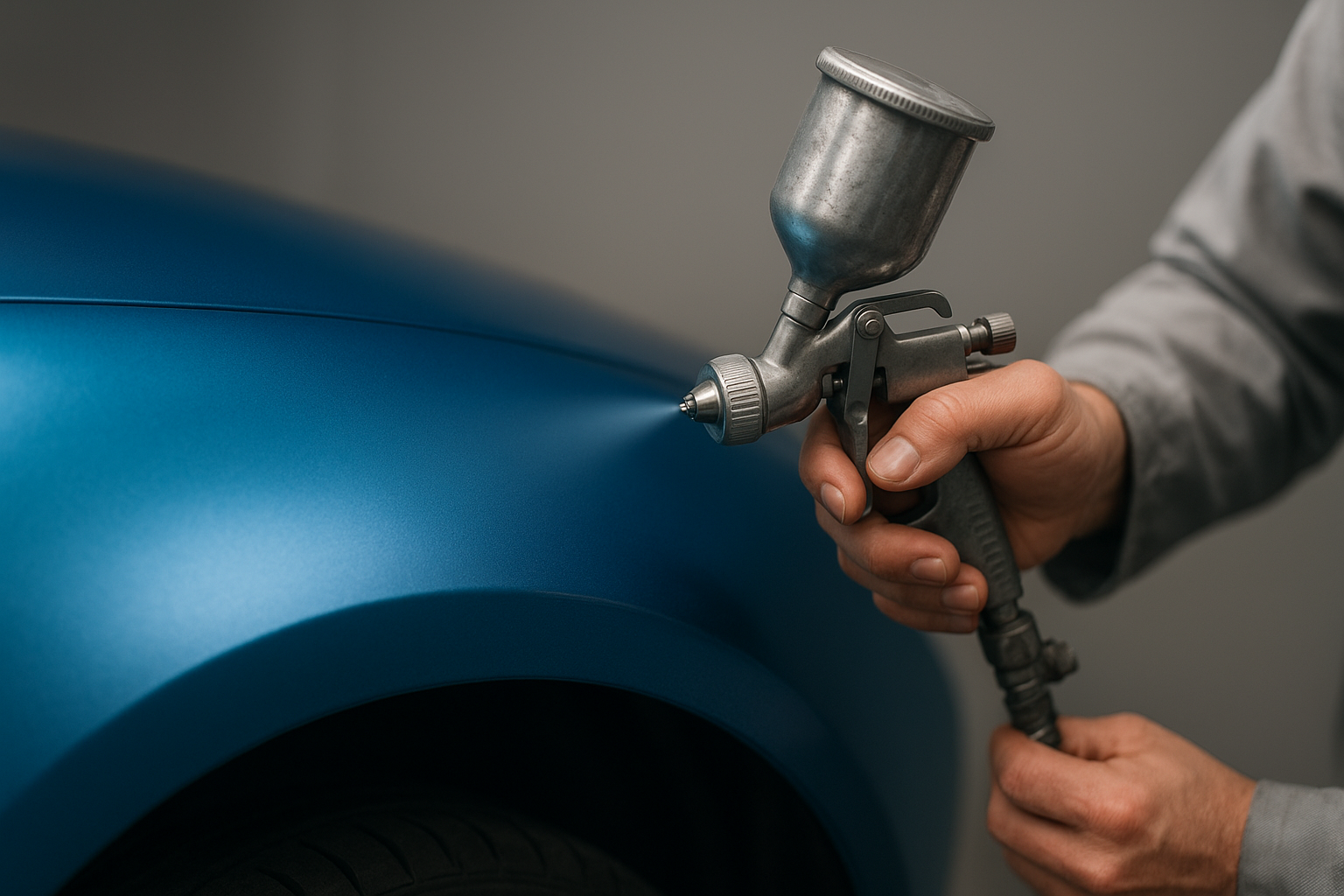
Auto body paint blending Brea technicians perform is the process of feathering fresh paint into an adjacent undamaged panel so a repair becomes visually undetectable. Rather than repainting an entire panel edge to edge, skilled painters gradually taper new color into the existing factory finish. As a result, drivers get a seamless repair without paying for a full panel repaint, and the vehicle keeps its original resale appeal.
Anyone who has seen a car with a slightly mismatched fender knows how noticeable a poor paint job can be. In particular, metallic and pearl finishes are difficult to match because light reflects differently depending on the angle. Consequently, shops that specialize in blending techniques deliver noticeably better results than those that simply repaint a single panel and hope for the best.
Quick Answer:
Paint blending feathers new paint into the edge of an existing panel, using computerized color matching and gradual fade-out spraying. This eliminates visible seams and is typically more affordable than repainting an entire adjacent panel.
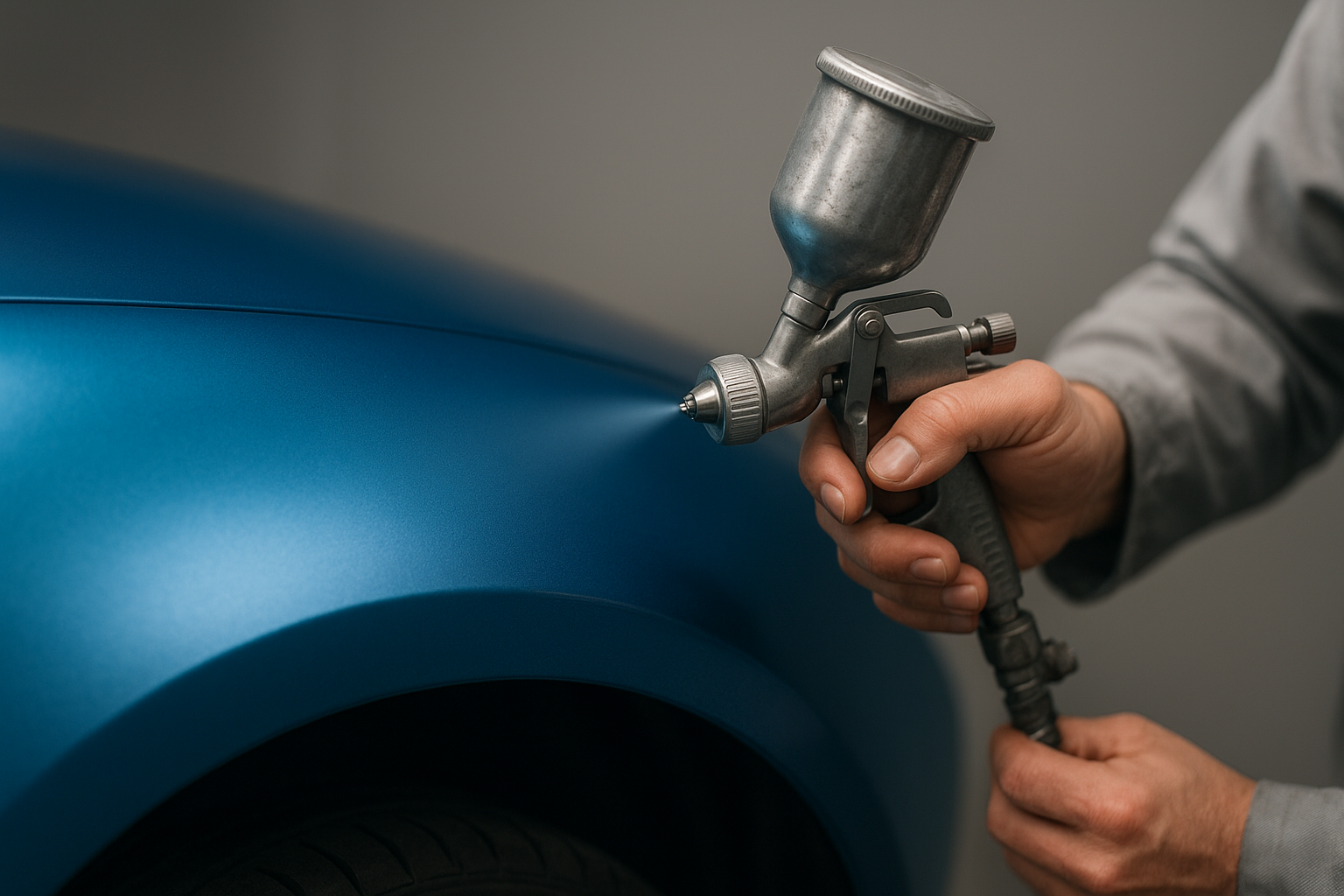
Careful feathering during auto body paint blending Brea repairs helps hide the transition between old and new paint.
What Is Auto Body Paint Blending Brea Shops Use?
Auto body paint blending Brea shops use is a refinishing method where new paint is gradually merged into a neighboring panel instead of stopping abruptly at a body line. Painters reduce the paint’s opacity as they move away from the damaged area, so the eye cannot detect where the repair begins or ends.
This technique matters most on metallic, pearl, or tri-coat finishes, since these paints reflect light unevenly if the edge isn’t softened. Similarly, vehicles with sun-faded panels benefit from blending because the fresh paint bridges the gap between the original color and any factory fading that has occurred over the years.
Why Precise Paint Matching Matters for Brea Drivers
A poor color match can lower a vehicle’s resale value and make an otherwise flawless repair look unfinished. Therefore, many Brea vehicle owners specifically seek shops that combine accurate paint matching with proper blending technique. Without both elements working together, even a technically sound repair can look obviously patched.
According to the American Coatings Association, color perception can shift by several visible units depending on lighting and viewing angle, which is why professional spray-out cards and controlled booths are essential for consistent results. For more background on the science behind automotive coatings, see this overview of automotive paint composition.
Readers curious about which local providers focus on this specialty can review this breakdown of local shops offering paint matching services in Brea for a closer comparison of available options.
How the Paint Blending Process Works Step by Step
Understanding the workflow helps drivers know what to expect when scheduling a repair. Below is the general sequence most certified shops follow.
- Identify the paint code and inspect fade: Technicians pull the factory code from a door jamb sticker and check surrounding panels for sun-related color shift.
- Mix and test the formula: A spectrophotometer reading guides a custom paint mix, which is verified on a test card before touching the vehicle.
- Mask and prep adjacent panels: Surfaces are cleaned and sanded so paint can taper smoothly without a hard edge.
- Apply base coat with fade-out spraying: Paint density gradually decreases moving into the undamaged panel.
- Apply clear coat and cure: A uniform clear coat restores gloss and is cured in a controlled booth.
- Buff, polish, and inspect: Final inspection under bright light and daylight confirms the blend is invisible.
Shops that skip steps, such as spray-out testing, often produce repairs that look acceptable indoors but reveal mismatches outdoors. For a closer look at how one Brea-based team approaches this process, see what makes this shop’s paint matching services stand out.
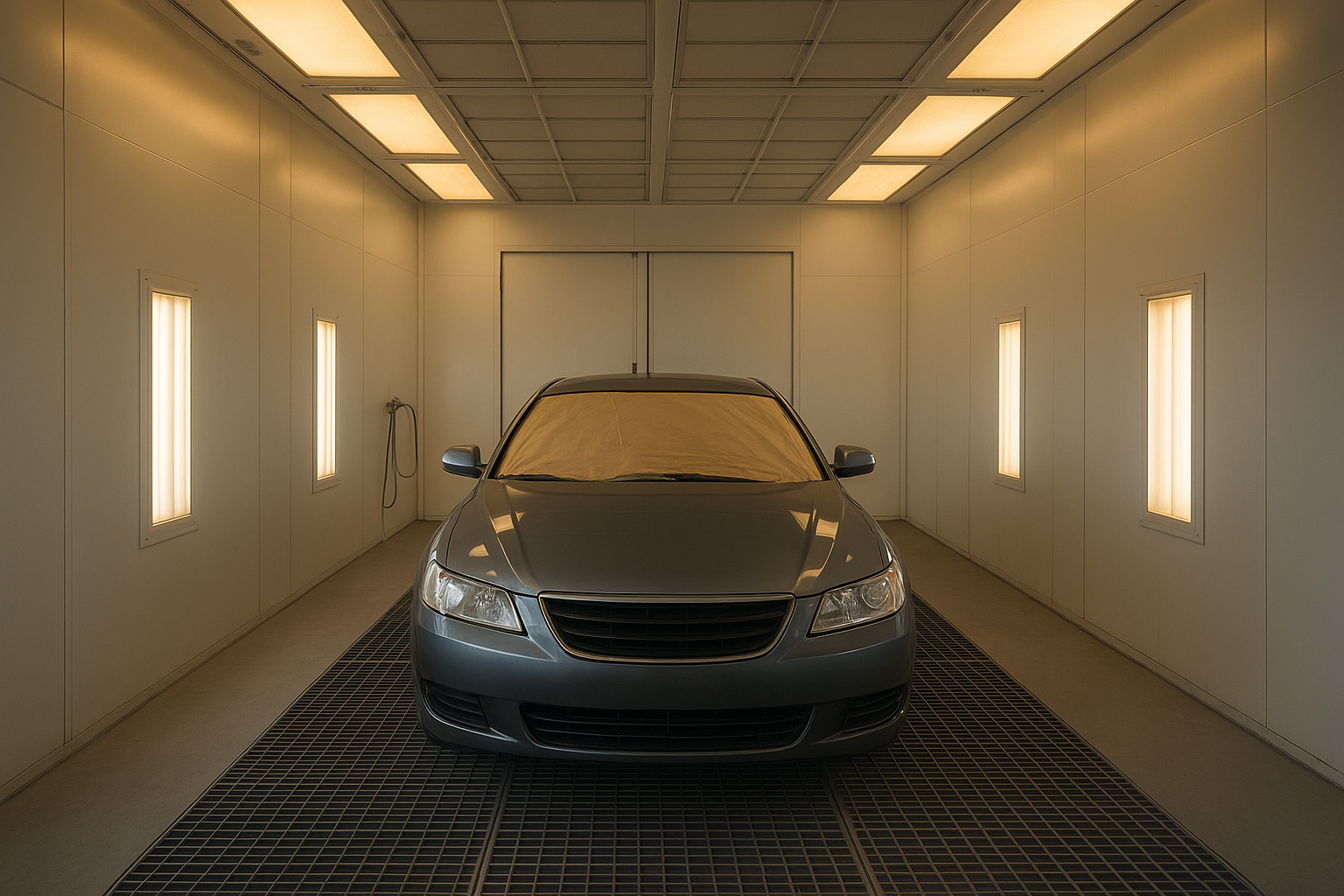
A controlled paint booth environment supports consistent, professional-grade blending results.
How Much Does Auto Body Paint Blending Cost in Brea?
Pricing varies based on the number of panels involved, paint type, and damage severity. In general, blending costs less than a full panel repaint because it uses less material and requires less labor time overall. Multi-panel blends, custom colors, or three-stage pearl finishes tend to push costs higher due to added complexity.
For drivers weighing options after a collision, this guide on choosing between paint options after bodywork outlines the tradeoffs between spot repair, panel blending, and full repaint scenarios in more detail.
Choosing a Shop for Car Paint Repair Brea Drivers Trust
Not every shop invests in the equipment needed for accurate blending. Consequently, it helps to ask direct questions before booking: Does the shop use computerized color matching? Do they test spray-out cards before committing to the full panel? What warranty backs the finished work?
Shops staffed by certified technicians who regularly handle both domestic and foreign vehicles tend to deliver more consistent results, since they’ve encountered a broader range of paint codes and formulations. For a comparison of regional options, this resource on which California body shop specializes in paint matching offers useful context, as does this page on car paint repair services in Brea.
The Inter-Industry Conference on Auto Collision Repair, commonly known as I-CAR, maintains training standards that many reputable shops follow for structural and cosmetic repairs. Reviewing a shop’s certifications through resources like the I-CAR training and certification directory can help confirm technician qualifications before committing to a repair.
Environmental and Safety Considerations in Paint Refinishing
Automotive paint contains volatile organic compounds, or VOCs, which are regulated because they contribute to air quality concerns. The U.S. Environmental Protection Agency sets guidelines for VOC emissions from automotive refinishing coatings, and compliant shops use low-VOC formulations along with proper ventilation systems. You can review official guidance directly from the EPA’s coatings emission standards.
Shops that follow these standards protect both technician health and the surrounding community. Moreover, compliant facilities often use waterborne base coats, which have become the industry norm across much of California due to stricter regional air quality rules.
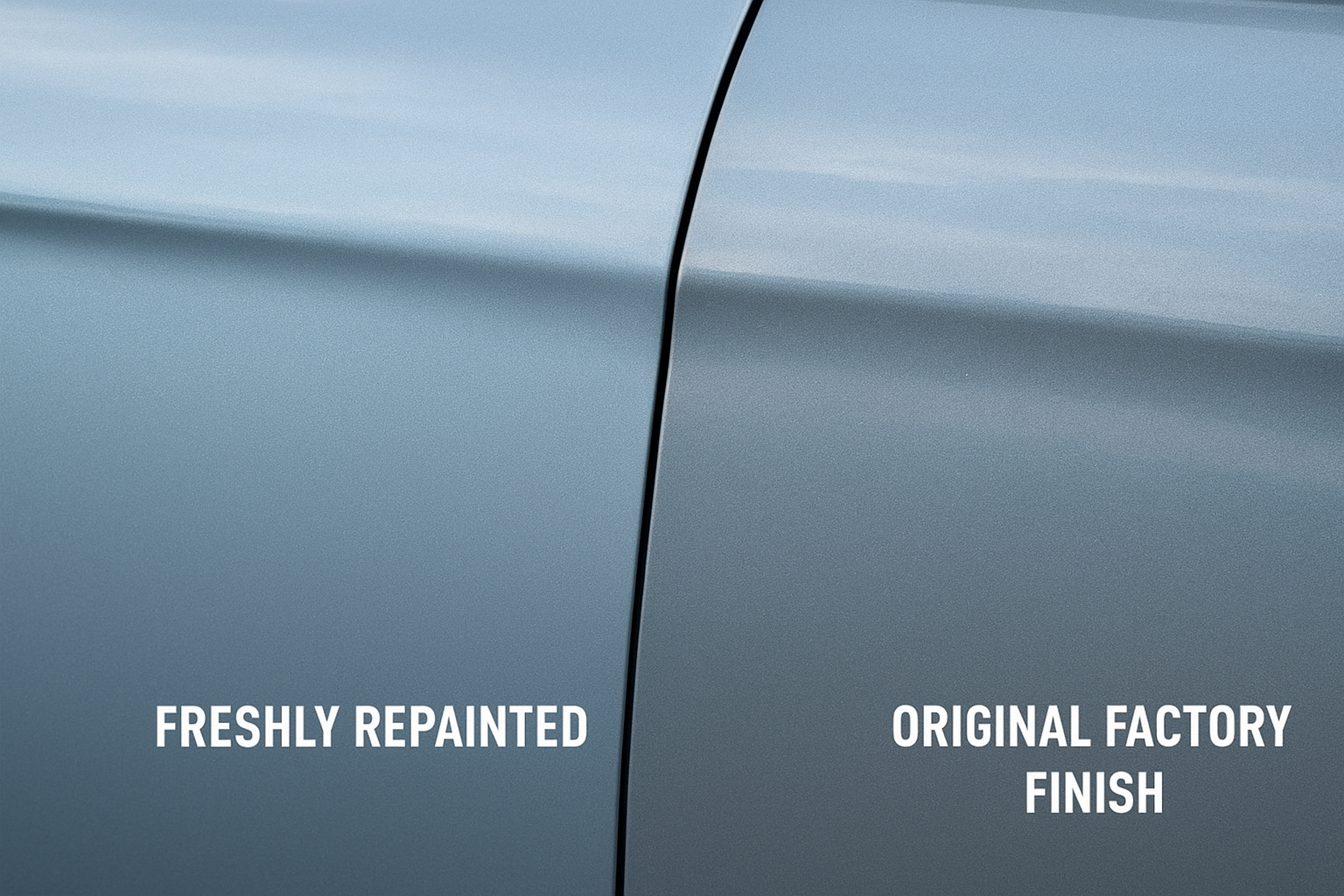
A properly executed blend leaves no visible line between the original factory panel and the repaired section.
Frequently Asked Questions About Auto Body Paint Blending Brea
What is auto body paint blending Brea shops recommend?
Auto body paint blending Brea shops recommend is a refinishing technique where fresh paint is feathered into an adjacent undamaged panel so the color transition becomes invisible. It avoids painting an entire panel edge-to-edge, which reduces cost and preserves factory-adjacent finish.
Why does paint blending work better than a single-panel repaint?
Blending softens the edge between old and new paint so no visible line appears under sunlight or at different angles. A single-panel repaint often shows a slight color shift because factory paint fades over time.
How much does auto body paint blending cost in Brea?
Paint blending typically costs less than a full panel repaint because fewer materials and less labor are involved, often ranging from a few hundred dollars for a single panel to more for multi-panel jobs. Exact pricing depends on paint type, vehicle size, and damage extent.
How long does the paint blending process take?
Most blending jobs take one to three days, including prep, painting, and curing time. Complex multi-panel blends or custom colors may take longer.
Can any shop match my car’s exact paint color?
Not every shop has the equipment or expertise for precise color matching. Shops with computerized spectrophotometers and updated paint code libraries achieve far more accurate matches than those relying on visual estimation alone.
What causes a visible paint mismatch after repair?
Mismatches usually happen when a shop skips blending, uses an outdated paint formula, or fails to account for UV fading on the original panels. Poor spray technique and inconsistent clear coat application also contribute.
Is paint blending necessary for small scratches?
Small scratches confined to one panel sometimes only need spot repair without blending into neighboring panels. However, if the scratch is near a panel edge or the paint has faded unevenly, blending produces a cleaner result.
Does insurance cover auto body paint blending?
Most insurers cover blending when it is required to achieve a seamless match following a covered collision claim. Documentation from the shop explaining why blending is necessary usually supports approval.
What is the difference between paint matching and paint blending?
Paint matching refers to identifying and mixing the correct color formula, while blending is the application technique that feathers new paint into existing panels. Both steps work together to create an invisible repair.
How do technicians find my vehicle’s paint code?
Technicians locate the manufacturer’s paint code on a door jamb sticker, glove box label, or engine bay plate, then cross-reference it in a paint formulation database. They may also scan the panel with a spectrophotometer to fine-tune the mix.
What common mistakes lead to poor paint blending results?
Common mistakes include skipping test spray-outs, rushing clear coat cure times, and failing to blend far enough into the adjacent panel. Inexperienced technicians may also ignore metallic or pearl flake alignment, which creates a visible sheen difference.
Can paint blending be done on both foreign and domestic vehicles?
Yes, paint blending applies to any vehicle brand as long as the shop has access to the correct paint code and formulation data. Certified technicians typically work with domestic and foreign makes using the same core blending techniques.
What should I ask a Brea shop before booking paint blending?
Ask whether they use computerized color matching, how many panels they plan to blend, and what warranty covers the finished work. It also helps to request before-and-after photos of similar past repairs.
Final Thoughts on Auto Body Paint Blending in Brea
In summary, auto body paint blending Brea drivers rely on is what separates a visible patch job from a truly seamless repair. The right shop combines accurate paint code identification, computerized color matching, and careful fade-out spraying to make damage disappear rather than merely covering it up. As a result, choosing a technician who understands this process protects both the vehicle’s appearance and its long-term resale value.
Before booking a repair, it’s worth confirming that a shop tests spray-out cards, follows recognized training standards, and offers a clear warranty on finished work. For additional details on services available locally, visit Brea Auto Body’s main site to review current offerings and request a personalized estimate.

