

Searching for affordable auto body near me usually starts the moment you notice a fresh dent, a cracked bumper, or a scraped door panel — and it usually comes with a nagging worry that “affordable” and “quality” cannot exist in the same repair shop. Fortunately, that worry is largely unfounded once you know exactly what to look for, what to ask, and which numbers actually matter.
This guide goes further than a typical location listing. Instead of just telling you where a shop is, it explains how pricing actually works, how to compare estimates line by line, when insurance makes sense, which certifications matter, and exactly how to avoid the handful of shops that give the entire industry a bad name. By the end, you will know precisely how to find an affordable auto body shop near me that also does excellent, lasting work.
What Actually Drives Auto Body Repair Costs?
Before you can judge whether a quote is fair, it helps to understand what you are actually paying for. Auto body pricing breaks down into three core components: labor, parts, and paint materials. Labor rates vary by region and shop certification, typically ranging from $45 to $150 per hour across the United States.
Parts costs depend heavily on whether the shop uses original equipment manufacturer (OEM) parts, which are made by your vehicle’s manufacturer, or aftermarket alternatives. OEM parts fit precisely and preserve resale value, though they cost more. Aftermarket parts, on the other hand, can reduce your bill significantly while still meeting solid quality standards in many cases.
Paint and materials are frequently underestimated. Specifically, color matching, primer, clear coat, and blending adjacent panels can add hundreds of dollars to a seemingly simple repair. Therefore, always ask your estimator to itemize the paint line before you approve any work.
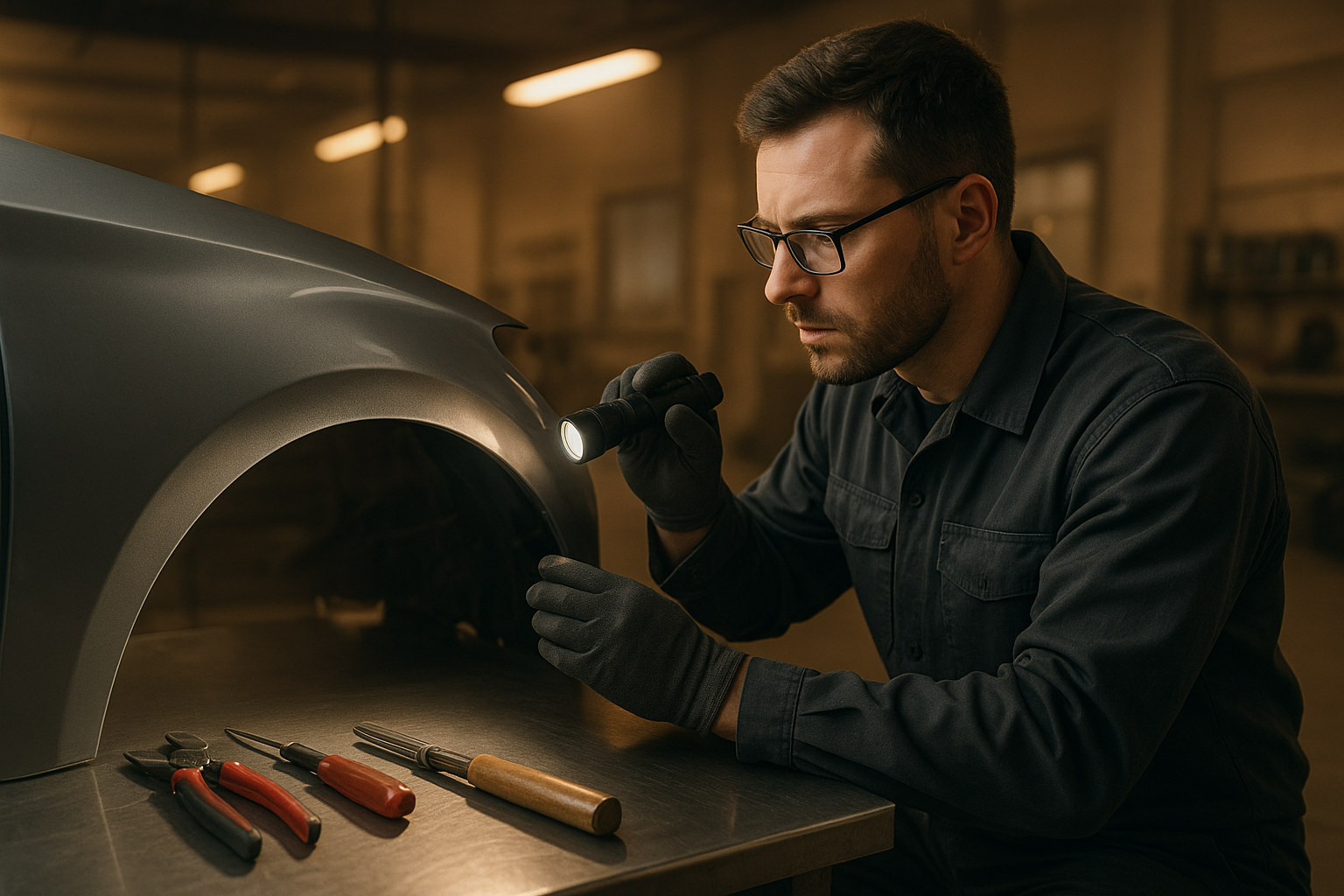
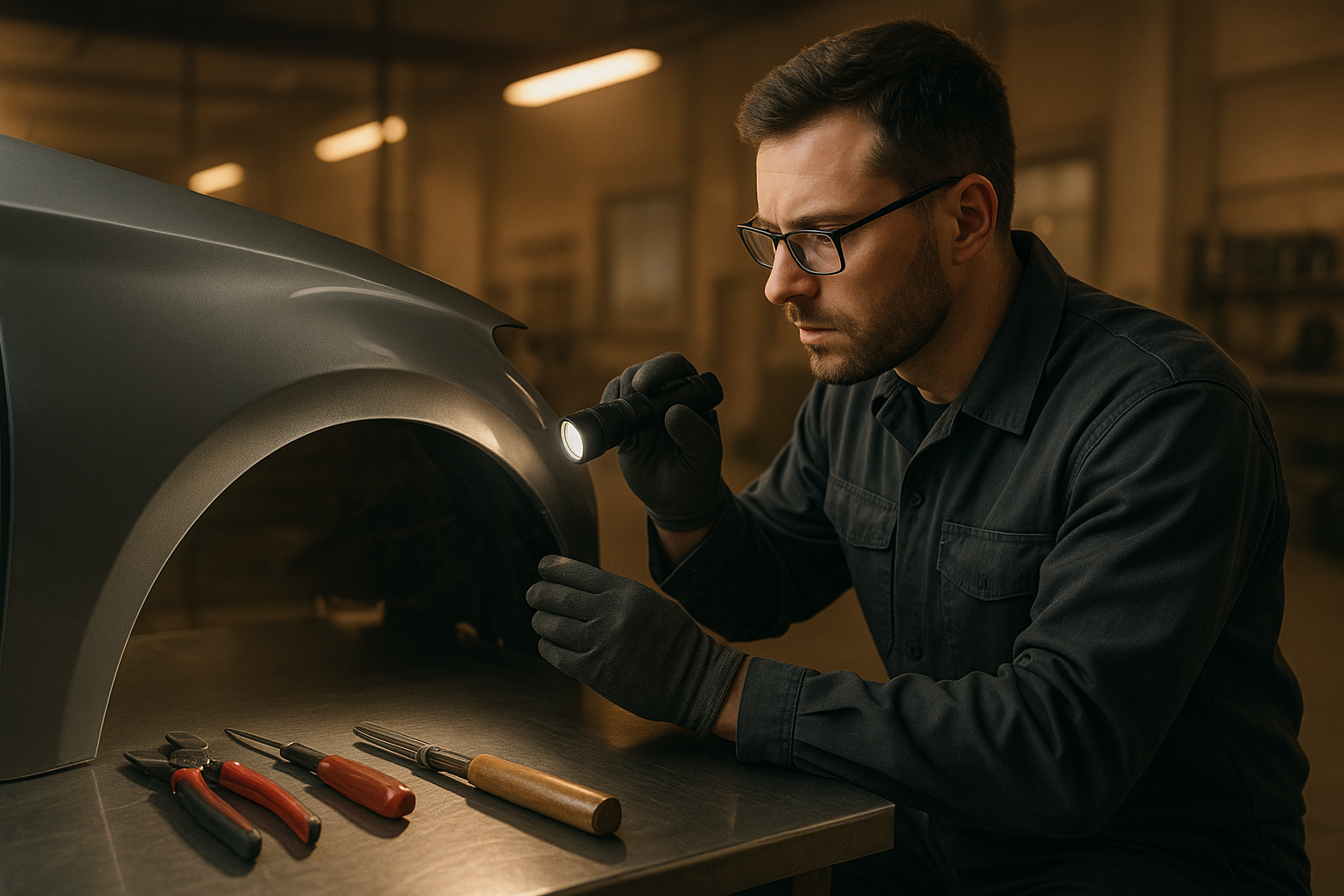
A technician assessing damage before quoting an affordable auto body repair.
Quick Reference: Common Repair Costs
- Small paintless dent repair: $75 – $200
- Bumper cover repair (no replacement): $150 – $600
- Bumper replacement with paint: $500 – $1,500
- Single-panel scratch and repaint: $300 – $900
- Headlight or side mirror replacement: $150 – $500
- Full collision repair (moderate damage): $1,500 – $4,500+
These ranges are national averages, so your local affordable auto body near me search results may run slightly higher or lower depending on regional labor rates and cost of living.
Chain vs. Independent Shops: Which Is More Affordable?
When you search for a body shop, large national chains often dominate the top results because of their marketing budgets and multiple locations. However, bigger is not automatically cheaper. In fact, national chains typically operate on standardized pricing structures with less room for negotiation, while independent, locally owned shops frequently have lower overhead and more flexibility on price.
That said, chains do offer some advantages: multiple locations, standardized warranties, and established insurance partnerships. Independent shops, in contrast, often compensate with personalized service, owner-level accountability, and a genuine incentive to earn repeat local business. As a result, the most affordable auto body near me search results often mix both — and comparing at least one of each type gives you the clearest picture of fair pricing in your area.
Ultimately, the decision should not hinge on brand recognition alone. Instead, weigh certifications, warranty terms, and itemized pricing side by side, regardless of whether the shop is a franchise or a family-owned business.
How to Search for Affordable Auto Body Near Me
Searching online is the fastest starting point, but the first result is rarely the best value. Instead, use a deliberate, multi-step approach to narrow your options intelligently.
First, search Google Maps for shops within a 10-mile radius and filter by rating. Focus on businesses with at least 4.0 stars and a minimum of 30 reviews, since a high rating on a tiny sample can be misleading. Next, check the Better Business Bureau and Yelp for unresolved complaints or repeated pricing disputes.
Additionally, ask friends, family, or coworkers for personal recommendations. Word-of-mouth referrals remain one of the most reliable ways to uncover a trustworthy, budget-friendly collision repair shop that standard search results might bury. Local Facebook groups and neighborhood apps like Nextdoor are also excellent, underused resources for genuine local feedback.
Getting Multiple Estimates the Right Way
Always collect at least three written, itemized estimates before committing to any shop. A verbal quote is not sufficient, because it leaves room for surprise charges once work begins. When comparing estimates, look at labor hours, parts type (OEM vs. aftermarket), and paint costs line by line rather than only glancing at the total.
If one estimate is noticeably lower than the others, ask specifically why. The shop may plan to use lower-quality parts, skip panel blending, or underestimate the actual labor time — any of which can produce a disappointing final result.
Understanding Insurance Direct Repair Programs (DRP)
Many drivers assume they must use whichever shop their insurance company recommends. In reality, you have the legal right to choose any repair facility. Insurance-preferred networks, known as Direct Repair Programs (DRP), can offer convenience — such as guaranteed work and faster claims processing — but they are not always the cheapest or best-fit option.
Because DRP shops sometimes operate under negotiated rates with insurers, their labor pricing can be lower than a fully independent shop, which occasionally benefits you. However, it is worth comparing an outside written estimate against the DRP quote before agreeing, since you are entitled to select whichever shop delivers the best combination of price, quality, and warranty coverage. According to the Federal Trade Commission’s consumer guidance on vehicle repairs, consumers retain the right to select their own repair shop regardless of insurer recommendations.
Repair Techniques That Lower Your Bill
Not every dent or scratch requires a full repaint. In fact, several modern repair methods dramatically reduce costs while still delivering excellent, factory-quality results.
Paintless Dent Repair (PDR) is the most cost-effective option for small to medium dents where the paint surface remains intact. According to the Wikipedia overview of paintless dent repair, this technique uses specialized tools to massage the metal back into shape from behind the panel, eliminating the need for filler or repainting. PDR jobs often cost $75 to $200, compared to $400 or more for traditional body work.
Spot painting is another low-cost option for small scratches that have not penetrated to bare metal. Rather than repainting an entire panel, a skilled technician can blend a spot repair seamlessly, which saves considerable time and material cost.
However, these techniques are not appropriate for every situation. Structural damage, deep creases, or paint that has peeled to bare metal will generally require traditional repair methods to preserve both safety and appearance. The Insurance Institute for Highway Safety notes that structural repairs must meet manufacturer specifications to maintain crash protection, so cutting corners here is never worth the savings.
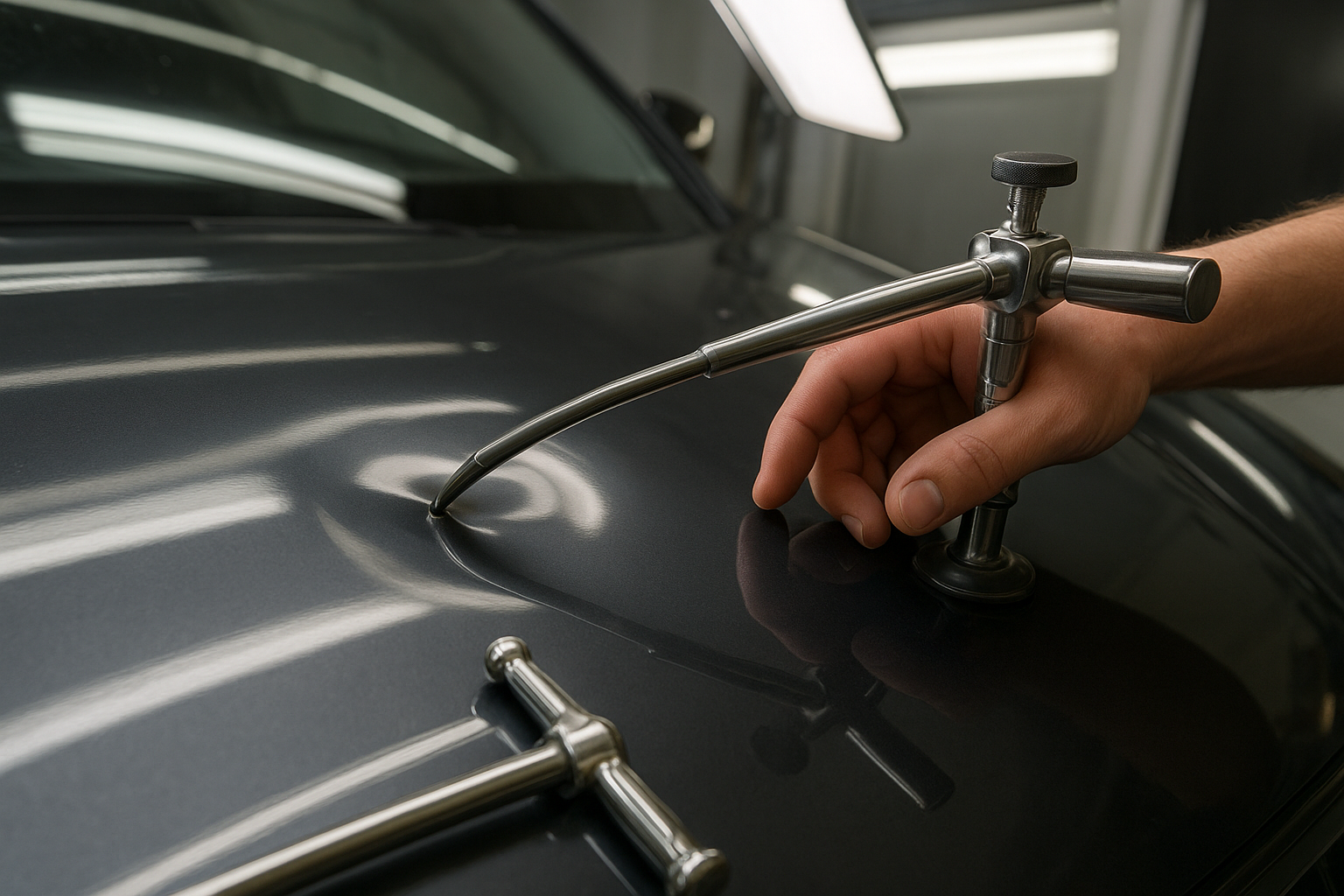
Paintless dent repair is one of the most affordable services offered at a quality body shop.
Mobile and Same-Day Repair Options
For minor dents and scratches, many technicians now offer mobile PDR services that come directly to your home or office. Because mobile technicians carry lower overhead than a full shop, these services are often among the cheapest results when you search for affordable auto body near me for small, cosmetic damage.
Insurance vs. Paying Out of Pocket
One of the most important financial decisions you will make is whether to file an insurance claim or pay for repairs directly. For minor damage, paying out of pocket is often the smarter move, because filing a claim can raise your premium for three to five years — potentially costing more overall than the repair itself.
As a general rule, if the repair estimate is less than twice your deductible, consider paying directly. For example, if your deductible is $500 and the repair costs $700, filing a claim may not be worth the long-term premium impact.
On the other hand, for major collision damage exceeding $2,000, filing a claim is typically the right financial choice. In that scenario, your insurer’s preferred shop network may also offer additional warranty backing on the completed work.
Negotiating a Better Price
Many drivers do not realize that auto body pricing is often negotiable, especially at independent shops. Bringing competing written estimates and politely asking a shop to match or beat the lower price is a legitimate, commonly accepted practice.
Additionally, asking about cash payment discounts, scheduling during slow periods (typically mid-week or mid-month), or bundling multiple repairs into one visit can all produce meaningful savings. Because shops carry fixed overhead costs, filling slow time slots benefits them too.
Financing Options for Larger Repairs
When a repair estimate exceeds what you can comfortably pay upfront, many shops offer in-house payment plans, or partner with third-party financing companies that allow monthly installments. Consequently, an affordable auto body near me search does not have to be limited to shops with the lowest sticker price — a shop offering 0% interest financing over six months can be more affordable in practice than a slightly cheaper shop demanding full payment on pickup.
Certifications and Warranties to Look For
Affordability should never come at the cost of quality or safety. Therefore, always verify that a shop employs technicians with recognized credentials before authorizing any work.
I-CAR Gold Class is the industry’s highest training recognition, indicating that technicians receive ongoing education in the latest repair techniques. ASE certification is another strong indicator of technical competence. Manufacturer-certified shops — such as those approved by Honda, Toyota, or Ford — are trained to repair specific vehicle brands to exact factory specifications.
Beyond credentials, always ask about the warranty before work begins. Reputable shops — both independent and chain-affiliated — typically offer a lifetime warranty on paint and labor for as long as you own the vehicle. A shop that hesitates to put a warranty in writing is a significant red flag, regardless of how affordable the quote looks.
For drivers in Southern California, Brea Auto Body is a helpful example of a local shop that pairs transparent pricing with certified technicians and strong customer reviews — a useful benchmark when evaluating shops in your own area.
A transparent, professional experience is the hallmark of a trustworthy affordable auto body shop.
Red Flags That Signal a Shop to Avoid
Not every low-priced shop is a good deal. In practice, certain warning signs indicate that a shop may cut corners in ways that cost you more money down the road.
Watch out for shops that refuse a written itemized estimate, pressure you to decide immediately, or cannot show proof of insurance and licensing. Similarly, be cautious if a shop proposes salvage or used structural parts without your explicit consent, since this can compromise your vehicle’s safety in a future collision.
Finally, a missing physical address or a shop that only communicates by text message are serious concerns. Legitimate auto body businesses maintain a fixed location and will happily show you their facility and credentials on request.
Checklist: Questions to Ask Before You Book
- Can you provide a written, itemized estimate today?
- Do you use OEM parts, aftermarket parts, or both — and can I choose?
- What certifications does your team hold (I-CAR, ASE, manufacturer-specific)?
- What warranty do you offer on paint and labor, in writing?
- How long will the repair realistically take, including parts delivery?
- Do you offer cash discounts or payment plans for larger repairs?
Step-by-Step: How to Choose the Right Shop
- Assess the damage. Photograph all damage from multiple angles before taking your vehicle anywhere, so you have a clear record for comparison.
- Research local shops. Use Google Maps, Yelp, and personal referrals to build a shortlist of at least five candidates, including both chains and independents.
- Request written estimates. Visit at least three shops in person and request detailed, itemized written quotes rather than verbal ballparks.
- Verify credentials. Confirm I-CAR, ASE, or manufacturer certifications and check for a written warranty policy before moving forward.
- Compare value, not just price. Weigh total cost against parts quality, warranty terms, and verified customer reviews from multiple sources.
- Decide on insurance vs. out-of-pocket. Run the numbers against your deductible before filing a claim to avoid unnecessary premium increases.
- Authorize the work in writing. Never approve repairs without a signed written estimate that locks in scope, parts, and price.
Conclusion: Getting the Best Value on Local Repairs
Finding affordable auto body near me is absolutely achievable once you approach the process with the right information. By collecting multiple estimates, understanding cost-saving techniques like PDR, comparing chain and independent shops, verifying certifications, and knowing when insurance actually makes financial sense, you can protect both your vehicle and your wallet. Ultimately, the goal is not the lowest price on the page — it is the best overall value for a repair that lasts.
For a local benchmark of what transparent, quality-focused auto body service looks like, consider visiting Brea Auto Body. You can also browse more vehicle maintenance guides, explore our full collision repair resource library, or return to our homepage for additional consumer advice.
Frequently Asked Questions About Affordable Auto Body Near Me
What does affordable auto body near me typically cost?
Costs vary widely depending on damage type and location. Minor dent repairs can range from $75 to $300, while larger collision repairs can exceed $1,500 or more. Getting multiple estimates helps you understand the fair market price in your area.
How do I find a reputable but affordable auto body shop?
Start by reading Google and Yelp reviews, then request at least three written estimates. Look for shops with certified technicians, a warranty on labor and parts, and transparent, itemized pricing.
Is it safe to choose the cheapest auto body shop?
Not always. The lowest price can sometimes mean lower-quality parts or inexperienced technicians. Focus on value — a fair price combined with strong reviews and a written warranty is a better indicator than price alone.
Are independent auto body shops cheaper than national chains?
Often, yes. Independent shops typically carry lower overhead and more flexible pricing than large chains, though chains may offer standardized warranties and insurance partnerships. Comparing both types side by side gives you the clearest picture of local value.
Should I use insurance or pay out of pocket for auto body repairs?
For minor damage, paying out of pocket often makes more sense to avoid a premium increase. For major collision damage, filing an insurance claim is usually the better financial choice. Compare your deductible against the repair estimate before deciding.
What is a direct repair program (DRP) and should I use an insurance-recommended shop?
A DRP is a network of shops that insurers recommend for faster claims processing. You are never required to use one — you always have the legal right to choose your own repair shop and should compare its quote against outside estimates.
What certifications should an affordable auto body shop have?
Look for I-CAR Gold Class certification or ASE-certified technicians, which indicate ongoing professional training. Manufacturer-certified shops are also a strong sign of quality workmanship.
How long do auto body repairs usually take?
Minor repairs like small dents or scratches can be completed in one to two days. More extensive collision repairs may take one to two weeks depending on parts availability and the extent of the damage.
Can I negotiate the price at an auto body shop?
Yes, many shops have some flexibility, especially on labor costs. Bringing competing estimates and asking about discounts for cash payment or scheduling during slower periods can sometimes lower your total bill.
Can I get financing for auto body repairs?
Many shops offer in-house payment plans or partner with third-party financing companies for larger repairs. This can make a slightly pricier shop more affordable in monthly terms than paying a lower quote in full upfront.
What is paintless dent repair and is it cheaper?
Paintless dent repair (PDR) is a technique that removes dents without repainting the panel, making it significantly cheaper than traditional body work. It works best on small to medium dents where the paint is still intact.
Do auto body shops offer free estimates?
Most reputable auto body shops offer free written estimates. Always request a detailed, itemized estimate so you can compare labor, parts, and paint costs across multiple shops.
What red flags should I watch for at a cheap auto body shop?
Watch out for shops that refuse to provide a written estimate, use aftermarket parts without disclosure, have no physical address, or lack verifiable customer reviews. Unusually low prices can sometimes signal the use of substandard materials.
Does auto body repair affect my car’s resale value?
Poor-quality repairs can actually reduce resale value, while professional repairs using OEM parts can preserve it. Always ask whether the shop uses original equipment manufacturer parts for structural or visible panels.
What is included in a standard auto body repair estimate?
A standard estimate should itemize labor hours and rates, the cost of replacement parts (OEM vs. aftermarket), paint and materials, and any sublet work like alignments or glass replacement.

