

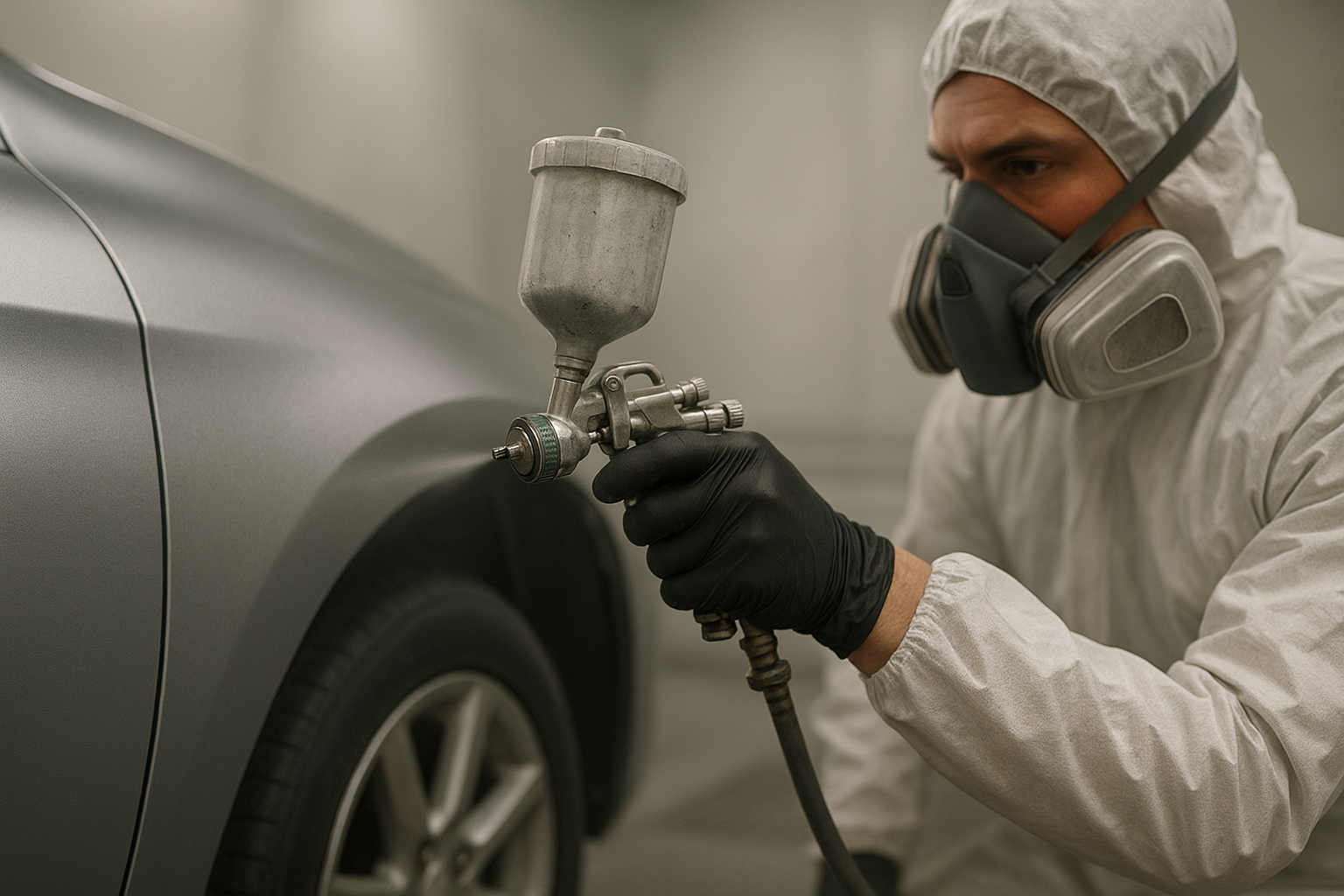
Auto body paint blending Orange County technicians perform is the technique that turns a repaired panel into an invisible one. Rather than stopping fresh paint at a hard edge, a trained painter feathers the new color into the surrounding factory finish so the eye can’t find the seam. For drivers who want their car to look untouched after a collision, this process is often the difference between a decent repair and a truly seamless one.
Quick answer: Paint blending gradually fades new paint color into adjacent panels instead of stopping abruptly at a repair boundary. It is the standard method Orange County shops use to hide subtle mismatches, especially on metallic and pearl finishes where lighting angle affects perceived color.
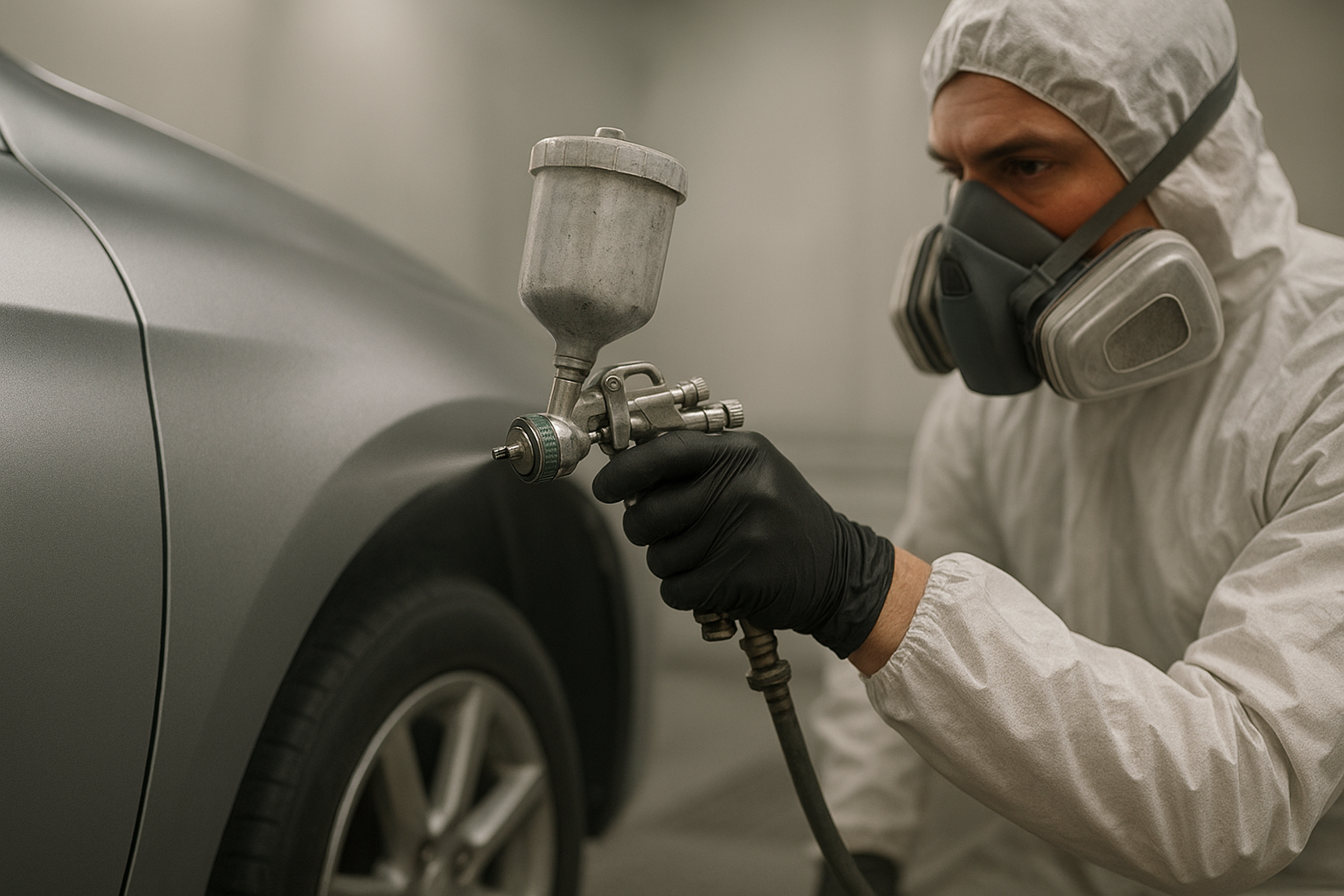
Careful feathering technique is at the heart of auto body paint blending Orange County shops rely on for invisible repairs.
What Is Auto Body Paint Blending?
Auto body paint blending is a refinishing method where a painter extends new paint beyond the repaired panel and gradually fades it into the untouched original finish. In other words, the color transition happens over a wide area rather than at one sharp line. This matters because two panels sprayed at different times, even with the “same” paint code, can look slightly different under sunlight.
Consequently, blending gives the painter room to correct for these tiny variations. Instead of chasing a perfect match on a single panel, the technician creates a gradual visual bridge that the human eye simply cannot detect. As a result, the repair looks factory-fresh rather than patched.
Why Auto Body Paint Blending Orange County Matters for Seamless Repairs
Orange County’s climate and vehicle mix make paint blending especially important. Because of near-constant sun exposure, factory paint on older panels often fades slightly compared to a brand-new coat. Therefore, a shop that skips blending risks leaving a visible boundary, particularly on silver, white pearl, and metallic blue vehicles that are common throughout the region.
In addition, many Orange County drivers own late-model vehicles with complex multi-stage finishes, including tri-coat paints that require exact layering. Specifically, these finishes need a painter who understands how light interacts with metallic flake at different angles. For that reason, choosing a shop experienced in custom auto body paint services makes a measurable difference in the final result.
Above all, a well-executed blend protects a vehicle’s resale value. A visible mismatch is often flagged during a used-car inspection, while a seamless blend leaves no trace that a repair ever happened.
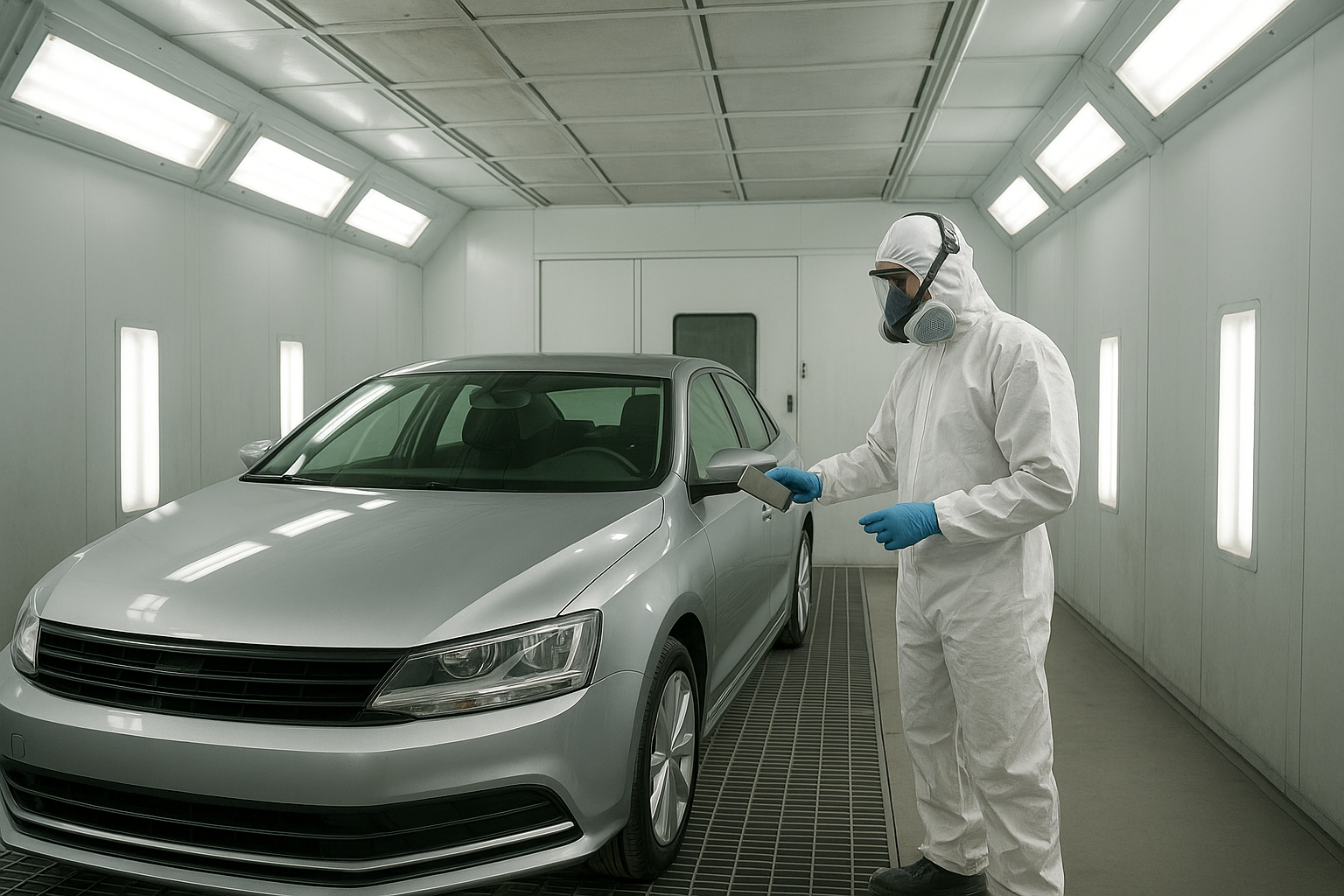
Modern paint booths give technicians the controlled lighting needed to verify a blend before the vehicle leaves the shop.
How Paint Blending Works: A Step-by-Step Process
Understanding the workflow helps drivers know what to expect and why the job takes the time it does. Below is the general sequence most certified shops follow.
- Inspect and identify the paint code. The technician locates the factory paint code on the vehicle’s build sticker to establish the correct base formula.
- Prep the repair panel and neighboring panels. Sanding, cleaning, and masking extend across the blend zone, not just the damaged section.
- Mix and test the paint formula. A test card is sprayed and compared against the car in natural light before any paint touches the vehicle.
- Apply feathered base coat layers. Paint is applied in light, widening passes that fade gradually onto the surrounding panels.
- Apply clear coat, cure, and polish. Once cured, the surface is wet-sanded and polished so gloss levels match evenly across the whole vehicle.
Common Challenges in Color Matching
Even with a solid process, color matching presents real challenges. Metallic and pearl finishes contain tiny aluminum or mica flakes that reflect light differently depending on the viewing angle, a property painters call flop. Consequently, a color that looks perfect under a fluorescent shop light may look slightly off in direct sunlight outside.
Furthermore, automakers occasionally adjust paint formulas between production runs, meaning two vehicles with the “same” color code from different model years may not match exactly. Similarly, sun exposure fades original panels over time, so a brand-new coat next to a five-year-old finish can appear too vivid without blending to soften the contrast.
For drivers researching this topic further, the guide on advanced paint matching recommendations offers additional detail on how shops handle these variables. According to industry data compiled by paint manufacturer PPG, more than 190,000 unique automotive color formulas exist worldwide, which underscores why exact matching without blending is often unrealistic on aging vehicles.
Choosing a Shop for Paint Matching in Orange County
Selecting the right shop starts with checking credentials. Specifically, look for technicians trained through I-CAR, an independent organization that certifies collision repair professionals in refinishing and structural techniques. Shops with this training tend to invest in computerized spectrophotometers that read a vehicle’s exact color rather than relying on guesswork.
Moreover, ask whether the shop performs a test spray before committing to the full repair. This single step catches most mismatches before they become expensive redo jobs. Brea Auto Body, serving drivers throughout Orange County, follows this test-and-verify approach on every blending job to keep results consistent for insurance clients, individual owners, and fleet customers alike.
Readers comparing options locally can also review the comparison at which California body shop specializes in paint matching for a broader view of regional specialists.
Cost and Time Considerations for Paint Blending Services
Cost varies based on paint complexity and how many panels need blending. Generally, a single-panel blend runs a few hundred dollars, while a multi-panel job involving pearl or tri-coat finishes costs more due to extra tinting and clear coat layers. Meanwhile, time expectations should factor in curing, since rushing this stage often causes the very mismatches blending is meant to prevent.
As a result, most straightforward jobs finish within one to three business days. However, if structural repair happens first, the paint stage begins only after the body is confirmed straight and safe, which can extend the overall timeline. For a full breakdown of what a repair estimate typically includes, the complete body shop guide walks through typical line items step by step.
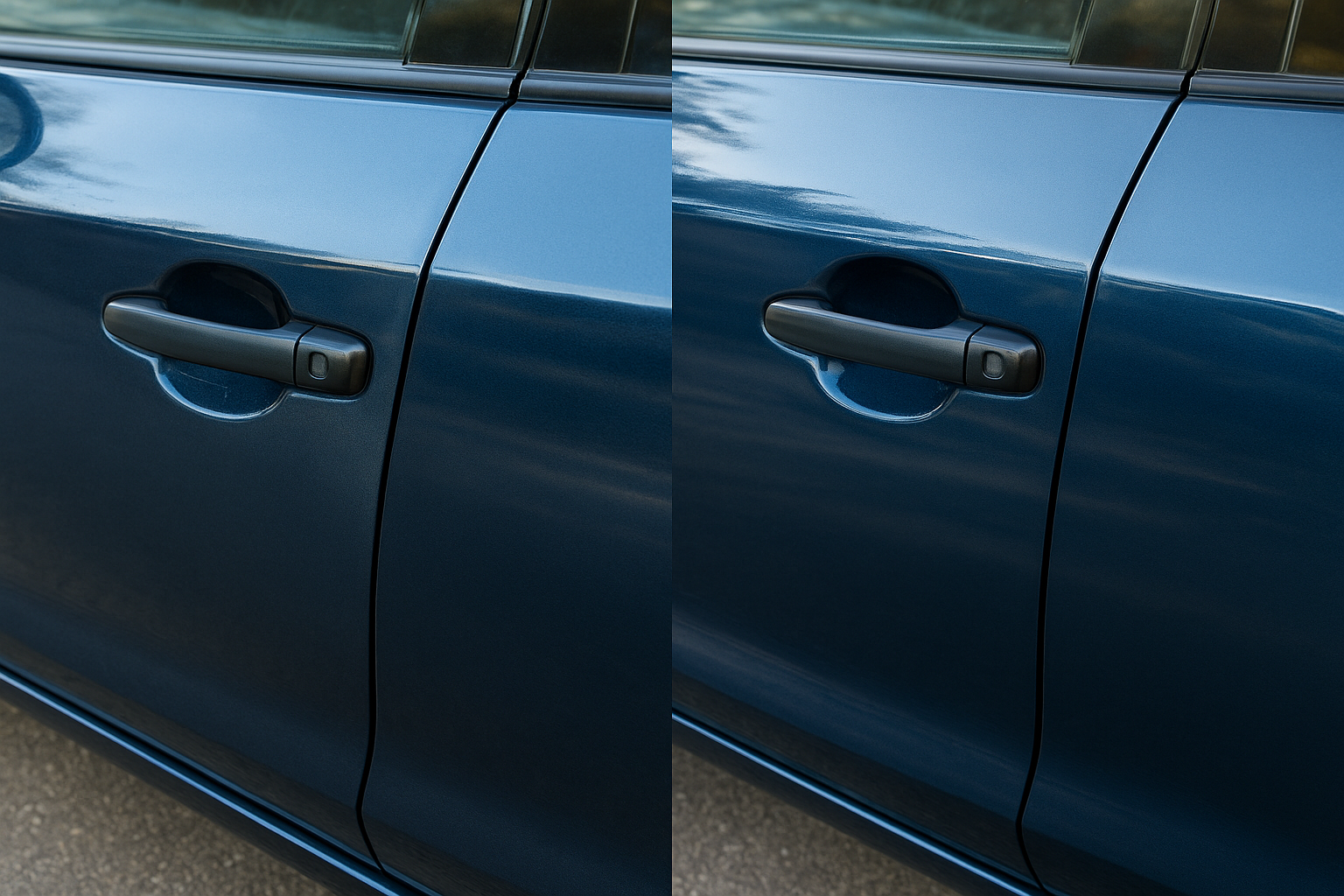
A properly executed blend leaves no visible line between old and new paint.
Frequently Asked Questions About Auto Body Paint Blending Orange County
What is auto body paint blending?
Auto body paint blending is a technique where a technician feathers new paint into the surrounding factory finish so the repaired area is invisible. Instead of stopping paint sharply at a panel edge, the color is gradually faded outward across adjoining panels.
How much does auto body paint blending Orange County service typically cost?
Auto body paint blending Orange County service typically costs between $300 and $900 per panel, depending on paint type and the number of adjacent panels involved. Metallic and pearl finishes usually cost more because they require extra tinting and clear coat work.
Why does paint blending matter for collision repairs?
Paint blending matters because modern factory finishes can be difficult to match exactly, especially metallics that shift color with light and viewing angle. Blending hides subtle differences by transitioning color gradually instead of creating a visible line.
How long does a typical paint blending job take?
Most single-panel blending jobs take one to three days, including prep, painting, and curing time. Multi-panel jobs or vehicles needing structural repair first can take a week or longer.
Can any body shop perform paint blending, or does it require special training?
Not every shop performs blending well; it requires trained technicians familiar with color theory, spray gun technique, and modern paint systems. Shops with I-CAR certified staff and computerized color-matching tools generally produce more consistent results.
What is the difference between paint blending and a full panel repaint?
A full panel repaint covers an entire panel edge to edge, while blending fades new paint into only a portion of adjacent panels. Blending is often faster and less expensive when the damage is limited to one section.
Why do some repaired cars still show a slight color mismatch?
Slight mismatches usually happen when a shop skips proper test spraying or uses an outdated paint formula for the vehicle’s build date. Sun fading on the original panels can also make an exact match harder to achieve without blending.
Does insurance cover paint blending after an accident?
Most insurance policies cover blending when it is necessary to achieve a proper color match, since leaving a visible mismatch is considered an incomplete repair. Shops typically document the need for blending in their estimate to support the claim.
What common mistakes lead to poor paint blending results?
Common mistakes include skipping a test spray card, rushing clear coat application, and failing to adjust tint for a vehicle’s specific production batch. Poor masking that creates hard edges is another frequent cause of visible blend lines.
How is the correct paint color determined before blending begins?
Technicians start with the factory paint code found on the vehicle’s build sticker, then verify it against a physical color chip or spectrophotometer reading. This initial formula is then fine-tuned with tint adjustments before any paint touches the car.
Is paint blending necessary for solid colors, or only metallics?
Blending is most critical for metallic and pearl finishes because their flake patterns shift with light, but even solid colors can show subtle mismatches from fading or batch variation. A cautious shop will test-spray solid colors too before committing to a full repair.
What should drivers ask a shop before approving a paint blending repair?
Drivers should ask whether the shop performs a test spray, how many panels will be blended, and what warranty covers the paint work. It also helps to ask if the shop is certified in modern refinishing techniques and uses computerized color matching. For more guidance, see where to get advanced paint matching for your car.
Can paint blending be done on both domestic and foreign vehicles?
Yes, blending techniques apply to virtually any vehicle brand as long as the shop has access to the correct paint formula and code database. Experienced shops routinely blend finishes on domestic, Asian, and European makes alike.
Final Thoughts
In summary, auto body paint blending Orange County shops perform is what turns a visible repair into an invisible one. From identifying the correct factory code to feathering base coat across several panels, each step exists to protect against the subtle color shifts that sunlight, metallic flake, and paint batch variation can create. Therefore, choosing a shop with certified technicians and a proven test-spray process is the most reliable way to guarantee a seamless outcome.
Whether the damage came from a minor parking-lot scrape or a larger collision, drivers throughout Brea and the wider Orange County area can visit Brea Auto Body for an estimate that walks through exactly how blending will be handled on their vehicle. As a final note, according to Wikipedia’s overview of automotive paint, modern basecoat-clearcoat systems have made blending both more necessary and more achievable than older single-stage paints ever allowed, which is good news for anyone seeking a repair that truly disappears.

