

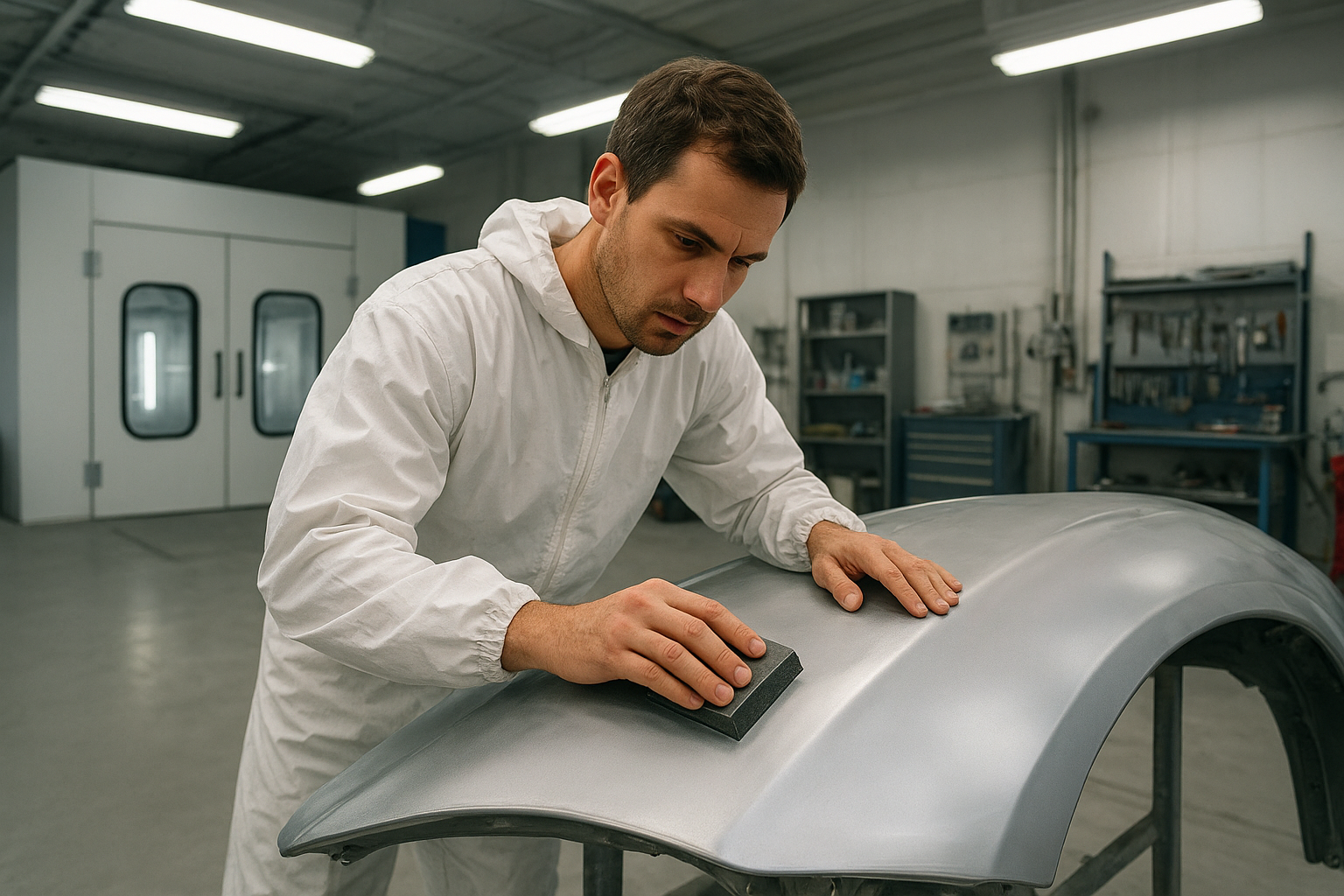
Auto Body Guide · Brea & Orange County — By Brea Auto Body. Last updated: 2026-07-07
Bodyshop Auto Repair: The Complete Guide to Understanding, Choosing & Getting the Best Results
When your vehicle is damaged, finding the right bodyshop auto repair facility is one of the most consequential decisions you will make. The quality of that repair affects your safety on the road, your vehicle’s resale value, and your insurance claim outcome. This comprehensive guide explains exactly what auto body shops do, how they differ from general mechanics, what the full repair process looks like, and how to choose a shop you can trust — step by step. This guide was prepared by the ASE-certified team at Brea Auto Body to reflect industry-standard procedures and local California rules. Last updated 2026-07-22. For a deeper walkthrough, see our Bodyshop Car Repairs: What to Expect & How to Choose.
Whether you are dealing with minor parking lot damage, hail dents, or a major multi-panel collision, the information here will help you navigate every stage of the bodyshop auto repair process with clarity and confidence.
Quick Answer: What Is Bodyshop Auto Repair?
Bodyshop auto repair refers to the specialized restoration of a vehicle’s exterior, structural components, and finish after collision or cosmetic damage. Services include collision repair, dent removal, frame straightening, computerized paint matching, bumper replacement, and glass work — performed by certified technicians using industry-standard equipment.
What Is a Bodyshop Auto Repair Facility — And What Does It Actually Do?
A bodyshop auto repair facility is a specialized workshop where certified technicians restore vehicles that have sustained cosmetic, structural, or collision-related damage. Unlike a general auto mechanic — who focuses on mechanical systems such as the engine, transmission, and brakes — an auto body shop is exclusively concerned with the exterior, structural framework, and finish of the vehicle.
According to the U.S. Bureau of Labor Statistics, more than 145,000 auto body repair technicians are employed across the United States, a figure that reflects just how essential this trade is to American drivers. The scope of work performed at a body shop includes both visible damage and hidden structural issues that can compromise safety if left unaddressed.
Body Shop vs. Mechanic: Understanding the Core Difference
This distinction matters because many drivers mistakenly bring collision-damaged vehicles to a general mechanic, or vice versa. Here is a clear breakdown of how the two types of shops differ:
Some full-service facilities offer both mechanical and body repair under one roof, but specialization in auto body work is what defines a true bodyshop auto repair center. When in doubt, always confirm the shop’s area of expertise before dropping off your vehicle.
Complete List of Services Offered at a Bodyshop Auto Repair Facility
A well-equipped bodyshop auto repair facility should offer all of the following core services. Understanding each one helps you evaluate what your vehicle actually needs — and whether a shop is truly capable of delivering it.
Collision Repair
Collision repair is the most comprehensive service offered at any body shop. It involves restoring a vehicle to its pre-accident condition after an impact — regardless of whether the damage is minor or severe. This process often includes structural work, panel replacement, and full refinishing. Quality collision repair follows OEM (Original Equipment Manufacturer) repair procedures, which are the manufacturer’s own published standards for how each model should be repaired.
Dent Removal and Paintless Dent Repair (PDR)
Dent removal encompasses two primary methods. Paintless Dent Repair (PDR) is used for minor dents and dings — such as hail damage or small door dings — where the paint finish is still intact. Specialized tools massage the metal back into shape from behind without any sanding or repainting. For larger dents where the paint is cracked or broken, traditional body filler and refinishing methods are used.
Computerized Paint Matching and Refinishing
Paint matching is one of the most technically demanding skills in auto body repair. Modern systems use spectrophotometers to analyze your vehicle’s existing paint color and produce an exact formula — accounting for fading, oxidation, and the unique characteristics of metallic, pearl, and tri-coat finishes. The result is a seamless blend that makes repaired panels invisible to the naked eye.
Frame and Structural Straightening
After a significant collision, a vehicle’s frame or unibody structure can be bent or twisted — even when exterior damage appears minor. Frame straightening uses computerized measuring systems and hydraulic equipment to restore the vehicle’s geometry to exact factory specifications. This is critical not just for appearance, but for the vehicle to handle correctly and for safety systems like airbags to function as designed.
Bumper Repair and Panel Replacement
Bumpers and body panels take the brunt of most collisions. Depending on the severity of the damage, a shop may repair the existing component or replace it entirely using OEM or quality aftermarket parts. OEM parts are made by your vehicle’s original manufacturer and guarantee the best fit, while approved aftermarket parts can offer cost savings without compromising quality.
Glass Repair and Replacement
Windshields and windows damaged in a collision are part of a complete body repair. Many shops offer in-house glass services or coordinate with certified glass specialists. This is particularly important on modern vehicles where the windshield supports roof integrity and houses sensors for ADAS (Advanced Driver Assistance Systems) that require precise recalibration after replacement.
ADAS Calibration
Modern vehicles are equipped with cameras, radar sensors, and sonar systems that power lane departure warnings, automatic emergency braking, and adaptive cruise control. Any repair that affects the windshield, bumper, or front-end geometry can knock these systems out of calibration. A quality bodyshop auto repair facility will perform — or coordinate — ADAS calibration as part of the repair process, not as an afterthought. Skipping this step creates serious safety risks. For more detail, read about expert collision repair, OEM procedures, and ADAS calibration.
Hail Damage Repair
Hail damage is one of the most common insurance claims in the U.S. A body shop specializing in PDR can restore a hail-damaged vehicle without painting — preserving the factory finish and protecting resale value. For severe hail damage, a combination of PDR and traditional refinishing may be required.
For drivers in Brea and Orange County, breaautobody.com provides all of the above services through a team of certified technicians experienced with domestic and foreign vehicles, delivering personalized service at every stage of the repair.
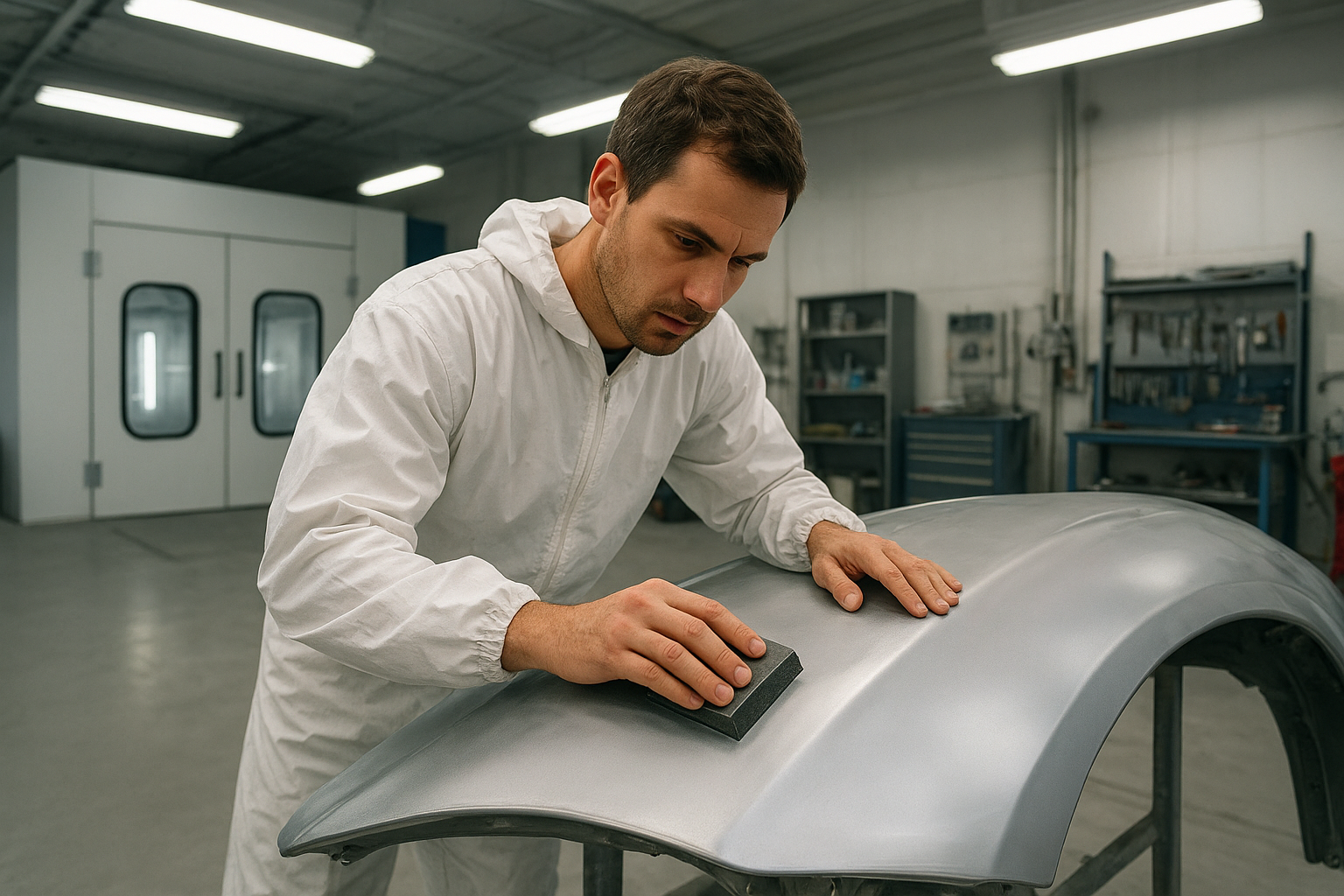
A certified technician at work — quality bodyshop auto repair depends on trained professionals, proper equipment, and OEM procedures.
How to Choose the Right Bodyshop Auto Repair Facility: A Step-by-Step Process
Selecting a shop is not a decision to make under pressure. Follow these eight steps to make a confident, informed choice — and protect both your vehicle and your budget throughout the process.
- Document all visible damage immediately. Before visiting any shop, photograph every damaged area from multiple angles in daylight. Capture wide shots for context and close-ups for detail. This record protects you throughout the insurance claim and repair process, and gives shops an accurate starting point for their estimates.
- Research shops with recognized certifications. Prioritize facilities with I-CAR Gold Class or ASE certifications. These credentials confirm that technicians complete ongoing, standardized training in the latest repair methods, materials, and safety requirements — including ADAS calibration.
- Read reviews on multiple platforms. Check Google, Yelp, and the BBB for consistent patterns across reviews. Look for comments about communication quality, timeline accuracy, and whether the shop honored its estimates. One bad review is noise; a consistent pattern is a signal.
- Request detailed written estimates from at least two shops. A written estimate should itemize labor, parts, paint materials, and any sublet work (such as ADAS calibration or glass replacement) separately. Vague estimates with lump sums are a warning sign. Compare not just the final price, but what each estimate includes.
- Confirm your insurance coverage and shop rights. Review your policy to understand your deductible, coverage type, and whether OEM parts are included. In California, you are legally entitled to choose your own repair shop — your insurer cannot mandate a specific facility. For more on navigating the insurance side, see the best body shop for insurance claims guide.
- Ask about OEM vs. aftermarket parts upfront. Before signing any authorization, confirm which type of parts the shop plans to use. OEM parts offer the best fit and maintain your vehicle’s warranty in many cases. If aftermarket parts are proposed, ask why and whether they meet manufacturer standards.
- Sign a written repair authorization and track progress. Never authorize work verbally. A signed written authorization protects you legally. Ask for regular status updates — by text, email, or a digital tracking system — so you are never left wondering about your vehicle’s status.
- Inspect the vehicle thoroughly before you accept it. Before driving away, walk around the vehicle in good lighting. Check paint blending at panel edges, panel gap consistency, interior cleanliness, and the function of any features (lights, sensors, windows) in the repaired area. Do not accept the vehicle until you are satisfied.
Certifications That Matter in Bodyshop Auto Repair
Not all auto body technicians are equally trained. Certifications are the most reliable external signal of a shop’s commitment to quality, safety, and up-to-date techniques; see auto body shop certifications. Here are the most important ones to look for:
I-CAR Gold Class
The I-CAR (Inter-Industry Conference on Auto Collision Repair) Gold Class designation is the collision repair industry’s highest recognition for training. Gold Class shops require all roles in the shop — not just individual technicians — to complete ongoing annual training in collision repair, damage analysis, structural repair, and refinishing. Fewer than 10% of auto body shops in the country achieve and maintain this status.
ASE Certification
ASE (National Institute for Automotive Service Excellence) certifications are earned by individual technicians who pass rigorous written examinations in specific repair categories. In the body shop context, relevant ASE certifications cover collision repair, painting and refinishing, and damage analysis. ASE-certified technicians must recertify every five years, ensuring their knowledge stays current.
Manufacturer (OEM) Certifications
An increasing number of automakers — including Tesla, Honda, Toyota, Ford, and General Motors — now offer their own certified repair network programs. A shop with an OEM certification for your vehicle’s brand has been trained on that manufacturer’s specific materials, construction methods, and repair procedures. This is especially important for aluminum-intensive vehicles (such as many Fords and Audis) and EVs (such as Tesla), which require unique handling and repair techniques.
Shops that invest in these certifications are far more likely to follow correct repair procedures — particularly for ADAS components where improper repairs can disable critical safety systems. For a deeper look, explore this article on expert collision repair, OEM procedures, and ADAS calibration.
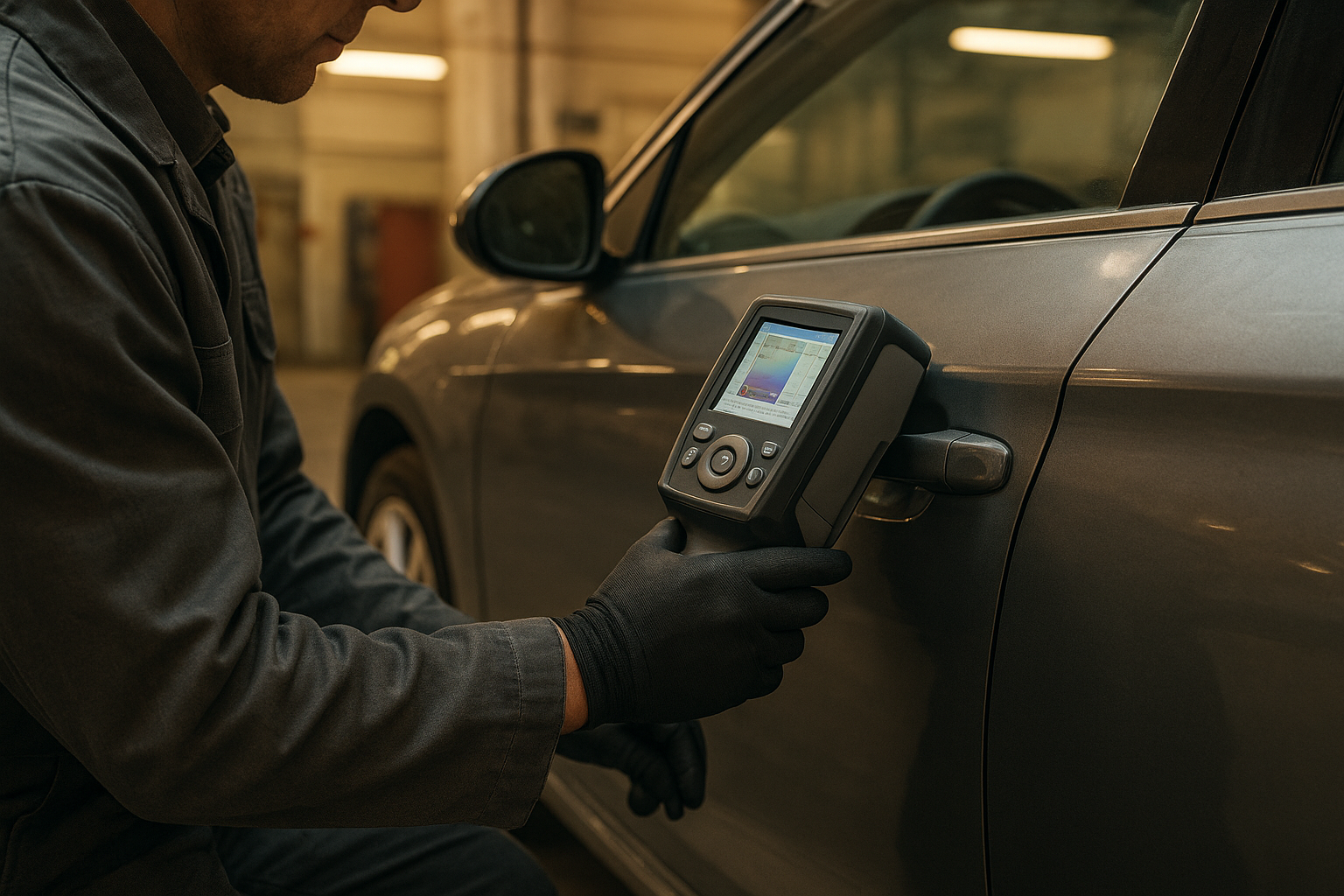
Advanced paint matching technology — including spectrophotometer analysis — produces a factory-accurate finish that makes repaired panels invisible.
The Full Bodyshop Auto Repair Process — Stage by Stage
Understanding each stage of the repair process removes anxiety and helps you ask the right questions at the right time. Here is exactly what happens after you drop your vehicle off at a quality bodyshop auto repair facility.
Stage 1: Initial Inspection and Written Estimate
The shop performs a thorough visual and physical inspection of all visible damage. A written estimate is then produced, detailing the labor hours, parts required, and paint materials for every line item of work. At reputable facilities, the estimator will also flag any areas where additional damage is suspected but cannot be confirmed until the vehicle is partially disassembled.
Stage 2: Insurance Coordination and Approval
If the repair involves an insurance claim, the shop communicates the estimate to your insurer. This may involve an insurance adjuster visiting the shop to review the damage. A good body shop will advocate on your behalf, ensuring the approved estimate covers the actual cost of restoring the vehicle — not just the minimum the insurer initially proposes.
Stage 3: Disassembly and Hidden Damage Assessment
Once repair authorization is given, the shop disassembles the damaged areas to assess hidden damage. It is extremely common in collision repair to discover additional structural or mechanical damage that was not visible from the outside. A reputable shop will pause, photograph the newly discovered damage, notify you immediately, and obtain your approval before proceeding with any additional work.
Stage 4: Parts Ordering
Parts are ordered based on what the disassembly reveals. OEM parts typically arrive from manufacturer distributors within one to five business days. If approved aftermarket parts are used, lead times may vary. Parts availability is one of the primary factors affecting overall repair timelines, particularly for newer or less common vehicle models.
Stage 5: Structural and Frame Repair
If the vehicle’s frame or unibody structure was compromised in the collision, structural repair is performed first — before any cosmetic work begins. This uses computerized measuring systems that compare the vehicle’s actual dimensions to factory specifications in real time, allowing technicians to apply precise hydraulic corrections until the structure is restored to within a fraction of a millimeter of factory tolerances.
Stage 6: Body Panel Repair and Replacement
Damaged panels are either repaired in place or replaced with new components. Metal reshaping is done with specialized hammers, dollies, and body spoons. Welding is performed where required. Body filler is applied sparingly to correct minor surface imperfections, then block-sanded to a perfectly smooth surface. Panel gaps are checked against factory specifications to ensure proper fit before painting begins.
Stage 7: Paint Preparation and Application
The vehicle is meticulously masked to protect areas not being painted. Primer is applied to prepared surfaces to ensure adhesion and fill any remaining microscopic imperfections. The base coat — matched to your vehicle’s exact factory color — is then applied in a controlled spray booth environment free from dust and contaminants. For metallic, pearl, or tri-coat finishes, multiple specialized layers are required. A clear coat is applied over the base coat to provide protection and gloss. After curing, the finish is compounded and polished to a factory-quality shine. For more on this process, read the complete guide to auto body repair at breaautobody.com.
Stage 8: Reassembly and ADAS Calibration
All panels, trim pieces, and components are reinstalled. On vehicles equipped with ADAS, sensors and cameras are recalibrated to manufacturer specifications. This step is mandatory on any modern vehicle where front-end components, the windshield, or bumper-area sensors were affected — and it requires specialized equipment and manufacturer-issued software.
Stage 9: Quality Inspection and Delivery
Before returning the vehicle to you, the shop performs a final quality control inspection — checking paint finish consistency, panel alignment, gap measurements, function of all repaired components, and interior cleanliness. Many quality shops also provide a complimentary interior cleaning as a final touch before delivery. You can learn more about this at breaautobody.com’s interior cleaning service page.
How Much Does Bodyshop Auto Repair Cost?
Auto body repair costs vary considerably based on the type and severity of damage, the vehicle’s make and model, the region of the country, and whether OEM or aftermarket parts are used. Here is a realistic overview of typical price ranges:
According to the Insurance Information Institute, the average auto collision claim in the U.S. exceeds $5,000 — a figure that underscores why choosing a shop with transparent, itemized pricing is so important. Getting at least two written estimates before authorizing work is always worth the time investment.
Auto Body Repair and Insurance: Everything You Need to Know
Navigating an insurance claim while also managing a vehicle repair is stressful. Understanding your rights and the process in advance makes it far more manageable.
Your Right to Choose Your Own Shop
In California, you are legally entitled to choose your own bodyshop auto repair facility — your insurer cannot compel you to use a specific shop or their “preferred vendor” network. While insurers may recommend shops they have agreements with, these recommendations serve the insurer’s cost and efficiency interests, not necessarily yours. Always choose a shop you trust based on certifications, reviews, and transparency.
Comprehensive vs. Collision Coverage
Collision coverage applies when your vehicle is damaged in an accident with another vehicle or object. Comprehensive coverage applies to non-collision damage — including hail, theft, vandalism, flooding, and fallen objects. Both types cover auto body repairs, minus your deductible. If another driver is at fault, their liability insurance covers your repairs and you should not need to pay a deductible at all.
Supplemental Estimates and Hidden Damage
When a shop discovers additional damage during disassembly that was not included in the original estimate, they must submit a supplemental estimate to your insurer before performing that additional work. A reputable shop will handle this process on your behalf and notify you of any timeline impact. Never let a shop proceed with undisclosed additional work without your explicit approval.
OEM Parts and Insurance Policies
Some insurance policies cover OEM parts by default; others default to aftermarket parts to control costs. If your vehicle is under the manufacturer’s warranty, using non-OEM parts may void certain warranty provisions. Review your policy carefully, and if OEM parts matter to you, confirm this in writing with both your insurer and the shop before repairs begin.
The team at breaautobody.com works directly with insurance companies on behalf of their clients, handling the communication and paperwork so you can focus on getting back on the road. For a detailed walkthrough of the insurance process, see their best body shop for insurance claims guide.
Red Flags: Warning Signs at Any Bodyshop Auto Repair Facility
Not every shop that calls itself a bodyshop auto repair center maintains the same standards. Recognizing warning signs early can save you from poor-quality repairs, hidden costs, and future safety problems.
- No written estimate provided: Any shop that refuses to put an itemized estimate in writing is a shop to walk away from. This is non-negotiable.
- Unusually low bids: Extremely low quotes almost always mean substandard parts, cut labor hours, or work that will not last. If one estimate is dramatically lower than others, ask specifically what was left out.
- No certifications on display: Legitimate shops are proud of their credentials and display I-CAR, ASE, and OEM certifications prominently. No certifications is a significant red flag.
- Pressure tactics: A shop that pressures you to sign a repair authorization immediately, before you have had time to compare estimates, is prioritizing their interests over yours.
- Poor or no communication: If reaching the shop for a status update is difficult before you become a customer, it will be even harder once your vehicle is in their bay.
- No warranty offered: Any quality shop stands behind its work with a written warranty on both parts and labor. A shop that deflects warranty questions or offers vague terms is a risk.
- Recommends skipping ADAS calibration: On any modern vehicle, recommending that ADAS calibration is “optional” or “probably not necessary” is a serious safety red flag. This is always required when sensors are disturbed.
- Discourages your involvement: You should always be welcome to ask questions, see the damaged areas, and review progress. A shop that discourages transparency is a shop with something to hide.
A well-maintained facility exterior reflects the care and professionalism applied to every vehicle inside.
OEM Parts vs. Aftermarket Parts: Which Should Your Body Shop Use?
The parts decision is one of the most consequential choices in any bodyshop auto repair, and understanding it helps you advocate effectively for your vehicle. For a deeper walkthrough, see our Brea Auto Body: Expert Collision Repair You Can Trust.
OEM (Original Equipment Manufacturer) Parts
OEM parts are manufactured by or for your vehicle’s maker — the exact same components that came on your car originally. They are guaranteed to fit correctly, integrate seamlessly with existing systems (including ADAS sensors), and maintain any active manufacturer’s warranty. OEM parts are generally more expensive than aftermarket alternatives, but they eliminate the guesswork around fit and compatibility.
Aftermarket Parts
Aftermarket parts are made by third-party manufacturers. Quality varies significantly — some aftermarket parts meet or exceed OEM standards, while others are significantly inferior. CAPA (Certified Automotive Parts Association) certification is a useful marker for quality aftermarket body parts. Non-certified aftermarket parts may fit poorly, require additional labor to install, and may not integrate correctly with ADAS sensor mounts.
LKQ (Like Kind and Quality) / Used OEM Parts
LKQ parts are recycled OEM components from salvage vehicles. They are factory-made with guaranteed fit but come from used vehicles, so their condition must be verified carefully. Some insurers push for LKQ parts to control costs. For structural components, LKQ parts should be accepted only with documented verification of their condition and integrity.
What Sets the Best Bodyshop Auto Repair Facilities Apart
Beyond technical competence, the best auto body shops demonstrate a distinct set of qualities that create a genuinely better customer experience from start to finish.
- Proactive communication: Regular status updates — whether by text, phone, or a digital tracking portal — so you are never left wondering where things stand.
- Rental car coordination: Assistance arranging a loaner or rental vehicle so your life is minimally disrupted during the repair period.
- Complimentary interior cleaning: Returning your vehicle cleaner than it arrived is a hallmark of shops that take genuine pride in their work.
- Insurance advocacy: Actively negotiating with your insurer on supplemental estimates and parts decisions — not simply accepting whatever the adjuster initially approves.
- Lifetime workmanship warranty: The best shops back their craftsmanship with a warranty that covers defects in the repair for the life of your ownership.
- Experience with your specific vehicle: Technicians who have worked extensively on your make and model — including luxury, European, and EV brands — bring valuable model-specific knowledge to the repair.
What Makes a Bodyshop Auto Repair Facility Genuinely Trustworthy?
A trustworthy bodyshop auto repair facility employs I-CAR Gold Class or ASE-certified technicians, provides fully itemized written estimates, uses OEM or verified-quality parts, performs ADAS calibration on modern vehicles, communicates transparently throughout the process, and backs its work with a written warranty. These are the non-negotiable markers of a shop that puts your vehicle — and your safety — first.
Frequently Asked Questions About Bodyshop Auto Repair
What is a bodyshop auto repair facility?
A bodyshop auto repair facility is a specialized shop where certified technicians restore vehicles that have sustained cosmetic, structural, or collision-related damage. Core services include collision repair, dent removal, computerized paint matching, frame straightening, and ADAS calibration. These shops differ from general mechanics, who focus on mechanical systems such as the engine, transmission, and brakes rather than the vehicle’s exterior and structure.
What is the difference between a body shop and a mechanic?
A body shop specializes in the exterior, structural frame, panels, paint, and glass of a vehicle. A general mechanic specializes in mechanical systems — the engine, brakes, suspension, and drivetrain. Some facilities offer both under one roof, but the skill sets, equipment, and certifications are distinct. For collision damage, always go to a certified auto body shop, not a general mechanic.
How long does bodyshop auto repair typically take?
Repair timelines vary significantly based on damage severity, parts availability, and insurance processing speed. Minor cosmetic repairs — small scratches, PDR, or single-panel painting — typically take one to three business days. Major collision repairs involving structural work, multiple panels, and ADAS recalibration can take two to four weeks. Parts delays are the most common cause of extended timelines, especially for newer or imported vehicles.
How do I choose a reliable auto body shop?
Look for shops with I-CAR Gold Class or ASE certifications, consistent positive reviews across multiple platforms, fully itemized written estimates, clear warranty terms, and experience with your specific vehicle make. Avoid shops that pressure you to sign immediately, refuse to provide written quotes, or cannot explain their repair process clearly. Visiting the facility in person before committing is always worthwhile.
Will my insurance cover bodyshop auto repair costs?
Both collision and comprehensive insurance policies cover auto body repairs, minus your deductible. If another driver is at fault, their liability coverage should pay for your repairs without requiring you to pay a deductible. In California, you have the legal right to choose your own repair shop regardless of what your insurer recommends. Always review your policy’s parts coverage before authorizing repairs.
What is paintless dent repair (PDR) and when is it used?
Paintless Dent Repair (PDR) is a technique used to remove minor dents — such as hail damage or door dings — where the paint surface is still intact. Specialized tools massage the metal back into shape from behind the panel without any sanding, filling, or repainting. PDR preserves the original factory paint finish, is generally faster and less expensive than traditional repair, and maintains your vehicle’s resale value better than refinishing.
Can a body shop fix structural or frame damage?
Yes. A properly equipped bodyshop auto repair facility uses computerized frame measuring systems and hydraulic equipment to restore a vehicle’s structural integrity after a collision. Frame straightening must return the vehicle’s geometry to within factory tolerances — not just visually close — to ensure proper alignment, handling, and airbag function. Always confirm the shop has the appropriate frame straightening equipment before authorizing structural repairs.
What is ADAS and why does it matter for auto body repair?
ADAS stands for Advanced Driver Assistance Systems — the cameras, radar, and sonar sensors that power features like automatic emergency braking, lane departure warnings, and adaptive cruise control. Any bodyshop auto repair that affects the windshield, bumper, front fascia, or front-end geometry can knock these sensors out of calibration. A qualified body shop must perform manufacturer-specified ADAS calibration after any repair that disturbs these systems. Skipping calibration leaves safety-critical systems unreliable or inoperative.
What are OEM parts and should my body shop use them?
OEM stands for Original Equipment Manufacturer. OEM parts are made by or for your vehicle’s manufacturer and are identical to what came on your car originally. They guarantee the best fit, maintain warranty coverage, and integrate correctly with ADAS sensor mounts and other precision systems. While they cost more than aftermarket alternatives, they eliminate compatibility risk. Discuss your preference before repairs begin and get the parts decision confirmed in the written estimate.
How much does bodyshop auto repair cost on average?
Minor repairs like small scratches or PDR can cost $150 to $500. Bumper repair or replacement runs $300 to $1,500 depending on sensor complexity. Single-panel collision repair typically costs $500 to $2,500. Major structural repairs involving the frame and multiple panels can run $2,000 to $10,000 or more. The average U.S. collision insurance claim exceeds $5,000. Getting multiple written, itemized estimates before authorizing work is always the right move.
Do body shops offer warranties on their repairs?
Reputable bodyshop auto repair facilities offer written warranties on both workmanship and parts, typically ranging from one year to a lifetime guarantee on paint and structural repairs. The lifetime workmanship warranty — covering defects for as long as you own the vehicle — is the gold standard. Always ask about warranty specifics before signing any repair authorization. A shop that hesitates or provides only vague warranty terms is a shop worth reconsidering.
What should I bring when I take my car to a body shop?
Bring your vehicle registration, insurance information and claim number (if applicable), any photos of the damage you took at the accident scene, the police report number if one was filed, and the contact information of the other party if another driver was involved. Having everything organized ahead of time speeds up the estimate and claim process considerably. Some shops can also begin the insurance coordination process during your initial visit.
Can a body shop handle both domestic and foreign vehicles?
Most full-service auto body shops can repair both domestic and foreign vehicles. However, European luxury brands, electric vehicles, and aluminum-intensive models may require specialized training, tools, and parts sourcing that not every shop possesses. Before committing, confirm the shop has documented experience with your specific make and model — and ask whether they hold any OEM certification for your brand.
What is paint matching and how does it work in auto body repair?
Paint matching in bodyshop auto repair uses a spectrophotometer to analyze your vehicle’s existing paint and account for fading, oxidation, and the unique characteristics of solid, metallic, pearl, and tri-coat finishes. The resulting formula is mixed and applied in a controlled spray booth environment. After curing, the finish is compounded and polished to seamlessly blend the repaired panel with the surrounding original finish. Modern paint matching technology can replicate virtually any factory color to an invisible standard.
Conclusion: Choosing the Right Bodyshop Auto Repair Facility With Confidence
A great bodyshop auto repair experience comes down to three things: finding certified technicians who follow the right procedures, choosing a shop that communicates transparently at every stage, and ensuring the facility has the equipment and expertise your specific vehicle requires. Whether you are dealing with a minor parking lot scrape or a major multi-panel collision, the steps outlined in this guide give you everything you need to make a confident, informed decision.
The difference between a good repair and a great one is often invisible to the eye — until something goes wrong months later. Choosing correctly the first time protects your safety, preserves your vehicle’s value, and ensures your repair stands the test of time.
For drivers throughout Brea and Orange County, breaautobody.com represents exactly the kind of certified, customer-focused bodyshop auto repair facility described throughout this guide — combining technical excellence, transparent communication, and genuine care for every vehicle and every customer they serve.

