

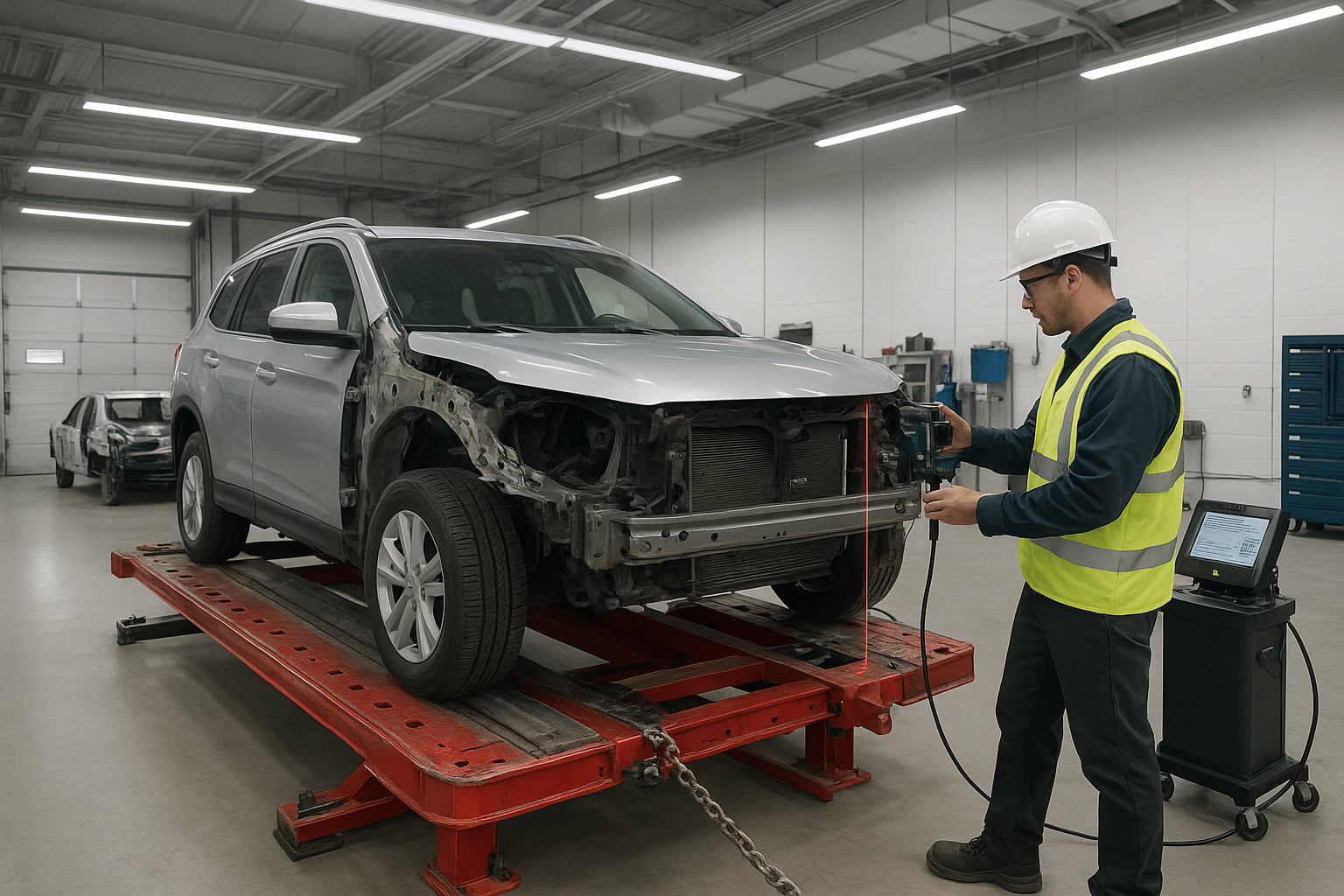
Brea vehicle structural repairs restore a car’s frame, unibody, and load-bearing components after a collision has compromised its safety systems. When a vehicle absorbs significant impact, the damage often extends far beyond dented panels and cracked bumpers into the structural skeleton that keeps occupants safe. For drivers throughout Brea and greater Orange County, understanding how structural repair works can make the difference between a car that merely looks fixed and one that performs safely in a future accident. This guide explains what structural repair involves, how to spot warning signs, and what to expect from a qualified shop. Author: Brea Auto Body technicians. Last updated: 2026-08-14.
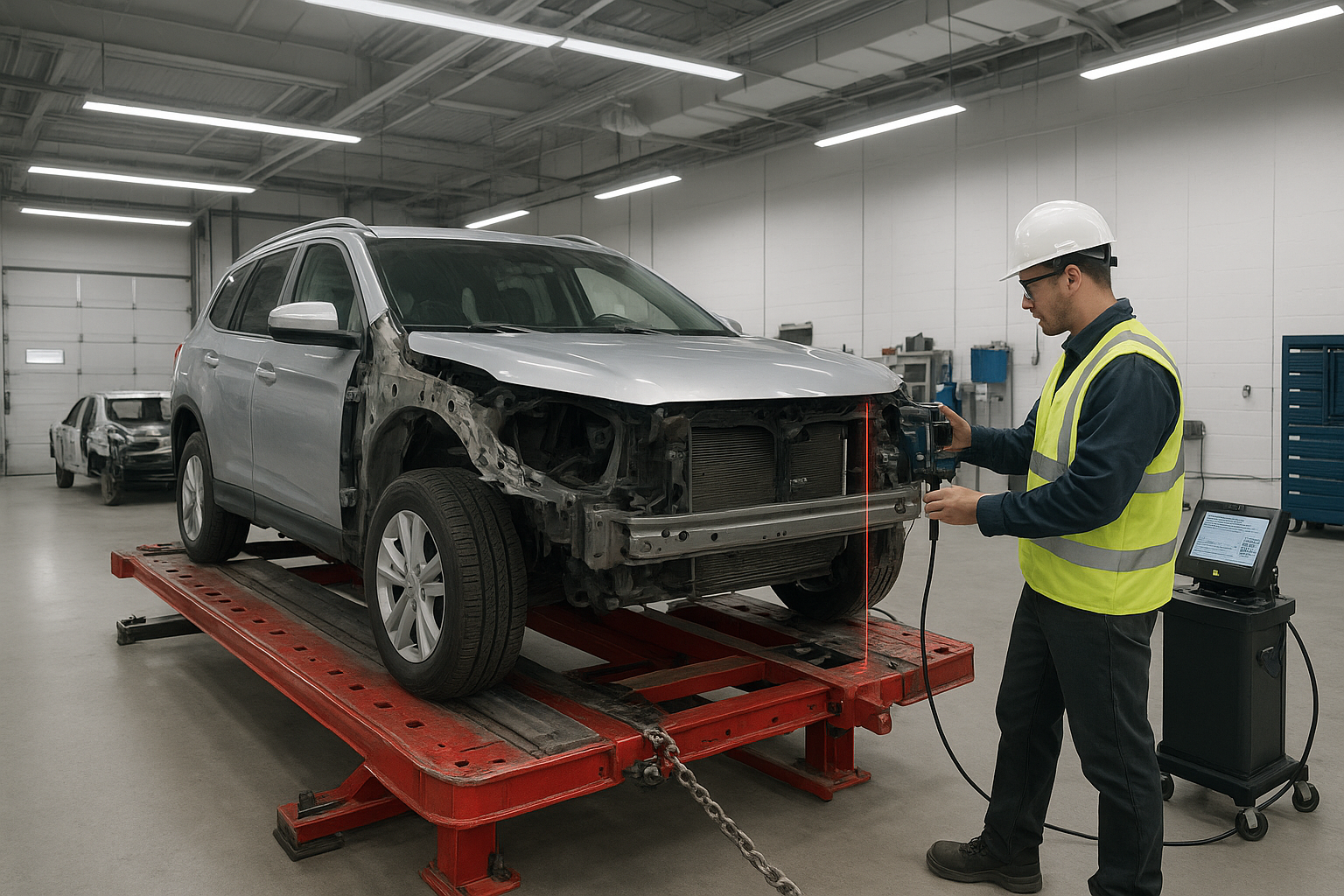
Hydraulic frame racks and laser measurement are central to accurate Brea vehicle structural repairs.
What Are Brea Vehicle Structural Repairs?
Brea vehicle structural repairs are professional procedures that realign, reinforce, or replace a vehicle’s frame, unibody rails, subframe, or crash-support structures after collision damage. Technicians use hydraulic pulling systems, precision measuring equipment, and manufacturer-specific procedures to return the vehicle to its original factory dimensions. Unlike cosmetic bodywork, this type of repair directly affects how a vehicle will perform in a future collision.
Most modern cars use a unibody construction, meaning the body panels and frame are welded into a single structure rather than bolted to a separate frame rail. As a result, a hard impact can transfer force through the entire body shell rather than just one localized area. According to unibody design principles, engineers build in “crumple zones” that absorb energy during a crash, and those zones must be restored precisely for the vehicle to protect occupants correctly the next time.
Why Structural Integrity Matters for Driver Safety
Structural integrity is not simply about how a vehicle looks after a repair; it determines how the car will react in another accident. Specifically, misaligned frame rails or weakened crumple zones can reduce a vehicle’s ability to absorb crash energy, which increases the risk of injury to occupants. Furthermore, an improperly repaired structure can throw off wheel alignment, causing uneven tire wear and unpredictable handling.
According to the National Highway Traffic Safety Administration, vehicle structural design plays a central role in occupant protection during frontal and side-impact crashes. Consequently, any repair that touches the frame or unibody must meet exact factory tolerances, often within a few millimeters. In addition, safety systems such as airbags and sensors rely on the structure being in its correct position to function as engineered. For that reason, choosing a shop with proper training and equipment is not optional when structural components are involved.
Common Signs of Frame and Structural Damage
Some structural damage is obvious immediately after an accident, while other issues remain hidden until they cause bigger problems. As a result, it helps to know the warning signs that point to structural repair needs.
- Doors, trunk, or hood that no longer close flush or align evenly
- Visible gaps or unevenness between body panels
- The vehicle pulling to one side while driving straight
- Uneven or rapid tire wear on one side of the car
- Unusual noises, such as creaking or clunking, over bumps
If any of these signs appear after a collision, weather event, or even a minor parking lot bump, it is worth having a technician inspect the vehicle with proper measuring tools. In many cases, hidden structural issues only become apparent once a technician compares the vehicle’s dimensions to factory specifications.
The Structural Repair Process, Step by Step
Understanding the repair sequence can help vehicle owners know what to expect and why certain steps take time. Below is the typical process a qualified shop follows for frame straightening in Brea and related structural work.
- Damage assessment and measurement: Technicians inspect the vehicle and use computerized measuring systems to compare current dimensions against factory specifications.
- Vehicle stabilization and disassembly: The vehicle is secured on a frame rack, and damaged panels or components are removed to expose the structural areas needing repair.
- Hydraulic pulling and realignment: Hydraulic equipment gradually returns bent frame rails or unibody sections back to their original factory position and angle.
- Structural component replacement: Severely damaged brackets, rails, or reinforcement panels are cut out and replaced using manufacturer-approved welding procedures.
- Post-repair measurement verification: Technicians re-measure the vehicle against factory data to confirm every point falls within approved tolerance ranges. For a deeper walkthrough, see our Buffing Car Scratches: The Complete Guide to Removing Every Type of Scratch.
- Refinishing and safety calibration: Panels are reassembled, paint is matched, and safety systems such as sensors and airbags are recalibrated to manufacturer standards.
Shops that follow these steps typically hold I-CAR certification, an industry training standard for collision repair technicians. This certification confirms that staff are trained on current welding, measuring, and calibration techniques required for modern vehicle structures. See our collision repair in Brea guide for local estimates and process details.
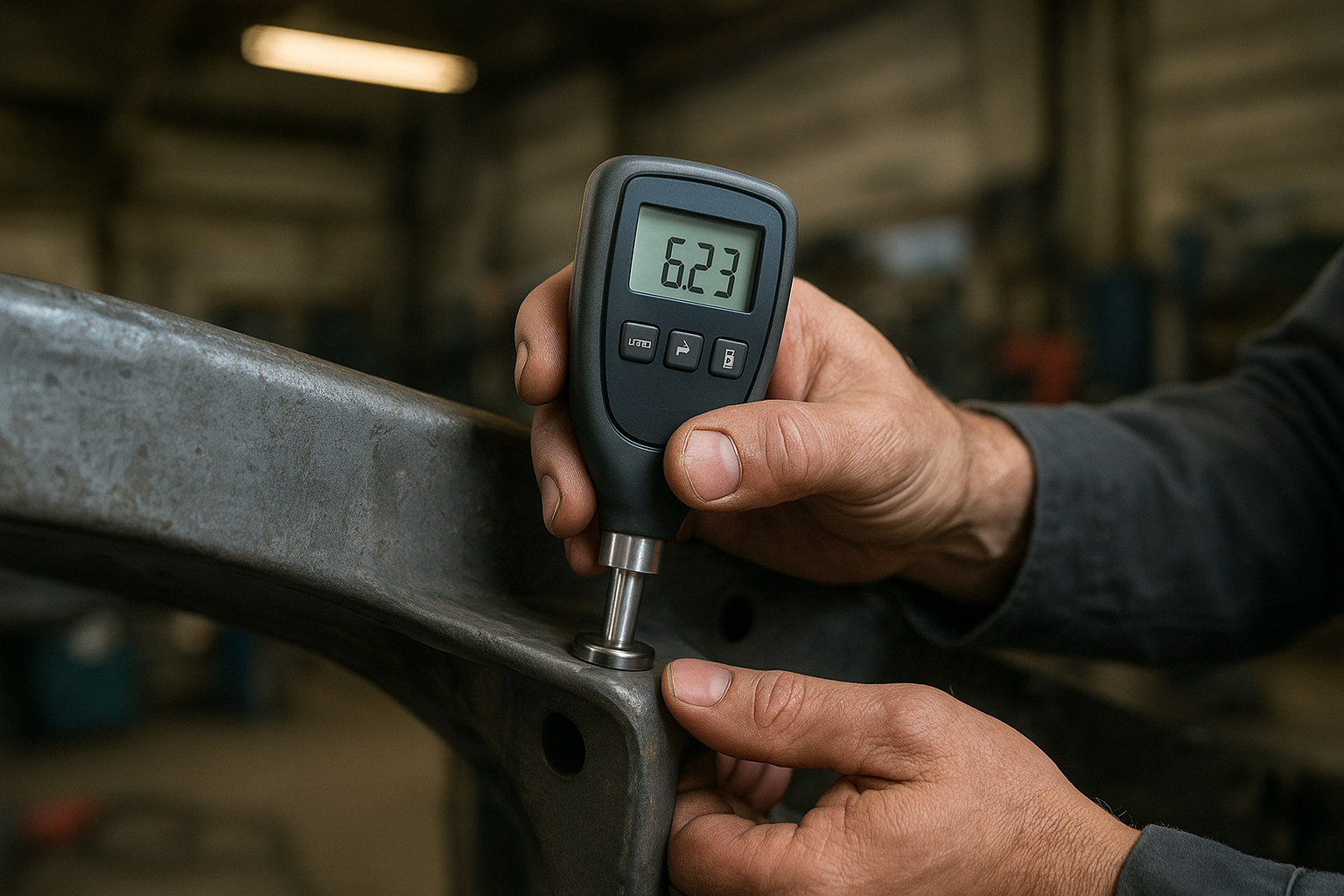
Post-repair measurement confirms structural repairs meet factory tolerance standards.
How Much Do Vehicle Structural Repairs Cost?
Cost varies widely depending on the extent of the damage and the vehicle’s make and model. In general, minor frame straightening can start around $1,500, while extensive unibody section replacement on a modern vehicle can exceed $8,000. Industry estimates suggest that structural and frame-related repairs account for a meaningful share of total collision repair costs, particularly on vehicles with advanced driver-assistance sensors that require recalibration after the structure is corrected.
Because pricing depends on so many variables, it is best to get a written estimate after a thorough inspection. Most insurance policies that include collision or comprehensive coverage will pay for structural repairs when the damage results from a covered incident, though a deductible typically applies. For a full breakdown of what a shop can handle, see this overview of services offered for collision and structural work.
Choosing a Shop for Structural Repair Near Brea
Selecting the right shop matters just as much as the repair itself. Above all, look for certified technicians, manufacturer-specific training, and computerized measuring equipment rather than relying on price alone. Brea Auto Body, for example, serves individual vehicle owners, insurance clients, and fleet customers throughout Orange County with certified technicians who specialize in collision repair, precision dent removal, and advanced paint matching for both domestic and foreign vehicles. Learn how to find a reliable body shop in Brea with checklist items and questions to ask.
In addition to structural work, a full-service shop should offer transparent communication throughout the repair process. Therefore, it helps to review a shop’s complete list of collision and body repair services before committing, and to ask specifically about their collision repair process in Brea. Vehicle owners recovering from an accident can also review guidance on car accident repair steps to understand what documentation and inspections to expect.
Working With Insurance on Structural Damage Claims
Filing an insurance claim for structural damage typically starts with a detailed estimate that separates cosmetic repairs from structural work. Consequently, adjusters often request supporting measurement reports before approving frame or unibody repairs. Shops that document pre- and post-repair measurements make this process smoother, since the paperwork clearly shows the extent of damage and the corrective steps taken. For step-by-step guidance on how to report an insurance claim, review our claims checklist and documentation tips.
Vehicle owners should also confirm whether their policy covers OEM (original equipment manufacturer) parts for structural components, since aftermarket parts may not meet the same safety tolerances. For more background on what to expect, visit Brea Auto Body’s resource center, which outlines the claims and repair workflow in more detail.
Frequently Asked Questions About Brea Vehicle Structural Repairs
What are Brea vehicle structural repairs?
Brea vehicle structural repairs are procedures that realign, reinforce, or replace a vehicle’s frame, unibody rails, or crash-support structures after collision damage. These repairs use hydraulic pulling equipment and precision measuring systems to restore factory dimensions.
How do I know if my car has frame damage?
Common warning signs include uneven panel gaps, doors or trunk that no longer close properly, the vehicle pulling to one side, and uneven tire wear. A technician can confirm frame damage with computerized measuring equipment.
Can a unibody vehicle be repaired after a collision?
Yes, most unibody vehicles can be repaired using hydraulic pulling systems and manufacturer-approved procedures, provided the damage falls within repairable tolerances. Severely compromised structures may require section replacement instead of pulling alone.
How long does structural repair take?
Minor structural corrections can take three to five business days, while extensive frame or unibody damage may require two to three weeks. Timeline depends on parts availability, insurance approval, and the extent of the damage.
How much do structural repairs cost in Brea, CA?
Structural repair costs typically range from $1,500 for minor frame straightening to over $8,000 for extensive unibody replacement work. Final pricing depends on the vehicle’s make, the severity of damage, and local labor rates.
Will insurance cover structural damage repair?
Most comprehensive and collision insurance policies cover structural repairs when the damage results from a covered event. It is best to confirm coverage details with your adjuster before repairs begin.
What’s the difference between structural repair and cosmetic body repair?
Structural repair addresses the frame, unibody, or crash-support components that affect safety and handling, while cosmetic body repair focuses on panels, paint, and trim. Structural work must meet exact factory measurements to restore crash protection.
Is a car safe to drive after structural repairs?
A properly completed structural repair, verified with post-repair measurements against factory specifications, returns a vehicle to safe operating condition. Skipping verification steps, however, can leave hidden weaknesses in the structure.
What equipment do shops use for structural repair?
Shops rely on hydraulic frame racks, computerized three-dimensional measuring systems, and welding equipment rated for high-strength steel and aluminum. This equipment ensures repairs meet manufacturer tolerances within fractions of a millimeter.
How do I choose a shop for Brea vehicle structural repairs?
Look for a shop with I-CAR certified technicians, manufacturer-specific training, and computerized measuring systems. Asking to see before-and-after documentation and warranty terms also helps confirm the shop’s quality standards.
What common mistakes should I avoid after a collision?
Avoid delaying repairs, choosing a shop based on price alone, or skipping a full structural inspection even when damage looks minor. Hidden frame damage can worsen over time and compromise safety in a future collision.
Do structural repairs affect resale value?
A documented, properly performed structural repair generally has less impact on resale value than an undisclosed or poorly executed one. Keeping detailed repair records and using a reputable shop helps preserve buyer confidence.
Final Thoughts on Structural Repair
In summary, Brea vehicle structural repairs go far beyond fixing dents and scratches; they restore the frame and unibody components that protect drivers and passengers in every future trip. As discussed, spotting early warning signs, understanding the step-by-step repair process, and choosing a shop with certified technicians and proper equipment all play a role in a safe outcome. Ultimately, working with an experienced local shop that documents measurements and communicates clearly with insurance adjusters gives vehicle owners confidence that their car has truly been restored, not just patched up cosmetically.

