

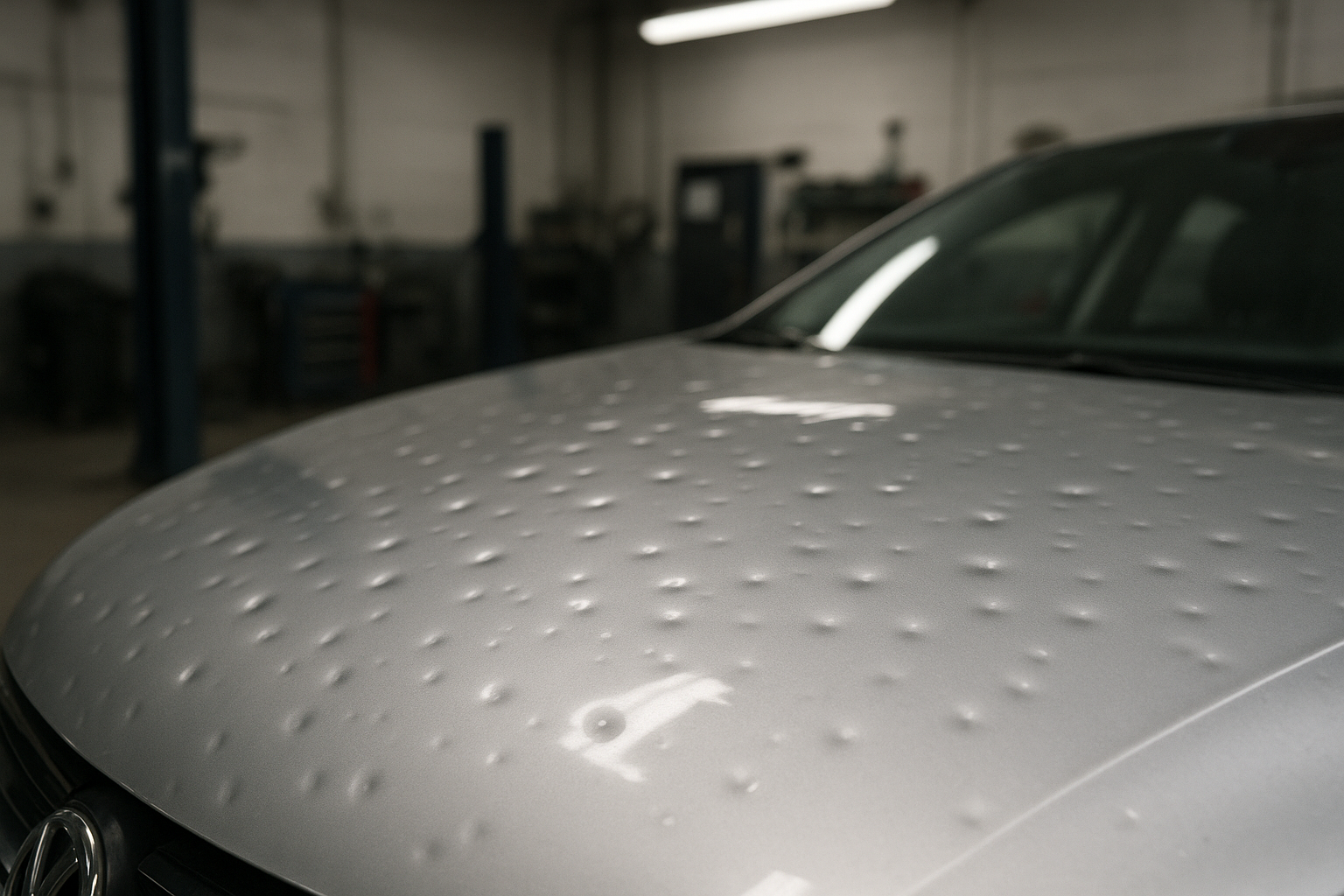
Hail damage vehicle repair Brea California services become urgent the moment a Southern California storm leaves rows of small dents across a hood, roof, or trunk lid. Even a brief burst of pea-sized ice can leave dozens of dings on exposed panels, and the longer those dents sit, the harder it becomes to keep an insurance claim and a repair timeline moving smoothly. This guide walks through what happens in the hours after a storm, how technicians actually fix hail dents, and how to judge whether a repair was done well before you drive off the lot.
Quick answer: Hail damage vehicle repair in Brea, California, usually starts with photo documentation and an insurance claim, followed by a professional inspection that separates dents suited for paintless dent repair (PDR) from damage needing traditional filler-and-paint work. Most minor jobs finish within one to two days, while extensive damage can take one to two weeks.
Hail Damage Vehicle Repair Brea California: What It Involves
At its core, hail damage vehicle repair Brea California drivers rely on combines two distinct techniques. The first, paintless dent repair, uses specialized rods and lighting boards to access the back of a panel and gently massage the metal back to its original shape without disturbing the factory paint. The second, traditional body repair, uses filler, primer, and repaint when the paint has cracked or the metal has stretched too far for PDR alone.
Because a single hailstorm often leaves a mix of shallow and deep dents on the same vehicle, most repair jobs actually blend both methods. For a deeper look at how these methods compare on cost and insurance handling, the PDR costs and insurance breakdown guide covers that side of the process in more detail.
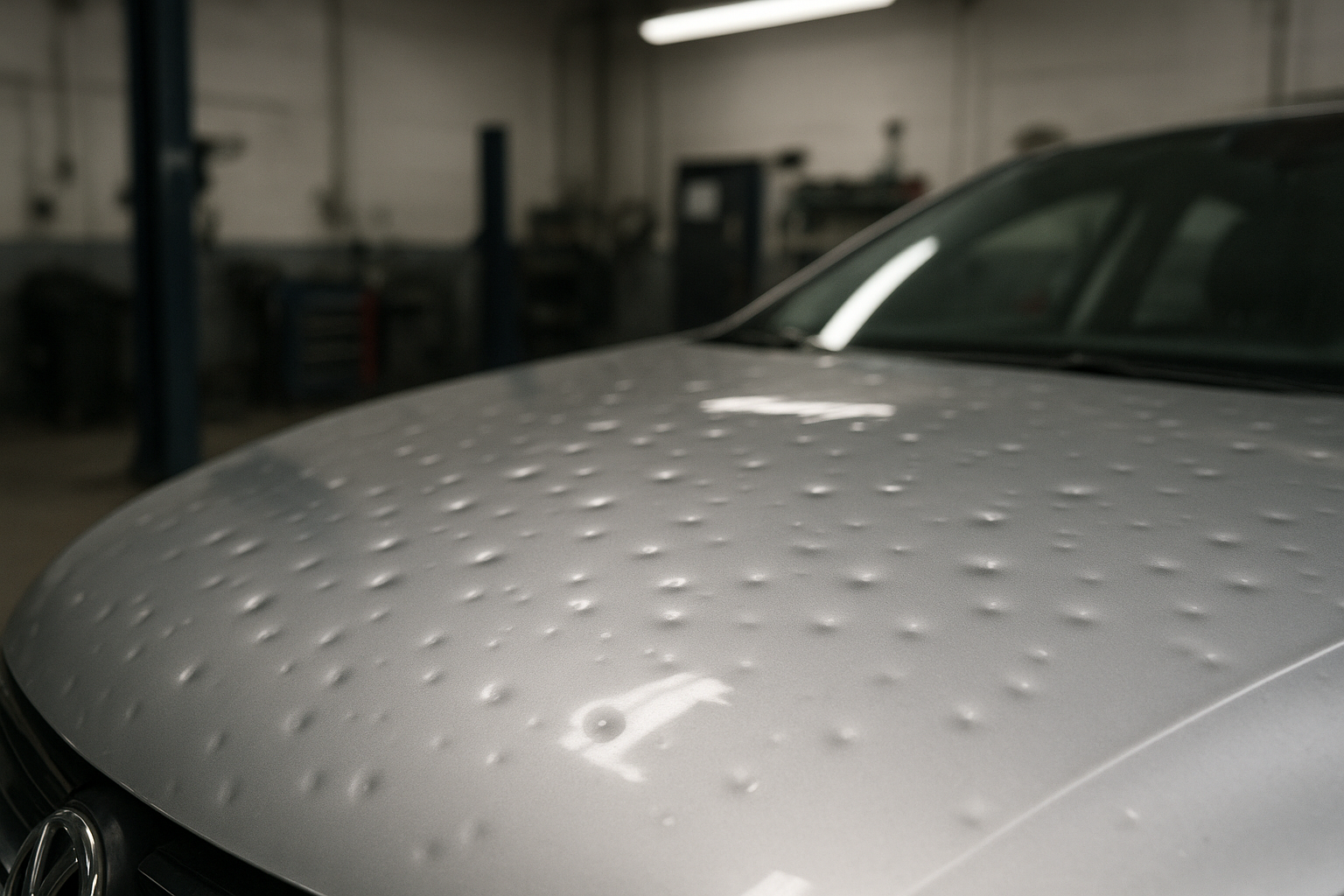
Shallow hail dents like these are common candidates for paintless dent repair during hail damage vehicle repair Brea California appointments.
What Is Hail Damage Vehicle Repair?
Hail damage vehicle repair is the structured process of inspecting, documenting, and restoring a car’s exterior after ice impacts bend sheet metal or crack paint. Technicians first count and measure every affected dent, then decide which repair method fits each panel based on paint condition and metal stretch.
In other words, it is not a single fix but a sequence of decisions. For example, a dent on a flat roof panel with intact paint is an easy PDR candidate, while a dent sitting right on a body crease often needs traditional repair because the metal there has less flexibility to spring back.
Why Brea’s Microclimate Creates Unique Hail Repair Challenges
Southern California does not see hail as often as the Midwest, yet Orange County’s inland valleys, including Brea, sit in a pattern where fast-moving winter storms occasionally push cold air high enough to produce hail during otherwise mild weather. According to the National Weather Service, hail-producing storms in this region tend to be brief but localized, meaning one neighborhood can see significant vehicle damage while a few miles away stays dry.
As a result, local shops often see a sudden spike in hail-related appointments within days of a single storm, rather than a steady year-round volume. Consequently, vehicle owners who wait a week or more to schedule an inspection may face longer queues than those who call right away.
The First 48 Hours After a Hailstorm: Your Action Plan
What happens in the first two days after a storm often shapes how smoothly the rest of the repair process goes. The following numbered steps outline a practical sequence for Brea drivers to follow.
- Document the damage immediately by photographing every affected panel, the windshield, and the roof in daylight before moving the vehicle indoors.
- Avoid washing or driving the vehicle through automated car washes, since brushes can catch raised metal edges and pull paint from stressed areas.
- Contact your insurance provider within 24 to 48 hours to open a comprehensive claim and request a copy of your policy’s hail damage coverage terms.
- Schedule an in-person inspection with a certified auto body shop before accepting a settlement, since adjusters sometimes underestimate dent counts hidden by curved panel geometry.
- Request a written repair plan that specifies which panels qualify for paintless dent repair and which require traditional bodywork, primer, and repaint.
- Confirm a realistic repair timeline and ask the shop to document pre-repair photos so you have a clear before-and-after record for warranty purposes.
For a broader overview of handling storm-related damage beyond hail, the complete guide to weather-related vehicle repair walks through flooding, wind debris, and related claim scenarios.
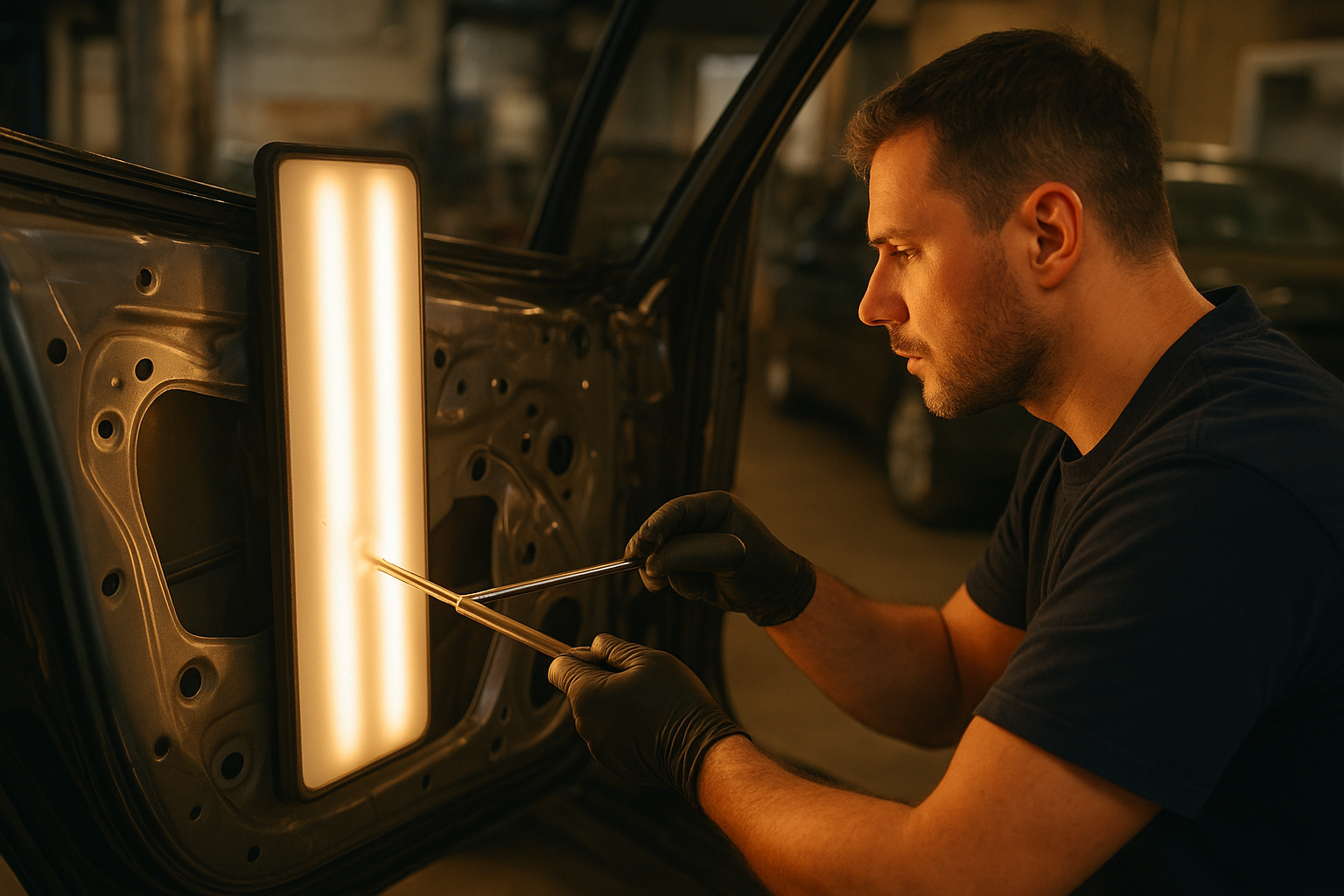
A trained technician massages metal back into shape during the paintless dent repair phase of a hail repair job.
How Paintless Dent Repair Fixes Hail-Damaged Panels
Paintless dent repair, commonly shortened to PDR, works by accessing the underside of a panel through door gaps, trim removal, or interior access points. A technician then uses metal rods and specialized tools to apply gentle pressure, pushing the dent back toward its original contour while a lighting board reflects lines across the surface so they can judge progress in real time.
Because the factory paint and clear coat stay untouched, PDR preserves the original finish, which matters for resale value and avoids any risk of color mismatch between panels. However, this technique only works reliably when the paint has not cracked and the metal has not stretched past its elastic limit, which is why not every hail dent qualifies.
When Traditional Body Work Replaces PDR for Hail Dents
Some hail dents simply fall outside what PDR can fix. Dents located near sharp body lines, panel edges, or areas where the paint has visibly cracked typically need filler, sanding, primer, and repaint to restore a smooth, even surface.
Similarly, bumper covers and other plastic components do not respond to PDR the same way steel or aluminum does, since plastic tends to crack rather than dent cleanly. In these cases, a shop experienced in both methods, such as the collision repair team detailed on the collision repair services page, can blend the two approaches on a single vehicle without leaving visible inconsistencies between panels.
How to Evaluate Hail Repair Quality Before Driving Away
Before accepting a finished repair, it helps to inspect the vehicle under strong, angled lighting rather than flat overhead shop lights, since dents and slight waviness show up more clearly when light rakes across the surface. Running a flat hand gently across each repaired panel can also reveal subtle high or low spots that are harder to see than to feel.
In addition, check that any repainted sections match the surrounding factory color and texture at the panel edges, and confirm that doors, hoods, and trunk lids still open, close, and align properly. The National Highway Traffic Safety Administration notes that proper panel alignment also matters for safety systems like sensors mounted near body lines, so a careful final check is worth the extra few minutes.
Insurance, Certification, and Choosing a Shop
The Insurance Information Institute notes that comprehensive coverage, which most financed and leased vehicles carry, typically pays for hail damage minus the policy deductible. Confirming this coverage before a storm season arrives can save confusion later.
When comparing shops, look for technicians with I-CAR training or manufacturer-specific certifications, since certified teams tend to follow documented repair procedures rather than guesswork. The team profiled on the trusted collision repair services page and the full details at breaautobody.com outline the certifications and process Brea-area drivers can expect from a local shop. If hail or interior water intrusion also affected upholstery, the interior cleaning service addresses that side of storm recovery as well.
Frequently Asked Questions About Hail Damage Vehicle Repair in Brea California
What is hail damage vehicle repair?
Hail damage vehicle repair is the process of restoring a car’s body panels, roof, and hood after ice strikes dent or crack the surface. It typically involves paintless dent repair for shallow dents and traditional bodywork with filler and repaint for deeper or cracked damage.
How long does hail damage vehicle repair take in Brea, California?
Minor hail damage with a handful of shallow dents can often be repaired in one to two days using paintless dent repair. Severe damage affecting multiple panels with cracked paint can take one to two weeks when primer, paint, and curing time are required.
Can every hail dent be fixed with paintless dent repair?
No, paintless dent repair only works when the paint remains intact and the metal has not stretched beyond its elastic limit. Dents near body lines, edges, or areas with cracked paint usually need traditional filler-and-paint repair instead.
How much does hail damage repair typically cost?
Costs vary widely based on the number, size, and location of dents, ranging from a few hundred dollars for a handful of shallow dings to several thousand dollars for extensive panel damage requiring repaint. A written estimate from a certified shop after an in-person inspection gives the most accurate figure.
Will my insurance cover hail damage repair?
Comprehensive auto insurance typically covers weather-related damage, including hail, minus your deductible. Liability-only policies generally do not cover hail, so checking your declarations page before a storm season is worthwhile.
What’s the biggest mistake drivers make after a hailstorm?
The most common mistake is driving the vehicle through an automatic car wash or delaying photo documentation, which can complicate an insurance claim. Raised metal edges can catch brushes and pull paint away from already stressed panels.
Should I wait to file a claim if the damage looks minor?
No, it is best to open a claim within 24 to 48 hours even if the dents look small, since curved panels can hide additional damage. Early documentation also protects you if more dents become visible after a professional inspection.
Can I repair hail dents myself with a DIY kit?
DIY suction kits and dry-ice methods can sometimes improve very shallow dents, but they often fail on deeper dings and can crack paint if used incorrectly. Professional hail damage vehicle repair uses specialized rods and lighting boards to restore the original contour without damaging the finish.
How do I choose a reliable shop for hail damage vehicle repair in Brea, California?
Look for I-CAR trained technicians, a written repair plan that separates PDR-eligible panels from those needing traditional work, and a shop willing to document damage before repairs begin. Checking recent customer reviews and asking about warranty coverage also helps narrow the choice.
Does hail damage affect resale value if left unrepaired?
Yes, unrepaired hail dents lower a vehicle’s resale and trade-in value because buyers and dealers visually inspect body condition closely. Even cosmetic-only damage can reduce offers by hundreds of dollars compared to a properly restored panel.
What certifications should a hail repair technician have?
Technicians trained through I-CAR or with manufacturer-specific certifications tend to follow documented repair procedures rather than guesswork. Certification also signals familiarity with modern panel materials, which affect how far metal can safely flex during paintless dent repair.
Can hail cause hidden structural damage beyond dents?
Large hail can crack windshields, damage trim, and in rare severe cases affect sensors mounted near the roofline or mirrors. A thorough inspection checks glass, weatherstripping, and camera alignment in addition to visible panel dents.
How soon after a storm should I schedule an inspection?
Scheduling an inspection within a few days of the storm is ideal, since shops in affected areas can book up quickly after regional hail events. Prompt inspection also supports a smoother insurance claim timeline.
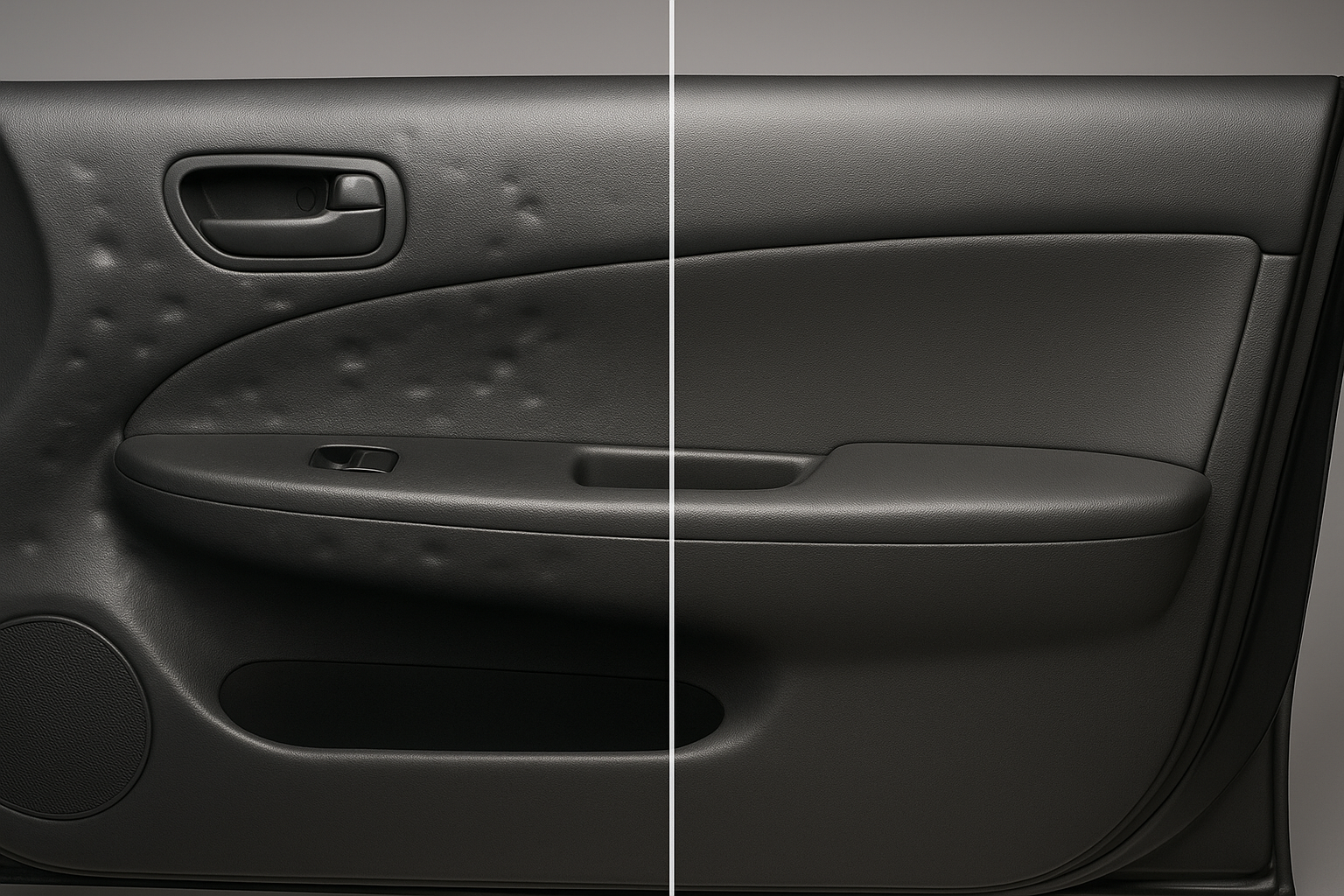
A finished panel shows no trace of dents once hail damage vehicle repair is complete.
Final Thoughts
In summary, hail damage vehicle repair Brea California drivers need after a storm comes down to three things: quick documentation, an honest inspection that separates PDR-eligible dents from those needing traditional bodywork, and a final quality check before the keys come back. Above all, acting within the first 48 hours protects both the vehicle’s finish and the insurance claim timeline.
Whether a vehicle has a handful of shallow dings or extensive panel damage, working with technicians who document their process and explain each repair choice makes the entire experience far less stressful. For drivers throughout Brea and the surrounding Orange County area, that combination of transparency and technical skill is what turns a stressful storm aftermath into a straightforward repair plan.

