Uncategorized

P B Body Shop Guide: Find Top Auto Body Repair

June 15, 2026
By : Fred
0 Comments

Auto Body Repair: The Complete Guide to Collision Repair, Services & Finding the Best Shop

Auto body repair restores a vehicle’s structural integrity and cosmetic appearance after a collision, dent, or paint damage — and choosing the right shop determines whether your car comes back safe, beautiful, and road-ready. This comprehensive guide covers every service, certification, cost factor, and step-by-step process you need to know before trusting your vehicle to any repair facility.

Whether you’ve just been in a fender-bender or experienced a serious multi-panel collision, the decisions you make in the hours and days that follow directly impact your vehicle’s long-term safety and resale value. In Orange County and across the country, the quality of auto body repair shops varies enormously — find a trusted Orange County body shop — and this guide gives you everything you need to make a confident, informed choice.

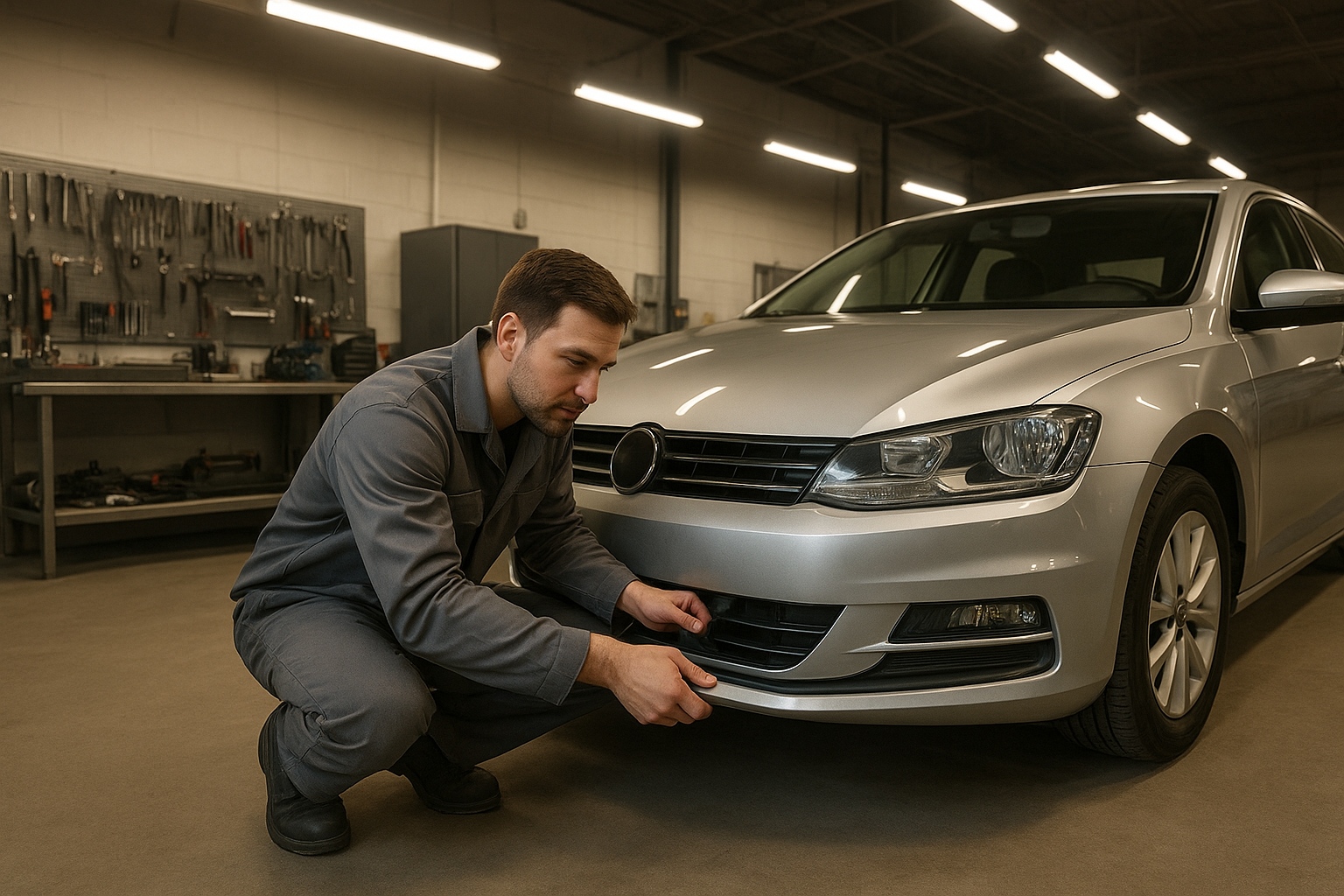
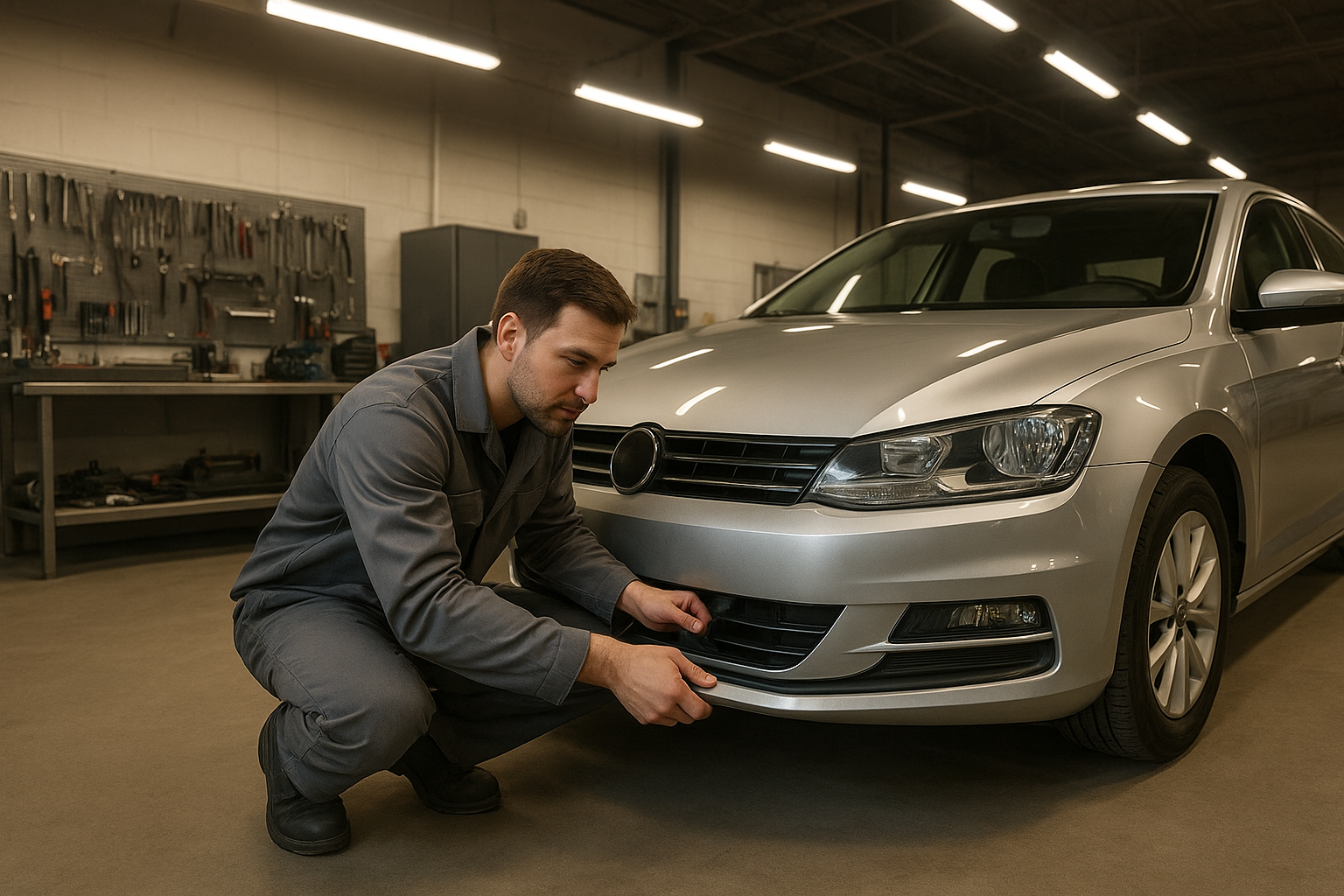
Certified technician performing a detailed auto body repair inspection on a damaged vehicle

A certified auto body repair technician performs a thorough vehicle damage inspection — the critical first step in every professional repair.


What Is Auto Body Repair?

Auto body repair is the professional process of restoring a vehicle’s exterior panels, structural frame, and paint finish after any form of damage — from minor parking lot dings to severe accident-related structural deformation. Unlike mechanical repair, which focuses on engine and drivetrain components, auto body repair addresses the visible and structural shell of the vehicle.

According to the Wikipedia entry on auto body shops, a professional repair facility typically employs body technicians, painters, estimators, and frame alignment specialists who work together to return a vehicle to its pre-accident condition — or better. Modern shops integrate computerized diagnostic systems, 3D laser frame measuring tools, and digital paint spectrophotometers to achieve factory-level precision.

The collision repair industry in the United States generates approximately $47 billion annually (IBISWorld), reflecting just how essential auto body repair is to everyday vehicle ownership. With over 35,000 repair shops operating across the country, the challenge is identifying the ones that truly deliver quality, safety, and value.

The Difference Between Auto Body Repair and Mechanical Repair

Many drivers confuse auto body repair with general mechanical work. Mechanical repair addresses what powers the vehicle — engines, transmissions, brakes, and suspension. Auto body repair addresses what protects and presents the vehicle — panels, frames, glass, and paint. After a collision, both types of damage may be present, but it’s the body shop that handles structural restoration and cosmetic refinishing.


Complete List of Auto Body Repair Services

A reputable auto body repair shop offers a wide spectrum of services — far beyond just fixing dents. Understanding what each service involves helps you ask the right questions and ensure nothing is overlooked after your vehicle sustains damage.

1. Collision Repair and Structural Restoration

Collision repair is the most comprehensive service offered by auto body shops. After a crash, technicians perform both visible and hidden damage assessments — because impact forces frequently travel through the vehicle’s structure in ways that aren’t immediately apparent. A door that looks fine on the outside may conceal a bent inner frame rail behind it.

Structural restoration involves the use of computerized frame-straightening equipment that applies measured, controlled force to return the vehicle’s unibody or body-on-frame structure to factory specifications. Misaligned frames compromise airbag deployment timing, crumple zone performance, and steering geometry — all of which are life-safety concerns, not merely cosmetic ones.

Certified shops follow OEM (Original Equipment Manufacturer) repair procedures to the letter. You can explore the full range of collision repair services at Brea Auto Body as an example of what comprehensive auto body repair looks like in practice.

2. Paintless Dent Repair (PDR)

Paintless dent repair (PDR) is a specialized technique used to remove small to medium dents without disturbing the vehicle’s original paint finish. Using a set of precision metal rods and picks, technicians access the dent from behind the panel and carefully massage the metal back to its factory contour.

PDR is the gold standard for:

  • Hail damage — multiple small dents across panels and the roof
  • Door dings — from parking lot impacts by adjacent vehicles
  • Minor creases — where the metal has flexed but paint remains intact
  • Shopping cart strikes — small, isolated impact points

PDR is faster, more affordable, and preserves the vehicle’s original factory paint — which is important for resale value. Learn more about paintless dent repair in Brea and how to determine if your damage qualifies.

3. Traditional Dent Repair and Panel Replacement

When dents are too large, too deep, or have compromised the paint, traditional dent repair is required. This process involves using body filler to reshape the damaged area, followed by sanding, priming, and repainting. In severe cases — such as after a significant side-impact collision — the entire panel may need to be replaced rather than repaired.

Panel replacement is a precise operation. New panels must be aligned to exact factory gaps and torqued to specification before painting. Improper panel fitting can cause wind noise, water leaks, and premature rust — all signs of substandard auto body repair.

4. Advanced Paint Matching and Refinishing

Paint refinishing is one of the most technically demanding disciplines in auto body repair. Achieving a seamless, undetectable color match between a repaired panel and the rest of the vehicle requires both advanced equipment and trained technique.

Professional shops use computerized spectrophotometers to scan the vehicle’s existing paint, accounting for the factory color code, paint formulation, and any natural oxidation or fading that has occurred over time. The resulting custom-mixed paint is then applied in a climate-controlled spray booth in multiple layers:

  • Primer coat — seals the substrate and ensures adhesion
  • Base coat — delivers the color
  • Clear coat — provides gloss, UV protection, and durability

Each layer is cured under controlled temperature conditions. A quality refinish job is virtually indistinguishable from the original factory finish. For a deeper dive, read our complete guide on car paint repair techniques and best practices.
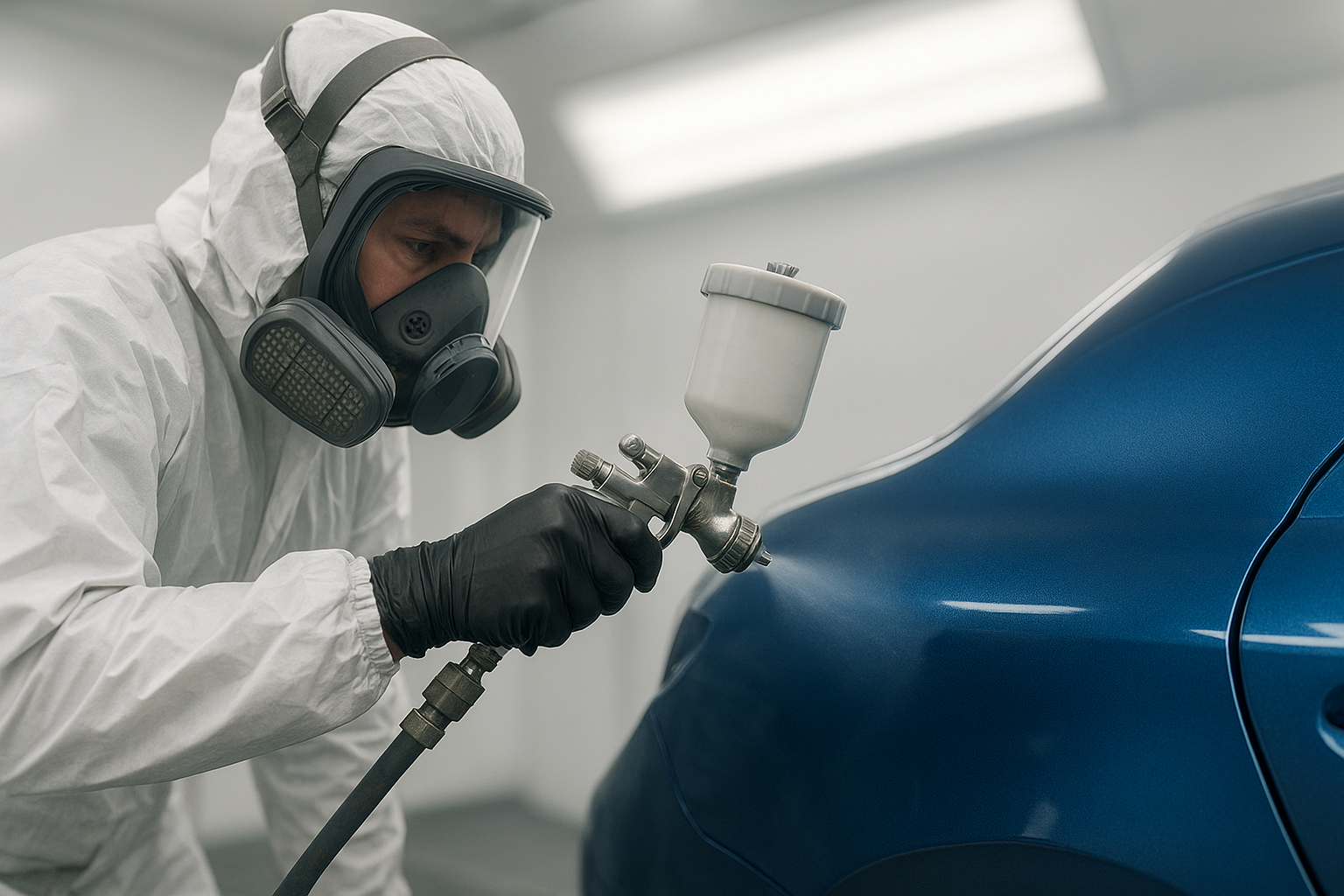
Auto body painter applying precision paint matching in a professional climate-controlled spray booth

Precision paint matching in a controlled spray booth is a hallmark of quality auto body repair — ensuring a factory-perfect finish on every repaired panel.

5. Bumper Repair and Replacement

Bumper damage is among the most common auto body repair scenarios. Modern bumpers are typically made of thermoplastic and can be repaired if the damage is localized — cracks, scrapes, and minor gouges can often be filled, sanded, and refinished without replacing the entire assembly. For more significant damage — deep cracks, structural deformation, or broken mounting points — full replacement is the correct course of action.

6. Glass Replacement and Windshield Repair

Auto body repair shops frequently handle windshield and auto glass services. Small chips can often be filled with resin to prevent spreading, while cracks larger than a dollar bill or in the driver’s line of sight require full windshield replacement. Many modern vehicles have ADAS (Advanced Driver Assistance Systems) cameras mounted to the windshield that must be recalibrated after glass replacement — a step that’s often overlooked at lesser-quality shops.

7. Rust Repair and Corrosion Prevention

Rust is a progressive threat to vehicle structure. Surface rust can be sanded back and treated, but rust that has penetrated through a panel requires cutting out the affected metal and welding in fresh steel. After any collision where the paint barrier is broken, corrosion prevention — including rust inhibitor application and quality primer — is an essential step in responsible auto body repair.

8. Interior Cleaning and Final Detailing

A complete auto body repair experience includes returning the vehicle in pristine condition — inside and out. Top-tier shops offer interior cleaning and full detailing services before vehicle delivery, ensuring that the repair experience feels truly comprehensive. Explore the interior cleaning service at Brea Auto Body for an example of this commitment to total vehicle care.


How to Choose the Right Auto Body Repair Shop

With thousands of auto body repair shops to choose from, selection requires a deliberate, methodical approach. The cheapest estimate is rarely the best value, and the most expensive shop isn’t automatically the most skilled. Here’s what actually separates great shops from acceptable ones.

Certifications: What They Mean and Why They Matter

Certifications are the most objective quality signal available to consumers. Look for these specifically:

  • I-CAR Gold Class — The collision repair industry’s highest training recognition. Awarded by the Inter-Industry Conference on Auto Collision Repair to shops where technicians complete ongoing annual training in modern repair methods. Fewer than 10% of U.S. shops hold this designation.
  • ASE Certification — Automotive Service Excellence certification signals that individual technicians have passed rigorous standardized exams in their specialty areas.
  • OEM Manufacturer Certifications — Brands like Honda, Toyota, Ford, Tesla, and GM certify select shops that meet their exact repair standards. These shops use approved procedures, tools, and parts — critical for warranty preservation and proper ADAS recalibration.
  • State Licensing — Most states require auto body shops to hold active repair licenses. Always verify the shop’s license status with your state’s Bureau of Automotive Repair or equivalent agency.

The National Highway Traffic Safety Administration (NHTSA) provides guidance on vehicle safety standards and the critical role that structural repair quality plays in post-collision crash protection.

OEM vs. Aftermarket Parts: Which Should Your Shop Use?

One of the most consequential decisions in auto body repair is whether OEM or aftermarket parts are used. Here’s the critical distinction:

OEM Parts are made by or to the exact specifications of the vehicle manufacturer. They are guaranteed to fit correctly, perform as designed, and will not void your vehicle warranty. They typically cost more.

Aftermarket Parts are produced by third-party manufacturers. Quality varies significantly — some match OEM standards closely, while others may fit poorly, corrode faster, or fail earlier. They cost less, but savings must be weighed against potential long-term quality issues. For safety-critical components (airbag covers, structural brackets, crumple zones), always insist on OEM parts.

Reading Reviews and Evaluating Reputation

Google, Yelp, and the Better Business Bureau are your first stops for reputation research. Look for shops with:

  • A minimum of 4.5 stars across 50+ reviews
  • Specific praise for quality of work, not just friendliness
  • On-time completion mentioned repeatedly
  • Professional, detailed management responses to any negative reviews

Word-of-mouth referrals from trusted friends, family, or your insurance agent are also extremely valuable. A shop that earns repeat customers and referrals has demonstrated consistent quality over time.


The Auto Body Repair Process: Step by Step

Understanding the complete auto body repair process from drop-off to pickup helps you set accurate expectations — and catch any shortcuts a substandard shop might try to take. For nearby options, see our collision repair near you guide.

  1. Step 1: Initial Damage Assessment and Inspection
    A certified estimator or technician performs a thorough visual and hands-on inspection of all damaged areas. This includes not just what’s visible, but probing panel gaps, checking for hidden structural damage, and identifying any fluid leaks or airbag deployment. Computerized vehicle health scans may also be performed to detect electronic fault codes triggered by the collision.
  2. Step 2: Written Estimate and Insurance Communication
    The shop produces a detailed written estimate itemizing every part, labor hour, and associated cost. If you’re filing an insurance claim, the shop communicates directly with your insurer — submitting photos, estimates, and supplemental documentation. A reputable shop will advocate for necessary repairs with the insurer, not simply accept whatever the lowest approved amount is.
  3. Step 3: Parts Ordering and Disassembly
    Once the estimate is approved and you authorize the repair, the shop orders all required parts. Delivery timelines for parts — especially OEM components from dealers — can be a primary factor in overall repair time. While waiting for parts, technicians begin disassembling the damaged areas to expose the full extent of the underlying damage.
  4. Step 4: Structural and Body Repair
    Frame straightening using computerized bench measuring equipment is performed first, if required. The vehicle is anchored to the frame rack and precision pulling equipment is used to restore the body dimensions to factory tolerances — verified to within millimeters. Then body panels are repaired or replaced, dents are worked out, and damaged metal is treated for corrosion prevention.
  5. Step 5: Refinishing — Surface Preparation, Priming, and Painting
    Repaired surfaces are sanded smooth, cleaned, and masked to protect surrounding panels. A primer coat is applied and sanded to create the perfect base. The color-matched paint is applied in the spray booth in multiple coats, followed by clear coat. Curing time varies by paint formulation and booth temperature — shortcuts here produce visible defects like orange peel texture or paint runs.
  6. Step 6: Reassembly, Calibration, and Quality Control
    All trim, glass, lights, sensors, and mechanical components are reinstalled. Shops with ADAS-equipped vehicles must recalibrate cameras and radar sensors after any windshield replacement or suspension work. A comprehensive quality control inspection — including panel gap measurement, paint finish inspection under specialized lighting, and test-driving the vehicle — completes this stage.
  7. Step 7: Final Inspection and Vehicle Delivery
    Before you take delivery, walk around the vehicle with the service advisor in natural outdoor light. Check paint color consistency, panel alignment, trim fitment, and glass clarity. Ask to see the repair documentation, and confirm any warranty coverage on the work performed. Reputable shops provide written repair warranties and will address any concerns before you leave.

How Much Does Auto Body Repair Cost?

Auto body repair costs vary widely based on damage severity, vehicle type, parts availability, and regional labor rates. Here is a practical breakdown to help you understand what to expect:

Repair Type Typical Cost Range Notes
Minor scratch touch-up $50 – $300 Surface-level, no primer needed
Paintless dent repair (single dent) $75 – $350 Price depends on size and location
Bumper repair or replacement $300 – $1,500 Higher for luxury or rear-sensor bumpers
Single-panel dent repair with repaint $400 – $1,200 Labor-intensive for metallic or specialty colors
Full door replacement and repaint $800 – $2,500 Includes OEM part and color match
Major collision repair (multi-panel) $2,500 – $10,000+ Frame work, multiple panels, labor-intensive
Frame straightening $500 – $3,000 Complexity determines cost

These are general national estimates. Always request a written, itemized estimate from your specific shop before authorizing any work. Never make a decision based on a verbal quote or phone estimate alone.

Will Insurance Cover Auto Body Repair?

Coverage depends on your policy type and who was at fault:

  • Collision coverage pays for your auto body repair regardless of fault, minus your deductible.
  • Comprehensive coverage covers non-collision damage — hail, flood, falling objects, vandalism, and theft.
  • Liability coverage only pays for damage to the other party’s vehicle — not yours.
  • Uninsured/underinsured motorist coverage may apply when the at-fault driver lacks adequate insurance.

You have the legal right to choose your own auto body repair shop — your insurer cannot legally require you to use a specific facility in most states. A reputable shop will communicate directly with your insurer to handle claims documentation efficiently.


Red Flags: Warning Signs of a Poor-Quality Auto Body Repair Shop

Knowing what to avoid is just as important as knowing what to look for. Watch for these red flags when evaluating any auto body repair facility:

  • No visible certifications or licenses displayed — legitimate shops post their credentials prominently
  • Unusually low estimates — often a sign of aftermarket parts, skipped steps, or unlicensed technicians
  • Pressure to skip the insurance claim — a shop that pushes you to pay cash and skip insurance may be trying to avoid accountability
  • Vague or verbal-only estimates — everything should be in writing
  • Poor online reviews mentioning paint mismatch, panel gaps, or returned damage — consistent quality complaints are a serious warning
  • No written warranty on repairs — quality shops back their work with explicit, documented warranties
  • Dirty or disorganized facility — a shop’s physical environment reflects its attitude toward quality

Why Brea Auto Body Delivers Elite Auto Body Repair in Orange County

For drivers throughout Orange County, Brea Auto Body represents the benchmark for professional auto body repair. Their certified team handles the complete spectrum of repair services — from precise paintless dent repair on minor dings to full structural collision restoration on significantly damaged vehicles — for both domestic and foreign cars, trucks, and SUVs.

What distinguishes Brea Auto Body from many competitors is their commitment to genuine transparency throughout the entire repair process. Customers receive clear, itemized estimates, regular progress updates, and honest timelines — with no hidden fees or surprise costs at pickup. They work with all major insurance carriers and handle the claims process on your behalf from start to finish.

Their facility is equipped with the latest computerized frame measurement and paint-matching technology. Technicians hold industry-recognized certifications and participate in ongoing training to stay current with evolving vehicle construction methods — including aluminum-intensive vehicles and ADAS-equipped cars that require specialized repair protocols.

For an in-depth look at expert-level auto body repair, the expert auto body repair guide is an excellent resource covering what separates true craftsmanship from average repair work.


Frequently Asked Questions About Auto Body Repair

What is auto body repair and what does it include?

Auto body repair is the professional restoration of a vehicle’s exterior panels, structural frame, and paint finish following collision, dent, or cosmetic damage. It includes collision repair, frame straightening, dent removal, paint refinishing, bumper repair, glass replacement, and rust treatment — depending on the nature and extent of the damage.

How long does auto body repair take?

Repair time depends on damage severity and parts availability. Minor dent repairs or scratch touch-ups may be completed in one to two days. Moderate single-panel repairs typically take three to five business days. Major collision repairs involving multiple panels, structural work, or parts delays can take two to four weeks or longer. Always ask for a written estimated completion date.

How much does auto body repair cost?

Costs range from $75 for a simple paintless dent repair to $10,000 or more for extensive multi-panel structural collision repair. Minor scratch repairs run $50–$300; bumper repairs range from $300–$1,500; full panel replacements with repaint typically cost $800–$2,500. Always get a detailed written estimate before authorizing any work.

Will my insurance cover auto body repair?

Coverage depends on your policy. Collision coverage pays for auto body repair after an accident regardless of fault, minus your deductible. Comprehensive coverage applies to non-collision damage like hail, flood, and vandalism. You have the right to choose your own repair shop — insurers cannot legally compel you to use a specific facility in most states.

What certifications should a quality auto body repair shop have?

Look for I-CAR Gold Class certification — the industry’s highest training recognition — along with ASE-certified technicians and OEM manufacturer certifications specific to your vehicle brand. These credentials confirm that the shop meets industry standards for repair quality, safety, and ongoing technician education.

What is paintless dent repair (PDR) and when is it the right choice?

Paintless dent repair uses precision metal tools to massage dents out from behind the panel without disturbing the original paint. It is ideal for small-to-medium dents — door dings, hail damage, minor creases — where the paint is fully intact. PDR is faster and more affordable than traditional dent repair and preserves the factory finish, which benefits resale value.

How does paint matching work in auto body repair?

Technicians use computerized spectrophotometers to scan the vehicle’s existing paint and generate a precise custom color formula accounting for the factory code and any natural fading. The matched paint is then applied in a climate-controlled spray booth in primer, base, and clear coat layers. A quality match is virtually invisible when compared to adjacent original panels.

Can an auto body shop repair structural frame damage?

Yes. Professional auto body repair shops use computerized frame-straightening equipment to restore a vehicle’s structural geometry to factory tolerances after a serious collision. Proper frame alignment is essential for vehicle safety — affecting airbag deployment, crumple zone performance, and steering. Always choose a certified shop with documented frame measuring capability.

Is it safe to drive my car before getting auto body repair?

Cosmetic damage — surface scratches or minor dents not affecting structure — is generally safe to drive with temporarily. However, structural damage, airbag deployment, fluid leaks, compromised glass, or damaged lighting must be addressed before driving the vehicle. When in doubt, have the vehicle inspected immediately after any collision.

What is the difference between OEM and aftermarket parts in auto body repair?

OEM parts are manufactured to the vehicle maker’s exact specifications — guaranteed fit, function, and warranty compatibility. Aftermarket parts are third-party produced and cost less, but quality varies widely. For safety-critical components such as structural brackets, airbag covers, and crumple zone panels, OEM parts are strongly recommended in professional auto body repair.

Does auto body repair affect my vehicle’s resale value?

High-quality auto body repair performed by a certified shop can restore or even protect a vehicle’s resale value, especially when OEM parts and factory-quality refinishing are used. Poor-quality repairs — visible paint mismatches, improper panel gaps, or undisclosed structural work — can significantly reduce resale value and deter buyers. Always request and retain copies of repair documentation.

What mistakes should I avoid when choosing an auto body repair shop?

Avoid choosing a shop based solely on the lowest estimate, accepting verbal quotes without written documentation, skipping the review of certifications, or allowing an insurer to pressure you into a specific network shop you haven’t researched. Always verify credentials, read customer reviews on multiple platforms, and insist on a written, itemized estimate before authorizing any auto body repair work.


Conclusion: Getting the Best Auto Body Repair for Your Vehicle

Quality auto body repair is about far more than cosmetic appearance — it’s about restoring the safety engineering built into your vehicle by the manufacturer. A properly repaired car protects you in the next collision just as it did when it left the factory. A poorly repaired car may look fine on the surface while hiding structural deficiencies that compromise your protection when it matters most.

Choose certified shops, insist on written estimates, understand your insurance rights, and inspect every repair before you drive away. For Orange County drivers, Brea Auto Body brings all of these qualities together — delivering certified, transparent, comprehensive auto body repair that restores your vehicle completely and returns you to the road with full confidence. Last updated: 2026-07-07. Author: Brea Auto Body team — add a short author bio and credentials page to improve trust signals.

Leave a Reply

Your email address will not be published. Required fields are marked *