

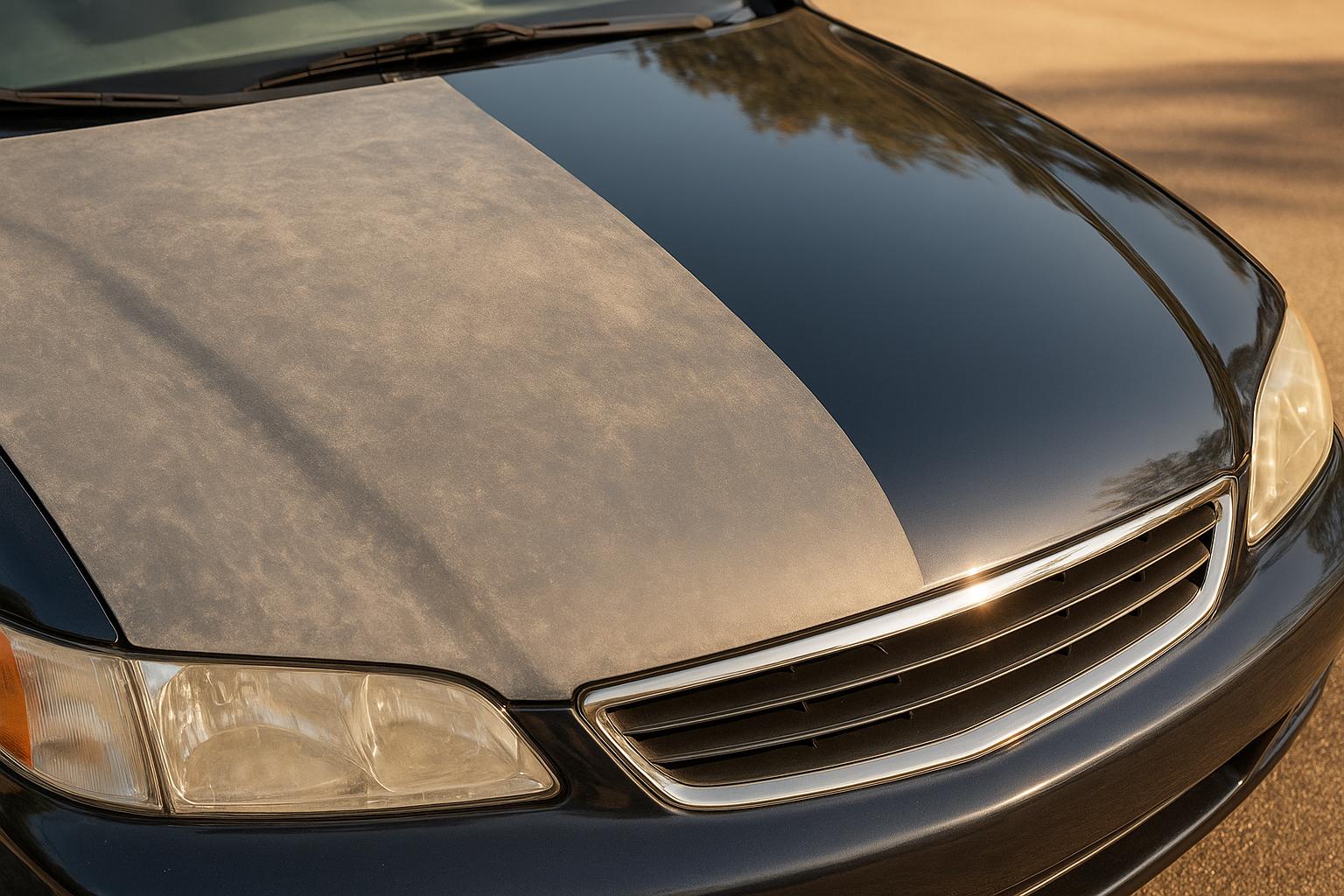
Paint fade restoration Brea CA services help local drivers reverse the sun-damaged, dull, and oxidized finishes that are so common across Southern California. Years of intense UV exposure, combined with the region’s dry heat, slowly break down a vehicle’s clear coat and pigment layers. As a result, once-vibrant paint can turn chalky, uneven, or faded within just a few years. Fortunately, professional restoration techniques can often bring that shine back without the expense of a full repaint.
Throughout this guide, drivers in Brea and the surrounding Orange County area will learn what causes paint fading, how the restoration process works, and what to expect in terms of cost and timeline. In addition, a step-by-step breakdown shows exactly how technicians correct oxidized finishes.
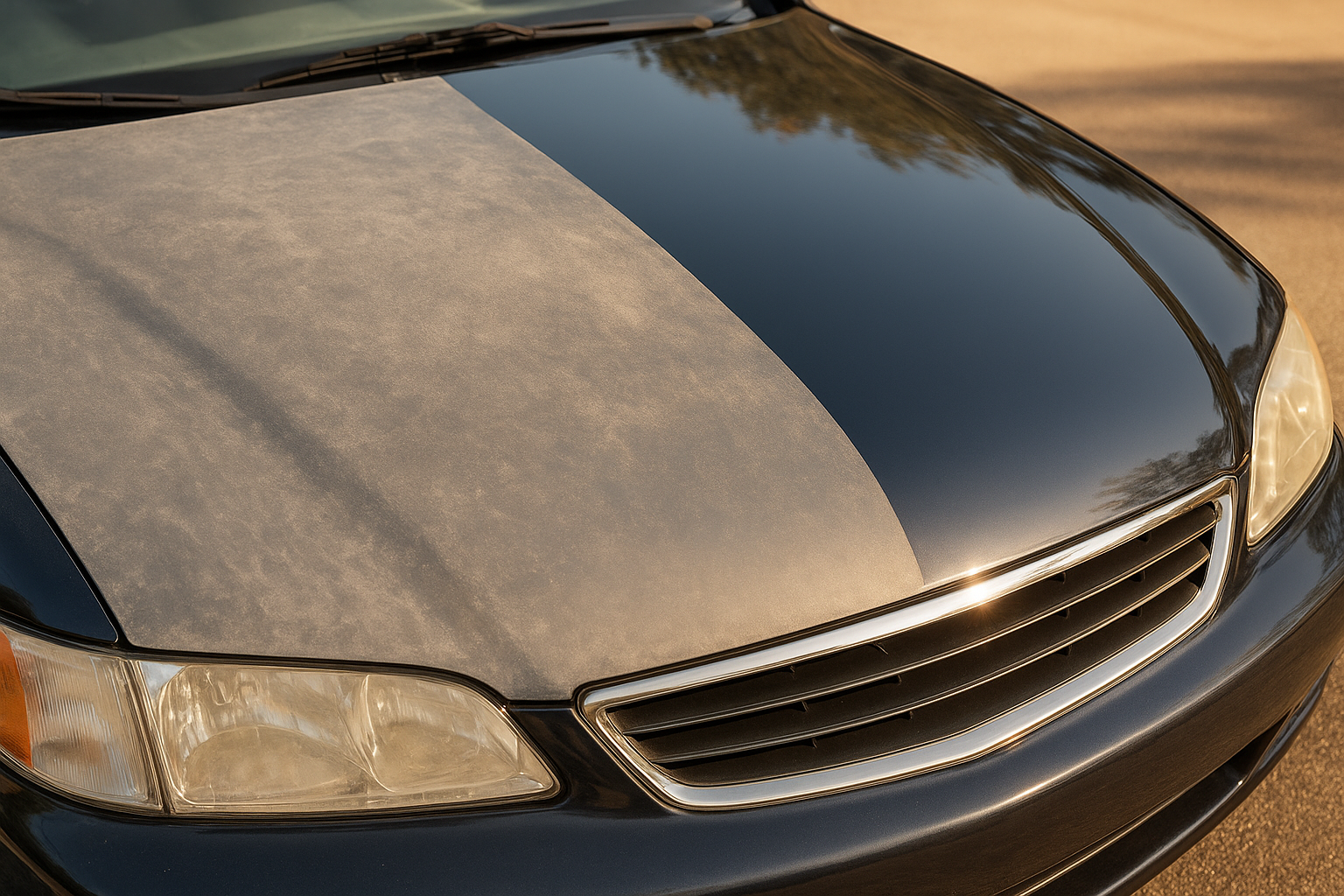
A side-by-side look at paint fade restoration Brea CA shops use to bring back a glossy finish.
What Is Paint Fade Restoration Brea CA Vehicle Owners Rely On?
Paint fade restoration is the process of correcting oxidized, chalky, or discolored automotive paint caused by sun exposure, environmental contaminants, or age, restoring gloss and color depth without necessarily replacing the entire paint job. Specifically, technicians in Brea CA typically rely on a combination of paint correction, machine polishing, and in some cases touch-up clear coat application to reverse visible damage. For more severe cases, however, spot repainting may be necessary to match the original factory finish.
This service differs from a standard wax or detail job. Rather than simply adding a protective layer on top of damaged paint, restoration physically removes the degraded outer layer of clear coat to reveal healthier paint underneath. As a result, the color appears richer and the surface reflects light more evenly.
What Causes Paint to Fade in Southern California?
Several environmental factors combine to accelerate paint fading in a climate like Brea’s. According to the U.S. Environmental Protection Agency, the UV index across Southern California frequently reaches 8 to 10 during summer months, a range classified as “very high” risk for UV damage. Vehicles parked outdoors absorb that radiation daily, which gradually breaks down the polymers in a car’s clear coat.
In addition to sunlight, dry heat speeds up the oxidation process by evaporating protective oils in older wax or sealant layers faster than in cooler, humid climates. Airborne contaminants such as dust, pollen, and roadway grime also settle into microscopic pores in the clear coat, further dulling the finish. For more background on how automotive paint layers are structured, Wikipedia offers a helpful technical overview.
Consequently, vehicles that spend most of their time parked outside in Brea tend to show visible fading sooner than those garaged overnight. Dark-colored paint, especially black and deep red, tends to show oxidation and fading more noticeably than lighter shades because contrast makes dullness easier to see.
Signs Your Car’s Paint Needs Restoration
Several warning signs typically appear before paint damage becomes severe. A dull or chalky appearance is usually the first clue, since healthy clear coat reflects light with a wet-looking shine. Similarly, a rough or gritty texture when running a hand across the hood often signals that contaminants have bonded to the surface.
Other indicators include faint white or hazy patches on darker panels, visible swirl marks under direct sunlight, and colors that appear washed out compared to when the vehicle was new. If any of these signs sound familiar, a professional inspection can confirm whether polishing alone will fix the issue or whether deeper repair is needed.
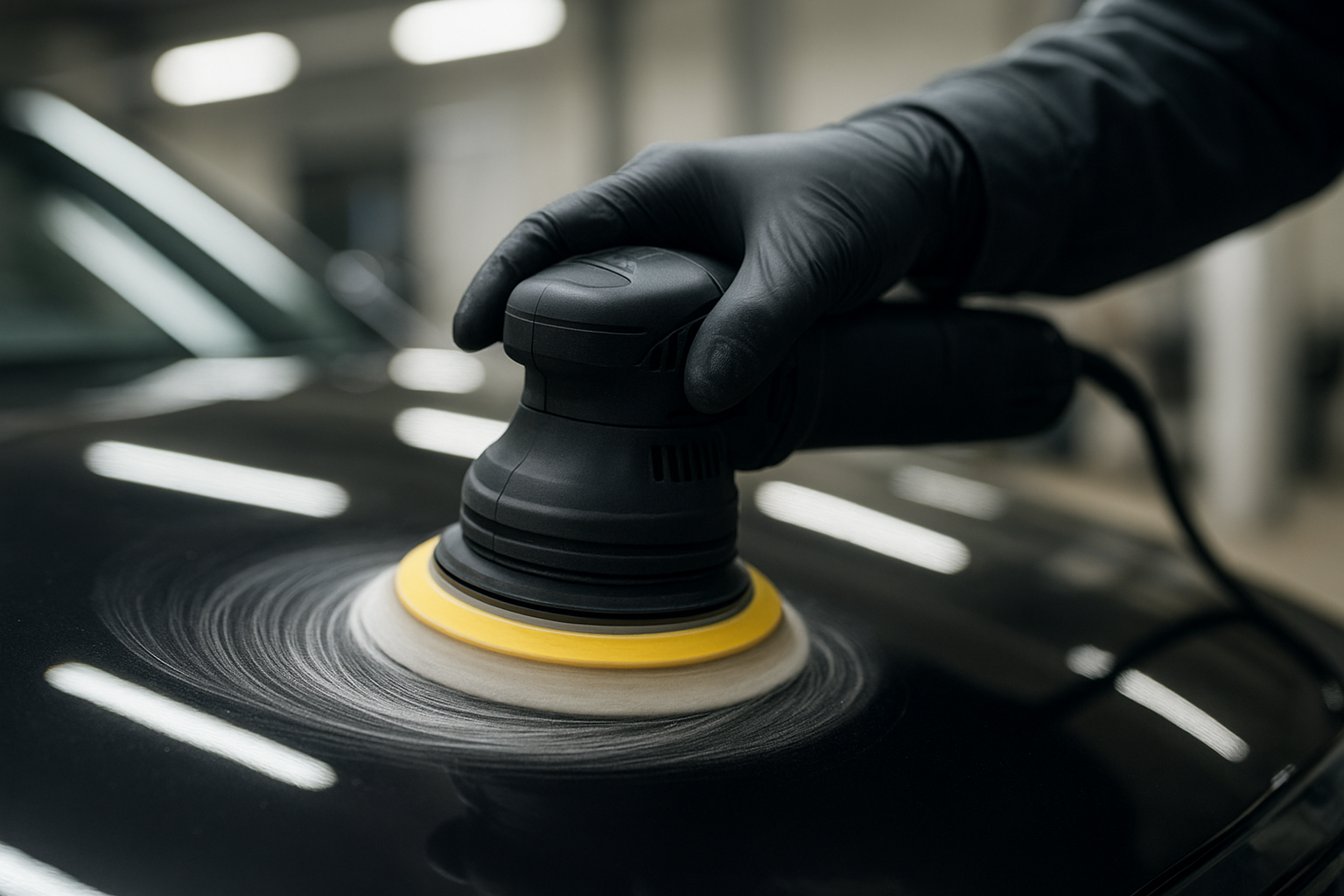
Machine polishing removes the oxidized top layer to reveal brighter paint beneath.
The Paint Fade Restoration Process, Step by Step
While every vehicle is slightly different, most shops follow a similar sequence when correcting sun-damaged paint. The steps below outline a typical restoration workflow.
- A technician thoroughly washes the vehicle and inspects the paint under direct light to identify the depth of fading, oxidation, and any clear coat damage before beginning work.
- The paint is treated with a clay bar or chemical decontaminant to remove embedded contaminants like tree sap, road grime, and mineral deposits that polishing alone cannot lift.
- Using a dual-action or rotary polisher with graduated abrasive compounds, the technician gradually removes the oxidized top layer of clear coat to reveal fresh, glossy paint underneath.
- Any spots where oxidation has penetrated into the base color receive precise touch-up paint and blended clear coat application to match the surrounding factory finish.
- A protective wax, sealant, or ceramic coating is applied to lock in the restored shine and create a barrier against future UV exposure and environmental damage.
Readers who want a deeper walkthrough of this process, including before-and-after examples, can review the vehicle paint restoration guide from Brea Auto Body for additional detail.
Professional Correction Versus DIY Paint Fixes
Many drivers first attempt DIY polishing kits before seeking professional help, and for very light fading, this can work reasonably well. However, improper technique with a rotary buffer often removes too much clear coat, which can create swirl marks or thin the protective layer permanently.
Professional-grade equipment, combined with experience reading how a specific paint type reacts to compound, generally produces safer and longer-lasting results. Furthermore, shops can accurately judge when a panel needs touch-up paint instead of polishing alone, which prevents wasted time on a fix that will not hold.
For drivers deciding between options, this guide on choosing paint options after bodywork breaks down when a touch-up, blend, or full panel repaint makes the most sense.
Choosing a Trusted Shop for Sun-Damaged Paint in Brea
Not every auto body shop offers the same level of paint correction expertise. Above all, look for a facility with certified technicians, documented before-and-after work, and transparent communication about what a vehicle actually needs before any work begins.
Brea Auto Body, for example, works with individual owners, insurance clients, and fleet customers across Orange County, offering collision repair, dent removal, and advanced paint matching alongside restoration services. This range of expertise matters because a shop that only offers basic polishing may miss underlying clear coat failure that requires a more involved repair.
Those researching services further can explore this complete guide to auto body paint restoration in Brea, or request an estimate directly from Brea Auto Body’s website.
Cost and Timeline for Paint Fade Restoration
Pricing varies depending on how severe the oxidation is and how many panels need attention. A single faded panel might only require an hour or two of machine polishing, while a full vehicle correction with touch-up work can take one to three days. Similarly, costs typically range from a few hundred dollars for light correction to over a thousand dollars when touch-up paint and blending are involved.
Because every vehicle’s damage is different, the most reliable way to get an accurate number is through an in-person inspection. Drivers dealing with surface scratches alongside fading may also want to review this resource on car scratch repair options, since the two issues are often addressed together.
Frequently Asked Questions
What is paint fade restoration Brea CA shops perform?
Paint fade restoration Brea CA shops perform involves correcting oxidized, chalky, or discolored paint caused by sun exposure and age. Technicians use polishing compounds, machine buffing, and sometimes spot clear coat application to restore gloss and depth.
How much does paint fade restoration cost?
Costs typically range from a few hundred dollars for a single panel to over a thousand dollars for a full vehicle correction, depending on severity. A shop can give an accurate quote after a visual inspection.
How long does the paint restoration process take?
Most paint correction jobs take one to three days. Heavier oxidation or sections needing touch-up paint may require additional time for curing and blending.
Can faded paint be fully restored without repainting?
In many cases, yes. If the clear coat is intact, polishing and compounding can remove oxidation and restore shine. However, if the clear coat has failed or peeled, a partial repaint is usually needed.
What causes paint to fade in Southern California?
Prolonged ultraviolet exposure, high heat, dry air, and airborne contaminants break down the clear coat and pigment over time. This is especially common in sunny regions like Orange County.
Is DIY paint correction a good alternative to professional restoration?
DIY kits can help with very light fading, but improper technique often causes swirl marks or thinning of the clear coat. Professional equipment and experience generally produce safer, longer-lasting results.
Does insurance cover paint fade restoration?
Standard insurance policies usually do not cover fading from sun exposure since it is considered normal wear rather than accident damage. Restoration is typically an out-of-pocket cosmetic service.
How often should a vehicle receive paint correction?
Light maintenance polishing every 12 to 18 months helps prevent deep oxidation. A full correction is usually needed every few years depending on sun exposure and parking conditions.
What is the difference between paint correction and a full repaint?
Paint correction polishes and restores the existing clear coat and pigment. A full repaint, by contrast, applies entirely new primer, base coat, and clear coat layers to the panel.
Can severe oxidation always be fixed?
Not always. If oxidation has penetrated through the clear coat into the base color, polishing alone cannot repair it, and localized or full panel repainting becomes the more reliable option.
How can I protect my car’s paint after restoration?
Applying a quality wax or ceramic coating, parking in shade or a garage, and washing regularly to remove contaminants all help extend the results of restoration work.
Does paint fade restoration work on both domestic and foreign vehicles?
Yes, the polishing and correction techniques apply to virtually all vehicle makes and paint types, though color-matching for touch-ups may vary by manufacturer.
What signs indicate my car needs paint restoration?
Dull or chalky appearance, visible swirl marks, a rough texture when running a hand over the surface, and color that looks washed out are common signs oxidation has set in.
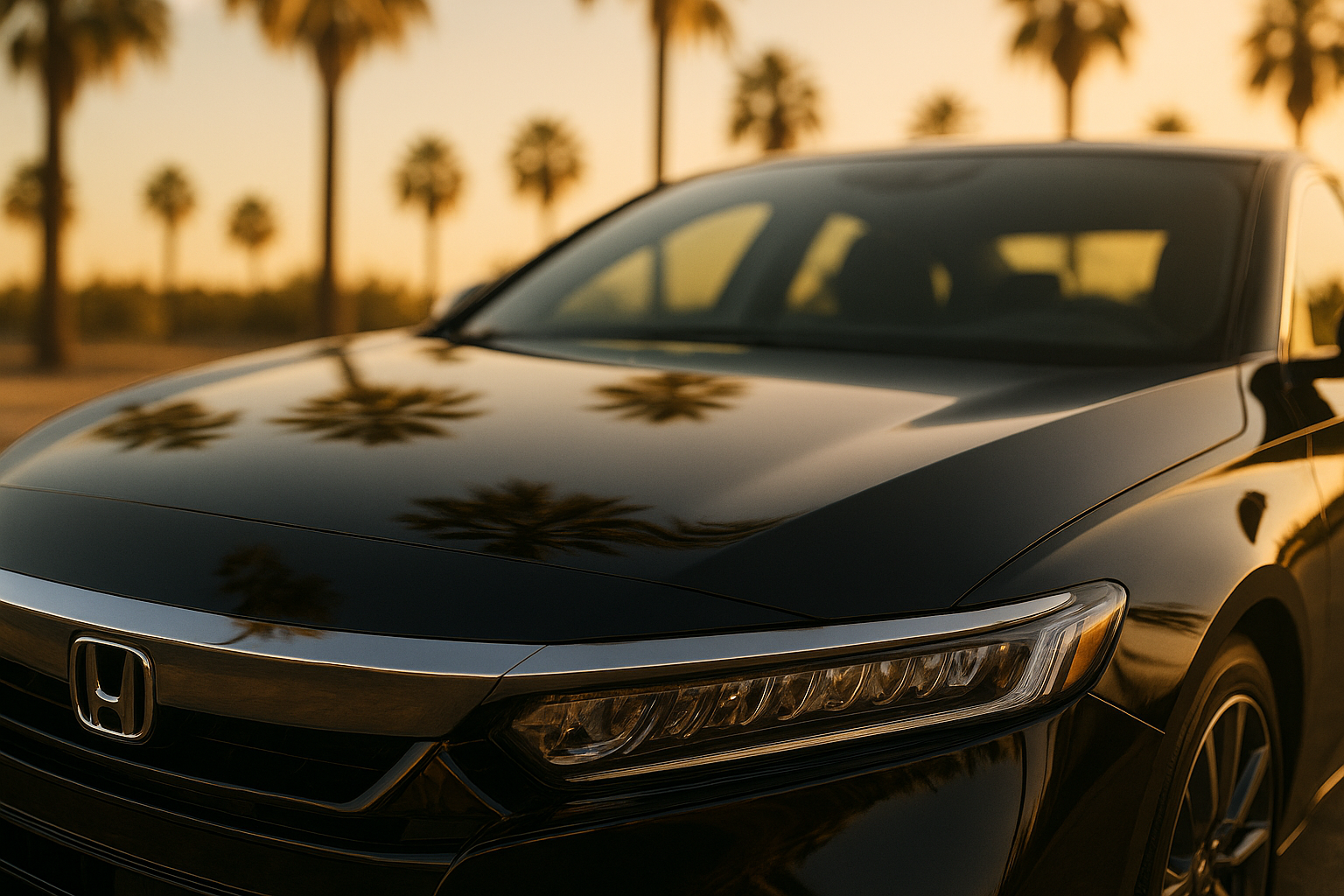
A fully restored finish reflects Brea’s sunshine instead of absorbing its damage.
Final Thoughts on Restoring Faded Paint
Ultimately, paint fade restoration Brea CA drivers invest in protects both the appearance and resale value of their vehicle. Because Southern California’s intense sun and dry climate accelerate oxidation, catching the early warning signs, such as dullness or a chalky texture, makes correction easier and more affordable. Whether a car needs simple machine polishing or more involved touch-up work, working with an experienced auto body shop ensures the finish is matched correctly and protected for the future. For drivers in Brea and across Orange County, scheduling an inspection at Brea Auto Body or reviewing their car paint repair services is a practical next step toward restoring that original showroom shine.

