


Auto body repair for commercial vehicles Orange County fleet owners depend on involves far more than fixing a dented bumper or buffing out a scratch. Commercial vehicles log far more miles than the average passenger car, and that extra time on the road means collisions, parking-lot mishaps, and weather damage happen more often. Therefore, fleet managers, insurance adjusters, and small business owners need a body shop experienced with heavy-duty panels, reinforced frames, and commercial-grade paint finishes. This guide explains what quality commercial auto body repair looks like in Orange County, how the process works, and what to expect in terms of cost and downtime.
Quick answer: Auto body repair for commercial vehicles Orange County fleets rely on typically includes collision damage assessment, frame and panel repair, dent removal, and commercial-grade paint matching, performed by technicians trained to handle vans, trucks, and specialty fleet vehicles while minimizing downtime.
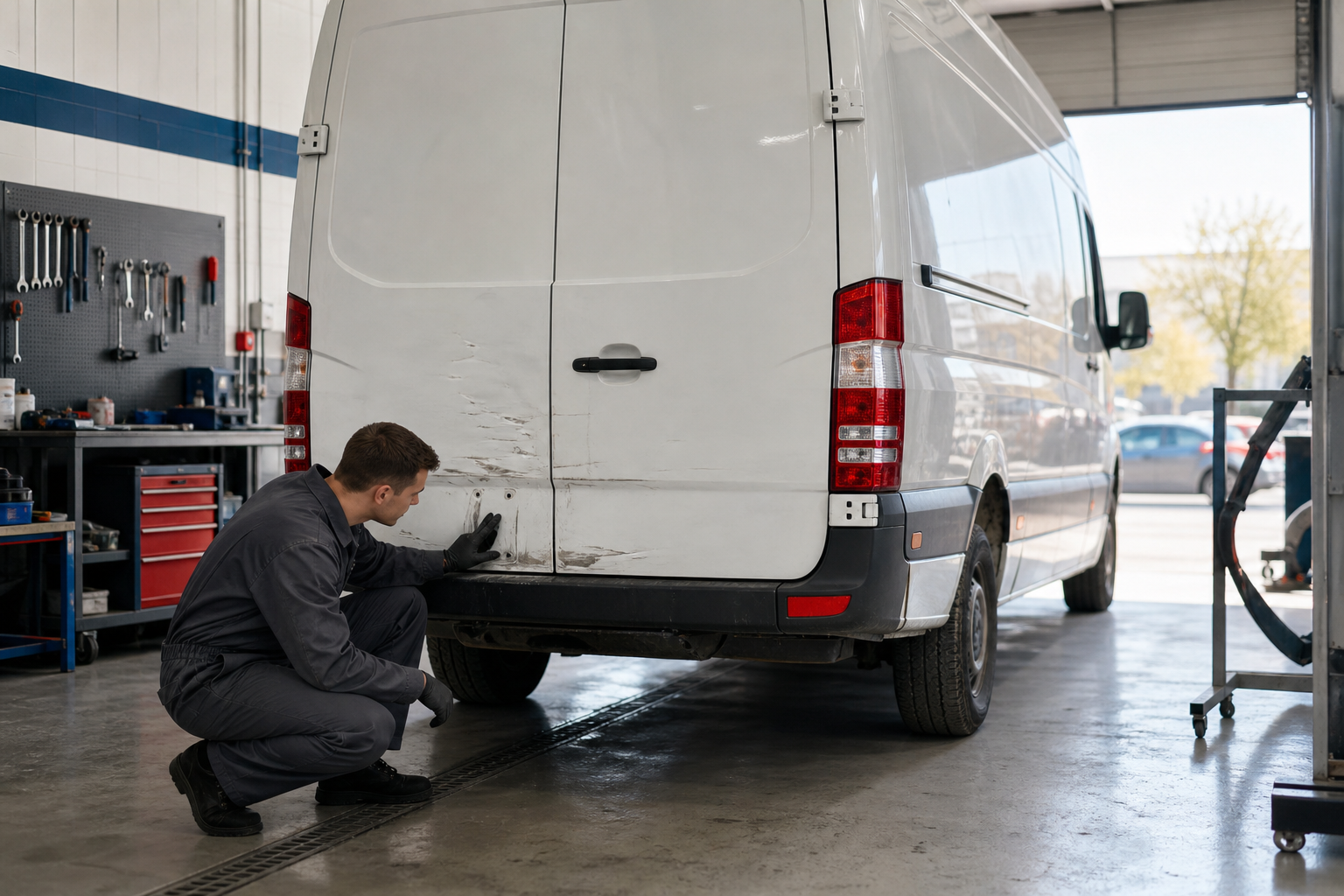
A thorough inspection is the first step in auto body repair for commercial vehicles Orange County fleets schedule after a collision.
Auto Body Repair for Commercial Vehicles Orange County Businesses Rely On
Auto body repair for commercial vehicles Orange County businesses rely on is different from standard passenger car work in a few key ways. For example, commercial vans and trucks often carry reinforced frames, cargo shelving, and branded exteriors that must be removed and reinstalled carefully. In addition, downtime directly affects a company’s bottom line, so shops that specialize in fleet work prioritize fast, accurate estimates and efficient scheduling. As a result, business owners often get better outcomes by choosing a shop with proven commercial experience rather than a general repair garage.
Specifically, this type of repair work usually spans three categories: structural repair for frame or chassis damage, cosmetic bodywork for dents and scrapes, and refinishing for paint and branding. Consequently, a shop needs equipment and training that covers all three areas to properly serve fleet customers. You can find a detailed overview of related local services in this complete guide to auto repair services in Orange County.
What Is Commercial Vehicle Auto Body Repair?
Commercial vehicle auto body repair is the process of restoring a work vehicle’s exterior, structure, and finish after damage from a collision, weather event, or daily wear. In short, it is the fleet-focused version of standard collision repair. However, the stakes are often higher because a damaged van or truck that sits idle can disrupt deliveries, service calls, or job site schedules.
Furthermore, this repair category typically involves both cosmetic fixes, such as dent removal and panel replacement, and structural work, such as frame straightening. According to the Wikipedia entry on fleet vehicles, businesses manage fleets specifically to control costs and maintain consistent uptime, which is exactly why specialized repair matters.
Why Fleet Vehicles Need Specialized Collision Repair
Fleet vehicles face unique stresses that personal cars rarely encounter. For instance, delivery vans are loaded and unloaded multiple times a day, service trucks carry heavy equipment, and company cars often rack up tens of thousands of miles per year. As a result, body panels, frames, and suspension components wear differently and sometimes fail in ways a general technician may not anticipate.
Moreover, commercial vehicles frequently display company branding, wraps, or decals that must be matched or reapplied after repair. Similarly, fleet accounts often require detailed documentation for tax, insurance, and maintenance records, so a shop experienced in commercial work can provide that paperwork without extra back-and-forth. The Federal Motor Carrier Safety Administration oversees safety standards for many commercial vehicles, which is one more reason proper structural repair cannot be skipped.
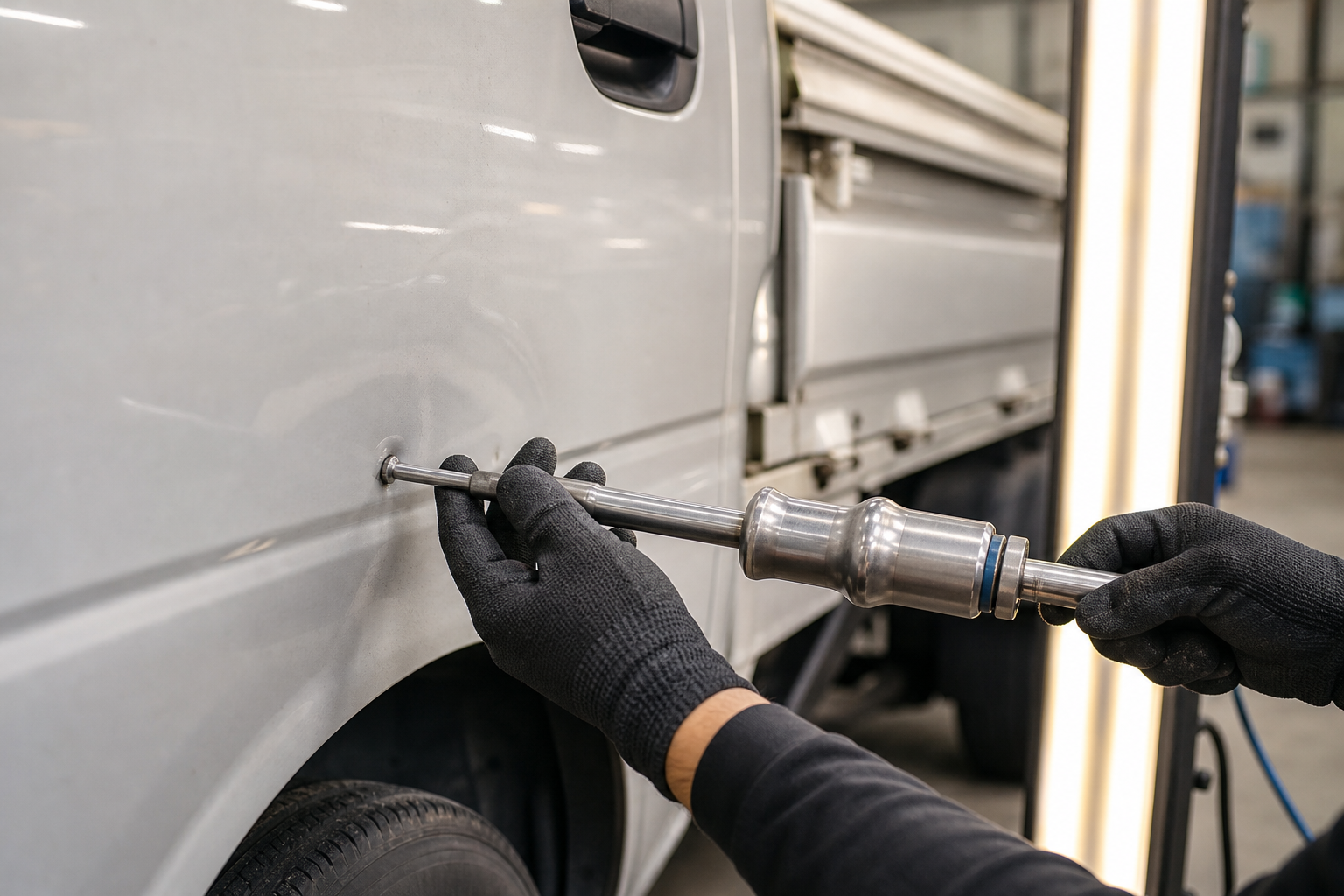
Dent removal preserves factory panels while restoring a clean, professional appearance for fleet vehicles.
Common Commercial Vehicle Damage Orange County Shops See
Certain damage patterns show up again and again in fleet repair work. Parking lot dings and side-mirror collisions are among the most frequent, especially for delivery vans navigating tight loading zones. In contrast, highway collisions tend to cause more severe frame and bumper damage that requires structural correction rather than simple panel work.
Additionally, weather-related damage, such as hail dents or sun-faded paint, is common across Southern California fleets that spend long hours parked outdoors. Below is a quick overview of typical damage types and the repair approach each one usually requires.
| Damage Type | Typical Cause | Repair Approach |
|---|---|---|
| Side panel dents | Parking lot collisions, loading mishaps | Paintless dent removal or panel replacement |
| Frame misalignment | Moderate to severe collisions | Frame machine straightening and measurement |
| Faded or mismatched paint | Sun exposure, prior repairs | Computerized color matching and refinishing |
| Bumper and grille damage | Rear-end or low-speed impacts | Component replacement and refinishing |
For a broader look at how shops evaluate damage across vehicle types, the body shop guide to finding top auto body repair covers additional considerations worth reviewing.
The Commercial Auto Body Repair Process: Step by Step
Understanding the repair sequence helps fleet managers set realistic expectations. Below is the typical process a qualified Orange County shop follows for commercial vehicle collision repair.
- Damage Assessment and Documentation: A technician inspects the vehicle in person, photographs all visible and hidden damage, and documents findings for the insurance claim or fleet maintenance record.
- Insurance and Fleet Coordination: The shop communicates with the insurance adjuster or fleet manager to confirm coverage, approve the estimate, and schedule the repair without unnecessary delay.
- Structural and Frame Repair: Technicians use frame machines and measuring systems to restore the vehicle’s structural integrity to factory specifications before any cosmetic work begins.
- Dent Removal and Panel Bodywork: Panels are straightened, replaced, or repaired using paintless dent removal or traditional bodywork techniques depending on severity and location.
- Paint Matching and Refinishing: A computerized color-matching system blends the new paint with the existing finish so repaired panels are seamless with the surrounding body.
- Quality Inspection and Return to Service: A final inspection confirms panel alignment, paint quality, and safety systems before the vehicle is cleaned and returned to the fleet.
Notably, OEM-quality standards matter at every stage. For a deeper look at how original equipment manufacturer specifications apply to collision work, see this OEM quality collision repair guide for North Orange County.
How to Choose an Orange County Commercial Auto Body Shop
Not every body shop is equipped to handle fleet work well. Above all, look for a shop with documented experience repairing vans, trucks, and other commercial vehicles rather than only passenger cars. Technicians should hold current training, such as credentials from I-CAR, which sets widely recognized standards for collision repair education.
Likewise, ask whether the shop offers fleet account support, direct insurance billing, and realistic turnaround estimates in writing. A shop that handles multiple vehicles for the same business should also be comfortable scheduling several repairs in sequence to limit overall downtime. For a closer look at fleet-specific service, this guide to the best Brea auto body shop for fleet vehicles outlines what to expect. You can also review general service options at breaautobody.com before requesting an estimate.
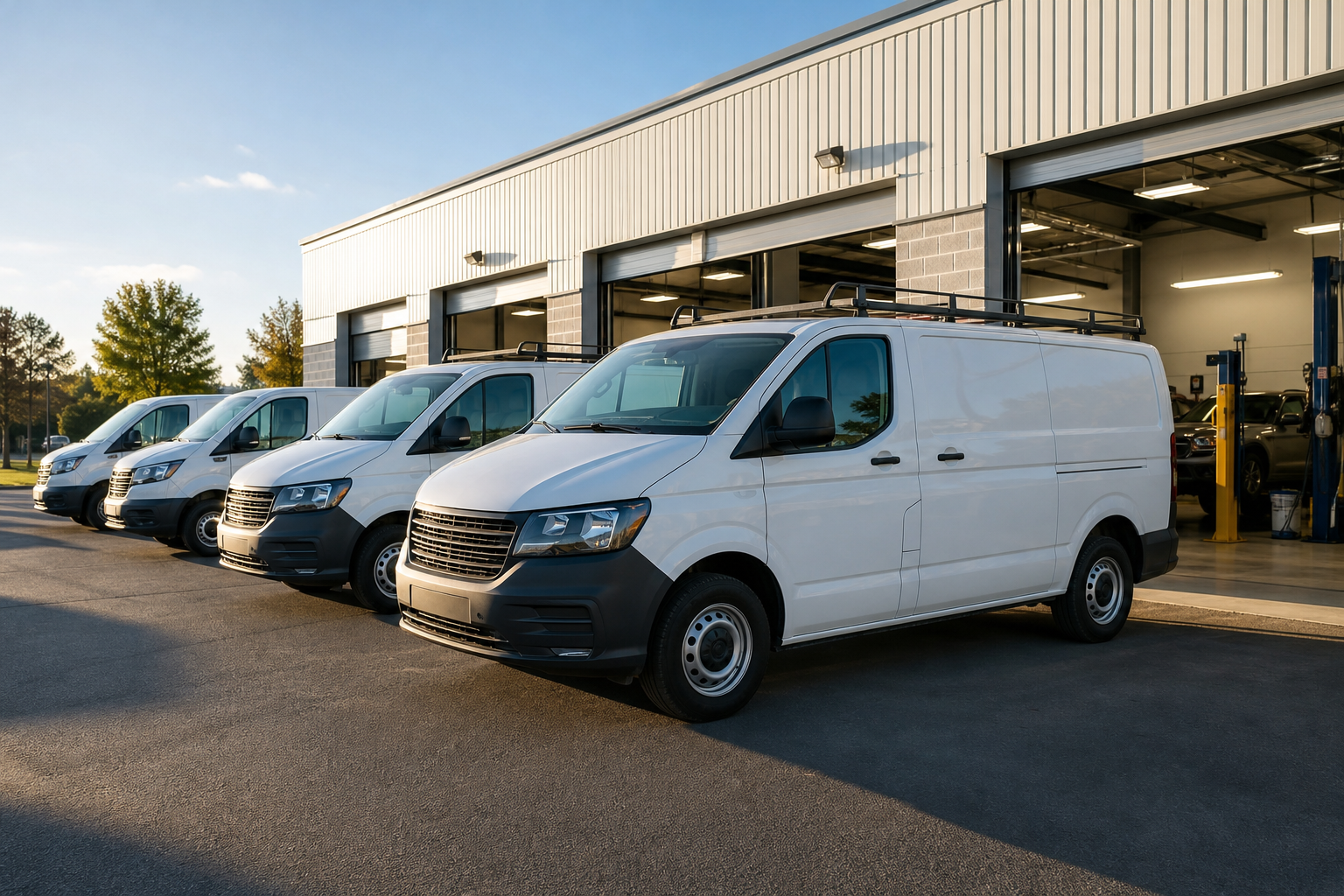
A well-equipped shop can turn around multiple fleet vehicles without long delays.
Cost and Downtime: What Fleet Managers Should Expect
Repair cost depends heavily on severity. Minor dent and scuff repairs often fall in the low hundreds of dollars, while panel replacement and paint blending can run into the low thousands. In particular, structural frame work carries the highest cost because it requires specialized equipment and longer labor time.
Meanwhile, downtime matters just as much as price for many fleet operators. According to Federal Motor Carrier Safety Administration crash data, large trucks alone were involved in over 500,000 police-reported crashes in a recent reporting year, underscoring how frequently commercial vehicles need repair services nationwide. Consequently, shops that schedule efficiently and communicate clear timelines help businesses avoid costly idle vehicles.
Working with Insurance Companies and Fleet Accounts
Insurance coordination is often the slowest part of the repair process if a shop lacks experience with commercial claims. Therefore, choosing a facility that regularly works with adjusters and fleet management companies can shorten approval times significantly. In many cases, the shop will handle most communication directly, which reduces the administrative burden on the vehicle owner.
Additionally, transparency throughout the process, including itemized estimates and photo documentation, helps avoid disputes over scope or cost. If you are still exploring your options, this resource on finding professional auto body repair services offers additional guidance on vetting a shop before committing.
Frequently Asked Questions About Auto Body Repair for Commercial Vehicles Orange County
What is auto body repair for commercial vehicles Orange County fleets need?
Auto body repair for commercial vehicles Orange County fleets need covers collision damage assessment, frame straightening, panel and dent repair, and commercial-grade paint matching for vans, trucks, and other work vehicles. It is performed by technicians trained to handle heavier gauge metal and fleet-specific coatings.
How long does commercial vehicle collision repair usually take?
Minor cosmetic repairs on commercial vans or trucks often take two to four business days, while structural frame repairs can take one to two weeks. Turnaround depends on parts availability and the extent of the damage.
How much does fleet collision repair cost in Orange County?
Costs vary widely based on severity, ranging from a few hundred dollars for a bumper repair to several thousand dollars for structural work. Most shops provide a written estimate after a hands-on inspection before any work begins.
Can a commercial vehicle stay in service while repairs are scheduled?
In many cases, yes, if the damage is cosmetic and the vehicle remains safe to drive. However, any structural or frame damage should take the vehicle out of service immediately until it is inspected and repaired.
Do commercial auto body shops work directly with insurance companies?
Most established shops coordinate directly with insurance adjusters and fleet management companies to streamline claims. This reduces paperwork for the vehicle owner and helps keep the repair timeline on track.
What types of commercial vehicles can typically be repaired?
Shops experienced in commercial work generally repair cargo vans, pickup trucks, box trucks, service vehicles, and light-duty fleet cars. Some facilities also handle wraps, decals, and company branding removal and reapplication.
Why is paint matching harder on commercial fleet vehicles?
Fleet vehicles often have custom colors, sun-faded finishes, or layered branding that makes an exact match more difficult than on a standard passenger car. Experienced technicians use computerized color-matching systems to blend panels seamlessly.
What certifications should an Orange County shop have for commercial work?
Look for technicians with I-CAR training and manufacturer-specific certifications relevant to the vehicle brands in your fleet. These credentials indicate the shop follows current structural and safety repair standards.
How does commercial vehicle repair differ from personal car repair?
Commercial repairs often involve heavier materials, reinforced frames, and business considerations like minimizing downtime or coordinating with fleet managers. Personal vehicle repairs typically focus only on the individual owner’s timeline and preferences.
What mistakes do fleet managers commonly make when choosing a repair shop?
A common mistake is choosing the lowest bid without confirming the shop has commercial vehicle experience or proper certifications. Another is failing to get a written estimate that details labor, parts, and expected turnaround.
How often should commercial vehicles receive body inspections?
Many fleet operators schedule a visual body inspection every six months, in addition to repairs after any visible damage. Regular checks catch rust, loose panels, or minor dents before they worsen.
What information should I bring when scheduling commercial vehicle repair?
Bring the vehicle’s insurance information, any incident or accident report, photos of the damage, and fleet account details if applicable. This helps the shop prepare an accurate estimate before the vehicle even arrives.
Final Thoughts
In summary, auto body repair for commercial vehicles Orange County fleets rely on requires more than general collision skills. It demands frame expertise, commercial-grade paint matching, and a clear process for working with insurance and fleet accounts. Ultimately, choosing a shop with proven fleet experience helps minimize downtime, control costs, and keep vehicles road-ready. Whether you manage a single service truck or a full delivery fleet, taking the time to vet a qualified Orange County shop pays off in fewer repeat repairs and safer vehicles on the road.


