


Auto body disposal practices Orange County drivers should know about are the everyday methods a collision shop uses to store, recycle, and discard paint, solvents, fluids, and damaged parts. If you are recovering from an accident, this may be the last thing on your mind. Still, it says a lot about how a shop treats your car, your neighbors, and the community.
Quick answer: Auto body disposal practices Orange County shops follow must meet California and federal hazardous waste rules. A responsible shop stores waste in closed, labeled containers, uses licensed haulers, keeps records, and recycles what it can.
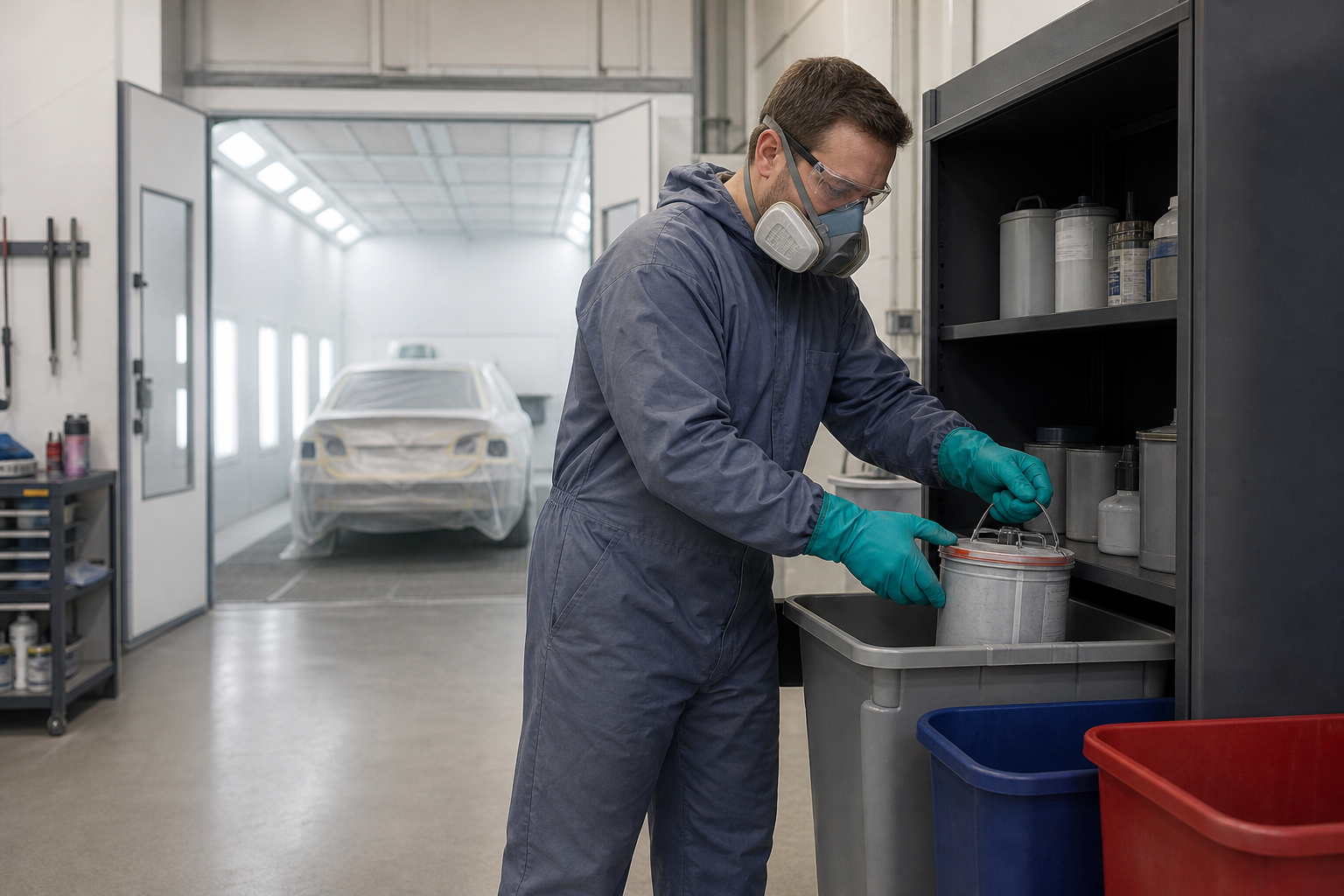
A well-run shop keeps waste sealed, labeled, and separate from the repair area.
What Waste Does a Collision Repair Shop Create?
Collision repair is more than hammers and paint guns. Several materials need careful handling once a job is done.
- Leftover paint, thinners, and cleaning solvents
- Used spray booth filters and sanding dust
- Rags and masking materials soaked with chemicals
- Old fluids, such as coolant, oil, and brake fluid
- Damaged panels, bumpers, glass, and scrap metal
Some of these items are classed as hazardous waste. Others can be recycled. As a result, a good shop sorts materials at the source instead of mixing everything together.
What Rules Apply to Body Shops in California?
California has some of the strictest hazardous waste rules in the country. The California Department of Toxic Substances Control oversees how hazardous waste is stored, transported, and disposed of. At the federal level, the U.S. Environmental Protection Agency sets the national framework.
In practice, these rules mean shops must use proper containers, label them, limit how long waste sits on site, and hand it to licensed transporters. Local agencies in Orange County may also inspect facilities. Specific requirements depend on how much waste a shop generates, so a shop should be able to explain how it complies.
Why Responsible Disposal Matters to Local Drivers
Improper disposal can reach storm drains, soil, and the air. In a dense area like North Orange County, that affects everyone. Therefore, a shop’s habits are a fair thing to ask about.
There is also a quality link. A shop that keeps a tidy, organized facility usually takes the same care with your repair. Meanwhile, workers who handle chemicals safely stay healthier, which supports steady, skilled teams.
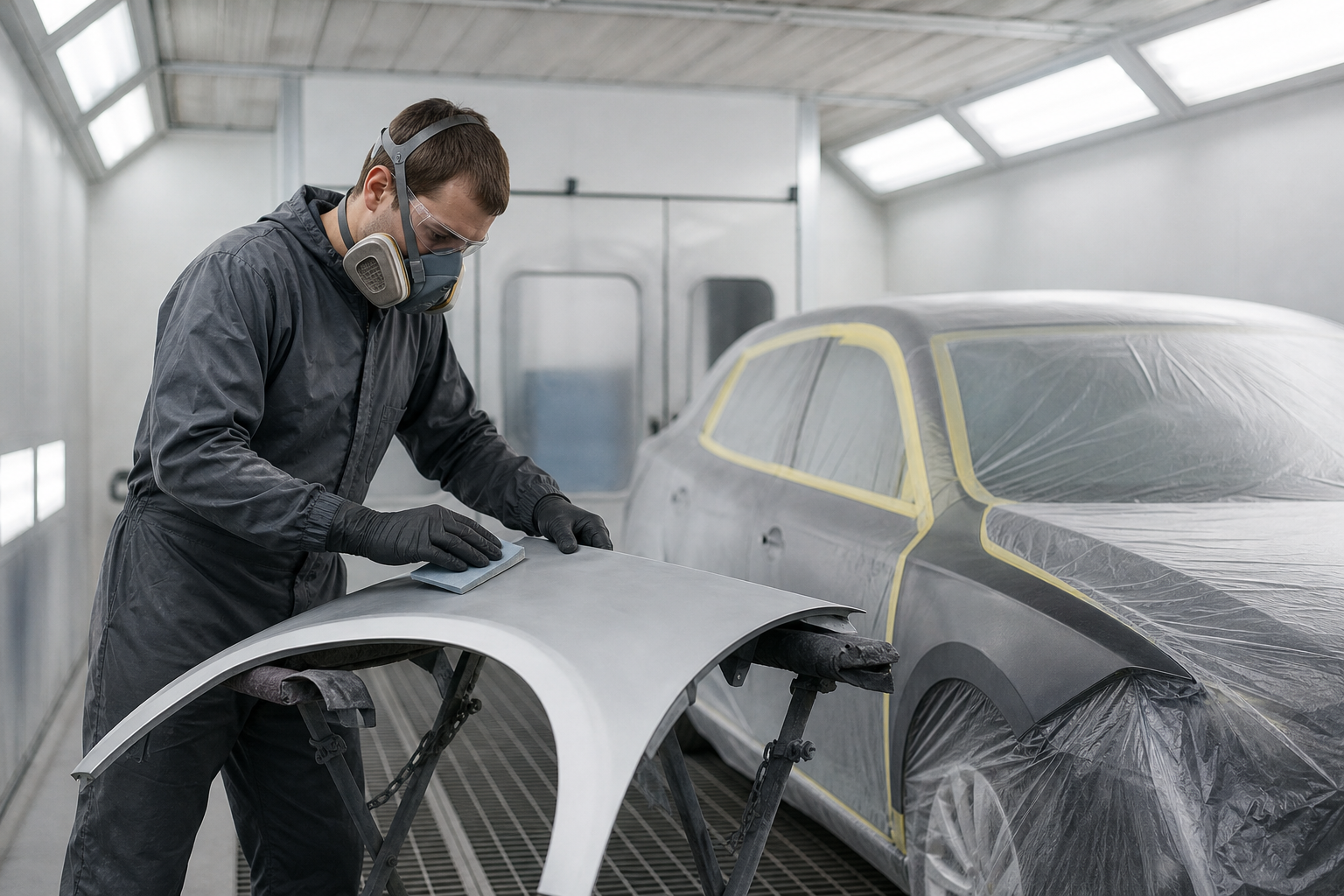
A proper paint booth helps control overspray and keeps solvents contained.
How a Green Auto Body Shop Reduces Waste
A green shop does more than meet the minimum. For example, it may use computerized color matching to mix only what a job needs, which cuts leftover paint. It may also recycle scrap metal, fluids, and cardboard.
Repair choices matter too. Paintless dent repair can fix some dents without paint or filler, so it can avoid paint waste entirely. However, it only works on certain dents, so a technician must inspect the damage first.
How Breaautobody.com Approaches It
Family-owned since 1979 in Brea, breaautobody.com reports using green products and disposal practices. The shop has a paint booth, a mixing station, and computerized color matching with hand tinting by technicians. It also holds ASE Blue Seal and I-CAR Gold credentials, which reflect ongoing training. Because the shop is family-run, three generations take part in daily operations, and that long-term view shapes how it treats the community.
How to Check a Shop’s Disposal Practices
You do not need technical training. These five steps take about 15 minutes.
- Ask how the shop stores and disposes of solvents, paint waste, and rags.
- Ask whether a licensed transporter hauls hazardous waste and whether shipping records are kept.
- Look around during your estimate for a paint booth, closed and labeled containers, and an orderly floor.
- Confirm training credentials such as I-CAR and ASE.
- Get a written estimate and compare it with other shops.
For more help choosing, read our guide on finding a trustworthy body shop in Orange County. You can also browse top-rated auto body shops in Orange County for comparison tips.
Insurance, Estimates, and Eco-Friendly Repair
Many drivers worry that choosing a careful shop will complicate an insurance claim. It usually does not. Almost all insurers work with qualified shops, and you may choose where your car is repaired. Our insurance claims repair guide explains the process, and our page on finding the best local shop covers what to look for nearby.
We know an accident is stressful. That is why our team handles claims, can arrange towing and a rental car, and offers a complimentary local shuttle. To start, call (714) 990-1500 for a free estimate. We are at 430 N Berry St, Brea, and open Monday to Friday, 8am to 5pm.
Frequently Asked Questions
What are auto body disposal practices in Orange County?
They are the methods a collision shop uses to store, recycle, and dispose of waste such as paint, solvents, used parts, and fluids. In California, shops must follow state and federal hazardous waste rules.
Why does proper disposal matter for collision repair?
Paint, solvents, and fluids can harm soil, water, and people if handled poorly. Proper disposal protects neighbors, workers, and local waterways.
What waste does a body shop produce?
Common waste includes paint and thinner residue, used solvents, spray booth filters, sanding dust, rags, old fluids, damaged parts, and scrap metal.
Which agencies regulate hazardous waste in California?
The California Department of Toxic Substances Control and the U.S. EPA oversee hazardous waste rules. Local agencies may also inspect shops.
Can a body shop be eco-friendly and still do quality work?
Yes. Responsible waste handling and careful repair methods can go together. Shops that invest in training and equipment often do both well.
What does a licensed hazardous waste hauler do?
A licensed hauler transports regulated waste from the shop to an approved facility. The shop should keep records of each shipment.
How can I tell if a shop is a green auto body shop?
Ask about its waste handling, recycling, and materials. Then look for orderly, labeled containers and a proper paint booth.
Does paintless dent repair create less waste?
Often, yes. Paintless dent repair fixes some dents without paint or filler, so it can avoid paint waste. It only suits certain dents, so the shop must inspect the damage first.
Are water-based paints better for the environment?
Water-based paints generally release fewer solvent emissions than older solvent-based systems. Leftover paint and cleanup materials still need proper disposal.
Do disposal practices affect my repair cost?
Compliant disposal is a normal cost of doing business, and estimates often include shop materials. Ask for a written estimate so you can compare.
What are common mistakes when judging a shop’s environmental practices?
People often rely on slogans instead of asking specifics. Ask how waste is stored, who hauls it, and what records the shop keeps.
How do I get a free estimate from a Brea shop?
Call breaautobody.com at (714) 990-1500 to book an inspection. Hours are Monday to Friday, 8am to 5pm, and Saturday by appointment.

A clear estimate conversation is a good time to ask about materials and waste handling.
Conclusion
Responsible auto body disposal practices Orange County residents can trust come down to a few things: closed and labeled containers, licensed haulers, recycling, careful paint use, and honest answers. Ask the questions, look at the facility, and compare estimates. If you would like a caring, family-run team in Brea to walk you through it, call (714) 990-1500 to request a free estimate.


