

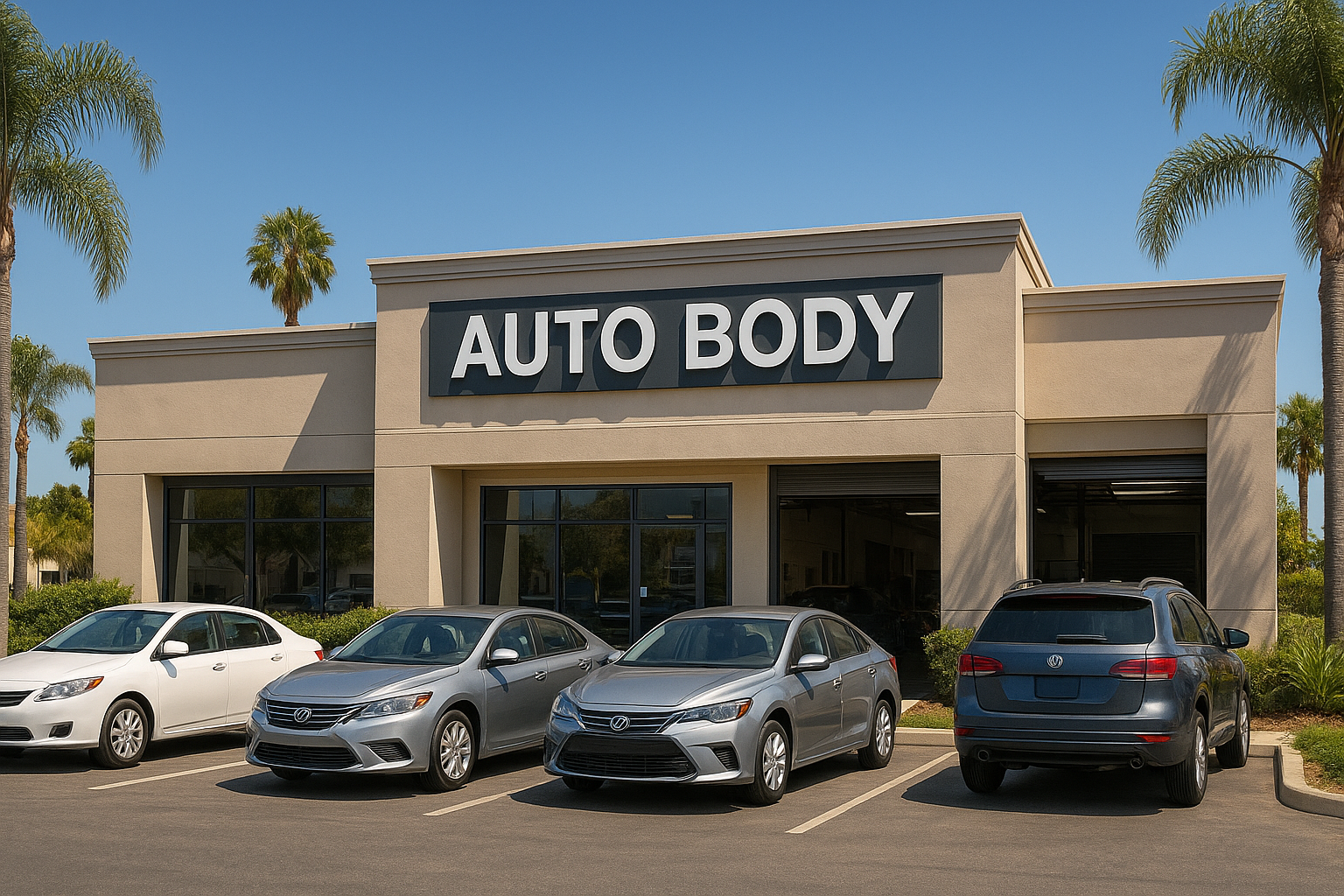
If you need a dependable auto body shop Orange County drivers can count on, you already know the stakes are high — a bad repair can quietly compromise your car’s safety long after the paint looks fine. Between Anaheim, Irvine, Santa Ana, Fullerton, Brea, Costa Mesa, and every freeway in between, Orange County drivers face fender-benders and parking-lot dings constantly. However, not every shop that advertises “collision repair” delivers the same level of skill, transparency, or accountability.
This guide goes far beyond a simple location listing. Instead, it walks you through exactly how to evaluate certifications, repair costs, insurance claims, ADAS recalibration, and the real differences between a locally accountable shop and a high-volume chain facility. As a result, by the end of this page you’ll know precisely what separates a great Orange County repair shop from an average one.
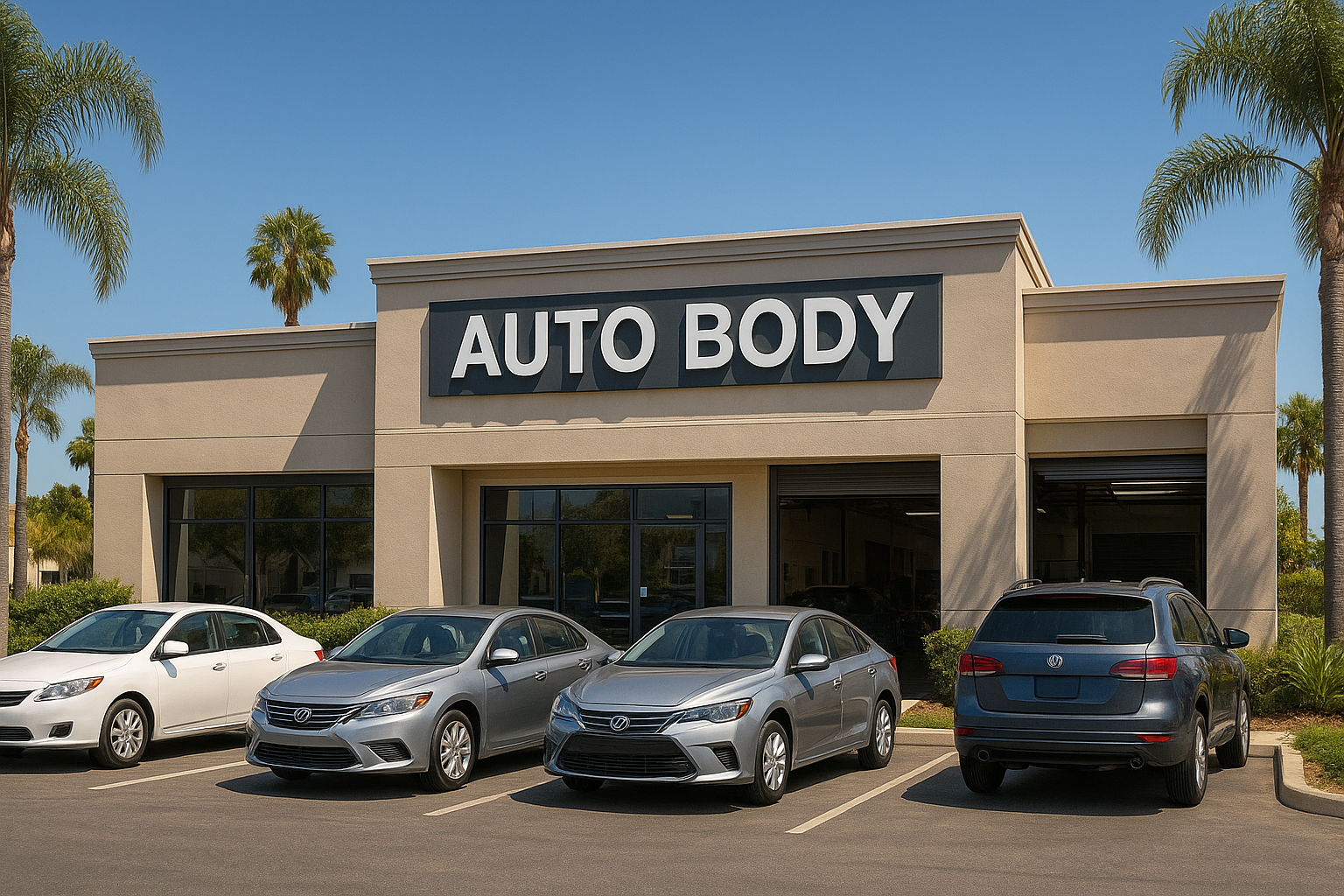
A well-maintained facility signals professionalism before you even walk through the door of a quality auto body shop Orange County residents trust.
What Is an Auto Body Shop and What Does It Actually Repair?
An auto body shop specializes in restoring a vehicle’s exterior structure and appearance after a collision, hailstorm, or everyday cosmetic wear. According to Wikipedia’s overview of auto body repair, these facilities handle everything from minor dent removal to full structural reconstruction of the vehicle frame.
Core services typically include collision repair, paint refinishing, frame straightening, bumper replacement, and glass work. In addition, many Orange County shops now offer paintless dent repair (PDR), a technique that removes minor dings without disturbing the factory paint finish, making it faster and often cheaper than traditional bodywork.
Because auto body repair touches both cosmetic and structural systems, the shop you select directly affects your car’s crash safety, resale value, and everyday driving experience. Therefore, this is not a decision to make casually or based on price alone.
Where to Find a Trusted Auto Body Shop Orange County Drivers Recommend
Orange County spans dozens of distinct communities, and repair quality can vary significantly from one city to the next. Consequently, it helps to know what to expect no matter where you live.
- Anaheim and Fullerton: High traffic volume near the 91 and 5 freeways means frequent fender-bender repairs and bumper work.
- Irvine and Tustin: A higher concentration of newer vehicles with advanced driver assistance systems (ADAS), which increases demand for sensor recalibration after repairs.
- Brea and Placentia: Established, community-rooted shops with long-standing local reputations are common here.
- Santa Ana and Orange: A dense mix of independent shops and larger facilities, so comparing certifications matters even more.
- Costa Mesa, Huntington Beach, and Newport Beach: Coastal salt air and UV exposure accelerate clear-coat wear, making paint quality especially important.
No matter which city you call home, the fundamentals below apply equally — certifications, transparent pricing, and warranty protection matter more than proximity alone.
How to Choose the Right Orange County Collision Repair Shop: A 6-Step Guide
Selecting the right repair facility does not have to feel overwhelming. Follow these six steps to make a confident, well-informed decision.
Step 1 — Document the damage. Photograph all visible damage from multiple angles in good lighting before visiting any shop. This record protects you during insurance negotiations and helps technicians provide accurate, itemized estimates from the start.
Step 2 — Research certified shops. Look specifically for I-CAR Gold Class certification, ASE-certified technicians, and any manufacturer-specific OEM certification relevant to your vehicle’s brand and model year.
Step 3 — Request multiple written estimates. Visit two or three shops and request itemized written quotes. Compare price, parts quality (OEM versus aftermarket), labor rates, and realistic completion timelines side by side.
Step 4 — Verify warranty and insurance handling. A reputable shop offers a written workmanship warranty and communicates directly with your insurer, which considerably reduces your administrative burden during the claims process.
Step 5 — Ask about ADAS recalibration and status updates. Confirm whether sensor recalibration is included in your estimate and whether the shop provides text, email, or app-based repair status updates so you always know where your vehicle stands.
Step 6 — Inspect the finished work in daylight. Before signing off, check paint color matching, panel alignment, and every area where new parts were installed under natural sunlight, not shop fluorescents.
Certifications That Actually Signal Quality
Not all certifications carry equal weight. However, three specific credentials stand out as genuine quality indicators across the Orange County market.
I-CAR Gold Class Explained
I-CAR Gold Class is the collision repair industry’s highest training recognition. Shops earning this designation prove that every key role meets rigorous annual training requirements, including modern construction techniques involving high-strength steel and aluminum-intensive vehicle bodies.
ASE Certification Explained
ASE (Automotive Service Excellence) certification covers individual technicians rather than the shop as a whole. Therefore, asking whether a shop employs ASE-certified body technicians tells you directly about the skill level of the people working on your vehicle.
Manufacturer-Specific OEM Certifications
Beyond general credentials, many automakers now certify specific shops to repair their vehicles according to factory specifications. Tesla, Honda, Ford, and other brands maintain approved repair networks with specialized equipment requirements. If you drive a newer vehicle, ask whether the shop holds manufacturer-specific certification for your exact make — this detail is often overlooked but matters enormously for structural repairs.
For example, Brea Auto Body is a well-regarded Orange County facility where you can verify credentials firsthand and see what a professional local shop looks like in practice.
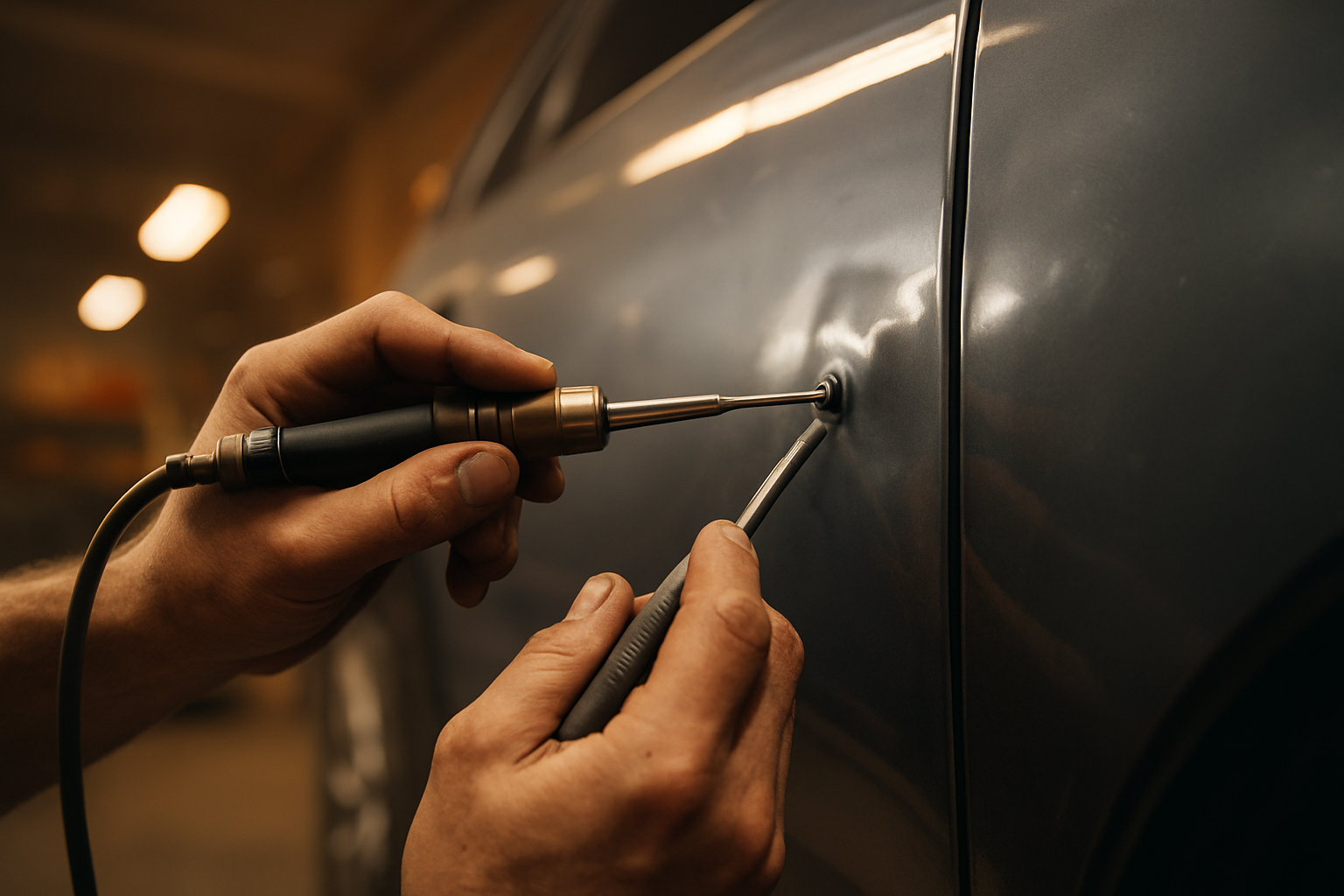
Certified technicians bring precision and up-to-date training to every collision repair job.
Auto Body Repair Costs in Orange County: A Full Breakdown
Repair costs vary considerably depending on damage severity. Below is a realistic breakdown so you know what to expect before requesting an estimate.
- Minor cosmetic work (small dent, scratch, or scuff): roughly $100–$300
- Bumper repair or replacement: roughly $300–$1,200 depending on sensor integration
- Panel repaint with color match: roughly $500–$1,800 per panel
- Major structural or frame repair: can exceed $5,000 depending on parts and labor
The primary cost drivers include the extent of structural damage, whether OEM or aftermarket parts are used, paint match complexity, and current regional labor rates. Because Southern California labor rates typically run higher than the national average, Orange County estimates often reflect that premium.
ADAS Calibration: Why Modern Repairs Cost More
If your vehicle has advanced driver assistance systems (ADAS) — such as lane-keeping cameras or radar sensors embedded in the bumper — recalibration after any body repair adds both time and cost. According to the National Highway Traffic Safety Administration, these systems must be precisely recalibrated to function correctly after a collision.
Consequently, always ask your Orange County shop whether ADAS recalibration is included in your written estimate. Skipping this step can leave safety systems like automatic emergency braking working incorrectly, even if the bodywork looks perfect.
Repair Status Tracking and Digital Communication
Uncertainty during a repair is one of the biggest sources of customer frustration. Therefore, top-tier Orange County shops now offer text or app-based status updates so you always know your vehicle’s stage — teardown, parts ordering, paint, reassembly, or quality check.
When comparing shops, ask specifically how often you’ll receive updates and through what channel. A shop that proactively communicates saves you dozens of unnecessary phone calls over a multi-week repair.
Navigating Insurance Claims Like a Pro
One of the most confusing aspects of collision repair is dealing with insurance. First, it’s important to know that in California, you have the legal right to choose your own repair shop — your insurer cannot force you to use a specific facility. The California Department of Insurance confirms this consumer protection explicitly.
A quality shop communicates directly with your insurance adjuster, submits the repair estimate, and negotiates any supplements if additional damage surfaces mid-repair. As a result, you avoid the frustrating back-and-forth that many vehicle owners dread.
Meanwhile, review your policy to confirm your deductible and whether rental car reimbursement is included during the repair period. Many Orange County shops partner with local rental agencies to make this transition seamless.
Environmentally Responsible Repair Practices
Increasingly, Orange County shops are adopting waterborne, low-VOC (volatile organic compound) paints and closed-loop spray booths that reduce airborne emissions. In particular, this matters for coastal communities where air quality regulations are stricter. Ask whether your shop uses waterborne paint systems — it’s a small question that reflects a shop’s overall investment in modern equipment.
Common Mistakes Drivers Make When Choosing a Shop
Even well-intentioned drivers make avoidable errors during shop selection. For example, choosing the lowest estimate without verifying parts quality often leads to poor paint matching or premature panel failure down the road.
Another frequent mistake is accepting verbal estimates only. Always insist on a written, itemized quote to avoid surprises on the final bill. Similarly, skipping the warranty conversation is a costly oversight — a shop unwilling to put its promises in writing is one worth avoiding entirely.
Finally, many drivers feel pressured into using their insurer’s “preferred” shop. However, remember that preferred network shops sometimes prioritize speed and insurer cost savings over top repair quality. Therefore, doing your own research first puts you in a stronger negotiating position.
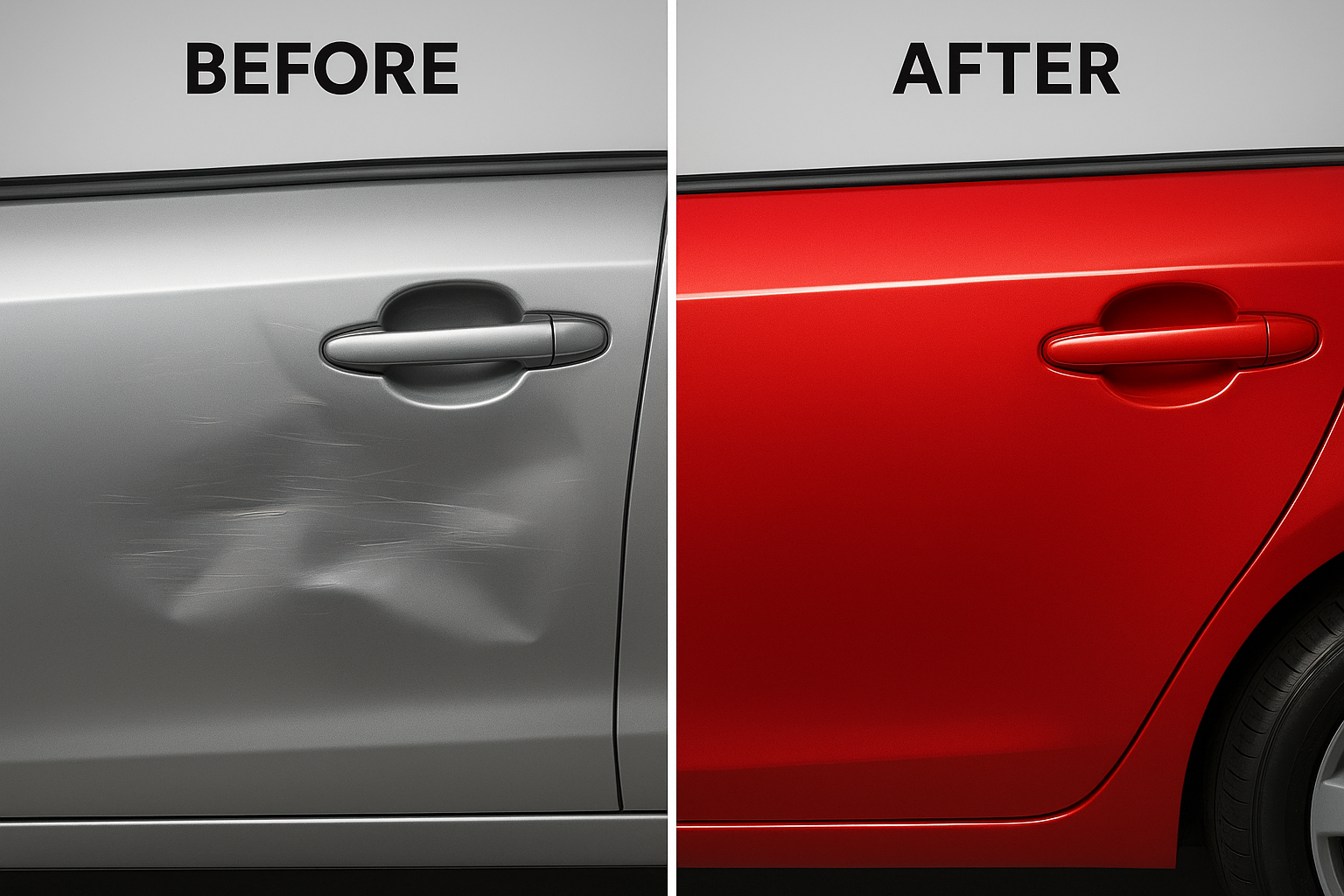
Professional paint refinishing restores both appearance and protective coating on repaired panels.
OEM vs. Aftermarket Parts: Which Should You Choose?
The parts debate is one of the most discussed topics in collision repair. OEM (original equipment manufacturer) parts are produced by your vehicle’s manufacturer and match factory specifications exactly. As a result, they typically offer the best fit, finish, and long-term durability.
Aftermarket parts, in contrast, come from third-party manufacturers. They can be significantly cheaper, but quality varies widely between brands — some meet or exceed OEM standards, while others require extra fitting adjustments.
Ask your shop which parts they plan to use and why. A transparent shop explains the trade-offs clearly instead of defaulting automatically to whatever the insurer prefers.
Independent Shops vs. Multi-Location Chains: What’s the Real Difference?
When comparing options, it helps to understand how independent, locally owned shops differ from large multi-location chains. Chains often standardize processes across dozens of locations, which can mean faster scheduling but less individual attention to your specific vehicle and situation.
Local shops, on the other hand, build their reputations within the community over years and are therefore more directly accountable to the customers they serve. Additionally, a shop rooted in Southern California understands how intense UV exposure and coastal humidity affect paint durability and clear-coat longevity — regional knowledge that informs better material choices during refinishing.
Resources like Brea Auto Body illustrate what a community-rooted Orange County shop looks like — transparent, certified, and focused on long-term relationships rather than one-time transactions.
How to Check Reviews and Reputation Before You Book
Before committing to any shop, spend ten minutes checking Google reviews, Yelp, and the Better Business Bureau. Specifically, look for patterns in complaints — repeated mentions of poor color matching or missed deadlines are red flags worth taking seriously.
In contrast, a shop with consistent five-star feedback about communication and paint quality across dozens of reviews is a strong signal of reliability. Above all, trust patterns over isolated reviews in either direction.
Quick Answer
The best auto body shop Orange County drivers can rely on combines I-CAR or ASE certification, transparent written estimates, ADAS recalibration awareness, a lifetime workmanship warranty, and direct insurance claim handling. Prioritizing these factors over price alone leads to safer, longer-lasting repairs.
Frequently Asked Questions About Auto Body Shop Orange County Options
What does an auto body shop in Orange County typically repair?
An auto body shop in Orange County handles collision damage, dent removal, paint refinishing, bumper repair, frame straightening, and glass replacement. Most shops also manage insurance claims on your behalf, which simplifies the entire process.
How do I choose the best auto body shop Orange County has available?
Look for I-CAR or ASE certifications, verified customer reviews, written estimates, and a warranty on repairs. Visiting the shop in person to assess cleanliness and professionalism is also a smart step before committing.
How long does auto body repair typically take?
Minor repairs like small dents or paint touch-ups can take one to three days. Major collision repairs involving structural work may take one to three weeks depending on parts availability and damage severity.
Will my insurance cover auto body repairs in Orange County?
If you carry comprehensive or collision coverage, your insurer typically covers most auto body repairs minus your deductible. A reputable shop can help you file and manage the claim directly, reducing your paperwork burden.
What certifications should a quality auto body shop have?
Look for I-CAR Gold Class certification, ASE-certified technicians, and manufacturer-specific OEM certification if you drive a newer vehicle. These credentials indicate ongoing training and adherence to industry repair standards.
What is paintless dent repair and when is it used?
Paintless dent repair (PDR) removes minor dents without repainting the panel. It works best when the paint surface is undamaged and the dent is not too deep or near a panel edge, making it cost-effective for hail damage and door dings.
How much does auto body repair cost in Orange County?
Minor dent repairs can start around $100 to $300, while major collision repairs involving frame work and repainting can exceed $5,000. Always get at least two written estimates to ensure fair pricing.
Can I get a free estimate at an Orange County auto body shop?
Most reputable shops offer free written estimates. It is advisable to get quotes from two or three shops before committing to repairs so you can compare scope and pricing accurately.
Do auto body shops in Orange County offer a warranty on repairs?
Many quality shops offer a lifetime warranty on their workmanship. Always confirm the warranty terms in writing before authorizing any repair work to protect yourself from future disputes.
What is frame straightening and why does it matter?
Frame straightening restores a vehicle’s structural integrity after a significant collision. A vehicle with an unrepaired bent frame can have compromised handling, uneven tire wear, and reduced safety in future accidents.
Should I use OEM or aftermarket parts for auto body repairs?
OEM parts offer the best fit and finish because they are made by your vehicle’s manufacturer. Aftermarket parts can be less expensive, but quality varies, so ask your shop which they use and request their reasoning.
What’s the difference between an independent shop and a chain repair facility in Orange County?
Independent shops tend to offer more personalized attention and direct owner accountability, while chains offer standardized processes across many locations. Neither is automatically better — always compare certifications and reviews regardless of shop size.
What common mistakes should I avoid when choosing an auto body shop?
Avoid choosing a shop based solely on price, accepting verbal estimates only, and skipping the warranty conversation. Additionally, never let an insurance company pressure you into using a specific shop if you prefer a different one — California law protects your right to choose.
Making the Right Call for Your Orange County Auto Body Repair
Choosing the right auto body shop Orange County drivers rely on comes down to research, credentials, and clear communication. By prioritizing certified technicians, written estimates, ADAS awareness, and warranty-backed workmanship, you protect both your vehicle’s structural integrity and your financial investment.
In summary, don’t rush your decision after an accident. Take time to document the damage, compare at least two written estimates, check reviews, and verify that your chosen shop stands behind its work in writing. As a result, you’ll drive away with repairs that look great and last for years.
For a starting point, explore what a well-established local facility like Brea Auto Body offers — from certified collision repair to direct insurance coordination — and use that benchmark to evaluate every other auto body shop Orange County has to offer.
Want more guidance on vehicle maintenance and repair decisions? Visit our full collision repair blog for additional guides, or head back to our homepage to explore more resources. You can also browse related driver safety topics on our blog archive anytime.

