

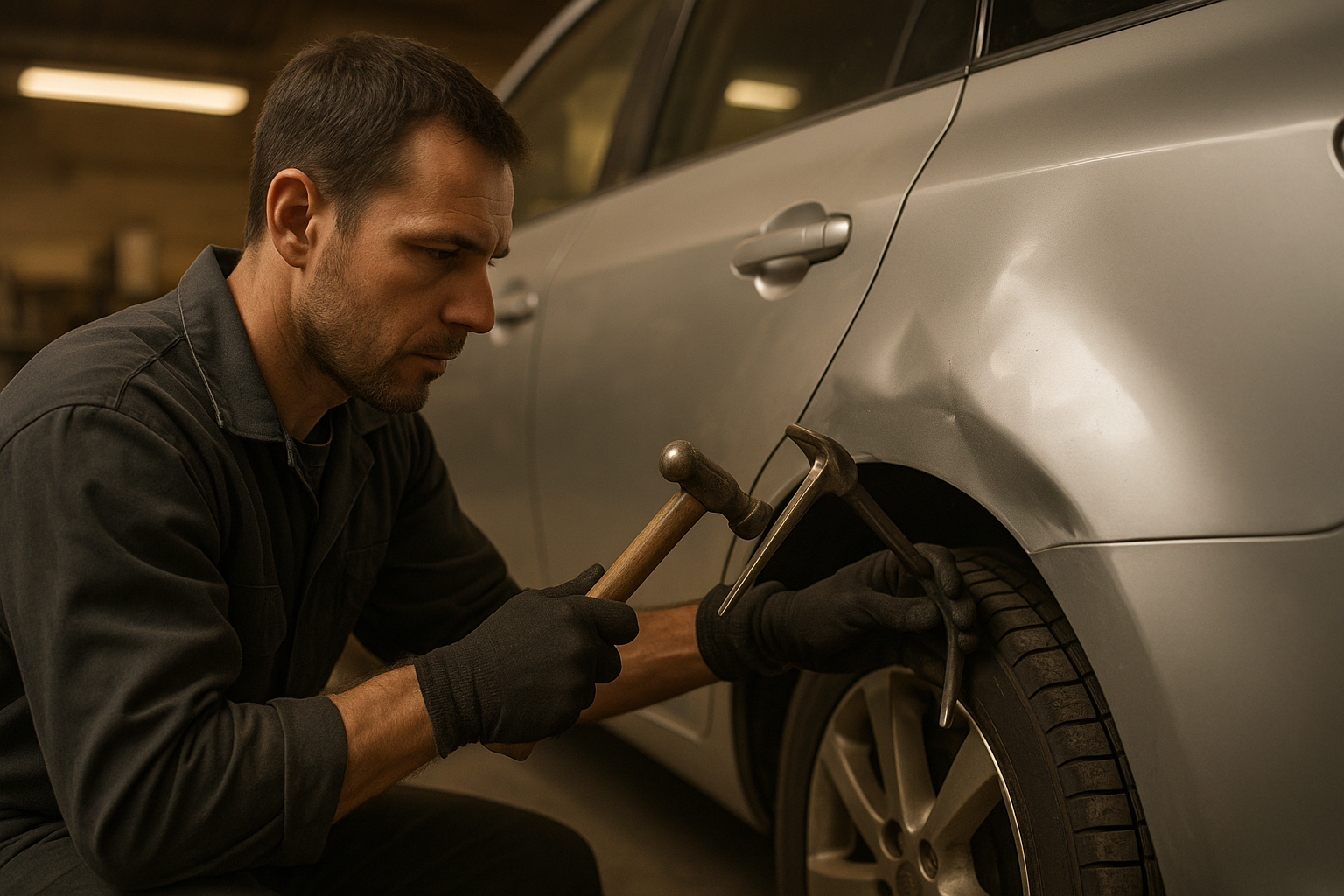
Car body repairs restore your vehicle’s panels, frame, and finish after a collision, a stray shopping cart, hail, or plain old rust — bringing back both structural safety and curb appeal. Whether you’re dealing with a minor parking-lot dent or extensive collision damage, understanding how professional car body repairs actually work helps you avoid overpaying, spot a bad shop from a mile away, and get your car back on the road looking — and performing — like new. Below, we break down every stage of the process, the real costs involved, and exactly how to pick a shop that won’t cut corners.

What Does Auto Body Work Entail?
In short, car body repairs cover any work done to a vehicle’s exterior shell, panels, and, in more serious cases, its underlying frame or unibody structure. Modern vehicles are typically built using a unibody construction (frame and body welded into one piece), which means even a moderate collision can transmit stress through several connected panels at once. As a result, a repair job that looks purely cosmetic on the surface may actually require frame straightening underneath.
Because the body shell also absorbs crash energy to protect passengers, proper repairs aren’t just about appearance. In fact, federal vehicle safety standards exist specifically because structural integrity affects how well a car protects its occupants in a future accident. Therefore, any shop performing car body repairs should treat safety restoration as seriously as cosmetic restoration — the two are inseparable. For a deeper walkthrough, see our How Often Should I Have My Car’s Body Inspected?.
Common Types of Car Body Damage That Need Repair
Not all damage is created equal, and the right fix depends entirely on what you’re dealing with. Below are the five damage types that make up the vast majority of auto body repair jobs.
Dents and Dings
Dents range from tiny door-edge dings to large hail-damaged panels. Small, shallow dents can often be fixed using paintless techniques, while deeper dents usually need traditional filling and repainting. If your vehicle picked up a dent recently, our guide to professional car dent removal services explains which method fits which type of damage. For a deeper walkthrough, see our Car Dent Removal in Brea.
Scratches and Paint Damage
Surface scratches that haven’t reached bare metal can sometimes be buffed out. However, deeper scratches expose metal to moisture, and left untreated, they quickly become a rust problem. Consequently, even “cosmetic” scratches deserve prompt attention.
Rust and Corrosion Damage
Rust spreads beneath paint long before it becomes visible, weakening metal from the inside out. In particular, wheel wells, rocker panels, and door bottoms are the areas most prone to corrosion. Once rust reaches structural panels, it must be cut out and the metal replaced — patching over it never solves the underlying problem.
Collision and Structural Frame Damage
This is the most serious category of car body repairs. A misaligned frame can throw off suspension geometry, tire wear, and airbag deployment timing. Independent crash-safety research from the IIHS consistently shows that improperly restored structural integrity reduces a vehicle’s ability to protect occupants in a second collision. Above all, frame damage should only be repaired by a shop with a computerized measuring system.
Bumper and Panel Damage
Bumpers are engineered to absorb low-speed impacts, so cracked or detached bumper covers are extremely common. In many cases they can be repaired rather than replaced, which saves money without sacrificing safety performance.
The Car Body Repair Process, Step by Step
Understanding the actual workflow helps you evaluate whether a shop is doing the job properly — or skipping steps to save time. Here’s exactly what should happen to your car, from drop-off to delivery.
- Damage assessment and inspection: A technician inspects visible damage, checks for hidden structural issues, and uses measuring equipment to determine whether the frame or unibody has shifted out of alignment.
- Disassembly and panel access: Damaged trim, lights, and adjacent panels are carefully removed so technicians can access the full extent of the damage without hiding any secondary problems.
- Metal work and panel repair or replacement: Bent metal is straightened using specialized pulling equipment, or severely damaged panels are cut out and replaced with new or certified salvage parts.
- Filling, shaping, and surface preparation: Body filler is applied to smooth minor imperfections, then sanded in progressively finer grits until the surface is perfectly level and ready for primer.
- Priming and paint matching: A primer coat seals the repaired area, while the paint department uses your vehicle’s exact color code to mix a matching formula that blends seamlessly with surrounding panels.
- Painting and clear coat application: Base color is sprayed in a controlled booth, followed by a protective clear coat that restores gloss and shields the new paint from UV damage and debris.
- Reassembly and quality inspection: Trim, lights, and hardware are reinstalled, and a final inspection confirms panel gaps, paint blending, and mechanical function all meet factory-level standards.
- Final detailing and delivery: The vehicle is cleaned inside and out, and the shop walks you through the completed repair before handing back the keys.
DIY Car Body Repairs vs. Professional Service: What’s the Real Difference?
DIY kits can genuinely handle small jobs — for example, touch-up paint pens for tiny chips or suction-based tools for shallow dents. In contrast, anything involving structural metal, deep rust, or paint blending across multiple panels almost always looks worse after a DIY attempt than before it.
Professional car body repairs use color-matching spectrophotometers, climate-controlled paint booths, and frame-measuring computers that simply aren’t available at home. Similarly, insurance-approved shops carry liability guarantees on their work, which a DIY repair never offers. If your goal is a repair that holds its resale value, professional service is worth the investment.
How Much Do Car Body Repairs Cost?
Cost depends heavily on damage severity, panel count, and whether structural repair is involved. As a general guide:
- Minor dent or scratch repair: roughly $75–$300 depending on panel size and paint blending required. For a deeper walkthrough, see our Vehicle Diagnostics & Repair in Brea | Brea Auto Body.
- Bumper repair or replacement: typically $300–$900, with painted-to-match bumpers costing more. For a deeper walkthrough, see our Car Bumper Repair in Brea.
- Multi-panel collision repair: commonly $1,500–$5,000, depending on parts availability and labor hours. For a deeper walkthrough, see our Car Collision Repair Experts: Your Complete Guide.
- Frame straightening: often $2,000 and up, since it requires specialized equipment and extended labor time.
Naturally, prices vary by region and shop overhead. If cost is your primary concern, our breakdown of an affordable auto body shop that still delivers quality work shows how to save money without sacrificing the repair standards discussed above.
How to Choose the Right Shop for Your Car Body Repairs
Not every shop measures up, and picking the wrong one can mean mismatched paint, poor panel gaps, or worse — a structurally unsafe repair. Specifically, look for I-CAR or ASE-certified technicians, a written warranty, and OEM-approved repair procedures. For a deeper walkthrough, see our ASE Certified Body Shop: What It Means, How to Choose, and Why It Matters.
For a deeper checklist, see our guide on how to ensure quality in your car body repair before you ever hand over your keys. And if you’re still comparing options nearby, this resource on how to find the best local body shop near you walks through exactly what questions to ask during a quote.
Car Body Repairs and Insurance Claims: What You Need to Know
In most states, you have the legal right to choose your own repair shop, regardless of which shop your insurer recommends. Furthermore, a reputable shop will work directly with your adjuster, provide a written estimate, and use OEM parts when your policy allows it.
Before authorizing any work, always ask whether the estimate includes a full teardown inspection. Otherwise, hidden damage discovered mid-repair can delay your car’s return and complicate your claim. For a deeper walkthrough, see our Car Bumper Repair in Brea.
Maintaining Your Car After Body Repairs
Once your vehicle body repair is complete, avoid automatic car washes for at least two weeks so the new paint can fully cure. In addition, apply a quality wax after 30 days to protect the finish, and inspect repaired panels periodically for early signs of bubbling paint, which can indicate trapped moisture. Consequently, catching small issues early keeps your repair looking factory-fresh for years.
Frequently Asked Questions About Car Body Repairs
How much do car body repairs cost on average?
Most car body repairs fall between $300 and $2,500, depending on the number of panels affected and whether structural work is required. For a deeper walkthrough, see our How Often Should I Have My Car’s Body Inspected?.
Can I drive my car with body damage before repairs?
It depends on the damage. Minor dents are generally safe to drive with, but exposed metal edges, damaged lights, or misaligned panels near the frame should be checked before you drive.
How long do car body repairs take?
Minor repairs often take one to three days, while multi-panel or structural repairs can take one to two weeks due to parts ordering and paint curing time.
Will my insurance cover car body repairs?
Collision and comprehensive coverage typically pay for car body repairs after damage from accidents, weather, or vandalism, minus your deductible. Liability-only policies do not cover your own vehicle’s damage.
Can body repairs be done without repainting the whole car?
Yes. Modern color-matching technology allows technicians to blend new paint into surrounding panels so only the repaired area and its immediate neighbors need to be sprayed.
What’s the difference between car body repairs and mechanical repairs?
Car body repairs address the exterior shell, panels, and frame, while mechanical repairs deal with the engine, transmission, and other internal systems that make the car run.
Conclusion: Getting Car Body Repairs Right the First Time
Ultimately, quality car body repairs come down to three things: an accurate damage assessment, a shop that follows every step of the proper repair process, and honest communication about cost and timeline. Above all, don’t let a shop skip the teardown inspection or rush the paint-matching stage — those shortcuts are exactly what separate a repair that lasts from one that fails within a year. With the knowledge in this guide, you’re now equipped to spot a quality shop, understand fair pricing, and get your vehicle back to safe, showroom-ready condition.

