

A car respray near me is usually the first thing drivers search for the moment their paint starts chipping, fading, or showing damage after a fender-bender. Fresh paint does more than restore looks — it seals bare metal from rust and protects the resale value of your vehicle. However, the quality of that respray depends entirely on which local shop you choose, and that single decision separates a flawless finish from a costly do-over.
This guide goes further than a typical shop-locator page. Below, you’ll find real cost ranges by paint tier, a side-by-side comparison of national chains versus independent shops, warranty red flags, financing and insurance options, DIY pitfalls, and the environmental rules every legitimate paint shop must follow. In short, everything you need to book a car respray near me with total confidence — without a second trip back to Google.
What Exactly Does a Car Respray Involve?
A car respray is the process of stripping, sanding, priming, and repainting one or more exterior panels to restore or completely change a vehicle’s appearance. According to Wikipedia’s overview of automotive paint, modern vehicle coatings involve several distinct layers — e-coat (electrophoretic coating, a rust-resistant base layer), primer, base coat, and clear coat — each serving a specific protective or cosmetic purpose.
In other words, a respray is far more involved than a spray-can touch-up. Consequently, it restores structural paint integrity, blocks moisture from reaching bare metal, and can meaningfully improve resale value when it’s done correctly.
Car Respray Near Me: Why Your Local Choice Matters Most
A poor-quality paint job can peel, orange-peel (a bumpy texture caused by improper spray technique), or fade within months. Therefore, choosing a skilled, reputable shop near you is essential — not optional. A local shop also means easy follow-up visits if anything looks off after pickup.
Furthermore, being nearby lets you walk the facility before committing. Specifically, look at booth cleanliness, mixing equipment, and how clearly staff explain the process. Above all, a shop that welcomes questions is usually the one that stands behind its work.
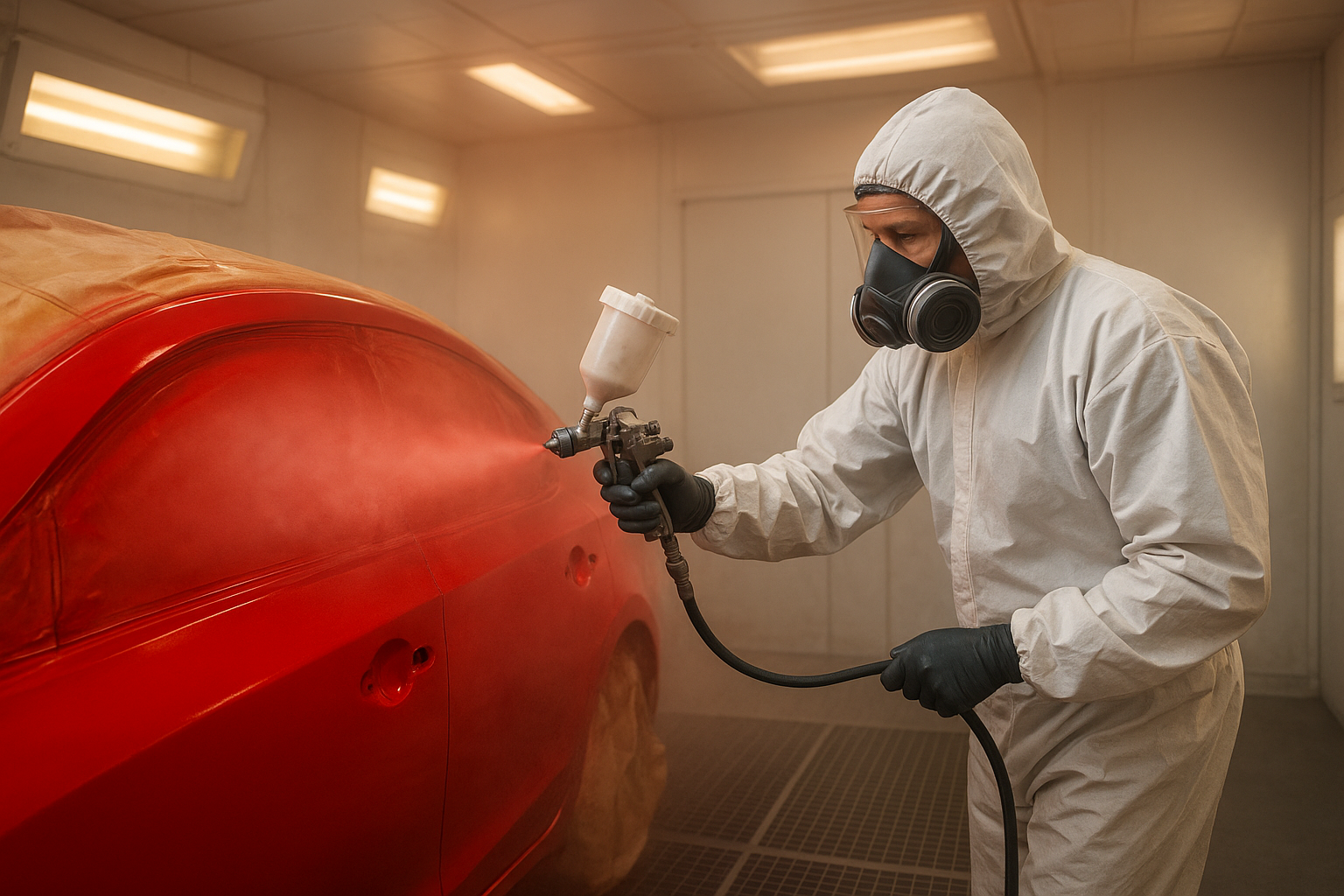
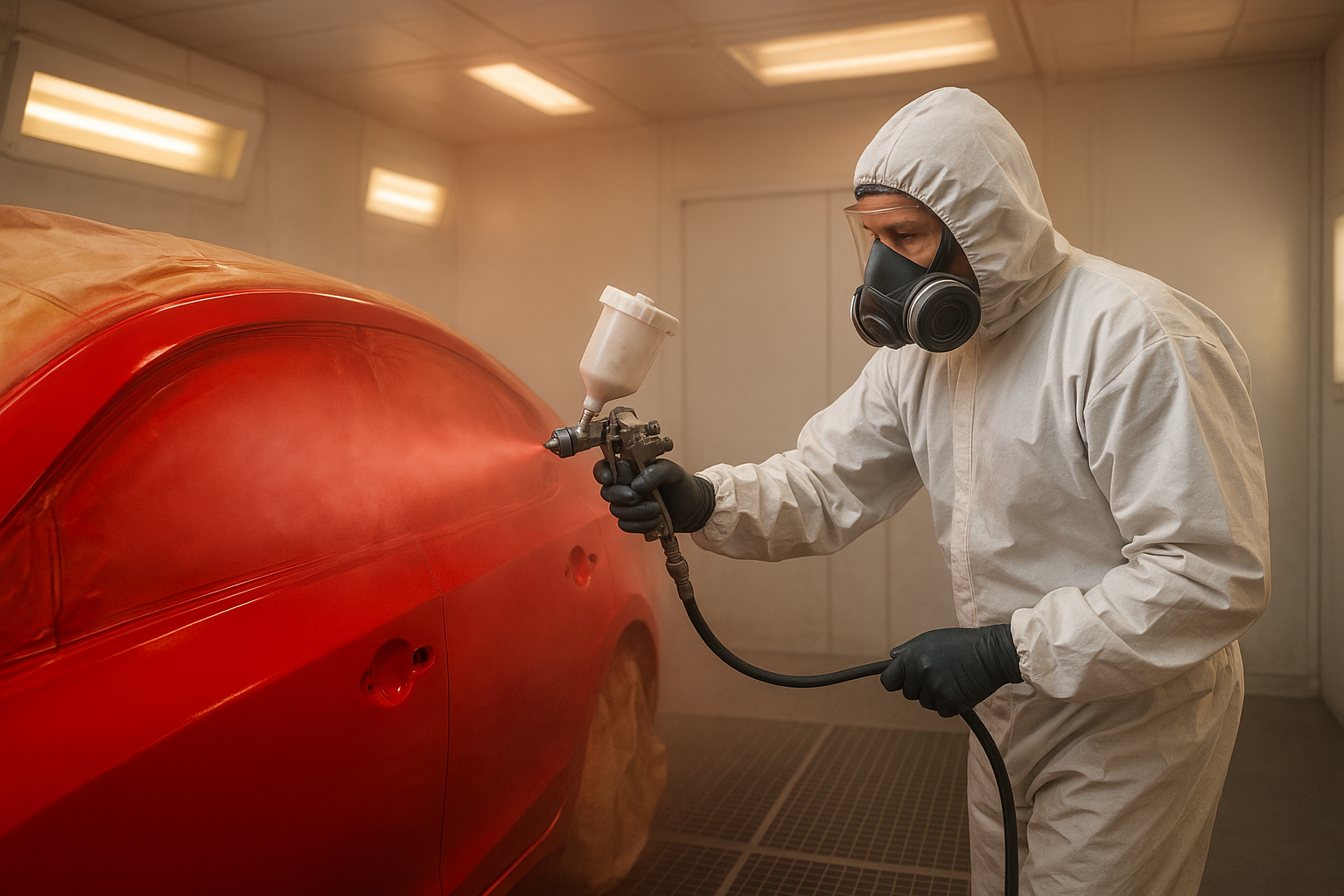
A skilled technician applies fresh paint inside a climate-controlled spray booth — a strong signal of a quality car respray shop.
National Chain vs. Independent Shop: Comparing Local Options
When you search for a car respray near me, results typically split into two categories: national franchise chains — such as Maaco — and independently owned auto body shops. Both can deliver excellent results, but they differ in important ways.
| Factor | National Chain | Independent Local Shop |
|---|---|---|
| Pricing structure | Fixed tiered packages, predictable | Custom quotes, often negotiable |
| Warranty | Standardized nationwide policy | Varies by shop; always request in writing |
| Color-matching depth | Computerized formulas, consistent | Often hand-tuned by veteran painters |
| Turnaround flexibility | Booked around corporate scheduling | Often more flexible for rush jobs |
| Personal accountability | Managed by rotating staff | Direct relationship with the owner or lead painter |
In contrast to a one-size-fits-all package, a well-reviewed independent shop can often match premium-tier quality at a lower price. That said, either option can work well — the key is comparing quotes, warranties, and reviews before you decide, not just picking the first name you see.
How Much Does a Car Respray Near Me Cost in 2025?
Pricing for a local auto paint job varies widely by region, vehicle size, and paint tier. On average, a basic single-stage respray starts around $500, while a premium full respray with extensive prep work can exceed $5,000. According to industry data compiled from auto body trade associations, the national average for a full professional respray sits between $1,200 and $2,500 for a standard passenger vehicle.
Paint Package Tiers Explained
Most shops, whether independent or franchise-based, price their car respray near me services in three tiers. Understanding what each includes prevents surprise upcharges later.
- Economy tier ($500–$1,000): Minimal sanding, single-stage paint, one base coat, light prep — best for budget touch-ups, not long-term durability.
- Standard tier ($1,200–$2,500): Full sanding, primer, two-to-three base coats, clear coat, and basic dent/rust spot treatment — the most common choice for daily drivers.
- Premium tier ($3,000–$5,000+): Complete disassembly of trim and panels, rust remediation, multiple color and clear coats, and a extended multi-year warranty — ideal for classic cars or color changes.
Beyond the tier itself, several factors push the final price up or down:
- Vehicle size: Larger vehicles require more paint and labor hours.
- Paint quality: Urethane and water-based paints cost more but last significantly longer.
- Surface preparation: Rust removal, dent repair, and sanding add to the total.
- Color complexity: Metallic, pearl, or custom colors require additional coats and skill.
- Partial vs. full respray: A single-panel job costs far less than repainting the whole vehicle.
Partial Respray vs. Full Respray: Which Do You Need?
A partial respray targets specific panels — for example, a scratched bumper or faded hood. A full respray, in contrast, covers every exterior surface. If your car shows widespread oxidation, or you want a totally new color, a full respray is the smarter investment.
However, if only one or two panels are affected, an experienced technician can blend new paint seamlessly into the existing finish. Color-matching technology has advanced enough that a well-blended partial respray is often undetectable, even up close.
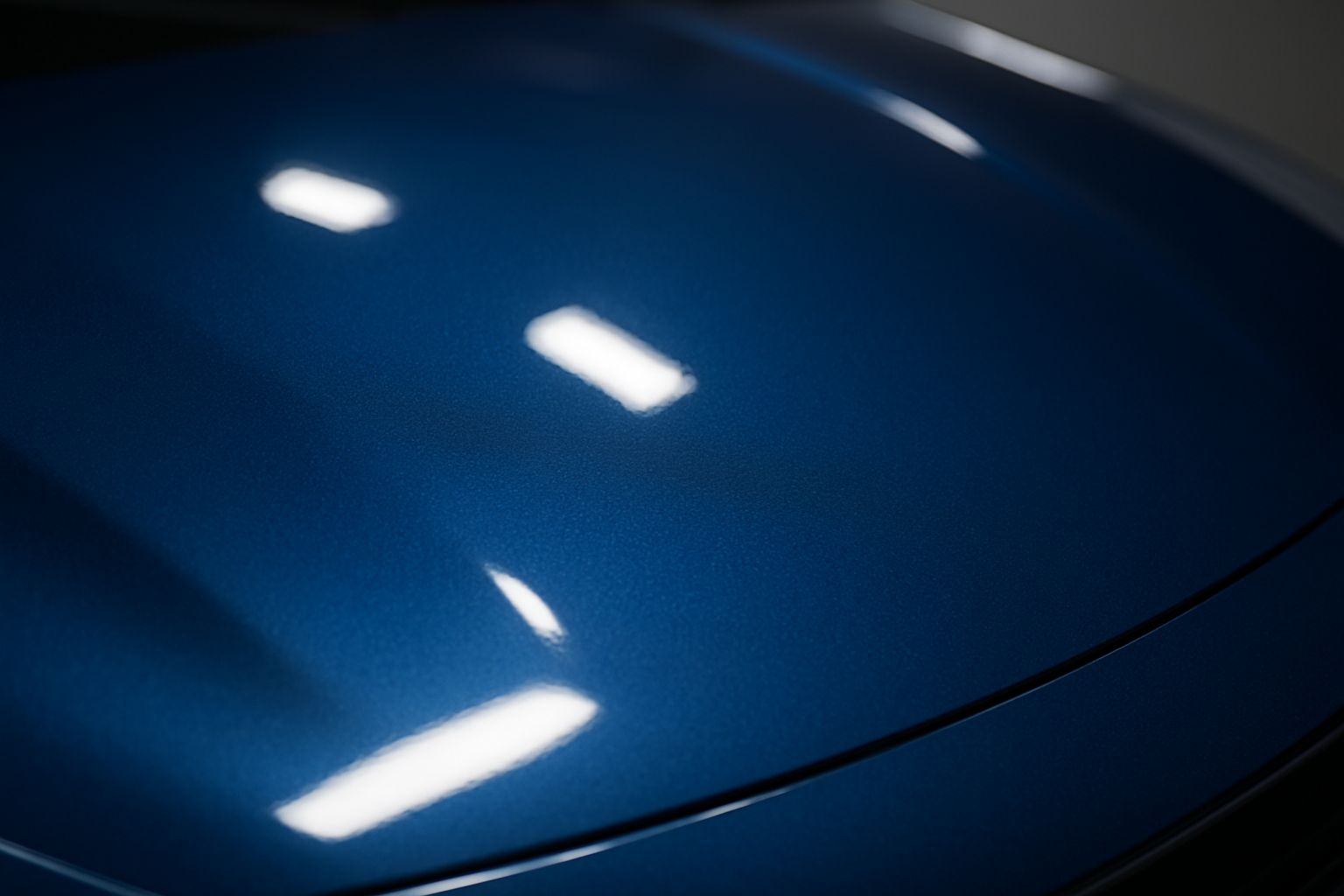
A flawless metallic finish is the hallmark of a high-quality car respray performed by experienced technicians.
How to Find the Best Car Respray Shop Near You
Finding a trustworthy auto paint shop near me takes a bit of legwork, but the process itself is simple. Follow these six steps to make a confident, informed decision:
- Research local shops online. Search Google or Yelp and filter by rating. Read at least ten recent reviews to spot patterns in quality, pricing honesty, and customer service.
- Request multiple written quotes. Contact at least three shops. Ask for itemized estimates specifying paint brand, number of coats, surface prep steps, and whether clear coat is included.
- Inspect past work and certifications. Ask for before-and-after photos. Look for I-CAR or ASE certification, which signals trained technicians and accountable, standardized workmanship.
- Confirm warranty terms in writing. A reputable shop should offer at least a one-year written warranty covering peeling, fading, cracking, and other paint defects at no extra cost.
- Ask about financing and insurance billing. If the damage came from a collision, confirm whether the shop handles direct insurance billing and offers financing plans for out-of-pocket costs.
- Drop off your car and follow aftercare advice. Communicate specific concerns directly to the technician. After pickup, avoid washing the car for at least two weeks to protect the curing paint.
Signs Your Car Needs a New Paint Job Now
Not every imperfection requires a full respray. Nevertheless, certain warning signs clearly mean it’s time to search for a car respray near me:
- Paint is visibly peeling, bubbling, or flaking from panels
- Deep scratches have penetrated through to the primer or bare metal
- Sun oxidation has left the surface chalky, dull, or faded
- Rust spots are forming beneath or around the paint layer
- You’ve been in a collision and need panel repair plus repainting
If you recognize two or more of these signs, it’s time to schedule a professional assessment. Otherwise, delaying repair often lets rust and corrosion spread underneath the surface, ultimately raising the total repair bill.
What Happens During a Professional Auto Respray
Understanding the process helps you set realistic expectations and communicate clearly with your chosen shop. A standard professional respray follows a consistent sequence of stages.
First, technicians strip or sand the existing paint down to a clean, workable surface. Next, they apply a primer coat to promote adhesion and shield the metal underneath. Then, two to three base coats of color are sprayed on, followed by two to three layers of protective clear coat. Finally, the vehicle is buffed and polished until it reaches a smooth, glossy finish.
How Long Does a Respray Take?
Most standard resprays take between three and five business days. More complex jobs — involving rust treatment, panel replacement, or custom colors — may need up to two weeks. Always ask your shop for a realistic timeline before you drop off your vehicle.
How Color Matching Technology Works
Every factory paint color has a unique code, usually located on a sticker inside the driver’s door jamb. Specifically, shops feed this code into a computerized spectrophotometer (a device that reads the exact pigment composition of your existing paint) to generate a matching formula. As a result, even discontinued or faded factory colors can be recreated with impressive accuracy, which is exactly why partial resprays so rarely show a visible seam.
For trusted local expertise, Brea Auto Body is one example of a professional auto body and paint service that handles everything from minor touch-ups to full vehicle resprays with careful attention to color accuracy and material quality.
Warranty Coverage: What Every Reputable Shop Should Guarantee
A written warranty is non-negotiable. At minimum, it should cover peeling, cracking, fading, and adhesion failure for at least one year. Premium-tier packages often extend coverage for several years or, in some franchise cases, for as long as you own the vehicle.
That said, a warranty is only as good as the shop honoring it. Therefore, check whether the location offering the warranty is likely to still be open in five years — an established local shop with years of reviews is often a safer bet than a brand-new pop-up location.
Financing, Insurance Claims, and Paying for Your Respray
If your paint damage resulted from a collision, your auto insurance may cover part or all of the respray cost. In particular, many shops participate in direct repair programs (DRPs), which let them bill your insurer directly and streamline the claims process for you.
If the job isn’t insurance-related — for example, cosmetic fading or a color change — many shops, both national chains and independents, offer financing plans that split the cost into monthly payments. Always ask about interest rates and total repayment terms before signing anything.
DIY Car Respray vs. Hiring a Professional
A DIY respray kit might look tempting, especially for a single panel touch-up. However, home setups almost never match a professional spray booth’s dust-free, temperature-controlled environment, which means visible imperfections are far more likely.
- DIY pros: Lower upfront cost; suitable for small, low-visibility scuffs.
- DIY cons: No warranty, inconsistent color matching, higher risk of overspray and orange peel texture.
- Professional pros: Warranty-backed, properly cured paint, seamless blending, and long-term durability.
- Professional cons: Higher upfront cost and a multi-day wait for your vehicle.
Ultimately, if resale value, warranty protection, or a flawless finish matter to you, a professional car respray near me is almost always the better long-term choice.
Environmental Rules and Safety Standards Behind Every Respray
Automotive paint contains volatile organic compounds, or VOCs (chemical emissions released as paint dries), which is why legitimate shops operate under strict environmental regulation. In the United States, the EPA’s national VOC emission standards limit how much of these compounds a shop’s paint products can legally emit.
In addition, reputable shops maintain certified spray booths with proper filtration and ventilation, both for compliance and technician safety. Consequently, asking whether a shop’s booth is compliant and permitted is a legitimate — and telling — question to ask before booking.
Similarly, technicians should hold recognized credentials. Certifications from organizations like ASE (National Institute for Automotive Service Excellence) or I-CAR confirm formal training in modern paint and repair standards, rather than informal, self-taught methods.
Aftercare: Protecting Your New Paint Job
Once your car is resprayed, proper aftercare significantly extends the life of the new finish. Specifically, avoid these common mistakes in the first 30 days:
- Do not wash the car for at least two weeks after pickup
- Avoid parking under trees, where sap or bird droppings can etch fresh paint
- Do not apply wax or polish for at least 30 days while the paint fully cures
- Avoid automated car washes with abrasive brushes for at least 60 days
Additionally, applying a quality sealant or ceramic coating after the 30-day curing window adds a protective layer against UV damage and minor abrasions. Many shops offer this as an add-on, and it’s often worth the extra cost for long-term shine retention.
You may also want to read our guide on auto body repair and collision services to see how paint work fits into broader vehicle restoration. For a wider library of maintenance guides, you can also browse our full auto care resource hub, or explore more vehicle upkeep articles on the site.
Frequently Asked Questions About Car Respray Near Me
What does a car respray near me typically cost?
A local car respray typically costs between $500 and $5,000, depending on vehicle size, paint tier, and how much surface preparation is needed. Premium finishes or specialty colors push costs toward the higher end.
How long does a full car respray take?
A full car respray usually takes between three and five business days. Complex jobs involving rust repair, bodywork, or custom colors may take up to two weeks.
Is a car respray worth it?
Yes, a car respray is worth it when the vehicle has sentimental value, significant paint damage, or when you want to boost resale value. It can make an older car look brand new at a fraction of replacement cost.
What’s the difference between a partial and full car respray?
A partial respray covers only specific panels, such as a bumper or door, while a full respray covers the entire vehicle. A full respray guarantees a uniform color match across every panel.
How do I find a reliable car respray near me?
Search online for verified reviews, ask for before-and-after photos, and request a written estimate from at least three shops. Shops certified by ASE or I-CAR tend to deliver more consistent results.
Can I drive my car immediately after a respray?
You should wait at least 24 to 48 hours before driving after a respray. The paint needs time to cure, and exposing it too soon to road debris or rain can damage the finish.
What paint types do professional shops use for a respray?
Professional shops commonly use urethane, acrylic enamel, or water-based paints. Urethane is widely preferred for its durability and resistance to chipping and UV fading.
Will a car respray fix rust damage?
A respray alone will not fix rust. The rust must be treated and removed first, and any damaged metal must be repaired before paint is applied, or the finish will bubble and peel prematurely.
Is it better to choose a national chain or an independent shop for a car respray near me?
Neither option is universally better. National chains offer standardized pricing and warranties, while independent shops often provide more personalized service and comparable quality. Compare reviews, warranties, and quotes from both before deciding.
Can I use my insurance claim to pay for a car respray?
Yes, if the paint damage resulted from a collision, your insurance may cover it. Many shops participate in direct repair programs and can bill your insurer directly, simplifying the claims process.
What’s the difference between matte, satin, and gloss respray finishes?
Gloss finishes reflect the most light and are the industry standard. Satin offers a softer sheen with less reflection, while matte has almost no shine and requires special maintenance products to avoid shine spots.
Should I add ceramic coating after a car respray?
Ceramic coating is optional but recommended once the paint has fully cured, typically after 30 days. It adds UV protection, makes the surface easier to clean, and helps preserve the new finish’s gloss.
Does a car respray affect my car’s resale value?
A high-quality respray in the original factory color can maintain or improve resale value. However, a non-standard color or poor-quality finish may reduce buyer interest and lower the vehicle’s market price.
What mistakes should I avoid when choosing a car respray shop near me?
Avoid choosing a shop based on price alone, skipping the inspection of past work, or failing to get a written warranty. Always verify the shop uses quality materials and employs certified technicians.
Conclusion: Finding the Right Car Respray Near Me
Finding a reliable car respray near me doesn’t have to be overwhelming. By comparing national chains against independent shops, requesting written quotes, verifying certifications, and understanding warranty, financing, and aftercare requirements, you can make a confident decision that protects your investment. A quality respray restores your car’s appearance, guards against corrosion, and can meaningfully increase resale value.
Take the time to choose the right shop, follow the aftercare steps outlined above, and your new paint finish will look sharp for years to come. For professional-grade results, resources like Brea Auto Body demonstrate the standard of quality and care you should expect from any reputable local provider.

