

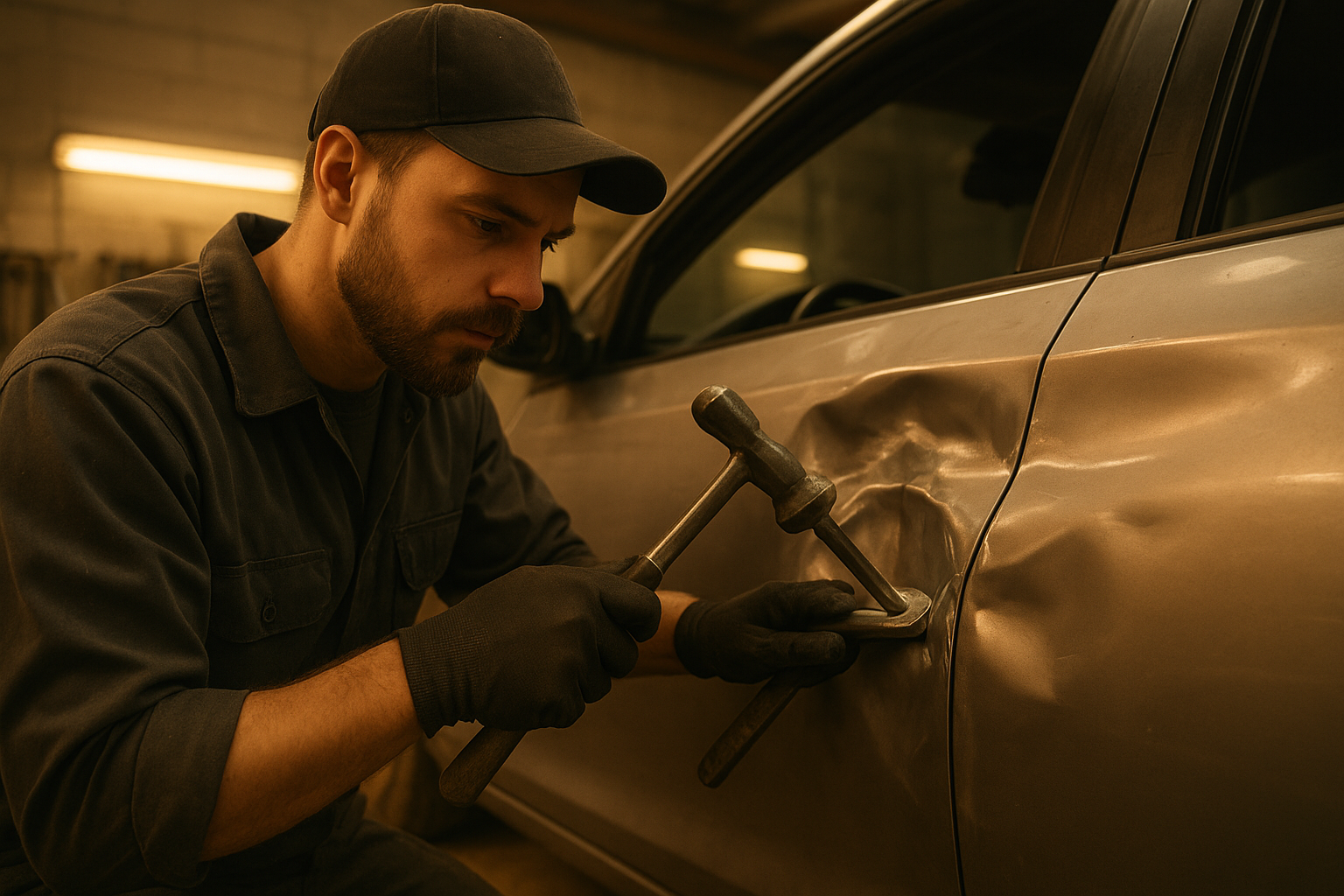
When you type panel repairs near me into a search bar, you want one thing above all: a nearby shop that fixes your car’s bodywork correctly the first time, at a fair price, without hidden surprises. Panel repairs near me refers to the process of restoring damaged body panels — doors, fenders, quarter panels, hoods, bumpers, and rocker panels — back to their original shape, structural integrity, and factory finish after a collision, dent, hailstorm, or years of everyday wear. Consequently, choosing the right local shop is the single biggest factor separating a seamless, invisible repair from one that peels, mismatches, or fails within months.
According to the Insurance Institute for Highway Safety, millions of vehicles sustain panel-level damage every year across the United States. As a result, local body repair has become one of the most searched-for automotive services in the country. This guide goes further than a typical shop listing — it explains exactly what panel repair involves, what it costs, how to vet a shop, and what modern vehicles need that older guides overlook, so you can make a confident decision without a second search.
What Are Panel Repairs Near Me, and Why Do They Matter?
Body panel repair involves reshaping, filling, and refinishing the outer metal or plastic sections of a vehicle. These panels do more than look good — they protect the structural integrity of the car, contribute to aerodynamics, and directly affect resale value. Therefore, even damage that looks purely cosmetic can carry real financial and safety consequences if it’s ignored.
Unrepaired panel damage exposes bare metal to moisture, which accelerates rust formation. Over time, rust spreads beneath the paint and compromises surrounding panels. In addition, crumpled or misaligned panels can interfere with door seals and drainage channels, which leads to interior water intrusion and, eventually, electrical faults.
For these reasons, addressing panel damage promptly — rather than waiting — is almost always the smarter financial and safety decision.
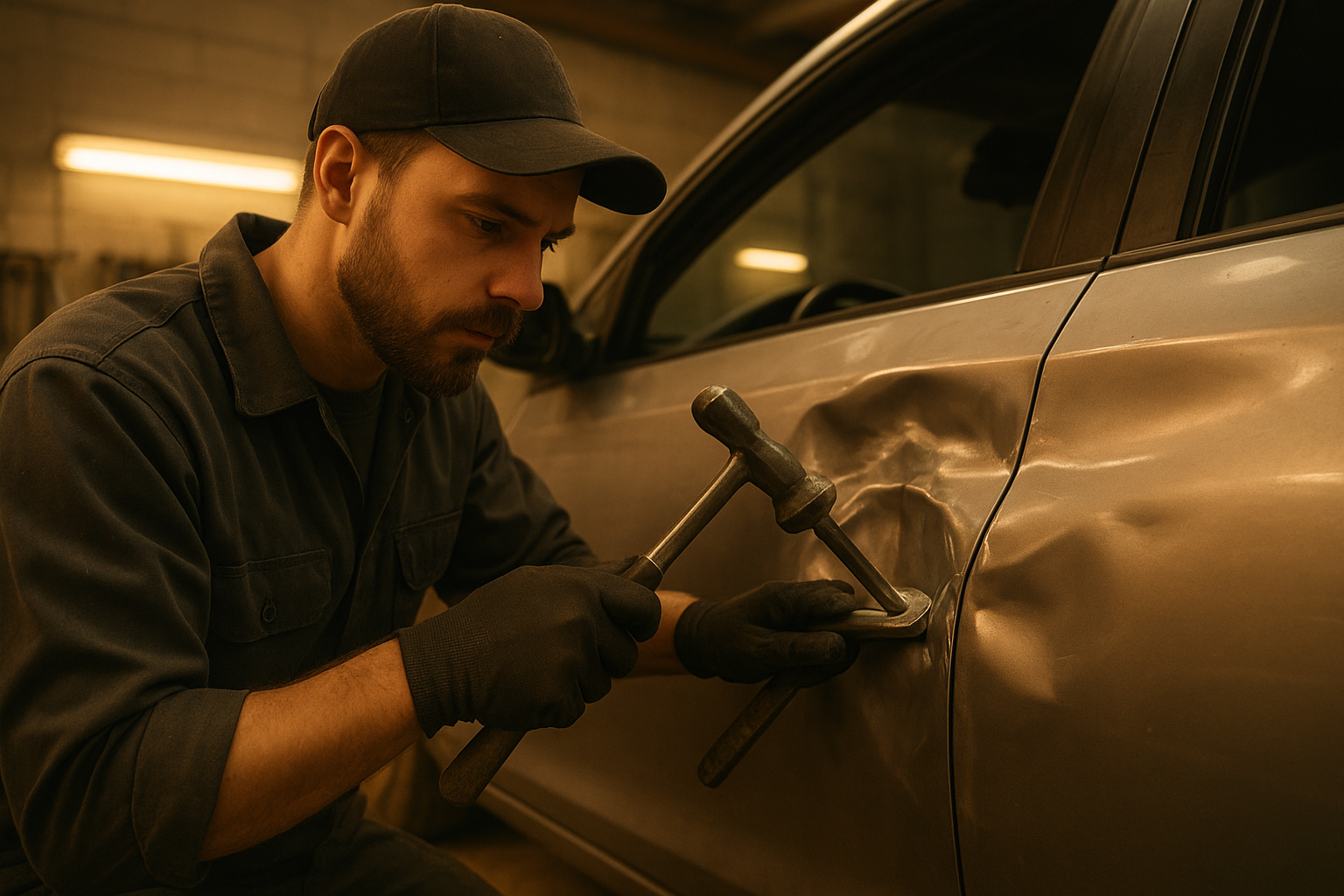
A skilled technician uses precision tools to restore a damaged door panel to its original factory shape.
Common Types of Vehicle Panel Damage
Not all panel damage is equal. Technicians generally categorize it by severity and location, which directly affects the repair approach, timeline, and cost. Below are the most common types drivers encounter:
- Minor dents and dings: Often caused by parking lot impacts, hail, or door strikes. These are frequently repairable using paintless dent repair (PDR) — a technique that gently massages metal back into shape without disturbing the factory paint.
- Creases and deep dents: These require body filler, sanding, and a full repaint of the affected panel. Consequently, cost and turnaround time increase.
- Collision damage: Significant impacts can crumple panels, misalign doors, and affect the underlying structure. In these cases, panel replacement may be necessary alongside frame repair.
- Rust and corrosion: Coastal and humid climates accelerate surface rust, which must be cut out and patched before refinishing.
- Scratches and paint damage: Deep scratches that reach bare metal need panel prep and repainting to prevent rust from developing underneath.
- Sensor-integrated panel damage: Modern bumpers and fenders often house parking sensors, radar units, or cameras, which require careful removal and recalibration during repair — a factor many shops overlook.
Panel Repair Costs: What to Expect
Cost is often the first question drivers ask, yet many local shop pages avoid publishing real numbers. Here is a realistic breakdown so you can budget accurately and spot an inflated quote immediately:
- Paintless dent repair: Typically $75–$250 per dent, depending on size and panel accessibility.
- Minor dent repair with paint: Usually $150–$450 per panel, including body filler and a color-matched blend.
- Deep crease or multi-panel damage: Generally $400–$900, since it involves more labor hours and refinishing.
- Full panel replacement: Ranges from $500 to $1,500 or more, depending on the panel, OEM part pricing, and paint complexity.
- Rust repair and patching: Starts around $200 for small spots but can exceed $1,000 if corrosion has spread beneath adjacent panels.
In particular, prices vary by region, vehicle make, and whether OEM (original equipment manufacturer) or aftermarket parts are used. Therefore, always request an itemized estimate rather than a flat verbal quote.
How to Find Reliable Panel Repair Shops in Your Area
Searching “panel repairs near me” returns dozens of results, but not every shop delivers the same quality. Specifically, follow these steps before committing to any repair facility:
- Assess your damage first. Before visiting any shop, examine every damaged panel in good lighting and photograph it from multiple angles. This documentation helps you compare estimates accurately and protects you from scope creep later.
- Look for certified technicians. Shops with ASE (Automotive Service Excellence) or I-CAR certified staff follow industry-standard repair procedures, which signals ongoing training and accountability.
- Request written, itemized estimates from at least two shops. A detailed estimate breaks down labor, parts, and materials separately. Comparing two side by side reveals whether a quote is fair or inflated.
- Confirm insurance coverage. Contact your insurer to verify the damage type is covered, understand your deductible, and secure a claim number before authorizing any work.
- Inspect the finished work in daylight. Once repairs are complete, review every panel in natural light before accepting the vehicle. Check for color consistency, panel alignment, and a smooth, even finish.
Red Flags to Watch For
Similarly, knowing what to avoid is just as important as knowing what to look for. Be cautious of shops that refuse written estimates, pressure you to decide immediately, or cannot show proof of technician certification. In addition, shops that use questionable aftermarket panels may leave you with fitment issues and paint that fades prematurely.
Always ask whether the shop offers a written warranty on panel repair work. Reputable facilities stand behind their craftsmanship and will cover defects in workmanship and paint finish for a defined period after the repair.
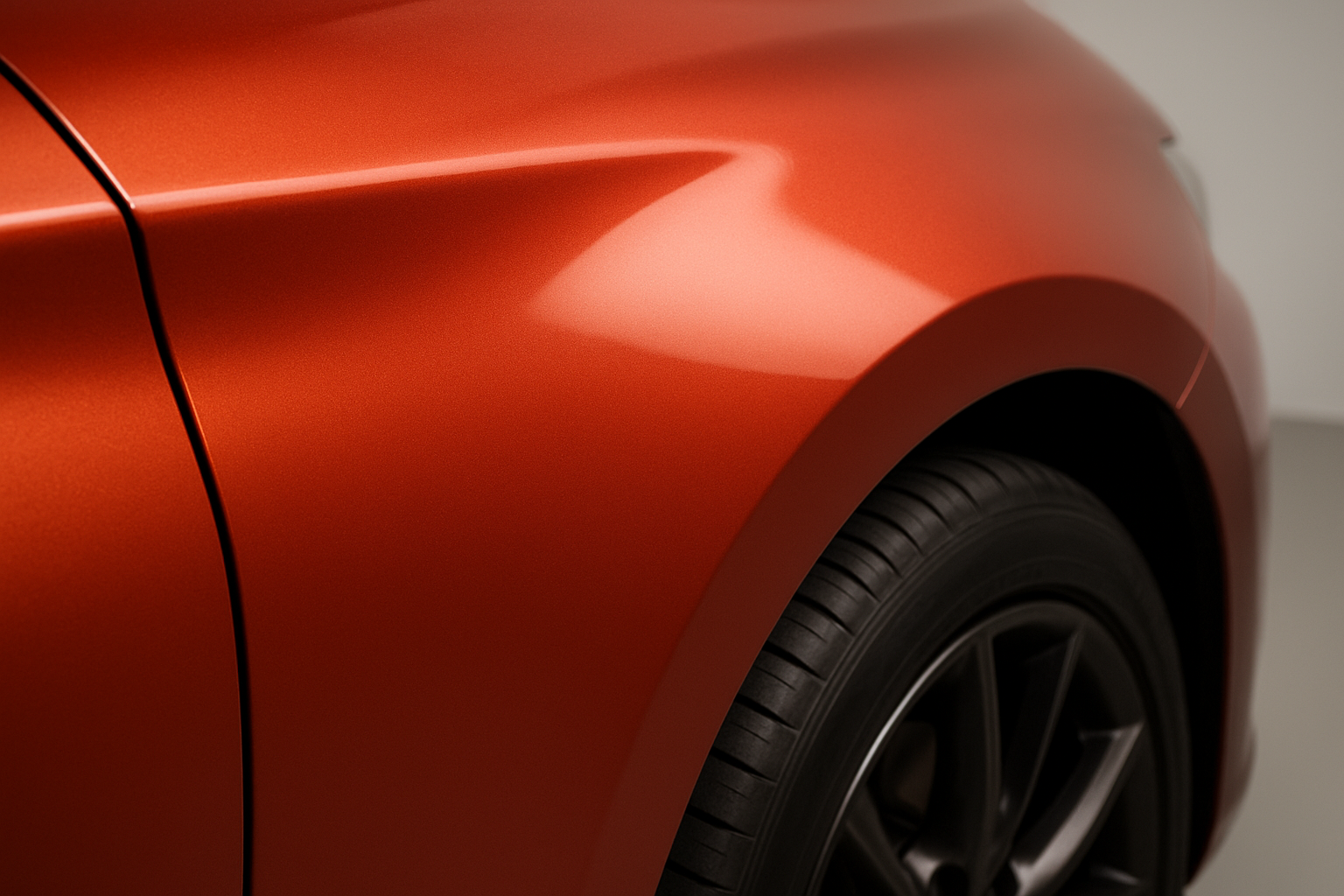
Advanced paint matching ensures repaired panels blend seamlessly with the vehicle’s original factory finish.
Panel Repair vs. Panel Replacement: Which Do You Need?
One of the most common questions drivers ask is whether their panel should be repaired or replaced entirely. Generally, the decision comes down to the severity and location of the damage.
Repair is preferred when the panel’s structural integrity is intact, the dent or crease is accessible, and paint damage is limited. In these cases, a skilled technician restores the panel to factory condition at a lower cost with less downtime.
Replacement becomes necessary when the panel is severely crumpled, torn, or when rust has compromised too much metal to repair effectively. Furthermore, safety-critical panels — such as those integrated with crumple zones — must meet exact factory specifications, making replacement the only responsible option.
For minor cosmetic issues, you may also want to explore minor auto body repair options that address surface-level damage quickly and affordably.
The Role of Paint Matching in Quality Panel Restoration
Even a structurally perfect panel repair can look wrong if the paint color doesn’t match precisely. Modern vehicles use complex multi-stage paint systems — base coat, clear coat, and sometimes metallic or pearl effects — that require sophisticated color-matching technology to replicate accurately.
Professional shops use computerized paint mixing systems and spectrophotometers (instruments that measure exact color wavelengths) to analyze your vehicle’s existing paint and formulate an exact match. As a result, the repaired panel blends seamlessly with adjacent panels, even accounting for natural paint aging over time.
For a deeper look, explore the car paint repair process used by experienced technicians to achieve factory-quality results.
Why Color Matching Matters for Resale Value
A mismatched panel is immediately noticeable to any experienced buyer or appraiser. Consequently, poor paint work can reduce your vehicle’s trade-in or private-sale value significantly. Investing in professional color matching during panel repair protects both the appearance and the financial value of your vehicle long-term.
ADAS Calibration and Modern Vehicle Panel Repairs
Newer vehicles rely on ADAS — advanced driver assistance systems — such as lane departure cameras, blind-spot radar, and parking sensors, many of which are mounted directly inside bumpers, fenders, and mirrors. Therefore, panel repairs on these vehicles often require sensor recalibration afterward, not just bodywork.
Skipping calibration can leave safety systems misaligned, which may cause false alerts or, worse, a failure to detect a genuine hazard. As a result, when you ask about panel repairs near me, it’s worth specifically asking whether the shop performs in-house ADAS calibration or partners with a specialist to complete it before returning your keys.
Insurance Claims and Direct Repair Programs Explained
Many national chain shops belong to insurance “direct repair programs,” which means the insurer pre-approves them and steers claims their way. However, you are never legally required to use your insurer’s recommended shop. In fact, choosing your own trusted local repair facility often results in better communication and more attentive service.
Before authorizing repairs, confirm your deductible, ask whether the shop bills the insurer directly, and get everything in writing. Comprehensive or collision coverage typically applies to panel damage, minus your deductible, but coverage details vary by policy and cause of loss.
Local Shops vs. National Chains: What Actually Matters
National chains offer standardized processes and multiple locations. In contrast, independently owned local shops often provide more personalized service, direct access to the technician working on your car, and greater flexibility on scheduling and pricing.
Ultimately, the deciding factors should be certifications, written warranties, transparent pricing, and verified reviews — not simply brand size. A well-run local shop with I-CAR certified technicians can match or exceed the quality of any national name.
Serving Orange County Drivers: Expert Panel Repairs in Brea
For drivers throughout Orange County searching for dependable panel repairs, breaautobody.com offers a full range of auto body restoration services backed by certified technicians and a commitment to customer transparency. The shop handles everything from minor dent removal and precision panel reshaping to full collision repair for both domestic and foreign vehicles.
Clients benefit from working directly with experienced professionals who use industry-standard techniques and quality materials, ensuring every repaired panel meets or exceeds pre-accident condition. Whether the damage came from a fender-bender, a hailstorm, or a parking lot scrape, the team provides the expertise needed to restore your vehicle with confidence.
In addition, the shop works with insurance clients and fleet customers, making the claims and repair process smooth from start to finish. Learn more about their full range of services at the Brea Auto Body collision repair page.
Frequently Asked Questions About Panel Repairs Near Me
What does panel repairs near me typically include?
Panel repairs near me generally include dent removal, reshaping damaged metal or plastic panels, and refinishing with color-matched paint. Depending on the severity of damage, a technician may repair the existing panel or replace it entirely.
How long does a typical auto body panel repair take?
Minor panel repairs often take one to two days. More extensive damage requiring panel replacement or structural work can take three to five days or longer, depending on parts availability.
How much does panel repair cost at a local auto body shop?
Costs vary widely based on damage severity, panel location, and whether repair or replacement is needed. Minor dent repairs can start around $150, while full panel replacements with paint matching may run $500 to $1,500 or more.
Will my insurance cover panel repairs?
Comprehensive or collision coverage typically covers panel repairs, minus your deductible. It is best to check with your insurer before authorizing repairs, since coverage depends on your specific policy and the cause of damage.
What is paintless dent repair and when is it used for panel damage?
Paintless dent repair (PDR) uses specialized tools to gently massage dents back into shape without disturbing the paint. It is ideal for small to medium dents where the paint surface is still intact.
How do I choose the best panel repair shop near me?
Look for shops with certified technicians (ASE or I-CAR), verified customer reviews, written estimates, and a warranty on repairs. Transparency about the repair process and materials used is also a strong indicator of a trustworthy shop.
Can panel repairs restore my car to its pre-accident condition?
Yes. Skilled technicians use advanced paint matching and body shaping techniques to restore panels to factory condition. When performed correctly, a professional panel repair should be virtually invisible.
What is the difference between panel repair and panel replacement?
Panel repair involves reshaping and refinishing the existing panel, while replacement means removing the damaged panel entirely and installing a new one. Repair is usually less expensive; replacement is necessary when damage is too severe to restore.
Do local auto body shops handle both domestic and foreign vehicles for panel repairs?
Most reputable shops handle both domestic and foreign vehicles. However, it is worth confirming before booking, since some foreign models require specialized parts or paint codes that not every shop stocks.
What happens if panel damage is left unrepaired?
Unrepaired panel damage can lead to rust, structural weakening, and reduced resale value. In some cases, exposed metal or compromised panels can also create safety risks during a subsequent collision.
Is a written estimate required before panel repairs begin?
Yes, reputable shops always provide a written estimate before starting work. This protects you from unexpected charges and ensures both parties agree on the scope and cost of repairs.
Do panel repairs come with a warranty?
Many quality auto body shops offer a warranty on their panel repair work, covering defects in workmanship and paint finish. Always ask about the warranty terms before authorizing repairs.
Do panel repairs affect ADAS calibration on newer vehicles?
Yes. If sensors or cameras are mounted in the repaired panel, they may need recalibration afterward. Ask the shop whether ADAS calibration is included or handled by a partner specialist.
Should I choose a local shop or a national chain for panel repairs near me?
Either can deliver quality work, but the deciding factors should be certifications, written warranties, transparent pricing, and verified reviews rather than brand size alone.
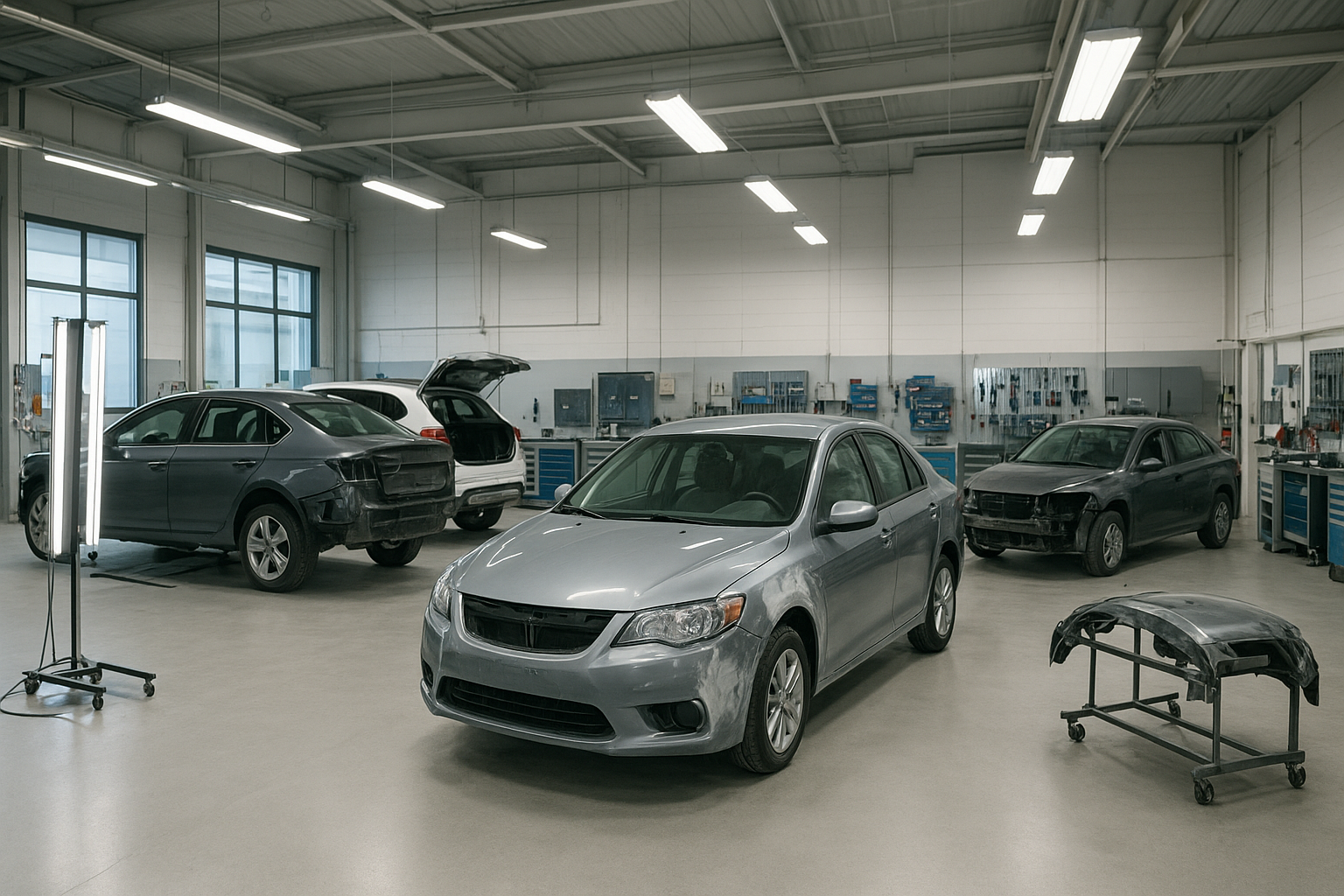
A well-equipped local auto body shop provides the tools and expertise needed for comprehensive vehicle panel restoration.
Conclusion: Choosing the Right Shop for Panel Repairs Near You
Finding quality panel repairs near me does not have to be overwhelming. By understanding the types of damage involved, knowing realistic costs, recognizing what to look for in a certified shop, and following a clear step-by-step process — from damage assessment to final daylight inspection — you can make a confident, well-informed decision. Above all, prioritize shops that offer transparency, certified technicians, written warranties, ADAS-aware repair practices, and proven color-matching capabilities. For Orange County drivers, Brea Auto Body combines all of these qualities with a track record of restoring vehicles to pre-accident condition with lasting craftsmanship. Do not let panel damage sit — the sooner it is addressed, the better the outcome for your vehicle’s safety, appearance, and resale value.

