

Honda Certified Collision: What It Means, Why It Matters, and How to Choose the Right Shop

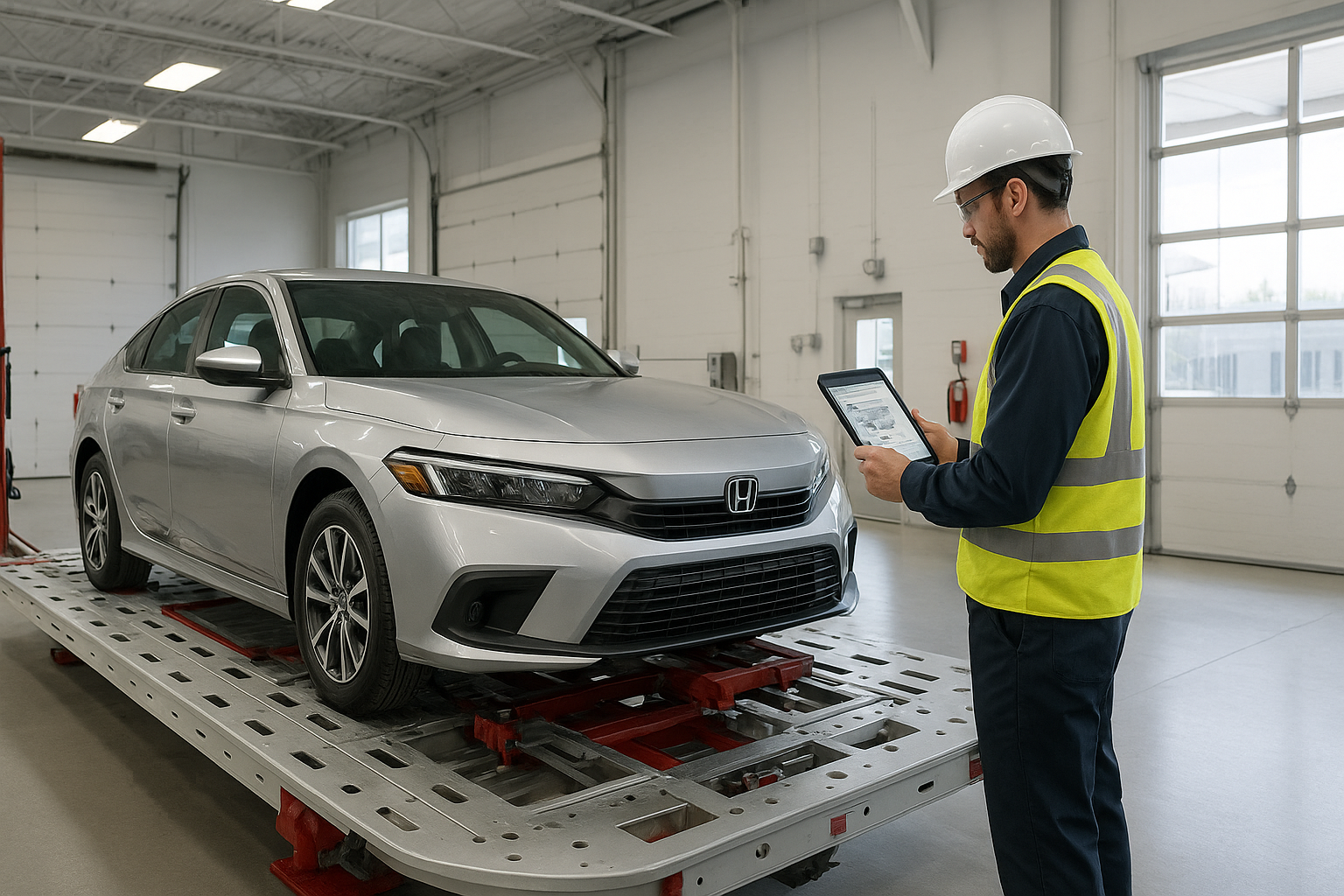
Honda certified collision work begins with OEM procedures in a controlled repair environment.
If you’ve recently experienced a fender-bender or a major crash in your Honda, you’ve probably searched for “Honda certified collision” and wondered what that label actually guarantees. This guide breaks down how Honda certification works, why it protects your safety and resale value, and the exact questions to ask before you choose a shop. You’ll also find a resource to start your estimate and learn more: explore Honda certified collision information at Brea Auto Body.
What “Honda Certified Collision” Really Means
“Honda certified collision” signifies that a collision center has been vetted to repair Honda and Acura vehicles using factory-approved methods. Certification focuses on three pillars:
- Training and credentials: Technicians receive ongoing instruction focused on Honda construction, materials, restraint systems, and electronics.
- Equipment and tooling: From squeeze-type resistance spot welders to structural measuring systems and rivet-bond tooling, the facility must demonstrate it can duplicate factory-level joining and measurement accuracy.
- Access to OEM repair procedures: Certified shops follow the latest model-specific instructions for repairs, refinishing, corrosion protection, and post-repair calibrations.
Why this matters: modern Hondas use a mix of high-strength steels, structural adhesives, and advanced driver-assistance systems (ADAS). Substituting non-approved repair methods can compromise crash energy management, airbag timing, and sensor performance.
Safety First: How Proper Repairs Protect You and Your Passengers
When a Honda is engineered, its body structure, crumple zones, weld counts, and panel bonds are designed to work together. Certified collision repair respects that design so the vehicle behaves predictably in a future crash. Key benefits include:
Crashworthiness preserved: Correct sectioning locations, weld types, panel adhesives, and sealers ensure energy travels through the structure exactly as intended. Incorrect shortcuts can change how the chassis deforms.
Airbag timing integrity: Sensors and modules measure deceleration through a precisely engineered structure. Altered rigidity or missing reinforcements can delay or prematurely trigger airbags, increasing injury risk.
ADAS functionality restored: Cameras, radar, sonar, and lidar require accurate aiming, vehicle ride height, and proper glass and bumpers. Certified shops perform required pre- and post-repair scans and calibrations so features like collision mitigation braking, lane-keeping, and adaptive cruise work reliably.

ADAS calibration is a required step in Honda certified collision repair to restore driver-assistance accuracy.
How to Verify a Honda-Capable Collision Center
Ask for the repair plan tied to Honda procedures
Before repairs begin, request a written plan that cites the specific model-year procedures for your VIN. A qualified shop can show where sectioning is allowed, which welds or adhesives are specified, and whether parts must be replaced instead of repaired.
Confirm scanning and calibrations are included
Modern Hondas require electronic pre-scans to document fault codes and post-scans after completion. If the repair disturbs cameras, radar, suspension ride height, windshield glass, or bumpers, calibrations must be performed and documented. Your estimate should list these line items explicitly.
Expect OEM-quality joining and corrosion protection
Look for details like weld test panels, rivet-bond processes where specified, seam sealer re-application, cavity wax in closed sections, and epoxy primer on bare metal. These aren’t “extras”—they’re baseline requirements to restore durability and rust resistance.
See the safety paperwork
A diligent facility keeps material safety data sheets (for adhesives and coatings), weld parameter logs, calibration reports, torque spec verification, and test-drive checklists. This documentation proves the vehicle was returned to OEM intent.
The Honda Collision Repair Process, Step by Step
1) Intake, documentation, and pre-scan: The team records damage, options, mileage, ADAS features, and performs a pre-scan to capture baseline diagnostic codes.
2) Blueprinting and disassembly: Trim and panels are removed to reveal hidden damage. The shop measures the body and suspension pick-up points, then writes a complete blueprint to reduce supplements and delays.
3) OEM parts sourcing: Structural parts, reinforcements, and safety-related components are typically specified as new OEM. Provenance matters: correct fit ensures sensor alignment and panel gaps.
4) Structural and panel repairs: Using measuring systems and OEM joining methods, technicians restore geometry, replace sections where allowed, and verify weld quality. Ultra-high-strength steel areas that forbid heat or sectioning are replaced as assemblies.
5) Corrosion protection and refinishing: Epoxy primers, seam sealers, anti-corrosion coatings, and cavity wax are applied to match factory protection, followed by color, metallic orientation, and clearcoat to OEM appearance standards.
6) Reassembly, calibrations, and post-scan: With the vehicle back together, the shop completes static/dynamic calibrations, verifies ride height and alignment, performs a post-scan, and documents results.
7) Quality control and road test: Final fit/finish checks, wind noise inspection, feature function tests, and a road test confirm everything operates correctly before delivery.

A clear, documented workflow ensures your Honda is restored to OEM specifications from start to finish.
Insurance, Estimates, and Your Right to Choose
Insurers can recommend shops, but you always have the right to choose where your Honda is repaired. Focus on the capability to follow OEM procedures—this directly affects safety and long-term value. If a preliminary estimate seems low, don’t panic: a thorough blueprint after disassembly often reveals additional OEM-required operations (a legitimate supplement) that weren’t visible at first glance.
Ask your shop to coordinate with the adjuster using clear, line-item documentation tied to Honda procedures. Well-documented repairs are easier to approve and result in fewer delays.
Parts Strategy: Why OEM Components Often Make Sense
While aftermarket parts can be appropriate for some cosmetic areas, safety-critical and ADAS-integrated components are typically best replaced with OEM parts to maintain fit, corrosion protection, and sensor accuracy. Even small differences in bumper cover thickness, windshield clarity, or bracket geometry can impact radar or camera performance. Discuss parts choices with your shop and request documentation when OEM is required.
EVs, Hybrids, and High-Voltage Precautions
For hybrid and electric models, high-voltage battery systems must be safely powered down and re-enabled following Honda procedures, and temperature/impact exposure guidelines must be respected. Choose a facility that documents its high-voltage handling steps and has insulated tools, PPE, and trained personnel. Post-repair diagnostics should confirm battery health, isolation, and thermal management functions.
Timeline and Quality: What to Expect
Cycle time depends on parts availability, the extent of structural repairs, and calibration needs. A certified approach prioritizes accuracy over speed; a few additional days to get the right parts, welds, and calibrations is time well spent. Insist on receiving copies of calibration reports, scan reports, and any alignment sheets with your final paperwork.
Where to Start Your Honda Certified Collision Journey
The best first step is an in-person evaluation and a transparent, OEM-based plan for your specific VIN. To explore what a modern, documentation-driven process looks like—or to request an estimate—visit Brea Auto Body. Their site offers an easy way to connect with a team that can discuss OEM-correct methods, scanning, calibration logistics, and parts strategy. If you’re researching options, you can also bookmark this page and return to the Honda certified collision resource at Brea Auto Body when you’re ready.
Bottom Line
Honda certified collision repair is more than a badge—it’s a systematic commitment to OEM procedures, the right tools and parts, and rigorous documentation that restores safety, performance, and value. By verifying repair plans against factory guidance, confirming scans and calibrations, and partnering with a shop that prioritizes quality, you can drive away confident that your Honda is truly repaired the right way.

