


Auto Body Expertise
“After a collision, your vehicle’s safety depends entirely on the skill of the people who restore it.”
Car collision repair experts — professionals who assess, restore, and certify vehicles damaged in accidents — are among the most technically demanding specialists in the automotive industry. When your car sustains collision damage, whether from a fender-bender in a parking lot or a high-speed highway impact, the quality of the repair directly affects your safety, your vehicle’s resale value, and the long-term reliability of every system involved. This guide walks you through everything you need to know: what these experts do, how they do it, what certifications matter, and how to choose the right shop for your situation.
Quick Answer
Car collision repair experts are certified automotive technicians who restore accident-damaged vehicles to factory-safe condition. They combine structural engineering knowledge, precision metalwork, and advanced paint science to return your car to both its original appearance and its original safety performance.
What Are Car Collision Repair Experts?
Car collision repair experts are trained and often certified professionals who specialize in diagnosing and repairing vehicles after accidents. Unlike general mechanics who focus on mechanical and drivetrain systems, collision repair technicians work primarily on a vehicle’s body, frame, and structural components. Their work intersects with mechanical engineering, materials science, and even chemistry — particularly when it comes to modern paint systems and adhesives used in today’s vehicles.
According to the U.S. Bureau of Labor Statistics, automotive body and related repairers must understand vehicle construction, hydraulic equipment, welding techniques, and computerized measuring systems. The profession requires a combination of hands-on skill and technical knowledge that takes years to develop fully.

Car collision repair experts use specialized diagnostic tools to assess both visible and hidden structural damage.
The Core Services Collision Repair Experts Provide
Modern collision repair is far more complex than simply hammering out dents and spraying paint. Today’s vehicles incorporate high-strength steel, aluminum alloys, carbon fiber components, and an intricate network of sensors and safety systems. Here is what a full-service collision repair process typically involves:
Structural Repair
Frame and unibody straightening using computerized measuring systems to restore factory tolerances within millimeters.
Panel Work
Replacing or reshaping damaged body panels using metalworking tools, plastic welders, and adhesive bonding systems.
Paint Refinishing
Computer-matched paint mixing, multi-stage application in climate-controlled spray booths, and clear coat finishing for a seamless result.
Safety System Recalibration
Resetting airbag modules, recalibrating ADAS cameras and sensors, and verifying all safety electronics function correctly post-repair.
What Is ADAS Recalibration and Why Does It Matter?
Advanced Driver Assistance Systems (ADAS) — including lane departure warning, automatic emergency braking, and adaptive cruise control — rely on precisely positioned cameras and radar sensors. Even a minor collision that shifts a front bumper by a fraction of an inch can misalign these sensors enough to cause dangerous false readings or system failures. Qualified car collision repair experts always include ADAS recalibration as part of a complete repair, not an afterthought.
What Certifications Should You Look For?
Not all body shops are created equal. Certifications are the clearest signal that a shop invests in training, equipment, and quality standards. The two most recognized credentials in the collision repair industry are:
I-CAR Gold Class
The Inter-Industry Conference on Auto Collision Repair (I-CAR) Gold Class designation is the industry’s highest recognition for training. Shops must complete ongoing annual training to maintain it — meaning their technicians stay current with evolving vehicle technologies.
ASE Certification
The National Institute for Automotive Service Excellence (ASE) offers collision repair certifications that test technicians on specific skills including painting, refinishing, structural analysis, and damage repair. ASE-certified technicians must retest every five years.
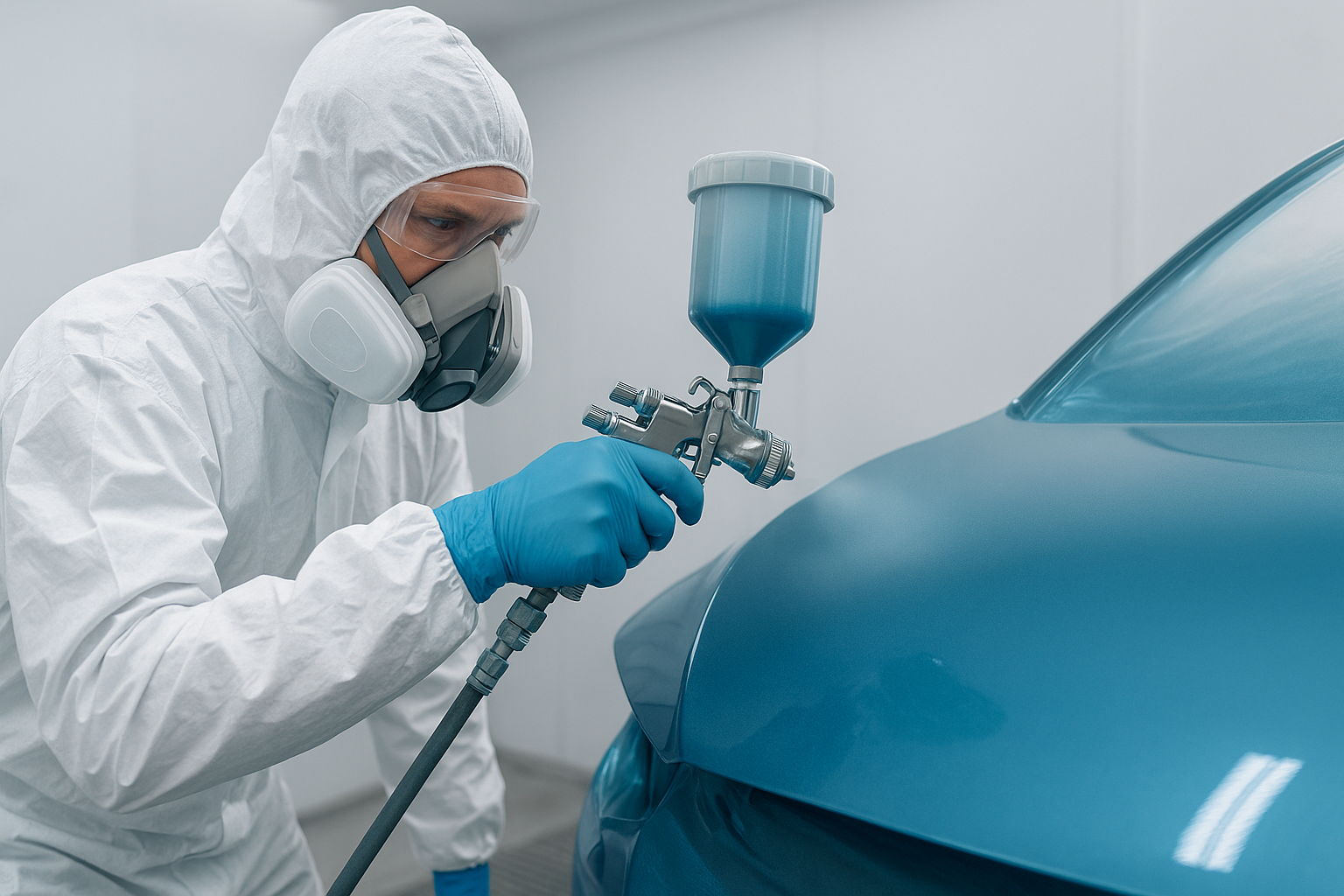
Precision paint refinishing is one of the most visible signs of quality work by experienced collision repair professionals.
How Do Car Collision Repair Experts Handle Insurance Claims?
One of the most stressful parts of a collision is navigating the insurance process. Experienced collision repair shops work directly with insurance companies on your behalf, handling the documentation, supplemental claims for hidden damage, and final billing. Here is what you should know:
- You have the right to choose your shop. Insurers may recommend “preferred” shops, but in most states you are legally entitled to select any licensed repair facility.
- Get a written estimate first. A reputable shop provides a detailed written estimate before any work begins, and communicates any changes immediately.
- Supplemental claims are normal. Hidden damage discovered during disassembly often requires a supplemental claim — experienced shops manage this process routinely.
- Ask about OEM vs. aftermarket parts. Original Equipment Manufacturer (OEM) parts are made to exact factory specifications; aftermarket parts may be less expensive but vary in quality and fit.
Frequently Asked Questions About Collision Repair
What do car collision repair experts actually do?
Car collision repair experts assess structural and cosmetic damage after an accident, then restore the vehicle to its pre-collision condition using frame straightening, panel replacement, welding, and precision paint matching. They also handle safety system recalibration and quality verification before returning the vehicle to its owner.
How long does professional collision repair typically take?
Repair time depends on damage severity. Minor dent and paint repairs can take one to three days, while major structural repairs may require one to three weeks or longer depending on parts availability and the complexity of safety system recalibration.
Is it safe to drive a car with unrepaired collision damage?
No. Even cosmetically minor collision damage can compromise crumple zones, airbag sensors, and structural integrity, making the vehicle significantly less safe in a subsequent accident. Unrepaired damage also tends to worsen over time due to moisture intrusion and metal fatigue.
Will my insurance cover the cost of collision repair?
If you carry collision coverage, your insurer will typically cover repair costs minus your deductible. Comprehensive coverage handles non-collision events like hail or theft. You generally have the right to choose your own repair shop regardless of insurer recommendations.
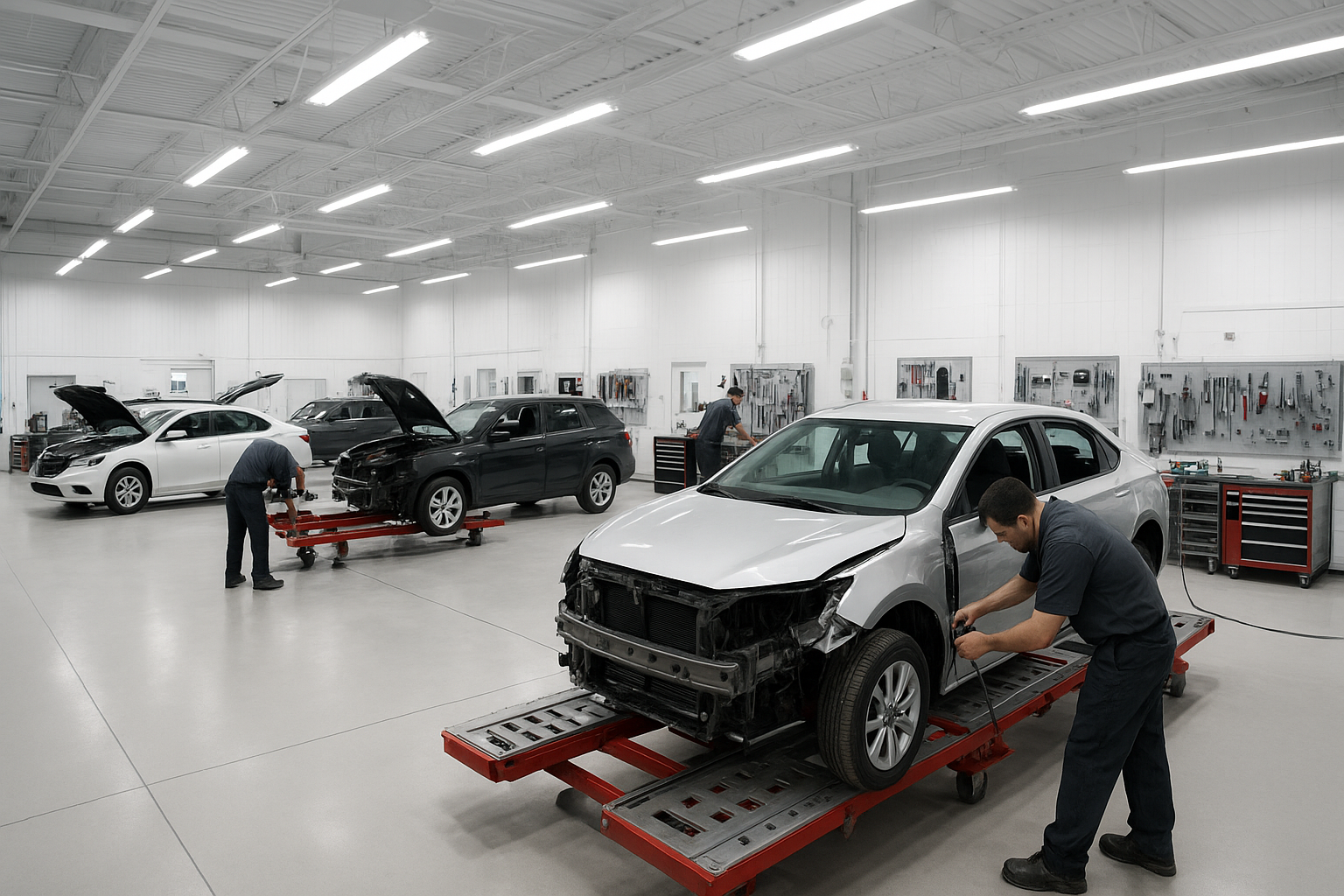
A well-equipped facility is a strong indicator of a shop’s commitment to quality collision repair.
How to Choose the Right Collision Repair Shop
Selecting the right shop is one of the most important decisions you will make after a collision. Here is a practical checklist to guide your evaluation:
Verify certifications. Ask specifically for I-CAR Gold Class status and ASE certifications. These are not self-reported — they can be verified through the certifying organizations.
Ask about warranty coverage. Reputable shops stand behind their work with written warranties on both parts and labor. Avoid any shop that cannot provide this in writing.
Inspect the facility. A clean, organized shop with modern equipment signals a professional operation. Cluttered, poorly lit facilities often reflect the quality of work produced.
Read verified reviews. Look for patterns in customer feedback — particularly comments about communication, timeline accuracy, and the quality of finished repairs.
Evaluate communication. Does the shop explain the repair process clearly? Do they provide timeline updates? Transparent communication is a hallmark of a professional operation.
If you are in Southern California, Brea Auto Body is a well-regarded example of what a professional collision repair facility should look like — combining certified technicians, modern equipment, and a customer-first approach to every repair.
The Impact of Collision Repair Quality on Resale Value
Beyond safety, the quality of collision repair has a direct financial impact on your vehicle’s resale value. A poorly executed repair — with mismatched paint, uneven panel gaps, or evidence of improper welding — will be flagged immediately by any experienced buyer or dealer. Worse, a vehicle history report through services like Carfax may show the collision, making the quality of the repair even more scrutinized.
Professional-grade repairs, by contrast, restore the vehicle to a condition that minimizes value loss. OEM parts, factory-matched paint, and certified structural repairs give you the strongest possible position when it comes time to sell or trade in your vehicle.
Conclusion: Why Trusting Car Collision Repair Experts Matters
After a collision, the instinct to minimize costs is understandable — but cutting corners on repair quality is a decision that can cost far more in the long run, both financially and in terms of personal safety. Trusting qualified car collision repair experts means trusting people who understand not just how your vehicle looks, but how it performs in a crisis.
From structural integrity and paint precision to ADAS recalibration and insurance navigation, the best collision repair professionals bring a depth of expertise that protects your investment and, more importantly, protects you. Take the time to verify certifications, ask the right questions, and choose a shop that communicates openly and backs its work with a written warranty.
For drivers in the Brea and greater Orange County area, Brea Auto Body offers the kind of certified, transparent, and warranty-backed service that defines what great collision repair should be. Your vehicle — and your safety — deserve nothing less.
Key Takeaway
The right car collision repair experts restore more than your vehicle’s appearance — they restore its structural integrity, its safety systems, and your peace of mind. Always verify certifications, demand written warranties, and never settle for less than professional-grade work.

