

Anaheim Hills Auto Body: How to Get Quality Collision Repair Without the Guesswork

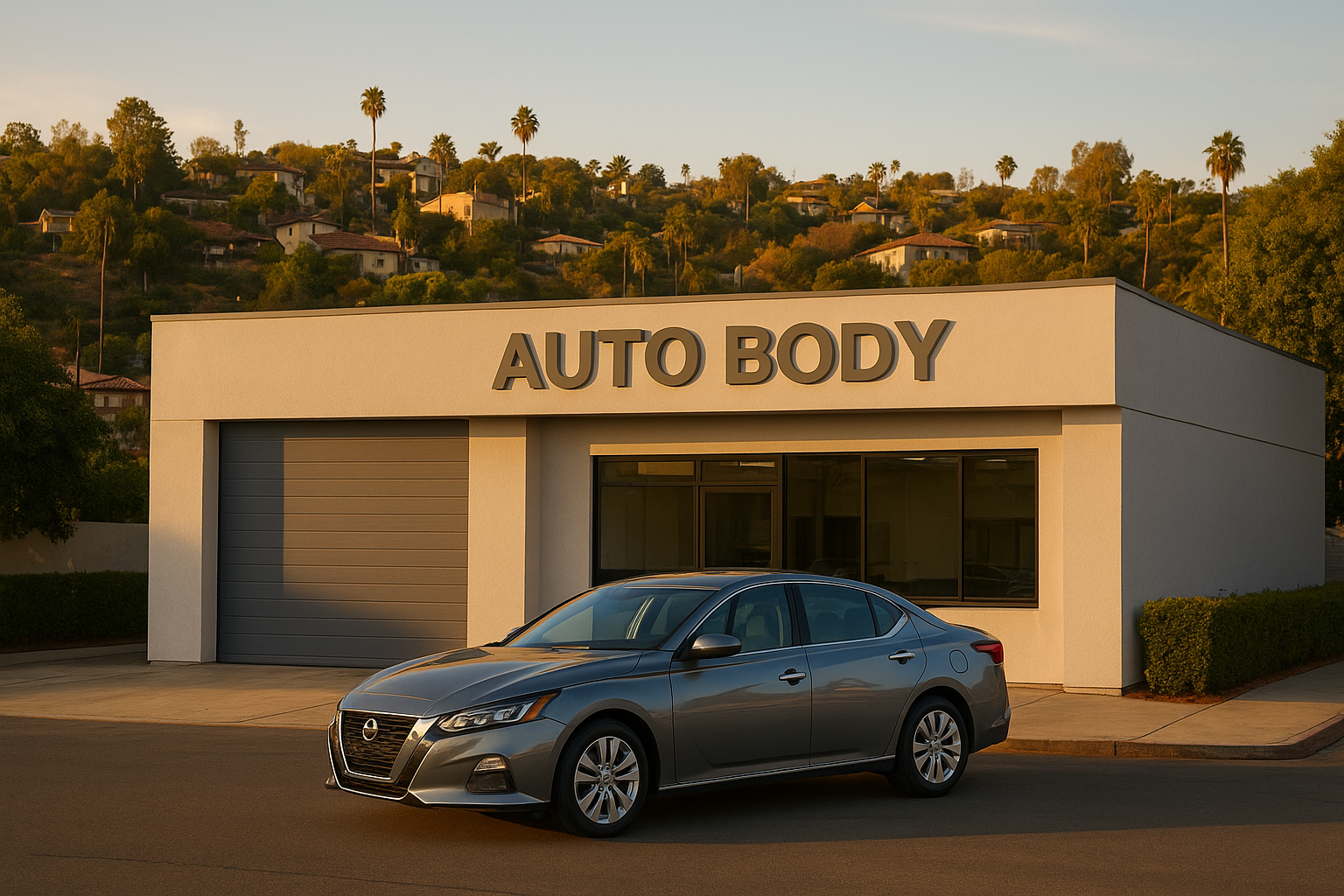
Anaheim Hills auto body setting: where precision repair meets SoCal driving conditions.
If you’re looking for Anaheim Hills Auto Body services—whether after a freeway fender-bender on the 91 or a parking-lot scrape near the canyon—you want repairs that are safe, seamless, and fairly priced. This guide explains exactly what to expect from an auto body shop serving Anaheim Hills: how estimates are written, why OEM procedures matter, how paint matching is done, and how to keep your insurance claim running smoothly. You’ll also find a local option to get a quick estimate without pressure.
Why drivers in Anaheim Hills benefit from a nearby, process-driven body shop
Anaheim Hills is uniquely Southern California—hillside drives, strong sun, and busy corridors like Imperial Highway. That means collision repair isn’t just about looking good; it’s about structural integrity, corrosion protection, and a topcoat that holds up under UV exposure. Choosing a shop near Anaheim Hills that documents every step and communicates clearly is the difference between a repair that’s simply “done” and one that’s truly road-ready.
For fast, friendly help close to Anaheim Hills, many locals turn to Brea Auto Body for a no-obligation collision repair estimate. Proximity matters when you’re juggling drop-offs, rental returns, and mid-repair approvals.
The Anaheim Hills auto body repair process, from estimate to delivery
Below is the typical journey your vehicle takes at a quality-focused shop serving Anaheim Hills. Understanding each stage ensures you know what’s happening and why it matters.

The collision repair roadmap helps Anaheim Hills drivers see what happens behind the scenes.
1) Estimate and check-in
Expect an initial visual estimate to identify obvious damage and outline a preliminary cost. Good shops photograph your vehicle, document the VIN, scan for diagnostic trouble codes (DTCs), and note pre-existing issues. Because not all damage is visible, the estimate is a starting point—not the final bill.
2) Teardown and “hidden damage” discovery
Once the affected area is disassembled, the shop can see structural, cooling, sensor, or wiring damage. This stage often triggers a supplement to your estimate. Transparent shops will call you—and, if applicable, your insurer—to approve updates before moving forward.
3) Blueprinting with OEM repair procedures
Blueprinting means mapping the repair with manufacturer repair guidelines, torque specs, and material requirements. On modern vehicles, correct welding methods, adhesives, and corrosion protection are not optional; they’re essential for safety and warranty alignment.
4) Structural and body repairs
Frame straightening occurs on calibrated equipment, restoring factory dimensions. Panels may be repaired or replaced depending on damage, material (steel, aluminum, carbon fiber), and cost-effectiveness. Proper seam sealing and rustproofing happen here too.
5) Refinishing and color match
Shops achieve a precise match by using the paint code, spectrophotometer readings, and spray-out cards. For tri-coats and pearls, blending adjacent panels is often necessary for an invisible transition under Anaheim Hills sunlight.
6) Reassembly, calibrations, and quality control
Technicians re-install trim, lighting, and sensors, then perform required calibrations for ADAS features (lane keep assist, radar cruise, parking sensors). Final QC includes road tests, scan reports, and a customer walk-through.
Paint matters in Anaheim Hills: matching, blending, and long-term durability
Southern California’s sunny climate intensifies any mismatch in hue, flop, or gloss. That’s why accurate formulas, fresh materials, controlled booth environments, and correct bake cycles are key. If your vehicle has a pearl or multi-stage finish, ask how the shop verifies match quality before spraying the car—pro-grade teams will show you test panels.

Precise paint matching and blending produce seamless results under bright Anaheim Hills sun.
Insurance claims without the headache
Whether you’re filing through your own policy or a third party’s, the most efficient path is to let the shop coordinate directly with the adjuster while keeping you in the loop. Expect the shop to handle supplements, provide photos, and share scan reports that justify the repair plan. You retain the right to choose your repair facility in California—period. If a suggested shop is inconvenient or doesn’t feel like the right fit, pick another that aligns with your standards.
Not sure where to start? You can request an estimate and claims coordination help from Brea Auto Body near Anaheim Hills, then decide how you’d like to proceed.
EVs and advanced safety tech: special considerations
Electric and late-model vehicles add steps that protect safety systems and battery health. Proper pre- and post-repair scans, high-voltage isolation procedures, and radar/camera calibrations are table stakes. Even seemingly simple bumper damage can affect sensors or radar brackets that must be measured and set to spec. Ask how the shop documents calibrations and what proof you’ll receive at delivery.
Timeline and cost: what really drives them
Repair time and price depend on parts availability, severity of damage, multi-stage finishes, and calibration needs. A small bumper and grille job may be measured in days; structural or multi-panel repairs can span weeks—especially if parts need to be ordered. Reliable shops publish status updates, text you with milestones, and invite mid-repair walk-throughs so you’re never guessing.
How to choose the right Anaheim Hills auto body shop
Use these practical, outcome-focused questions to separate okay from excellent:
- Process proof: “Can you show me a sample repair plan with OEM references and calibration steps?”
- Paint accuracy: “Will you perform spectro readings and spray-out cards before blending?”
- Communication: “How will you update me—text, email, phone—and how often?”
- Warranty clarity: “What does your workmanship warranty cover and for how long?”
- Delivery documentation: “Will I receive pre/post scan reports, photos, and a final QC checklist?”
If a shop can answer these clearly, you’re positioned for a smooth experience and a result that stands up to daily driving in Anaheim Hills.
Common Anaheim Hills scenarios—and how a great shop solves them
Hillside driveway scrapes and curb rash
Lower bumpers and rocker panels often take the hit on sloped driveways. The best fix combines careful plastic repair (if appropriate) with texture replication and blending so panels match OEM sheen and surface profile.
Sun-faded panels next to fresh paint
SoCal UV exposure can cause subtle fade. Smart color matching uses adjacent-panel blending to ensure a seamless transition under direct afternoon light on Imperial Highway.
Minor dents without cracked paint
Paintless dent repair (PDR) may remove door dings without refinishing. Ask whether access is feasible and whether the metal memory supports a clean PDR result.
What you’ll take home after a quality repair
Beyond a clean finish, you should receive documentation that proves the repair is complete and safe: final scan reports, calibration confirmations, torque spec notes for critical fasteners, paint batch numbers, and a workmanship warranty. Keep these with your service records; they support resale value and provide peace of mind.
Ready for an Anaheim Hills auto body estimate?
If you want a clear plan, strong communication, and nearby convenience, start with a quick estimate at Brea Auto Body. Bring your insurance information, a few photos of the damage, and your availability for drop-off. You’ll leave with a transparent game plan designed for today’s vehicles—EVs, ADAS, multi-stage finishes, and all.

