

Auto Body Diamond Bar: The Complete Guide to Collision Repair Done Right
Updated guide for Diamond Bar drivers navigating collision repair, paint matching, ADAS calibration, and shop selection.

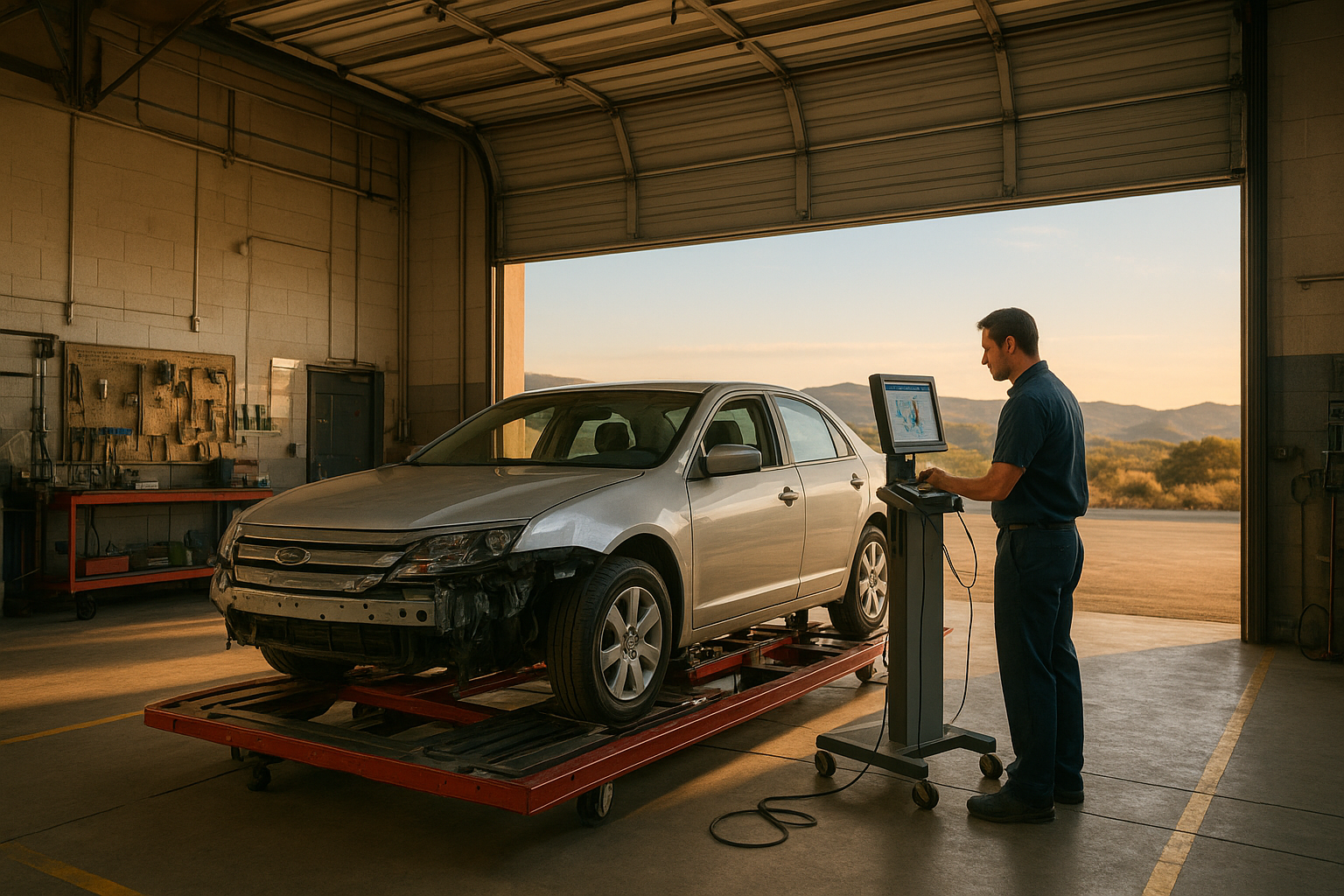
A professional collision repair environment built for auto body Diamond Bar drivers who demand quality.
Whether you were rear-ended on the 57 Freeway, scraped a pillar in a parking structure near Brea Mall, or caught a shopping cart in the Target lot off Diamond Bar Boulevard — you’re now making decisions about auto body repair in Diamond Bar. This guide gives you everything you need: how to evaluate a local shop, what a professional repair workflow actually looks like, what separates a seamless color match from an obvious mismatch, what EV and ADAS repairs require, and which nearby shop Diamond Bar drivers consistently trust for quality results.
How to Choose an Auto Body Shop in Diamond Bar
Not every auto body shop in or near Diamond Bar operates at the same standard. The difference between a shop that cuts corners and one that does it right shows up weeks later — in a panel gap that wasn’t there before, a warning light that won’t clear, or a paint match that looks fine indoors but shifts color in direct sun. Here’s what to evaluate before you commit.
1. Transparent, Documented Process
Ask the shop to walk you through their workflow. Do they perform a full teardown before finalizing the repair estimate? Do they dry-fit panels before painting? Do they provide written documentation at each stage? Shops with nothing to hide show you everything — and that transparency is itself a quality signal.
2. Equipment That Measures Instead of Guesses
Frame and unibody work must be measured against OEM specifications using a computerized measuring system tied to a frame rack. Shops using visual inspection alone cannot guarantee structural integrity. If your vehicle has aluminum panels or mixed-material construction — increasingly common on newer models — ask specifically about dedicated aluminum tooling and approved bonding procedures.
3. Technicians Who Follow OEM Repair Procedures
Modern vehicles have model-specific repair requirements published by the manufacturer — covering everything from corrosion protection coatings and seam sealer locations to one-time-use fasteners and weld stitch patterns. A qualified technician looks up these procedures for your specific year, make, and model rather than relying on generic experience. This is the only way to restore a vehicle to pre-loss safety and function.
4. Reputation Backed by Verifiable Reviews
Online reviews matter, but read for specifics — not just star counts. Look for reviewers who mention turnaround accuracy, communication quality, fit and finish details, and how the shop handled any warranty concerns. A long list of generic five-star ratings is less meaningful than consistent patterns in detailed reviews.
5. Written Warranty Coverage
Any reputable auto body shop near Diamond Bar should offer a written warranty on their workmanship — covering paint, bodywork, and structural repairs. Ask what the warranty covers, how long it lasts, and what the process is if an issue emerges after delivery. A shop confident in their quality will have no hesitation providing this in writing.
Collision Repair Services Diamond Bar Drivers Should Expect
A full-service auto body shop serving the Diamond Bar area should offer comprehensive capabilities under one roof. Sending your vehicle to multiple locations for different stages increases risk and extends timelines. The core services to confirm before choosing a shop include:
- Collision and impact damage repair — from minor fender benders and parking lot dings to major front or rear collisions requiring structural work
- Frame and unibody straightening — computerized measurement and rack-based correction to OEM tolerances
- Panel repair and replacement — dent repair, crease repair, and full panel replacement when necessary
- Color-matched refinishing — spectrophotometer-guided mixing, blending, and booth curing for a factory-level finish
- Bumper repair and replacement — including plastic welding, realignment, and sensor-safe procedures
- Glass replacement — windshield and door glass replacement with proper adhesive cure times and recalibration coordination
- ADAS and sensor calibration — static and dynamic procedures for cameras, radar, and ultrasonic systems
- EV and hybrid-specific repair — high-voltage disable procedures, insulated tooling, and battery assessment protocols
- Insurance claim assistance — working directly with your insurer to document damage and coordinate approvals
The Auto Body Repair Process: Every Step Explained
Understanding what actually happens between drop-off and delivery gives you the context to compare shops, evaluate estimates, and hold any Diamond Bar auto body facility accountable for the quality you’re paying for.

From initial assessment through final calibration, each stage matters for safety and quality.
Step 1: Check-In and Initial Assessment
When you bring your vehicle in, a qualified estimator performs a visible damage assessment and photographs every affected area. For insurance claims, this initial documentation anchors the repair authorization process. You should receive a written explanation of what’s been observed and what the next step — teardown — is expected to reveal.
Step 2: Teardown and Blueprinting
Trim panels, fascias, and damaged components are removed to expose what the initial assessment couldn’t see. This “blueprinting” stage produces an accurate, complete repair plan — and it’s when parts are ordered. Shops that skip teardown before ordering parts frequently cause delays and incomplete repairs. Blueprinting is non-negotiable at quality facilities.
Step 3: Structural Measurement and Correction
The vehicle is mounted on a frame rack and every structural measurement is compared against factory data for your specific model. Pulls and corrections bring the unibody back within millimeter-level tolerances. This step must be completed — and verified — before any cosmetic work begins. Shops that skip to bodywork on a still-compromised structure are creating safety risks you may not discover until much later.
Step 4: Mechanical and Safety System Restoration
If impact energy reached the suspension, steering, cooling, or safety systems, those components are addressed before cosmetic work continues. Driving a vehicle with hidden mechanical damage — even with a perfect paint job — is a liability and a safety hazard. A thorough shop captures these issues during teardown and includes them in the repair plan.
Step 5: Panel Repair, Replacement, and Dry-Fit Testing
Repairable panels are worked to remove dents, creases, and distortion. Panels too compromised for safe repair are replaced. Before any paint is applied, all panels are dry-fitted to the vehicle to verify proper gaps, alignment, and door operation. This dry-fit check is what separates doors that close cleanly from doors that need a second slam — and it’s a step many lower-tier shops skip entirely.
Step 6: Surface Preparation and Corrosion Protection
Bare metal and repair areas are treated with corrosion inhibitors before primer application. Seam sealer is applied per OEM location maps. These steps prevent rust from starting in the repair area years after the job is complete — and they’re part of restoring your vehicle to manufacturer safety specifications, not just cosmetic appearance.
Step 7: Refinishing in a Controlled Spray Booth
Primer, sealer, color basecoat, and clearcoat are applied in a filtered, temperature-controlled spray booth. Controlled flash and bake cycles build the gloss, hardness, and durability of the OEM finish. Adjacent panels are blended as needed so the human eye perceives a continuous, seamless color across the vehicle.
Step 8: Reassembly and Component Reinstallation
Trim, moldings, emblems, lighting, and mechanical components are reinstalled to OEM torque specs. One-time-use fasteners identified during teardown are replaced with new units per manufacturer specifications — not reused, which can compromise fit and safety.
Step 9: ADAS Calibration and Scan
Any repair that affects sensor mounting locations, bumper fascias, ride height, glass, or camera housings requires recalibration of affected driver-assistance systems. Calibrations may be static (performed in a controlled environment using targets), dynamic (performed on the road at specified speeds), or both — depending on the system and manufacturer requirement. Calibration results should be documented in printed scan reports.
Step 10: Final Quality Inspection and Road Test
Before you get the keys back, a trained quality inspector verifies panel fit, paint gloss and color match, lighting function, safety system indicators, and clean-up of the interior. A road test confirms mechanical and electronic systems are operating normally. Only after passing this checklist should the vehicle be considered complete.
Paint Matching That Holds Up in Diamond Bar’s Southern California Sun
Southern California’s intense direct sunlight is unforgiving to imperfect paint work. A color match that looks acceptable under a shop’s fluorescent lighting can reveal obvious mismatches the moment you drive the car outside. This is one of the most common complaints about lower-quality auto body shops in the Diamond Bar area — and it’s entirely preventable with the right approach.

Spectrophotometer-guided color matching is the standard for accurate results in SoCal light conditions.
Spectrophotometer Color Reading
A spectrophotometer is a handheld device that reads the precise color and light-reflective properties of your vehicle’s existing finish. It accounts for metallic flake orientation, pearl pigment concentration, and the natural weathering your paint has undergone. This reading feeds a mixing formula that is dramatically more accurate than relying on a factory paint code alone — because factory codes describe new paint, and your vehicle’s paint has been exposed to years of UV, heat, and weather.
Spray-Out Card Verification
Before any paint is applied to your vehicle, a qualified colorist should spray out the mixed formula on a test card and compare it directly against your existing finish in natural light. Adjustments to metallic orientation, toner ratios, or tinted clearcoat are made at this stage — not after the panel is already painted.
Blend Strategy for Metallics and Tri-Coats
Even a perfectly matched formula cannot guarantee an invisible result on metallics, pearls, and tri-coats without a proper blend. Color is feathered into adjacent panels so the transition point is invisible to the human eye. Skipping the blend — or blending too aggressively — produces visible color boundaries that are obvious in raking light. Diamond Bar drivers with silver, gold, or multi-stage paint finishes should specifically ask how the shop handles blending for their color.
Waterborne vs. Solvent-Based Paint Systems
Most California collision shops use waterborne basecoat systems, which comply with SCAQMD (South Coast Air Quality Management District) regulations and consistently produce excellent color accuracy. Waterborne chemistry allows for better metallic orientation control, which is one reason modern California shops can achieve matches that would have been difficult a decade ago. Confirm the shop uses a current-generation refinishing system.
Clearcoat Film Build and Texture
A great color match buried under a clearcoat with the wrong texture or film build will still look wrong. OEM-like orange peel, gloss level, and film thickness are achieved through proper product selection and application technique — not luck. Ask specifically whether the shop matches texture as well as color.
Working With Insurance for Your Diamond Bar Auto Body Repair
Navigating an insurance claim is often the most stressful part of an auto body repair for Diamond Bar drivers. Understanding the process — and your rights within it — reduces friction and ensures you get the repair your vehicle actually needs.
You Have the Right to Choose Your Shop
California law gives you the right to choose which auto body shop repairs your vehicle, regardless of what your insurer recommends or which “preferred network” they direct you toward. Insurers may recommend DRP (Direct Repair Program) shops for convenience, but you are not required to use them. If you have a shop you trust, you can use it.
Understanding OEM vs. Aftermarket vs. Recycled Parts
Insurance estimates often specify aftermarket or recycled (LKQ) parts to reduce claim cost. Here’s what each means for your vehicle:
- OEM (Original Equipment Manufacturer) parts are made by your vehicle’s manufacturer and guaranteed to fit and function as designed. They’re the safest choice for structural, safety-system-adjacent, and appearance-critical panels.
- Aftermarket parts are made by third-party suppliers. Quality varies widely. CAPA-certified aftermarket parts meet a minimum quality standard, but fit and finish can still vary from OEM.
- Recycled (LKQ) parts are used OEM components from salvage vehicles. They may be appropriate for certain body panels on older vehicles, but should be avoided for structural components and panels housing sensors.
Ask your Diamond Bar auto body shop how each parts choice affects fit, safety system integrity, and corrosion protection. A quality shop will advocate for the correct parts and document any disputes with your insurer on your behalf.
Supplement Cycles
Insurance estimates are almost always written before teardown reveals the full extent of damage. A “supplement” is an updated repair authorization submitted to your insurer after teardown uncovers additional damage or required calibrations. Reputable shops handle supplements routinely and communicate the impact on timing before proceeding.
Rental Car Coordination
If your policy includes rental coverage, confirm the per-day limit before drop-off and ask the shop for an estimated completion timeline. Supplement cycles and parts delays can extend rental needs beyond the initial estimate — a good shop will communicate proactively so you’re never caught off-guard.
Realistic Timelines for Auto Body Repair in Diamond Bar
Collision repair is a choreography of technical steps, parts procurement, insurance approvals, and calibration scheduling. Timelines vary widely based on the scope of damage — here’s what to realistically expect:
| Repair Type | Typical Timeframe | Key Variables |
|---|---|---|
| Minor dent or scratch repair | 1–3 days | Paint blend, parts on hand |
| Single panel collision repair | 3–5 days | Insurance approval, parts availability |
| Multi-panel with structural work | 7–14 days | Supplement cycles, parts lead times |
| Major collision with ADAS calibration | 10–21+ days | Calibration scheduling, dealer coordination |
| EV collision repair | 14–30+ days | Battery assessment, OEM parts availability |
The single biggest driver of timeline surprises is parts availability — particularly for newer or less common vehicles. A shop with strong supplier relationships and an organized parts management process minimizes this. Choose a Diamond Bar auto body repair partner that publishes milestone targets, communicates proactively when timing shifts, and gives you a direct contact for status updates.
EVs and ADAS: What Diamond Bar Drivers Need to Know
Diamond Bar drivers own a higher-than-average share of electric vehicles and late-model vehicles equipped with advanced driver-assistance systems. If your vehicle falls into either category, the auto body shop you choose needs specific capabilities — not just collision repair experience in general.
Electric Vehicle Collision Repair Requirements
EV repairs introduce safety requirements that don’t exist for internal combustion vehicles:
- High-voltage disable procedures: Before any structural or undercarriage work, the high-voltage system must be safely disabled by a trained technician using insulated tools. Failure to do so creates lethal risk.
- Battery pack inspection and assessment: Even when cosmetic damage appears minor, an impact near the battery pack requires inspection for structural damage, thermal event risk, and cell integrity. This often requires manufacturer diagnostic tools.
- Temperature-controlled storage: Damaged battery packs or vehicles with battery concerns may require controlled-environment storage pending inspection — a capability not every shop has.
- OEM parts for high-voltage components: Aftermarket alternatives for battery system components are generally not appropriate or available — OEM parts sourcing and potentially factory-trained technician procedures are required.
ADAS Calibration: Why It’s Not Optional
Modern vehicles use radar, cameras, and ultrasonic sensors embedded throughout the body to power lane centering, automatic emergency braking, adaptive cruise control, blind spot monitoring, and parking assist. A collision — even a minor one affecting a bumper, door mirror, windshield, or ride height — can displace these sensors enough to compromise system accuracy without triggering a dashboard warning.
The result: a system that appears to function normally but operates outside its designed safety envelope. This is why ADAS calibration after collision repairs is a mandatory step for any vehicle equipped with these systems — not an upsell.
Ask your shop specifically: What ADAS calibrations does my vehicle require based on the repairs being performed? Can you perform them in-house, or will you coordinate with a dealer or calibration specialist? Will I receive printed documentation showing calibration was completed and passed?
Static vs. Dynamic Calibration
Static calibration is performed indoors, with the vehicle stationary and positioned against manufacturer-specified target patterns. It requires a level floor, adequate space, and the correct target boards for your specific model. Dynamic calibration is performed during a road test at specified speeds, with the system learning its new alignment from real-world inputs. Many vehicles require both. Ask for documentation of whichever procedure(s) apply to your vehicle.
Certifications and Training That Matter for Diamond Bar Auto Body Shops
Not all training and certification programs are equal. Here’s what the credentials you may see on a shop’s wall or website actually mean for your repair:
- I-CAR Gold Class: The highest industry-wide recognition for collision repair training, I-CAR Gold Class means every role in the shop — estimators, body technicians, refinish technicians — meets defined annual training hour requirements. Fewer than 10% of collision shops in the U.S. achieve this designation. It’s a strong baseline indicator of commitment to current repair knowledge.
- OEM Certifications: Manufacturer programs like Honda ProFirst, Toyota Collision Repair & Refinishing, Ford Certified Collision Network, Nissan NCAR, and similar designations train technicians to manufacturer-specific procedures and require shops to maintain equipment standards. If you drive a specific brand, ask if the shop is certified for that make.
- ASE Certifications: ASE (Automotive Service Excellence) certifications for collision-specific roles — including structural analysis, non-structural analysis, and refinishing — indicate technicians have passed standardized competency tests in their specialty.
- EV-Specific Training: With EVs making up a growing share of vehicles on Diamond Bar roads, shops serving the area should have at minimum I-CAR’s Electric/Hybrid Vehicle Operations training, and ideally manufacturer-specific EV repair training for the makes they service.
Don’t be shy about asking a shop what certifications their technicians hold and when training was last completed. A quality shop will answer clearly and without hesitation — and the answer will tell you everything you need to know about their commitment to doing the job right.
A Nearby Auto Body Option Many Diamond Bar Drivers Choose
When Diamond Bar drivers search for quality collision repair and want a shop they can verify — rather than just hope for — many explore Brea Auto Body’s collision repair center. Located just minutes from Diamond Bar, Brea Auto Body offers a full range of services including structural repair, color-matched refinishing, ADAS calibration, and EV-compatible repair procedures.

Panel fit, paint gloss, and color continuity are all visible indicators of repair quality — before and after.
When evaluating any auto body shop near Diamond Bar, including Brea Auto Body, verify the following before committing:
- Current certification status and technician training credentials
- Whether they perform full teardown and blueprinting before finalizing estimates
- In-house or coordinated ADAS calibration capability with documented results
- EV capability including high-voltage disable procedures
- Written warranty coverage for workmanship
- Communication process and how they provide status updates during repair
The short drive from Diamond Bar is a reasonable investment when the alternative is choosing a shop that isn’t fully equipped for your vehicle’s specific requirements. Visit breaautobody.com to review current services, request an estimate, or confirm availability.
FAQ: Auto Body Diamond Bar
How do I find a quality auto body shop in Diamond Bar?
Look for shops with verifiable certifications (I-CAR Gold Class, OEM brand certifications), a documented teardown-first process, in-house ADAS calibration capability, and a written workmanship warranty. Read reviews for specifics about communication, accuracy of timelines, and how the shop handled any post-delivery concerns. Don’t choose based on price alone — the cheapest estimate often reflects corners being cut in the process.
How do I compare estimates from different Diamond Bar auto body shops?
Look beyond the total price and compare scope. Does the estimate include teardown to expose hidden damage? Are structural measurements and calibrations itemized? Are repair vs. replace decisions explained with safety reasoning? Does the estimate reflect OEM parts where appropriate, or has it substituted aftermarket components without explanation? A lower estimate is only a better deal if the scope actually matches what your vehicle needs.
Can I choose my own auto body shop in Diamond Bar even if my insurance recommends another?
Yes. California law gives you the right to select the collision repair shop of your choice, regardless of insurer recommendations or DRP network preferences. Your insurer may ask you to obtain multiple estimates or visit a preferred shop for an initial assessment, but they cannot require you to use a specific facility. If you have questions about your rights, your state’s Department of Insurance can provide guidance.
What parts should I expect to be used in my auto body repair?
Depending on your vehicle’s age, insurer guidelines, and the specific panel, the repair plan may include OEM, CAPA-certified aftermarket, or recycled components. Ask how each choice affects fit and finish, safety system function, and long-term corrosion resistance. OEM parts are generally preferred for structural components, panels housing sensors, and appearance-critical surfaces. Your shop should explain all parts decisions clearly before work begins.
How long will my auto body repair take in Diamond Bar?
Minor cosmetic repairs may take 1–3 days. Single-panel collision repairs typically run 3–5 days. Structural repairs with multiple panels usually require 7–14 days, and major collisions involving ADAS calibration or EV battery assessment can take 2–4 weeks or longer. Parts availability and insurance supplement approval cycles are the most common sources of timeline extension. A quality shop publishes milestone targets and communicates proactively when timing shifts.
Does my auto body repair need ADAS calibration?
If your vehicle is equipped with any driver-assistance systems — lane keeping, automatic emergency braking, adaptive cruise, blind spot monitoring, or parking assist — and the repair affected sensors, cameras, bumper fascias, windshield, mirrors, or ride height, calibration is required. This is not optional. A displaced sensor can operate silently outside its safety envelope without triggering any dashboard warning. Always request printed documentation confirming calibration was completed and passed.
What warranty should I expect from a Diamond Bar auto body shop?
Reputable collision repair shops offer a written workmanship warranty covering paint, body repairs, and structural work — often for as long as you own the vehicle. Ask for the warranty terms in writing before you authorize any repair, and confirm the process for bringing a concern back to the shop if something appears after delivery. A quality shop will stand behind their work without hesitation.
Is Brea Auto Body a good choice for Diamond Bar residents?
Brea Auto Body is located just minutes from Diamond Bar and is frequently chosen by local drivers looking for a full-service collision repair center. Before choosing any shop, verify current certifications, confirm ADAS and EV capabilities for your vehicle’s make, and ask about their teardown and documentation process. Visit breaautobody.com to review services and request an estimate.
The Bottom Line for Diamond Bar Drivers
When you need auto body work in Diamond Bar, the stakes go beyond appearance. Structural integrity, sensor calibration, and corrosion protection all affect how your vehicle performs in the next accident — not just how it looks today. Prioritize shops that show you their process, prove their measurements, document their calibrations, and stand behind their work in writing.
From teardown blueprinting to waterborne refinishing, ADAS recalibration, and final quality inspection, every step in a professional repair workflow is there for a reason. Understanding these steps makes you a better consumer — and helps you identify immediately which shops are worth your trust and which are not.
Explore nearby options like Brea Auto Body to compare capabilities, ask the right questions, and choose a collision repair partner that earns your confidence — from the first estimate to final delivery.

