Uncategorized

Auto Body Inc: Expert Collision Repair in Brea, CA

June 11, 2026
By : Fred

Auto Body Repair in Brea, CA: The Complete Guide to Collision Repair, Costs, and Choosing the Right Shop

After a collision or cosmetic damage event, finding a professional Auto Body Repair Brea CA shop you can trust matters more than almost any other decision you’ll make as a vehicle owner. The quality of the repair directly affects your safety, your vehicle’s resale value, and whether the damage is truly corrected — or just concealed.

auto accident repair guide covers everything you need to know about auto body repair — from the specific services a full-service shop provides, to how the repair process works step by step, to what certifications and quality standards you should insist upon before authorizing any work. If you’re in Brea or anywhere across Orange County, this guide will help you make a confident, informed choice.

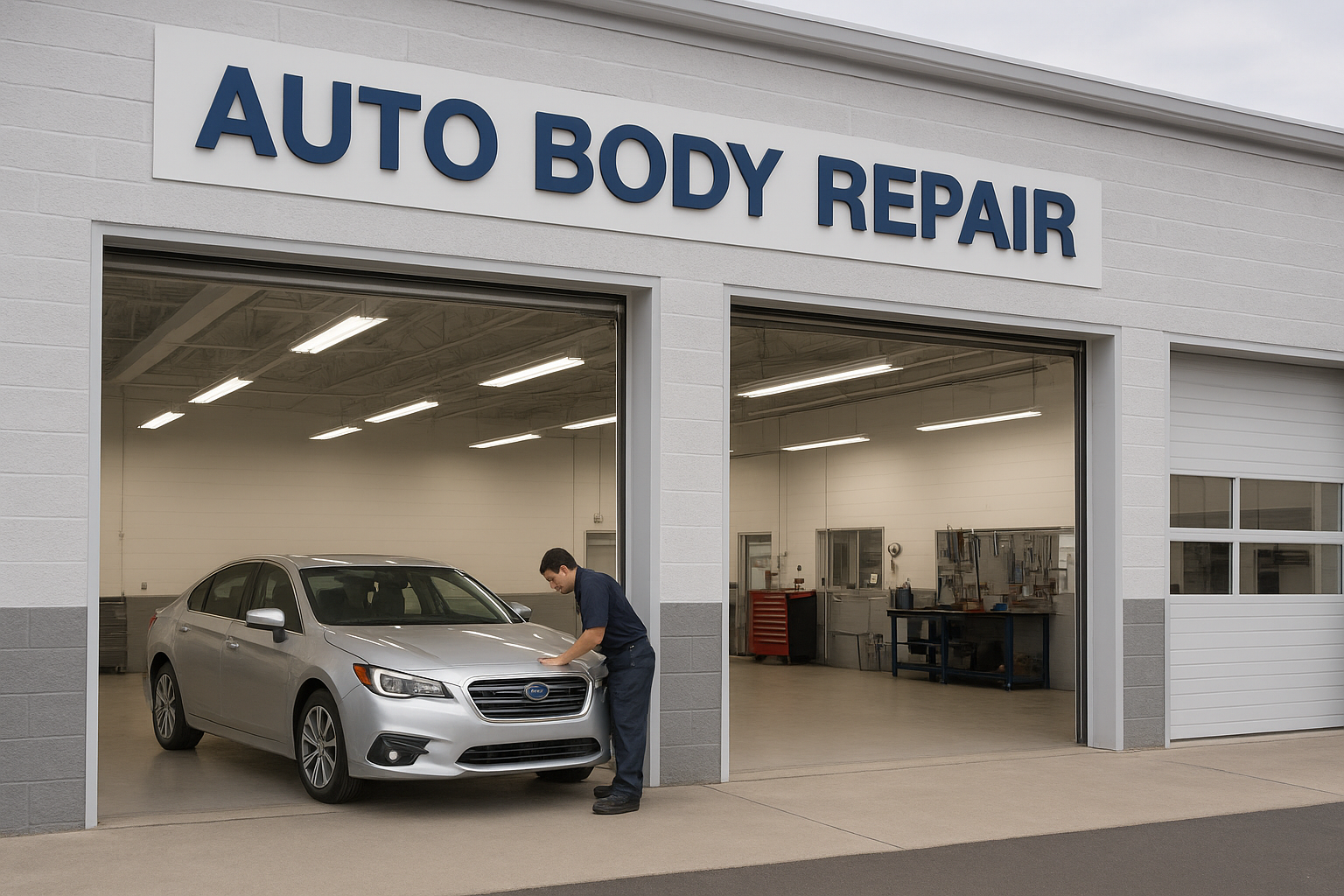
Certified auto body repair technician inspecting a silver sedan inside a professional repair shop in Brea CA

A fully equipped auto body repair facility conducts thorough vehicle inspections before any repair work begins.


What Is Auto Body Repair? A Clear, Direct Answer

Auto body repair is the professional process of restoring a vehicle’s structural integrity, exterior panels, and paint finish after collision damage, hail, vandalism, or general wear. It encompasses a wide range of technical services — from repairing minor scratches and dents to straightening a bent frame and refinishing an entire vehicle section.

Unlike mechanical repair, which focuses on a vehicle’s engine and drivetrain systems, auto body repair addresses the vehicle’s body structure, outer panels, and finish. Both are essential after a serious collision — and many professional shops coordinate with mechanical specialists to ensure the entire vehicle is properly restored.

A professional, incorporated auto body repair business operates under formal state licensing requirements, adheres to manufacturer repair guidelines, and employs certified technicians who follow industry-standard protocols. That formal structure gives customers an important layer of consumer protection and accountability that informal, uncertified operations simply cannot offer.


Complete Auto Body Repair Services: What a Full-Service Shop Provides

A reputable auto body repair shop handles far more than surface-level scratches. The range of services spans structural, cosmetic, mechanical coordination, and finishing work. Below is a detailed breakdown of what you can expect from a certified facility.

Collision Repair and Full Structural Restoration

Collision repair is the most technically demanding service an auto body shop performs. After an impact, a vehicle may sustain damage to outer panels, bumpers, doors, fenders, and — in more serious cases — its underlying frame or unibody structure. Technicians use specialized equipment to measure and restore structural alignment, ensuring the vehicle meets original manufacturer specifications (OEM standards).

Frame straightening services use computerized measuring systems to detect and correct even subtle misalignment that could affect handling, tire wear, and occupant safety. According to the National Highway Traffic Safety Administration (NHTSA), unaddressed structural damage after a collision can significantly compromise a vehicle’s crashworthiness in a future accident. That makes structural restoration not just a cosmetic issue — but a life-safety priority.

Frame Straightening and Unibody Correction

Many modern vehicles use a unibody construction — meaning the body and frame are one integrated structure. When this structure sustains impact damage, even a few millimeters of misalignment can cause cascading problems: premature tire wear, poor handling, doors and windows that don’t seal properly, and compromised airbag deployment during future collisions.

Professional auto body repair shops use computerized frame measuring systems — such as Car-O-Liner or Chief Automotive Technologies platforms — to precisely diagnose and correct structural deformation. The vehicle is anchored to a frame straightening bench and hydraulic pulling equipment restores the metal to exact OEM tolerances.

Precision Dent Removal and Paintless Dent Repair (PDR)

Minor dents from hail, parking lot impacts, or door dings are extremely common and can often be resolved through paintless dent removal (PDR). PDR uses specialized tools to gently reshape the metal from behind the damaged panel without disturbing the factory paint finish. The result is faster, less expensive, and preserves the vehicle’s original paint — which is important for maintaining resale value.

However, larger or deeper dents that have cracked, creased, or chipped the paint require traditional filler and refinishing methods. A skilled auto body technician will assess each individual dent and recommend the most appropriate repair technique — not simply the most profitable one.

When PDR is appropriate:

  • The paint surface is fully intact with no cracking or chipping
  • The dent has no sharp creases that have stretched the metal
  • Hail damage across large panel areas
  • Minor parking lot dings and door dents

Advanced Paint Matching and Refinishing

Paint matching is one of the most technically demanding aspects of auto body repair. Modern vehicles use complex, multi-stage paint systems — including primer coats, base coats, clear coats, and specialty finishes like pearl, metallic, tri-coat, and matte effects. Achieving a seamless, invisible blend requires both computerized color-matching technology and a skilled painter’s trained eye.

Professional shops use spectrophotometers — optical devices that measure light wavelengths reflected by the existing paint — to formulate an exact color match. This technology is especially critical for vehicles whose paint has faded slightly over time, because the new paint must match the vehicle’s current aged tone, not just the original factory color code.

All painting is performed in a climate-controlled spray booth, which eliminates dust contamination and ensures consistent temperature and humidity conditions for a perfect finish. The painted surface then undergoes a multi-stage polishing process to achieve factory-level gloss and clarity.

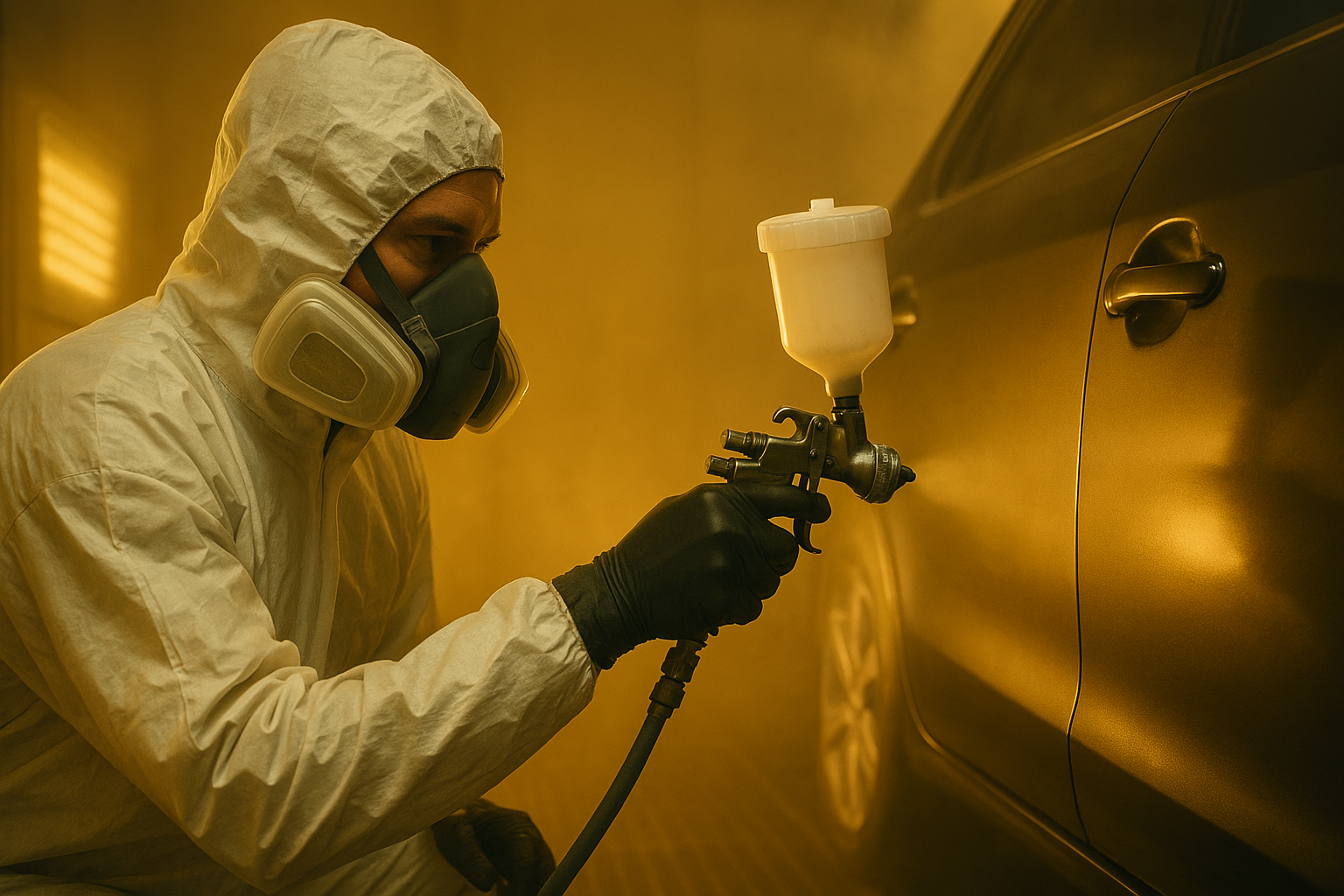
Auto body repair painter applying precision paint match to a vehicle door panel in a professional spray booth in Brea CA

Advanced spectrophotometer paint matching technology ensures a flawless, factory-quality finish on every auto body repair.

Bumper Repair and Replacement

Bumpers are among the most frequently damaged components in low-speed collisions and parking incidents. Modern bumpers are engineered systems — they contain impact-absorbing foam, sensor mounts for parking aids and adaptive cruise control, and camera housings for backup assist. Proper bumper repair requires not just cosmetic restoration but also verification that all integrated systems function correctly.

Depending on the damage severity, a bumper may be repaired using plastic welding and filler techniques, or it may require full replacement with an OEM or OEM-equivalent part. A certified shop will always recommend the option that restores both form and function — not the one that simply looks acceptable in the short term.

Auto Glass Repair and Windshield Replacement

Many full-service auto body repair facilities offer windshield and auto glass services as part of their comprehensive offerings. Small chips and cracks in the windshield can often be repaired with resin injection without requiring full replacement — saving time and money. Larger cracks, or chips within the driver’s direct sightline, typically require full windshield replacement.

On vehicles equipped with Advanced Driver Assistance Systems (ADAS) — such as lane departure warning, automatic emergency braking, or forward collision detection — windshield replacement must be followed by ADAS recalibration. This critical step is often overlooked by shops that lack the proper equipment or training.

ADAS Calibration After Auto Body Repair

Advanced Driver Assistance Systems are increasingly standard on new vehicles — and they are sensitive to even minor changes in vehicle geometry. After any significant auto body repair involving the windshield, front bumper, rear bumper, or structural components, ADAS sensors must be recalibrated to manufacturer specifications.

Failing to recalibrate ADAS components can result in systems that trigger incorrectly — or worse, fail to activate when needed. A qualified auto body repair shop will identify which systems require recalibration and either perform the work in-house or coordinate with a specialist who has the proper calibration targets and software.

Interior Cleaning and Post-Repair Detailing

A thorough auto body repair goes beyond what you can see from the outside. Collisions often leave dust, debris, glass fragments, and residue inside the vehicle cabin. Quality shops offer interior cleaning services as part of the restoration process — ensuring the vehicle looks and feels as good on the inside as it does on the outside when it’s returned to you.


How the Auto Body Repair Process Works: Step by Step

Understanding the auto body repair process from start to finish reduces stress and sets realistic expectations. Here is a clear, sequential overview of what happens when you bring your vehicle to a professional shop.

  1. Document the Damage Immediately: Photograph all visible damage from multiple angles as soon as it is safe to do so. Capture wide shots for context and close-ups for detail. Also photograph the surrounding scene, any other vehicles involved, and road conditions. This documentation is essential for your insurance claim and helps the technician assess the full scope of repair needed before the estimate.
  2. Contact Your Insurance Company: Notify your insurer promptly and provide photos, incident details, and the other party’s information if applicable. Ask specifically whether your policy requires a pre-approved estimate, whether you are free to choose your own repair facility, and whether a rental vehicle is covered during the repair period.
  3. Schedule a Comprehensive Repair Estimate: Bring your vehicle to a certified auto body repair shop for a thorough written estimate. A qualified technician will inspect both visible surface damage and hidden structural damage before quoting the full cost. Avoid shops that provide estimates without physically examining the vehicle.
  4. Authorize the Repairs in Writing: Review the estimate carefully and authorize work in writing only once you are satisfied with the scope, parts specification, and pricing. Confirm the expected completion timeline and ask specifically about the warranty covering both parts and labor. A reputable shop will never pressure you to sign before you’re ready.
  5. Disassembly and Hidden Damage Assessment: Once the shop begins work, technicians will disassemble the damaged area to reveal any hidden structural or mechanical damage not visible during the initial estimate. The shop should contact you immediately with a revised scope and cost before proceeding. This is a normal, expected part of the process — not a bait-and-switch.
  6. Structural Repair, Panel Work, and Painting: Technicians perform structural corrections, replace or repair body panels, and refinish affected surfaces in a temperature-controlled spray booth. Quality control checks occur at each stage before the vehicle moves to the next phase of repair.
  7. Reassembly and Systems Verification: All components — including trim, sensors, lights, and bumper covers — are reinstalled and tested. If ADAS systems were affected, calibration is performed at this stage. The vehicle also undergoes a final alignment check to confirm all structural measurements meet OEM specifications.
  8. Final Inspection and Vehicle Delivery: Before returning your vehicle, the shop performs a multi-point quality inspection. When you pick up the vehicle, inspect it thoroughly in good lighting: verify paint color matches seamlessly, all panels align correctly, gaps are consistent, lights and electronics work properly, and the vehicle drives straight without pulling.

What to Look for When Choosing an Auto Body Repair Shop Near You

auto body shop in Brea involves far more than finding the lowest price. The quality of the repair affects your safety, your vehicle’s value, and how long the repair holds up over time. Look for these specific markers of quality and professionalism before making your decision.

I-CAR Gold Class and Manufacturer Certifications

I-CAR Gold Class certification is widely regarded as the highest industry training standard for collision repair professionals. Shops that maintain this designation invest in continuous technician education covering the latest vehicle materials, construction methods, and repair techniques. According to I-CAR, Gold Class shops represent only about 20% of all collision repair businesses in the United States — making this certification a meaningful and genuine differentiator.

In addition to I-CAR, look for manufacturer-specific certifications — such as those offered by GM, Ford, Toyota, Honda, and others. These certifications require shops to use approved repair procedures, OEM parts, and specific equipment — and they are verified through periodic audits. ASE (Automotive Service Excellence) certifications for individual technicians are also a strong positive indicator.

OEM Parts vs. Aftermarket Parts: Why It Matters

One of the most consequential decisions in any auto body repair job is whether to use Original Equipment Manufacturer (OEM) parts or aftermarket alternatives. OEM parts are made by the vehicle’s manufacturer to exact specifications — they fit precisely, perform as intended, and maintain your vehicle’s safety ratings. Aftermarket parts are produced by third-party manufacturers and may fit less precisely, perform differently, or void manufacturer warranties.

Always ask your shop which type of parts will be used and confirm this in the written estimate. In California, shops are legally required to disclose when non-OEM parts are used in a repair covered by an insurance claim. You generally have the right to request OEM parts — and your insurer may be required to cover them depending on your policy.

Transparency, Written Estimates, and No-Surprise Pricing

A trustworthy auto body repair shop always provides a detailed, itemized written estimate before beginning any work. They communicate proactively if additional damage is discovered during the repair process — and they never add charges without your explicit written approval. Avoid any facility that pressures you to authorize work without a clear cost breakdown, or that provides only verbal estimates.

Brea Auto Body is known throughout Orange County for its customer-first approach — transparent pricing, clear communication at every stage of the repair, and a commitment to restoring every vehicle as though it were their own. Their approach stands in stark contrast to high-volume franchise operations where individual vehicles are just another ticket in the queue.

Repair Warranty — What to Expect and Demand

A confident, quality-focused auto body repair shop stands behind its work with a written warranty. At minimum, expect a warranty covering paint and labor for at least one year — though many reputable local shops offer lifetime warranties on their workmanship for as long as you own the vehicle. Always get the warranty terms in writing before authorizing repairs.

Be cautious of shops that offer vague or verbal warranty assurances. If the shop isn’t confident enough in its work to put the warranty in writing, that tells you something important about their confidence in the quality of their repairs.

Insurance Claim Assistance and Direct Billing

Navigating an insurance claim after a collision is stressful and time-consuming. A professional auto body repair shop can make this process significantly easier by working directly with your insurance company — handling estimate submissions, communicating with adjusters, and managing supplement requests when hidden damage is discovered mid-repair.

In California, you have the legal right to choose your own repair facility regardless of which shop your insurance company prefers or recommends. Insurance companies may have “preferred” or “direct repair” shops — but these programs exist to benefit the insurer’s cost management, not necessarily your vehicle’s repair quality. You are under no obligation to use them.

Full-Spectrum Services for Domestic and Foreign Vehicles

A capable auto body repair shop handles both domestic and foreign vehicles and offers a complete spectrum of services — from structural frame work to cosmetic panel finishing. For a complete overview of what a local Orange County shop provides, visit the full services page at Brea Auto Body to see how their team addresses everything from minor cosmetic damage to major collision restoration.


How Much Does Auto Body Repair Cost? A Realistic Breakdown

One of the first questions most vehicle owners ask after a collision is: how much will this cost? The honest answer is that auto body repair costs vary widely depending on the type and severity of damage, the vehicle’s make and model, the parts required, and your geographic location. Here is a realistic range for the most common repair scenarios in California.

Repair Type Typical Cost Range (CA) Key Factors
Minor scratch repair $150 – $400 Depth, panel affected, paint type
Paintless dent removal (PDR) $100 – $400 per dent Size, location, paint condition
Bumper repair or replacement $300 – $1,500 Sensors, damage severity, OEM vs. aftermarket
Panel replacement (door, fender, hood) $500 – $2,500+ Vehicle type, part availability, painting
Major collision repair $1,500 – $10,000+ Structural damage, multiple panels, parts
Frame straightening $500 – $2,000+ Severity of deformation, vehicle type

Always obtain a written estimate from a certified shop before authorizing any work. A trustworthy shop will explain every line item in the estimate and answer your questions before expecting your signature.

Industry Fact: The U.S. collision repair industry generates over $47 billion in annual revenue, according to IBISWorld — reflecting just how essential professional auto body repair services are to vehicle owners nationwide. With millions of claims processed each year, choosing the right shop is more important than ever.

Auto Body Repair and Insurance: What Every California Driver Should Know

Navigating insurance after a collision can feel overwhelming. Understanding your rights as a California vehicle owner makes the process significantly less stressful and helps ensure your vehicle is repaired correctly — not just cheaply.

Your Right to Choose Your Own Shop

California law gives you the right to choose any licensed auto body repair shop for your collision repairs — regardless of which shop your insurance company steers you toward. Insurers may recommend shops in their preferred network, but you are under no legal obligation to use them. The shop you choose works for you, not for the insurance company.

How to File an Auto Body Repair Claim Effectively

  • Report the collision to your insurer promptly — most policies require notification within a specified period
  • Provide your insurer with photos, incident details, and the other party’s insurance information
  • Request a copy of the adjuster’s damage estimate and compare it to your shop’s written estimate
  • If the estimates differ significantly, ask your chosen shop to negotiate the supplement directly with the adjuster
  • Confirm whether your policy covers a rental vehicle during the repair period
  • Understand your deductible and when it applies — typically you pay the deductible, and insurance covers the remainder

Supplement Claims: When Hidden Damage Changes the Estimate

It is common for auto body technicians to discover additional damage once disassembly begins. When this occurs, the shop submits a “supplement” to your insurance company — a revised estimate reflecting the newly discovered damage. This is a normal, expected part of the collision repair process and should not surprise you. A professional shop will inform you of the supplement and explain what was found before proceeding.


Why Orange County Drivers Choose Local Auto Body Repair Professionals

Large franchise chains often prioritize volume over precision. In contrast, a locally operated auto body repair business builds its reputation one vehicle at a time — through individual relationships, repeat customers, and word-of-mouth referrals from a community it genuinely serves.

Local shops are more likely to take the time to explain each repair decision, source quality parts, use OEM procedures, and stand behind their work with meaningful warranties. They also have more to lose from a single dissatisfied customer — which is a powerful incentive for getting every repair right.

Brea Auto Body exemplifies this local advantage. Serving drivers across Brea, Fullerton, Anaheim, Yorba Linda, and the broader Orange County region, their certified technicians bring hands-on expertise and personalized attention to every repair — whether it’s a fleet vehicle, an insurance claim, or a privately owned car requiring careful cosmetic restoration. According to Wikipedia’s overview of automobile body repair, the industry relies heavily on skilled craftsmanship and evolving technology — both of which local specialists are uniquely positioned to provide.

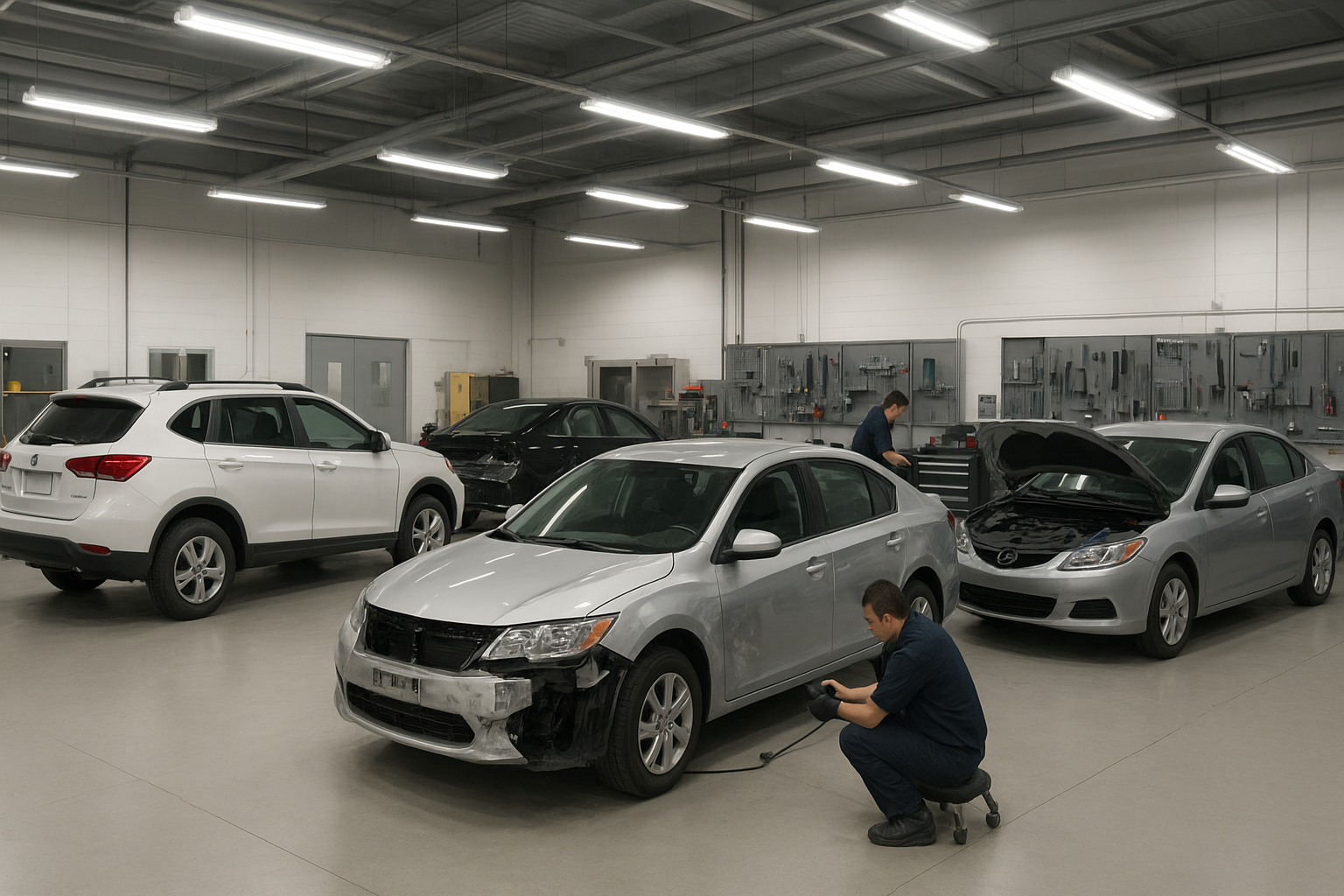
Wide view of a busy auto body repair workshop in Brea CA with multiple vehicles being restored by certified technicians

A well-organized auto body repair workshop handles multiple vehicle restorations simultaneously while maintaining consistent quality standards.


Red Flags to Avoid When Selecting an Auto Body Repair Shop

Just as important as knowing what to look for is knowing what to avoid. These warning signs suggest a shop may cut corners or fail to deliver a safe, quality repair.

  • No written estimate provided — A reputable shop always documents the repair scope in writing before starting.
  • Pressure to decide immediately — Quality shops give you time to review the estimate and ask questions.
  • No visible certifications — I-CAR, ASE, or manufacturer certifications should be displayed and verifiable.
  • Unusually low estimates — Suspiciously cheap estimates often mean aftermarket parts, skipped procedures, or hidden charges added later.
  • No warranty offered in writing — Any shop confident in its work should warranty it in writing.
  • Poor communication or evasive answers — If technicians can’t explain the repair process clearly, that’s a problem.
  • Discouraging you from using OEM parts — Always ask about parts sourcing and get the answer in writing.

Frequently Asked Questions About Auto Body Repair

What does auto body repair include?

Auto body repair includes collision damage restoration, structural frame straightening, dent removal, bumper repair or replacement, paint matching and refinishing, auto glass replacement, ADAS sensor recalibration, and interior cleaning. Full-service shops handle the complete restoration of a vehicle’s exterior structure and finish after any type of damage.

How long does auto body repair take?

Repair time depends on the extent of the damage. Minor dent and scratch repairs typically take one to three days. Moderate panel work and painting may take three to seven days. Major collision repairs involving structural work can take one to three weeks or longer, depending on parts availability, insurance approvals, and the complexity of the damage discovered.

Does auto body repair work with insurance companies?

Yes. Most reputable auto body repair shops work directly with insurance companies to streamline the claims process. They submit estimates, communicate with adjusters, manage supplement requests for hidden damage, and handle billing on your behalf. In California, you have the right to choose your own shop regardless of which shop your insurer recommends.

What is paintless dent removal (PDR) and when is it used?

Paintless dent removal (PDR) is a technique that uses specialized metal tools to gently massage dents out of a vehicle’s body panels from behind, without affecting the paint surface. It is ideal for small dents from hail, parking lot impacts, or door dings where the paint remains fully intact. PDR is faster and less expensive than traditional filler-and-paint methods, and it preserves the vehicle’s original factory finish and resale value.

How do auto body technicians match paint color accurately?

Technicians use spectrophotometers — optical devices that measure the light wavelengths reflected by the existing paint — to formulate an exact color match. This technology accounts for natural fading and weathering, so the new paint matches the vehicle’s current color, not just the original factory code. All painting is done in a climate-controlled spray booth to ensure a perfect finish free from dust and contamination.

Is frame straightening necessary after a collision?

Yes, if a vehicle sustains significant impact, the frame or unibody structure may be bent or misaligned. Even a few millimeters of misalignment can affect handling, cause premature tire wear, prevent doors and windows from sealing properly, and compromise airbag deployment geometry in future collisions. Frame straightening restores structural integrity and is essential for both safe driving and maintaining the vehicle’s crashworthiness rating.

How much does auto body repair cost in California?

Costs vary widely based on damage severity. Minor scratch or PDR repairs typically range from $150 to $400. Bumper repairs cost $300 to $1,500. Panel replacement runs $500 to $2,500 or more. Major collision work including structural repair can exceed $5,000 to $10,000 depending on the vehicle and extent of damage. Always get a written estimate from a certified shop before authorizing any work.

What certifications should I look for in an auto body repair shop?

Look for I-CAR Gold Class certification, which requires ongoing technician training and represents only about 20% of all collision repair shops in the U.S. Also look for manufacturer-specific certifications (such as OEM-approved repair status from GM, Toyota, Honda, etc.) and ASE-certified individual technicians. These credentials verify that the shop meets rigorous standards for training, equipment, and repair quality.

Can auto body shops repair both domestic and foreign vehicles?

Yes. Most full-service auto body repair shops are equipped to restore both domestic and foreign vehicles. Certified technicians follow manufacturer repair guidelines and use OEM or OEM-equivalent parts to ensure proper fitment and performance regardless of the vehicle’s origin. Always confirm the shop has experience with your specific make and model before authorizing repairs.

What should I do immediately after a collision before visiting an auto body shop?

First, ensure all parties are safe and contact emergency services if needed. Document all visible damage with photos from multiple angles. Exchange insurance and contact information with all parties involved. Contact your insurance company to report the incident before scheduling a repair estimate. Acting promptly helps preserve your claim, speeds up processing, and ensures no critical detail is lost.

Does auto body repair affect my vehicle’s resale value?

Properly performed auto body repair by a certified shop — using OEM parts, correct structural procedures, and factory-quality paint — should not significantly affect resale value. In fact, unrepaired damage or poor-quality repairs are what truly hurt resale value. Always request documentation of the repair for your records, including the written estimate and warranty, which can reassure future buyers that the work was done correctly.

Do I need ADAS recalibration after auto body repair?

Yes, if your vehicle is equipped with Advanced Driver Assistance Systems and the repair involved the windshield, front or rear bumper, or structural components, ADAS recalibration is typically required. Sensors for lane departure warning, automatic emergency braking, and adaptive cruise control are calibrated to specific geometric reference points — which can shift after any significant repair. Failing to recalibrate these systems can cause them to function incorrectly or fail entirely.

How do I choose the right auto body repair shop in Orange County?

Look for a shop with I-CAR Gold Class or manufacturer-specific certification, transparent written estimates, positive verified customer reviews, OEM parts usage, and a written repair warranty. Confirm the shop has experience with your vehicle type and that they communicate clearly throughout the repair process. Local shops with strong community ties — like Brea Auto Body — consistently deliver more personalized, higher-quality service than high-volume franchise operations.


Conclusion: Finding the Right Auto Body Repair Shop for Your Needs

collision repair guide is one of the most important decisions you’ll make as a vehicle owner. The best shops combine certified technicians, advanced equipment, OEM-quality parts, transparent communication, and a genuine commitment to restoring your vehicle to its pre-damage condition — structurally, mechanically, and cosmetically.

Whether you need full collision repair, precision frame straightening, paint matching, bumper restoration, ADAS recalibration, or interior cleaning, a trusted local facility in Brea and Orange County has the expertise, certifications, and equipment to deliver results you can count on — and stand behind with a written warranty.

For drivers throughout Brea, Fullerton, Anaheim, Yorba Linda, and surrounding Orange County communities, Brea Auto Body stands ready to provide the professional, personalized auto body repair service your vehicle deserves — from the first estimate to the final delivery inspection.