

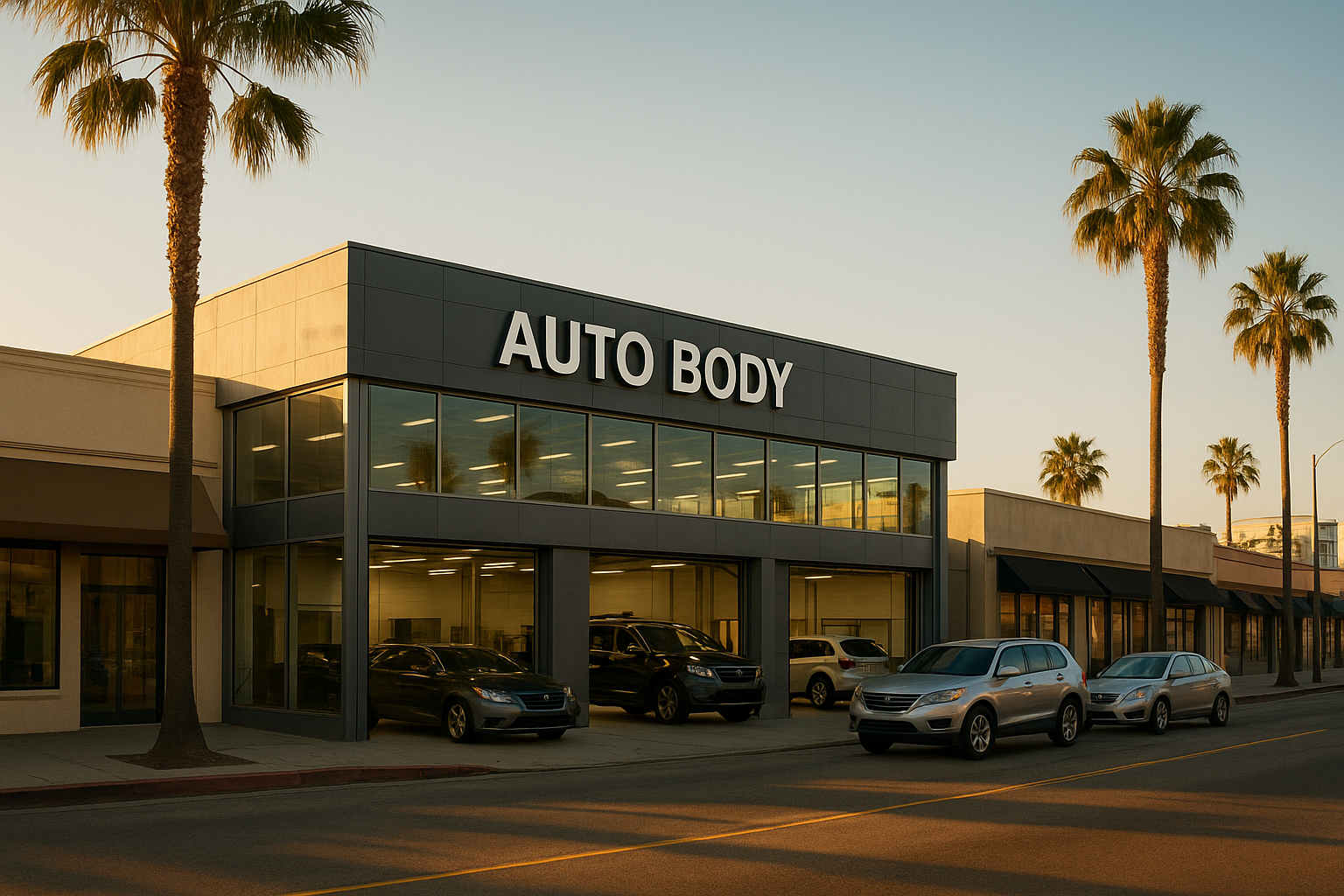
Body Shop Downtown Brea: The Complete Local Guide to Collision Repair, Estimates & Choosing Right

A trusted, modern body shop in downtown Brea — where collision repair meets local convenience and craft.
If you’re searching for a reliable body shop downtown Brea, this is the guide you’ve been looking for. We cover everything — from what full-service collision repair actually includes, to how estimates and insurance work, to the exact questions that reveal whether a shop is truly qualified. By the end, you’ll have no reason to keep searching.
Why Choosing a Body Shop in Downtown Brea Makes a Real Difference
Not all collision shops are created equal — and location matters more than most drivers realize. A body shop in downtown Brea sits at the intersection of access, accountability, and local expertise. Here’s why that combination is hard to replicate at a distant shop.
Convenience That Fits Your Life
Downtown Brea is walkable, accessible, and surrounded by restaurants, shops, and transit options. Dropping off your car and walking to a nearby coffee shop — or ridesharing to work — means collision repair doesn’t have to derail your day. Proximity also makes mid-repair check-ins realistic, not just theoretical.
Local Knowledge of SoCal Vehicles and Conditions
Southern California driving presents specific challenges: sun-degraded clearcoats, ceramic coatings that need careful color blending, and freeways that produce their own pattern of front-end damage. A downtown Brea auto body shop that works on these vehicles daily understands which paint formulas match sun-faded SoCal finishes, which sensors are most commonly knocked out of calibration in rear-end collisions, and how humidity and temperature affect paint curing cycles in this climate.
Accountability Is Easier with a Local Shop
When a shop is minutes away and embedded in the community, it has more at stake with every repair. Online reviews, word-of-mouth referrals, and repeat business from Brea residents keep local shops honest and motivated. If a post-repair issue arises — a sensor recalibration, a paint chip, a trim piece that wasn’t seated correctly — being close means it gets resolved fast, not ignored.
What to Look for in a Brea Auto Body Shop
With multiple options in and around downtown Brea, knowing what separates a truly qualified shop from one that just looks the part is essential. Don’t rely on star ratings alone — use these criteria to evaluate any collision repair shop in Brea.
OEM and Industry Certifications
Look for shops certified by vehicle manufacturers (OEM certifications from brands like Honda, Toyota, Ford, GM, or BMW/Mercedes) or industry organizations like I-CAR (Inter-Industry Conference on Auto Collision Repair). These certifications mean technicians are trained to repair your specific vehicle to factory standards — not just industry averages.
- I-CAR Gold Class — the industry’s highest ongoing training credential, recognized by most major insurers
- OEM Certifications — brand-specific training that ensures proper repair methods for your vehicle’s materials and construction
- ASE-Certified Technicians — individual credentials that confirm a technician’s specific skill set
Modern Equipment
Quality repairs depend on quality tools. A serious downtown Brea body shop invests in computerized frame measuring systems, dedicated spray booths with controlled temperature and airflow, spectrophotometers for precise color matching, and ADAS calibration equipment. Ask what tools they use — qualified shops are proud to show them off.
Written Warranties
A shop confident in its work offers written warranties — ideally lifetime warranties on paint and workmanship. Be specific: ask whether the warranty covers paint delamination, panel corrosion at repair joints, and labor to re-do work that doesn’t meet spec. A verbal “we stand behind our work” is not the same as a documented guarantee.
Transparent Communication Practices
The best Brea auto body shops communicate proactively — not just when you call to check in. Look for shops that provide written estimates, explain supplement situations clearly, send milestone updates (parts arrival, bodywork done, in paint, ready for pickup), and walk you through the completed repair at delivery.
Reviews Specific to Collision Repair — Not Just Oil Changes
A shop with 4.8 stars across fifty reviews is encouraging — but filter for reviews that specifically mention collision repair, not just detailing or tire work. Look for comments about paint match quality, structural repairs, insurance handling, and whether the car came back looking factory-correct.
What Full-Service Collision Repair Actually Includes in Brea
“Full service” gets thrown around loosely. Here’s what it genuinely means when a body shop in downtown Brea earns that label — covering every stage from intake to final delivery.
1. Damage Assessment and Documentation
Every repair begins with a thorough visual and photographic inspection. A qualified shop photos every angle, notes all visible damage, and logs your VIN to pull manufacturer repair procedures specific to your vehicle’s build date and option package. This documentation becomes the foundation of your estimate — and your record.
2. Structural and Frame Repair
Modern vehicles use advanced high-strength steel, aluminum, and composite materials engineered to absorb and redirect collision energy. Repairing them correctly requires computerized measuring systems that compare your vehicle’s actual dimensions against factory specs — and documented procedures for welding, bonding, or sectioning specific panels. Cutting corners here affects crumple zone performance, door alignment, and airbag deployment geometry.

Precision color matching with a spectrophotometer ensures your repaired panels are indistinguishable from factory finish — critical in bright SoCal light.
3. Panel Replacement and Repair
Depending on damage severity, panels may be repaired using conventional straightening techniques or replaced entirely. Quality shops evaluate both paths against cost, time, and structural integrity — not just what’s cheapest to source. Panel gaps, flush alignment, and edge sharpness are all checked against factory tolerances before moving to paint.
4. Paint and Refinishing Calibrated for SoCal
Color accuracy is the most visible measure of a quality repair. A professional Brea collision repair shop uses a spectrophotometer to identify your vehicle’s exact color variant — accounting for natural fade and sun exposure — then blends adjacent panels for a seamless transition. Paint is applied in a climate-controlled spray booth and cured under controlled conditions to achieve the correct hardness and gloss level. This is what makes repairs invisible in direct California sunlight.
5. Electronics, Sensors, and ADAS Calibration
This is where many shops — and many estimates — fall short. Modern vehicles are loaded with cameras, radar units, parking sensors, lane-departure systems, and blind-spot monitors. Any collision that involves bumpers, fenders, mirrors, or windshields likely disturbs these systems. A properly equipped body shop in Brea performs pre- and post-repair scans using OEM or OEM-equivalent diagnostic tools, and performs required calibrations — either in-house or through a certified partner — before your vehicle is returned to you.
Skipping this step is a safety risk, not just a quality issue. Uncalibrated ADAS systems may give false confidence in features like automatic emergency braking or lane centering.
6. Corrosion Protection at Repair Joints
Wherever panels are cut, welded, or bonded, the vehicle’s factory corrosion protection is broken. Professional shops apply seam sealer, weld-through primer, and cavity wax or anti-corrosion coatings to restore this protection — preventing rust from forming inside door sills, rocker panels, and quarter panel seams years after the repair.
7. Quality Control and Final Detailing
The final QC inspection checks panel gaps, paint uniformity, glass seals, trim fitment, and electrical function. Your car should be returned detailed and clean — not because it looks nice (though it does), but because a clean surface lets you inspect every repair line and paint transition before you drive away.
How Estimates and Insurance Work at a Downtown Brea Body Shop
The estimate and insurance process intimidates many drivers — but it doesn’t have to. Here’s how a professional body shop in downtown Brea handles both, and what you should expect at every stage.

The collision repair journey from intake to delivery — transparent, documented, and predictable at every step.
What an Estimate Actually Represents
An estimate is a professionally educated assessment of damage based on what’s visible before disassembly. It is not a fixed price — because collision damage hides. Bumpers conceal crush cans, reinforcements, and wiring harnesses. Quarter panels hide inner structure. A shop that tells you the estimate is definitive without tearing down hasn’t been through enough repairs to know better.
A trustworthy Brea auto body shop explains the supplement process upfront: once teardown reveals hidden damage, a supplement is written and submitted to your insurer (or quoted to you directly for cash-pay jobs). Communication here is critical — you should never be surprised by extra charges.
Your Right to Choose Your Shop in California
Under California law, you have the legal right to choose any licensed repair facility for your vehicle — regardless of which shop your insurance company recommends or “steers” you toward. DRP (Direct Repair Program) shops have agreed to pricing structures and cycle-time targets with insurers; independent shops in downtown Brea may have more flexibility to do the job right without compromise. Know your rights before your insurer’s adjuster makes a recommendation.
How Insurance Claims Flow Through the Shop
- Claim filed. File with your insurer or the at-fault party’s insurer. Get your claim number before you bring the car in.
- Estimate written. The shop documents visible damage and submits or shares the estimate with the insurer. Many shops communicate directly with adjusters, reducing your involvement.
- Teardown and supplement. Once the repair begins and hidden damage is found, the supplement is approved before additional work proceeds.
- Repair authorized. Once all damage is approved, parts are ordered and the repair timeline begins.
- Completion and payment. The insurer pays the shop directly (minus your deductible, which you pay at pickup) for covered repairs.
Cash-Pay Repairs: No Insurance Involved
Not every repair goes through insurance. Minor dents, paint scratches, and cosmetic work are often paid out-of-pocket to avoid a rate increase. For cash-pay repairs, ask the shop to walk you through the itemized estimate line-by-line, clarify what’s optional vs. essential, and ask whether alternative repair methods (PDR for dents, for example) might reduce cost without sacrificing quality.
How to Compare Two Body Shop Estimates in Brea — The Right Way
Two estimates for the same damage can look very different — and the cheaper one isn’t always the better deal. Here’s how to evaluate competing quotes from Brea collision shops like a professional.
Check for OEM vs. Aftermarket vs. Salvage Parts
Estimates must specify parts sourcing. OEM (Original Equipment Manufacturer) parts come directly from the vehicle’s maker and are engineered to factory tolerances. Aftermarket parts are third-party alternatives — quality varies dramatically. Salvage (used) parts carry unknown service history. A lower estimate may reflect cheaper parts, not cheaper labor. Ask specifically: “Are all replacement parts OEM?”
Verify That Required Scans and Calibrations Are Included
ADAS calibrations are frequently omitted from low estimates. If your vehicle has cameras, radar, or sensors in the affected area, and neither estimate includes diagnostic scanning or calibration, push back — or disqualify both shops. This step is not optional on modern vehicles.
Confirm Corrosion Protection and Seam Treatment
Check whether the estimate includes seam sealer, weld-through primer, and anti-corrosion coatings at any welded, bonded, or sectioned areas. These aren’t luxury line items — they’re required steps in proper structural repair. An estimate that skips them is cutting corners on safety and longevity.
Evaluate Paint Blend Procedures
Does the estimate include blending adjacent panels for a seamless color transition? On most color matches, repainting only the damaged panel produces a visible line where old and new paint meet. Proper blending eliminates this. If the cheaper estimate doesn’t include blend panels and the pricier one does, that difference in cost is justified.
Ask About Alignment Post-Repair
Any repair involving the front subframe, rear cradle, control arms, or tie rods requires a wheel alignment check and likely a reset. If the estimate doesn’t include alignment on a structural repair, ask why. Driving on an unaligned repaired vehicle accelerates tire wear and affects handling.
Compare Warranties Side by Side
Ask for the warranty in writing from both shops. Compare: coverage scope (paint, parts, labor), duration (lifetime vs. time-limited), and claim process (do you need to return to that shop, or is the warranty transferable?). A lifetime warranty from a reputable downtown Brea body shop has tangible dollar value — factor that in.
Real-World Repair Timelines — And What Affects Them
One of the most common frustrations with collision repair is timeline uncertainty. Here’s what actually drives repair duration at a body shop in downtown Brea — and how to plan around it.

Downtown Brea’s accessible layout makes it easy to drop off, check in, and pick up — reducing the logistical friction of collision repair.
Parts Availability Is the #1 Variable
In the current supply chain environment, parts availability is the most unpredictable element of any repair timeline. OEM parts for popular vehicles are generally available within days; for luxury imports, specialty trims, or EV-specific components, lead times can stretch to weeks. A transparent shop will tell you upfront if parts are on backorder and factor that into your estimated completion date.
Typical Timeline Ranges by Job Type
- Minor cosmetic repairs (single panel, no structural involvement): 2–4 business days
- Moderate collision damage (multi-panel, bumper replacement, minor structural): 5–10 business days
- Major structural damage (frame repair, multiple panel replacement, ADAS calibration): 2–4+ weeks
- EV or specialty vehicle repairs: add additional time for unique parts sourcing and high-voltage safety procedures
Milestone Updates You Should Expect
A quality Brea collision repair shop communicates at every meaningful milestone, not just when you call in. Expect updates at: parts arrival confirmed, teardown complete and supplement approved, bodywork finished, paint started, paint cured and in reassembly, final QC complete, ready for pickup. Each milestone update lets you plan transportation and reduces uncertainty.
Rental Car and Transportation Options
If your collision was not-at-fault, the at-fault insurer typically covers a rental vehicle for the duration of repairs. Your own insurer may also offer rental reimbursement as an add-on coverage. Downtown Brea’s proximity to transit, rideshare pickup points, and walkable amenities makes vehicle-free days more manageable than at suburban shops.
Certifications, Warranties, and Quality Standards for Brea Auto Body Shops
Understanding the certifications and quality benchmarks that matter helps you evaluate any auto body shop in Brea with confidence — not just the one with the most reviews.
I-CAR Gold Class: The Industry Gold Standard
I-CAR Gold Class shops maintain ongoing training for all technicians in up-to-date repair procedures, materials, and safety technologies. It’s not a one-time certification — it requires continuous education. Most major insurers recognize I-CAR Gold Class as a quality baseline. If a shop can’t confirm Gold Class status, ask why.
OEM Certifications: Brand-Specific Expertise
Vehicle manufacturers including Toyota, Honda, Ford, GM, Tesla, BMW, Mercedes-Benz, and others operate certification programs that require shops to invest in brand-specific tooling, training, and procedures. If you drive a luxury vehicle, an EV, or a vehicle with particularly complex construction (like an aluminum-intensive body), OEM certification for your brand is highly worth seeking out.
What a Lifetime Warranty Should Cover
A true lifetime warranty on collision repairs covers:
- Paint: delamination, peeling, fading or color shift inconsistent with adjacent panels
- Structural repairs: dimensional integrity of repaired or replaced structural components
- Parts: defects in replacement panels, moldings, and trim items
- Labor: any workmanship defects that require re-do
A warranty that covers only paint but not labor, or only parts but not installation, is not a lifetime warranty — it’s a limited warranty dressed up in bigger language. Read it carefully.
Environmental and Safety Compliance
California has some of the strictest VOC (volatile organic compound) regulations in the nation for auto body refinishing. Reputable shops in Brea use waterborne paint systems and compliant clear coats that meet SCAQMD standards — which also happen to produce better long-term color stability and gloss retention than legacy solvent-based systems.
Frequently Asked Questions About Body Shops in Downtown Brea
How do I find a good body shop in downtown Brea?
Look for I-CAR Gold Class certification, OEM certifications relevant to your vehicle, written lifetime warranties, and a track record of reviews specifically about collision repair quality — not just general auto service. Visit the shop in person before committing: cleanliness, modern equipment, and a willingness to explain their process are all good signs.
Can I choose any body shop in Brea, or do I have to use my insurance company’s shop?
You can always choose your own shop in California — it’s your legal right under California Insurance Code. Your insurer may suggest a DRP (Direct Repair Program) shop, but they cannot require you to use one. Choose the shop you trust most, and notify your insurer of your choice.
How long does collision repair take at a downtown Brea body shop?
Timeline depends on damage severity and parts availability. Minor cosmetic repairs typically take 2–4 business days. Moderate collision damage runs 5–10 business days. Major structural repairs can take 2–4 weeks or more, especially if specialty parts are on backorder. Ask your shop for milestone-based updates rather than a single estimated completion date.
What is a supplement in auto body repair?
A supplement is additional damage documentation that emerges after teardown reveals hidden damage not visible during the initial estimate. The shop documents the new damage, calculates the additional repair cost, and submits it to your insurer (or presents it to you for approval on a cash-pay job) before proceeding. Supplements are normal and expected in anything beyond the most minor collision.
Does a body shop in Brea handle ADAS and sensor recalibration?
A qualified downtown Brea body shop should perform pre- and post-repair diagnostic scans and carry out required ADAS calibrations — either in-house or through a certified calibration partner. If a shop says sensors “usually don’t need calibration,” that’s a red flag. Manufacturer procedures, not assumptions, should drive this decision.
What’s the difference between OEM and aftermarket parts in collision repair?
OEM parts are manufactured by or for your vehicle’s original maker and are engineered to exact factory tolerances. Aftermarket parts are made by third-party manufacturers — quality ranges from excellent to poor, and fit is not always guaranteed. Salvage (used) parts carry unknown history. For structural components and safety-related parts, OEM is always the preferred standard.
Will my repaired car look as good as before the collision?
Yes — when the repair is done correctly. A professional body shop in downtown Brea uses spectrophotometer color matching, panel blending, and controlled spray-booth painting to produce a factory-correct result. In direct Southern California sunlight, even a well-done repair is detectable without proper blending and color calibration, which is why these steps matter so much.
How to Choose Your Body Shop in Downtown Brea — A Final Checklist
Use this checklist when evaluating any collision repair shop in Brea before you commit:
- ? I-CAR Gold Class certified — ongoing technician training, not a one-time credential
- ? OEM certifications for your vehicle’s brand where available
- ? Written lifetime warranty covering paint, structural work, and labor
- ? Computerized frame measuring equipment confirmed on site
- ? Dedicated spray booth — not an open area or portable setup
- ? Pre- and post-repair scanning for electronic systems and ADAS
- ? OEM parts sourcing policy — or a clear explanation when alternatives are used
- ? Transparent supplement process — explained upfront, not as a surprise
- ? Proactive milestone communication throughout the repair
- ? Collision-specific reviews confirming paint quality, structural work, and insurer coordination
If you want a local starting point that meets these standards, explore Brea Auto Body in downtown Brea — request an estimate, ask about ADAS calibration capabilities, and see what a genuine full-service repair experience looks like up close.
Your vehicle is more than a machine — it carries you through your daily life, your family, and every errand and adventure that makes downtown Brea worth living near. Choose a shop that treats it accordingly: with technical precision, honest communication, and craftsmanship you can see and trust.

