

California Auto Body Shop: The Complete Guide to Choosing the Right One
Last updated: June 2025 | 15-minute read | By Brea Auto Body team
A California auto body shop is a state-licensed repair facility that restores vehicle exteriors, structural frames, and paint finishes after collisions, weather events, or general wear. With hundreds of shops operating across the state — from San Diego to Sacramento — knowing exactly what to look for is the difference between a repair that lasts and one that fails. This guide covers every critical factor: licensing, certifications, your legal rights, common services, cost estimates, red flags, and why Orange County drivers consistently choose certified specialists for their repairs.
? Quick Answer
The best California auto body shop holds a valid Bureau of Automotive Repair (BAR) license, employs I-CAR Gold Class or ASE-certified technicians, provides written itemized estimates, uses computerized frame alignment equipment, and backs workmanship with a warranty. Verifying these five criteria eliminates the vast majority of unreliable shops in any region of California.
Table of Contents
- What Is a California Auto Body Shop?
- Licensing, Certification & Why They Matter
- How to Choose the Right Shop: Step-by-Step
- Your Legal Rights as a California Vehicle Owner
- Common Services at a California Auto Body Shop
- How Much Does Auto Body Repair Cost in California?
- Red Flags to Watch Out For
- Navigating Insurance Claims at a California Shop
- ADAS Calibration: The Overlooked Safety Step
- Why Orange County Drivers Trust Brea Auto Body
- Tips for Getting the Most From Your Repair
- Frequently Asked Questions
What Is a California Auto Body Shop?
A California auto body shop is a state-regulated repair facility specializing in the physical structure and exterior surfaces of vehicles. That includes collision damage, dent removal, paint restoration, frame straightening, and increasingly — advanced driver assistance system (ADAS) recalibration after any repair that shifts a vehicle’s geometry or replaces sensor-bearing components.
Unlike a general mechanic who focuses on engines and drivetrains, an auto body specialist handles everything structural and cosmetic — from the bumper cover inward to the chassis. These two specialties require completely different equipment, training, and facility certifications.
Every shop operating in California must register with the California Bureau of Automotive Repair (BAR) — the state agency that enforces consumer protection standards for vehicle repair businesses. Registration mandates that shops meet minimum standards for equipment, disclosure practices, and customer transparency. Shops that skip this registration are operating illegally and expose customers to zero regulatory recourse.
California is also home to some of the strictest environmental regulations governing auto body work anywhere in the country. Shops must comply with Air Resources Board (CARB) rules on paint and coating emissions — another reason why working with a licensed, compliant facility matters beyond just repair quality.
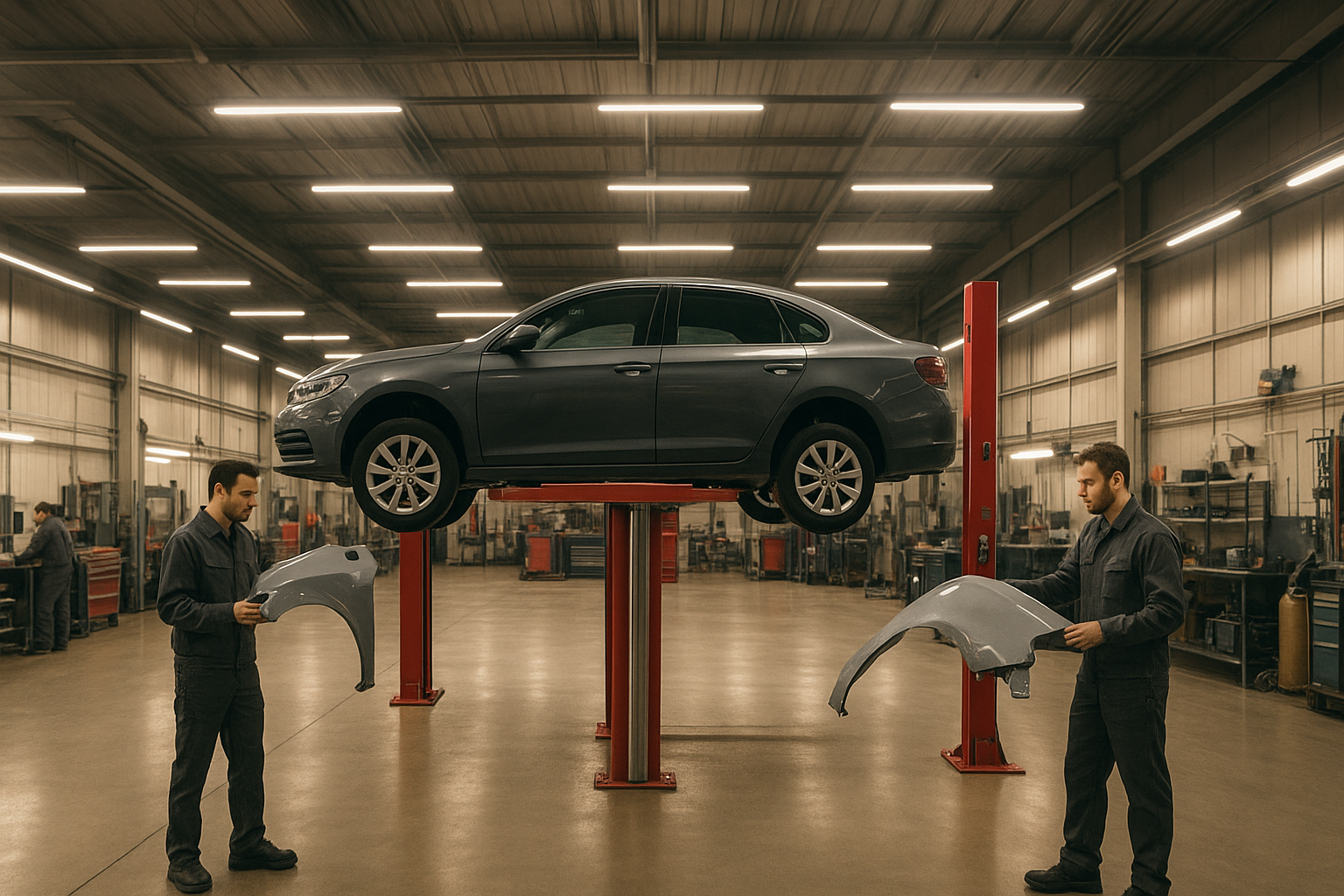
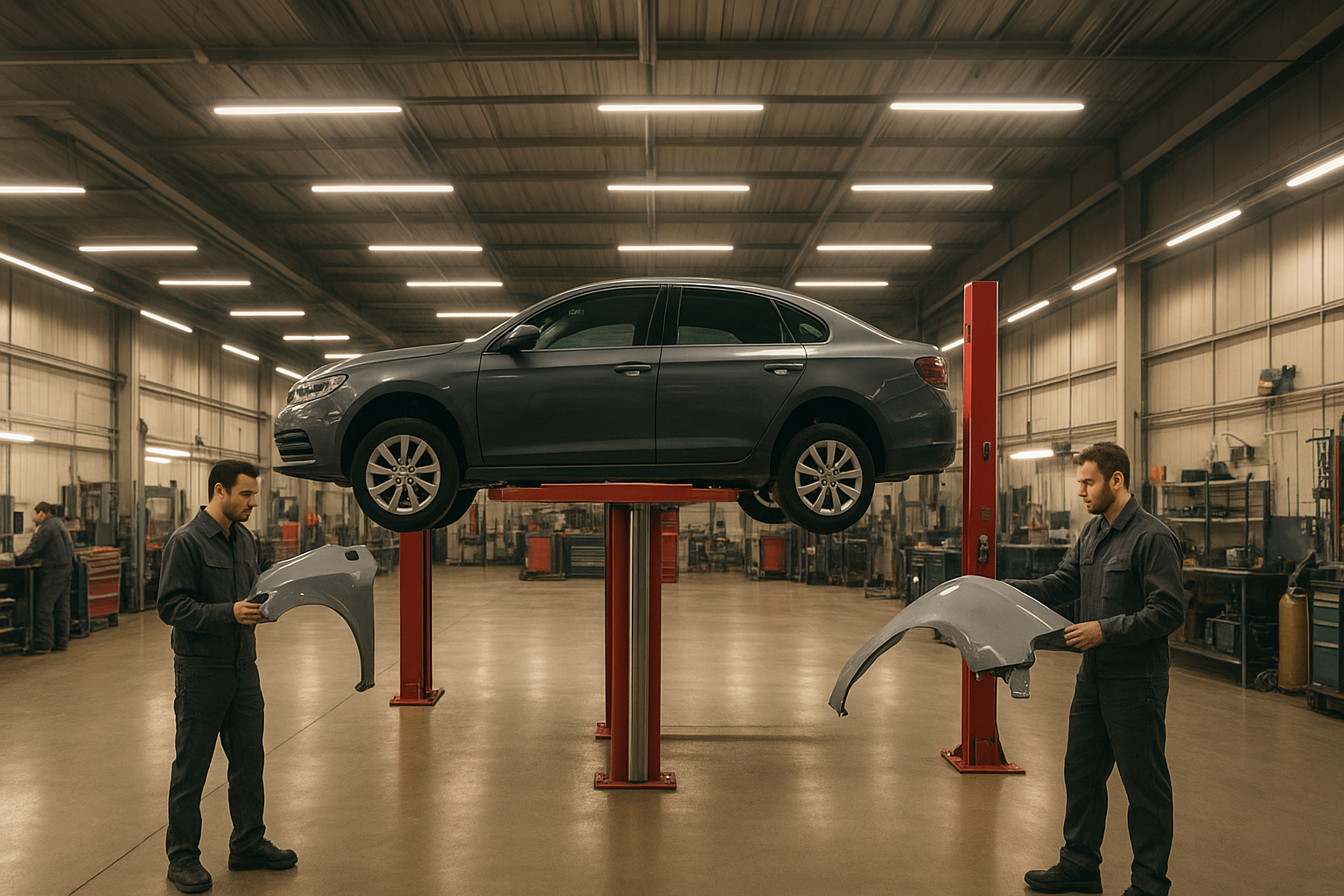
Inside a certified California auto body shop, technicians use industry-standard equipment to assess and restore vehicle damage.
Licensing, Certification & Why They Matter at a California Auto Body Shop
Not every shop that advertises body work is properly licensed. The BAR handles thousands of consumer complaints annually related to unlicensed or substandard repair work. Verifying credentials before you hand over your keys is one of the most protective steps you can take as a vehicle owner in California.
BAR Registration for California Auto Body Shops: The Baseline Requirement
BAR registration is the legal baseline — not a quality endorsement. A registered shop has simply met the minimum requirements to operate. The BAR provides a free online license lookup tool at its official website. Enter the shop name or license number to confirm current registration status. If a shop cannot provide its BAR registration number or appears unlisted, walk away.
I-CAR Gold Class: The Industry’s Highest Training Recognition
I-CAR Gold Class certification is the collision repair industry’s most meaningful shop-level credential. According to I-CAR, only approximately 10% of collision repair businesses in North America achieve Gold Class status. To earn and maintain it, every technician must complete ongoing role-specific training each year — meaning the shop’s knowledge stays current with evolving vehicle technology, not frozen in the past.
When comparing California auto body shops, Gold Class status is a genuine differentiator — not a marketing badge. It confirms the entire team is trained to current standards, not just a single senior technician.
ASE Certification: Individual Technician Credentials
ASE (Automotive Service Excellence) credentials confirm that individual technicians have passed standardized knowledge exams in their specific specialty areas — including collision repair, refinishing, and structural analysis. ASE certification is technician-level, while I-CAR Gold Class is shop-level. The best California auto body shops carry both.
Manufacturer-Specific Certifications
If you drive a luxury, electric, or specialty vehicle — such as a Tesla, BMW, Mercedes-Benz, or Rivian — look for a shop with that manufacturer’s official certification program. OEM certification programs require shops to use approved repair procedures, genuine or equivalent parts, and specific equipment calibrated to the manufacturer’s specifications. Repairs performed outside OEM procedures can void warranties and compromise structural integrity.
Certification Quick Reference
- BAR Registration — Legal minimum to operate in California
- I-CAR Gold Class — Shop-wide ongoing training, ~10% of shops qualify
- ASE Certification — Individual technician knowledge exams
- OEM Certification — Required for luxury/EV manufacturers’ approved repair procedures
- CARB Compliance — Required for paint/coating emissions in California
How to Choose the Right California Auto Body Shop: A Step-by-Step Process
Following a structured selection process removes guesswork and protects you legally and financially. Here is a practical seven-step approach developed specifically for California vehicle owners:
- Verify the shop’s California BAR license. Use the BAR’s free online lookup tool to confirm the shop is currently registered and in good standing. This takes under two minutes and filters out any illegal operations immediately. Auto Body Shops Guide
-
Confirm technician certifications.
Ask whether the shop holds I-CAR Gold Class status and whether individual technicians are ASE-certified. If you drive a luxury or EV, ask about OEM-specific certification for your vehicle brand.
- Request a written itemized estimate. California law requires a written estimate before work begins. Insist on a line-by-line breakdown of labor, parts (OEM vs. aftermarket vs. recycled), and materials. This allows accurate quote comparisons and prevents surprise charges at pickup. Bodyshop Repairs Guide
-
Ask specifically about parts quality.
There is a meaningful difference between OEM (original equipment manufacturer), aftermarket, and recycled/LKQ parts. OEM parts are built to the exact factory specification. For structural or safety-critical components, OEM is always preferable. Ask the shop to document which type of parts will be used for each repair item.
-
Review warranty terms in detail.
Ask what the warranty covers, for how long, and what voids it. Reputable California auto body shops offer a lifetime warranty on workmanship and paint for as long as you own the vehicle. Confirm whether the warranty is shop-backed or manufacturer-backed.
-
Read verified customer reviews across multiple platforms.
Check Google, Yelp, and the Better Business Bureau. Look specifically for reviews mentioning repair quality, whether the final cost matched the estimate, how the shop communicated during the process, and how complaints were handled. Recent reviews (within the last 12 months) carry more weight than older ones.
-
Inspect the facility in person before committing.
A professional California auto body shop should be clean, organized, and well-equipped. Look for modern frame alignment systems, climate-controlled paint booths, and computerized color-matching tools. A chaotic or poorly maintained facility is a reliable predictor of the repair quality you will receive.
Drivers who work through this full checklist are significantly less likely to encounter disputes over hidden fees, poor paint matching, incomplete structural repairs, or miscommunication with insurers after the fact.
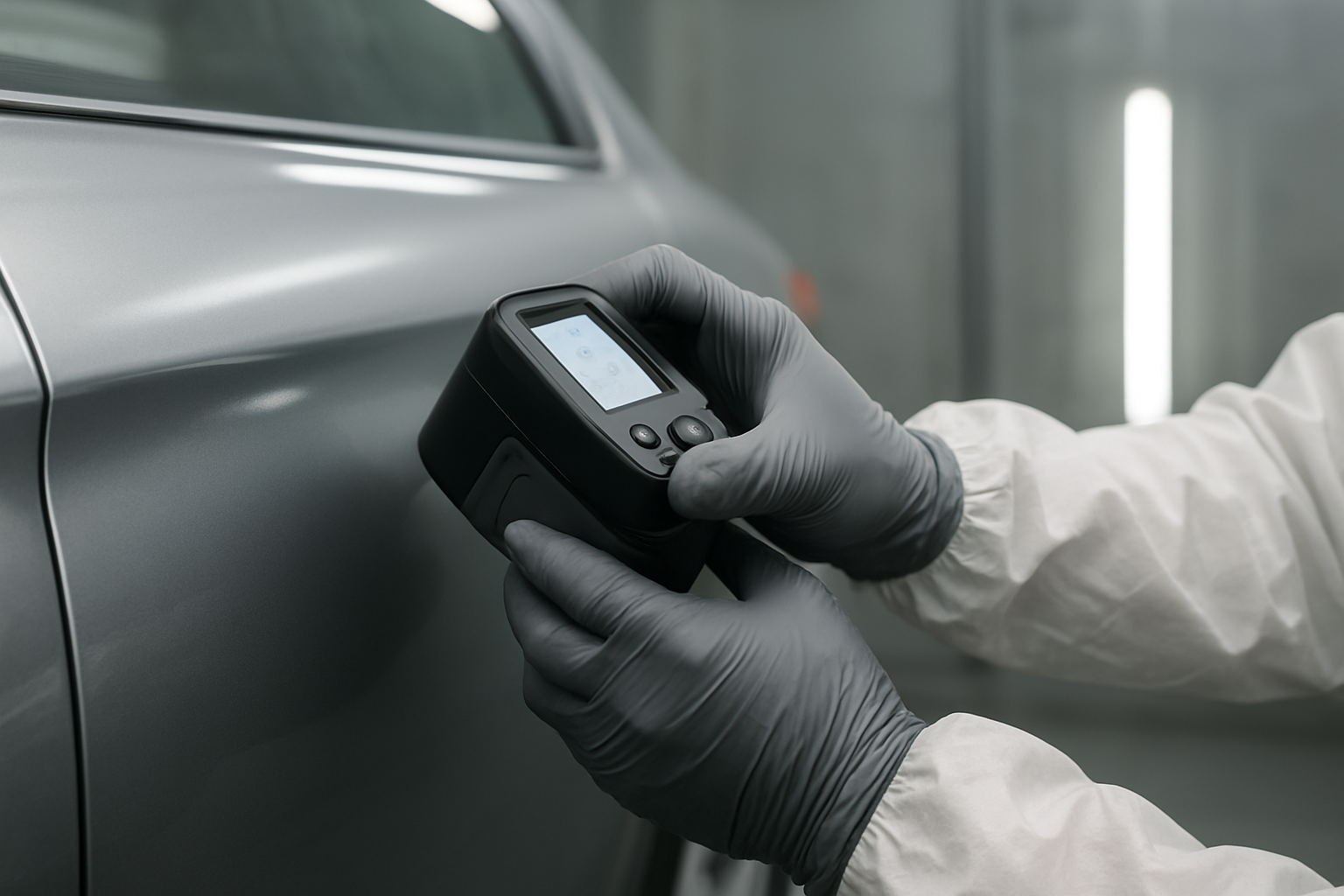
Advanced paint matching technology ensures a seamless, factory-quality finish on every repaired panel.
Your Legal Rights as a California Vehicle Owner at an Auto Body Shop
California provides vehicle owners with some of the strongest consumer protections in the country when it comes to auto body repair. Understanding these rights before you walk into any shop puts you in a significantly stronger negotiating and legal position.
Right to Choose Your Own Shop
Under California law, you have the absolute right to take your vehicle to any licensed California auto body shop — regardless of which facility your insurance company recommends or prefers. Insurers cannot legally require you to use a specific shop. If a representative implies otherwise, that is either misinformation or a violation of your rights. Your insurer is obligated to pay the reasonable cost of repairs at the shop you select.
Right to a Written Estimate
California shops are legally required to provide a written estimate before beginning any repairs when costs exceed a minimal threshold. This estimate must itemize labor, parts, and materials. No work can begin until you sign authorizing it — either in person or via a documented remote authorization.
Right to Authorize Additional Work
If a shop discovers additional damage during the repair process that was not included in the original estimate, it must contact you and receive your authorization before proceeding. Performing unauthorized work is a violation of California law, regardless of whether the shop believes the additional repairs are necessary.
Right to Request Replaced Parts
In California, you have the right to request that any replaced parts — such as damaged panels or components — be returned to you after the repair is complete. This allows you to verify that the work was actually performed and that the parts listed in the invoice were genuinely replaced.
What to Do If a Shop Overcharges or Underperforms
If a shop charges more than the written estimate without prior authorization, or if repairs are substandard, file a formal complaint with the California Bureau of Automotive Repair. The BAR investigates complaints and has the authority to issue fines, suspend licenses, or revoke registration entirely. You can also escalate disputes to the California Attorney General’s consumer protection division or pursue a claim in small claims court for amounts under $12,500.
?? Know Before You Sign
Never sign a blank authorization form. Always ensure the estimate is fully completed — with specific parts, labor hours, and materials listed — before you authorize work. A blank or incomplete authorization gives a shop broad latitude to charge amounts far beyond what you expect.
For a deeper look at how to evaluate your options across the state, the team at breaautobody.com’s guide to finding the best auto body shops in California provides additional regional context and practical tips.
Common Services Offered by a Reputable California Auto Body Shop
A well-equipped California auto body shop handles a broad range of damage scenarios. Understanding what each service entails helps you ask better questions and evaluate whether a shop is truly qualified to perform the specific repairs your vehicle needs.
Collision Repair
Collision repair encompasses restoring panels, bumpers, quarter panels, and structural components after an accident. This ranges from minor fender benders to severe multi-panel impacts. Quality collision repair requires not just cosmetic restoration but a full structural inspection to confirm that hidden damage — particularly to the firewall, floor pan, and rocker panels — has been identified and addressed.
Frame and Unibody Straightening
Frame and unibody straightening is among the most safety-critical services any California auto body shop can perform. A vehicle with an improperly repaired or diagnosed frame will not protect occupants correctly in a subsequent collision and will exhibit handling and tire wear issues. Quality shops use computerized three-dimensional measuring systems — not visual guesswork — to restore a vehicle’s geometry to OEM specifications. Always confirm this capability before authorizing structural work.
Advanced Paint Matching and Refinishing
Paint matching is the process of formulating and applying paint that precisely replicates a vehicle’s original factory color — accounting for the fact that factory colors fade and shift over time. Quality shops use spectrophotometers to measure the existing paint on adjacent panels and formulate an exact match, rather than relying solely on factory color codes. A poor match is visually obvious, devalues the vehicle, and signals a shop that cut corners on this critical step.
Paintless Dent Repair (PDR)
Paintless dent repair uses specialized tools to massage minor dents and dings back into their original shape without removing or repainting the affected surface. PDR preserves the factory paint finish, is faster than conventional repair, and costs significantly less. It is most effective on shallow dents where the paint surface has not been broken or creased.
Glass Replacement
Windshields, side windows, and rear glass replacement requires careful attention when the vehicle is equipped with cameras, rain sensors, or ADAS technology mounted to or near the glass. Simply installing new glass without recalibrating the associated sensors creates safety risks that may not be immediately apparent.
Rust and Corrosion Repair
Even in California’s relatively dry climate, rust and corrosion can develop on vehicles exposed to coastal salt air or moisture intrusion through damaged seals. Proper rust repair requires removing all corroded metal, treating the substrate, applying corrosion-resistant primer, and sealing the area before refinishing. Surface-only treatments that do not address underlying corrosion will fail within months.
Bumper Repair and Replacement
Modern bumper covers house an increasing number of sensors — parking sensors, radar arrays, and camera systems. A California auto body shop that replaces a bumper without checking sensor integrity and placement is creating a safety liability. Always ask whether sensor functionality will be tested as part of the repair process.
? Collision Repair
Full structural and panel restoration after impact
? Frame Straightening
Computerized unibody/frame restoration
? Paint Matching
Spectrophotometer-driven factory color replication
? Paintless Dent Repair
Minor dent removal without repainting
? Glass Replacement
Windshields, side, and rear glass with sensor checks
? Rust & Corrosion Repair
Full substrate treatment and sealed refinishing
For more guidance on comparing repair options, visit this resource on finding the best auto repair body shop in California for side-by-side evaluation criteria.
How Much Does Auto Body Repair Cost in California?
Repair costs at a California auto body shop vary significantly based on the type and extent of damage, the vehicle’s make and model, and whether OEM or aftermarket parts are used. Understanding typical cost ranges helps you evaluate whether a quote is reasonable — or suspiciously low. frame repair near me
A critical point: an unusually low estimate is not always a deal. Some shops quote low to win business and then present supplemental charges once your vehicle is disassembled. Others achieve low prices by using non-OEM parts or skipping structural inspections. Always request a written itemized estimate and ask specifically whether the quote is based on OEM or aftermarket components.
Labor rates at California auto body shops typically range from $55 to $130+ per hour depending on the region, shop certifications, and vehicle type. Luxury and EV repair rates trend toward the higher end of this range due to specialized training and equipment requirements.
Red Flags to Watch Out For at a California Auto Body Shop
Knowing what a quality California auto body shop looks like is only half the equation. Equally important is knowing what warning signs to watch for. These red flags consistently predict poor repair quality, hidden costs, or outright fraud:
- No BAR license or refusal to provide the number — Unlicensed shops have no regulatory accountability and offer no consumer recourse if repairs fail.
- Verbal estimates only, or reluctance to put anything in writing — California law requires written estimates. Any shop that resists this is already violating consumer protection rules.
- Pressure to decide immediately or waive the estimate — High-pressure sales tactics are a hallmark of shops that rely on customer confusion rather than quality work.
- Vague or incomplete itemization on the estimate — “Labor and parts” without specifics is not a valid estimate. You cannot compare or dispute what you cannot see.
- No warranty offered, or a warranty with excessive exclusions — A shop confident in its work backs it with a clear, meaningful warranty. Extensive exclusions often signal low-quality materials or workmanship.
- Steering you toward your insurance company’s preferred shop — If the shop’s first question is which insurer you use and they seem unusually eager to align with the insurer rather than you, their loyalty may not be to your best repair outcome.
- Disorganized facility or visibly outdated equipment — Frame straightening, paint matching, and modern collision repair all require specialized equipment. A shop without it cannot perform these tasks to industry standards.
- Unable to provide references or customer reviews — Reputable shops welcome you to speak with past customers or review their online reputation. Resistance to this is a meaningful warning sign.
Navigating Insurance Claims at a California Auto Body Shop
Most California auto body shop repairs involve an insurance claim — either through your own insurer or through the at-fault driver’s carrier. Understanding how this process works prevents you from being caught off guard by insurer decisions that affect your repair quality.
Direct Repair Programs (DRPs) and What They Mean for You
Many insurers operate Direct Repair Programs — networks of shops that have agreed to the insurer’s pricing guidelines and repair standards in exchange for referrals. DRP shops are not inherently bad, but the arrangement creates a potential conflict of interest: the shop’s financial relationship with the insurer may influence decisions about repair scope, parts quality, or time allocation in ways that do not always favor the vehicle owner.
You are never obligated to use a DRP shop. In California, your insurer must pay the reasonable cost of repairs at the licensed shop of your choosing — not just shops within its preferred network.
Supplements: When the Initial Estimate Isn’t Enough
An initial insurance estimate is frequently incomplete — adjusters cannot see hidden damage without disassembly. Reputable California auto body shops handle supplement requests directly with your insurer when additional damage is discovered during teardown. Ask your shop how they manage the supplement process and whether you will be kept informed at each stage.
Total Loss vs. Repair: How the Decision Is Made
California follows an “actual cash value” model for total loss determinations. If the estimated repair cost exceeds a threshold — typically 75–80% of the vehicle’s pre-accident actual cash value — the insurer will typically declare it a total loss rather than authorize repairs. A quality California auto body shop will give you an honest assessment of whether your vehicle is likely to fall near this threshold before you invest time in the claims process.
ADAS Calibration: The Most Overlooked Step in Modern Auto Body Repair
Advanced Driver Assistance Systems — including automatic emergency braking, lane departure warning, adaptive cruise control, and blind spot monitoring — depend on cameras, radar sensors, and ultrasonic arrays that are precisely positioned and calibrated to the vehicle’s geometry. See our OEM repair procedures and ADAS calibration guidance for proper recalibration workflows. Any California auto body shop repair that alters wheel alignment, replaces a bumper, windshield, or sensor-bearing panel, or straightens the frame has the potential to knock these systems out of calibration.
A vehicle with uncalibrated ADAS can exhibit a range of dangerous behaviors — from a lane departure system that triggers incorrectly to automatic braking that fails to engage when needed. These failures may not generate a dashboard warning light, which means a driver can unknowingly operate a vehicle with compromised safety systems.
When evaluating a California auto body shop, ask explicitly:
- Does the shop perform ADAS calibration in-house, or does it outsource this step?
- Will calibration be performed after any repair that affects the vehicle’s geometry or sensor-bearing components?
- Will calibration results be documented and provided to you at pickup?
ADAS calibration capability is increasingly a non-negotiable qualifier for any shop working on vehicles manufactured after 2015. If a shop does not mention it or seems unfamiliar with the requirement, that is a significant red flag for modern vehicle owners.
Why Orange County Drivers Trust Brea Auto Body
For drivers throughout the Orange County area, Brea Auto Body embodies exactly the standards this guide describes. Their certified technicians specialize in collision repair, precision dent removal, frame straightening, and advanced paint matching — restoring every vehicle to its pre-accident condition using industry-standard techniques and quality materials.
The shop serves individual vehicle owners, insurance clients, and fleet customers — making it a versatile choice for personal and commercial vehicle needs across Southern California. Clients benefit from working directly with experienced professionals who maintain full transparency throughout the repair process, from initial written estimate through final delivery inspection.
Whether your vehicle has sustained damage from a collision, a weather event, or everyday wear, the Brea-based facility handles both domestic and foreign vehicles with equal expertise. You can explore their car accident repair services in Brea for specific post-collision restoration options.
A well-maintained shop exterior reflects the professionalism and quality standards you can expect throughout the repair process.
Tips for Getting the Most From Your California Auto Body Repair Experience
Beyond choosing the right shop, there are several practical steps that ensure a smooth process and protect your interests from drop-off through final pickup.
Document Everything Before Drop-Off
Photograph all visible damage from multiple angles and in good lighting before leaving your vehicle. Also photograph any pre-existing scratches, dents, or interior wear unrelated to the current repair — this prevents disagreements about whether the shop is responsible for pre-existing condition.
Get the Repair Timeline in Writing
Ask for an estimated completion date alongside your written estimate. Reputable shops communicate proactively about any schedule changes — delays due to parts availability or discovered damage are normal, but you should be notified promptly rather than left to follow up repeatedly.
Clarify Insurance Communication Responsibility
Confirm upfront whether the shop will communicate directly with your insurer regarding supplements, approvals, and payments — or whether that responsibility falls to you. Most reputable California auto body shops handle insurer communication as a standard part of their service, but this should be explicitly confirmed.
Inspect the Finished Work Before Signing Off
Never accept a vehicle in dim lighting or at the end of a rushed day. Inspect the repaired area carefully under bright light for color consistency across all panels, smooth panel gaps, flush-fitting components, and complete sensor/window/mirror function. Once you sign the completion paperwork, disputes become significantly harder to resolve.
Keep All Paperwork
Retain the original written estimate, any supplement authorizations, the final invoice, and the warranty documentation. These documents are essential if you need to file a complaint with the BAR, make an insurance claim adjustment, or exercise your warranty in the future.
For additional selection tips specific to the local area, see these tips for choosing an auto body shop in Brea.
Frequently Asked Questions About California Auto Body Shops
What is a California auto body shop?
A California auto body shop is a state-licensed facility that repairs vehicle exteriors, structural frames, and paint after collisions, weather damage, or everyday wear. These shops must be registered with the California Bureau of Automotive Repair (BAR) and employ trained technicians who restore vehicles to pre-accident condition.
How do I find a reputable California auto body shop near me?
Start by verifying BAR registration using the state’s free online lookup tool. Then look for I-CAR Gold Class or ASE-certified technicians, written estimates, a clear warranty policy, and strong recent reviews on Google and Yelp. A facility visit to evaluate equipment and organization is also worthwhile before committing.
Does a California auto body shop legally have to provide a written estimate?
Yes. California law requires all licensed auto body shops to provide a written estimate before beginning repairs when costs exceed a minimal threshold. The estimate must itemize labor, parts, and materials. No work may begin without your signed authorization, and any additional work discovered mid-repair requires fresh authorization before proceeding.
Can I choose any California auto body shop if I’m using insurance?
Yes. California law gives you the unconditional right to choose any licensed auto body shop, regardless of your insurer’s preferred vendor list or Direct Repair Program network. Your insurer must pay the reasonable cost of repairs at the shop you select. Any insurer that tells you otherwise is misrepresenting your legal rights.
What is I-CAR Gold Class and why does it matter when choosing a shop?
I-CAR Gold Class is the collision repair industry’s highest shop-level training recognition. Only approximately 10% of collision repair businesses in North America achieve this status. It requires every technician to complete ongoing, role-specific training annually — meaning a Gold Class California auto body shop stays current with evolving vehicle technology rather than relying on outdated practices.
How long does collision repair typically take at a California auto body shop?
Minor repairs such as small dents or paint touch-ups typically take one to three business days. Moderate collision damage involving multiple panels may take one to two weeks. Severe structural or frame damage can take two to four weeks or longer, depending on parts availability, damage extent, and whether supplemental insurance approvals are needed.
What is ADAS calibration and does my auto body repair require it?
ADAS calibration is the process of realigning and recalibrating the cameras, radar sensors, and ultrasonic arrays that power safety systems like automatic emergency braking, lane departure warning, and blind spot monitoring. Any repair that affects wheel alignment, replaces a sensor-bearing bumper or windshield, or straightens the frame can knock these systems out of calibration. Skipping this step can create dangerous conditions that may not trigger a warning light.
What is the difference between OEM and aftermarket parts in auto body repair?
OEM (original equipment manufacturer) parts are produced by the vehicle’s manufacturer to exact factory specifications. Aftermarket parts are made by third parties and may vary in fit, finish, and durability. For structural, safety-critical, or sensor-integrated components, OEM parts are strongly preferred. Always ask your California auto body shop to specify which type of parts will be used for each repair item before authorizing work.
What does frame straightening involve and how do I know if it was done correctly?
Frame straightening uses computerized three-dimensional measuring systems to restore a vehicle’s unibody or full frame to factory geometry specifications. Correctly performed frame straightening should produce documented measurement results that match the OEM specifications for your vehicle. Ask your shop for a printed copy of the pre- and post-repair measurements as proof the work was completed to standard.
How much does auto body repair cost in California?
Costs range from approximately $75–$300 for minor PDR dent work, $300–$1,200 for single panel repaints, $500–$2,000 for bumper repair or replacement, $1,500–$5,000 for moderate collision repair, and $2,500–$10,000+ for structural frame repairs. California shop labor rates typically run $55–$130+ per hour. Always request an itemized written estimate before authorizing any work.
What should I inspect when I pick up my vehicle from an auto body shop?
Inspect in bright lighting for paint color consistency across all repaired and adjacent panels, smooth and even panel gaps, flush-fitting components, and correct operation of any windows, mirrors, sensors, or electronics affected by the repair. Test drive the vehicle before finalizing pickup. If anything looks or feels incorrect, raise it before signing the completion paperwork.
What is the difference between an auto body shop and a general mechanic?
A California auto body shop focuses on exterior repairs, structural restoration, and paint work. A general mechanic handles engine, drivetrain, and mechanical system repairs. These are distinct specialties requiring different equipment, training, and facility certifications. Some shops offer both, but expertise in one area does not guarantee competence in the other.
Does Brea Auto Body serve customers outside of Brea, California?
Yes. Brea Auto Body serves drivers throughout the greater Orange County area and neighboring cities across Southern California. Their certified team handles both domestic and foreign vehicles for individual owners, insurance clients, and fleet customers — with full transparency from estimate through final delivery.
Conclusion
Choosing the right California auto body shop comes down to verifying credentials, understanding your legal rights, evaluating services and parts quality, and working with professionals who prioritize both safety and transparency. From confirming a valid BAR license and I-CAR Gold Class status, to reviewing warranty terms, asking about ADAS calibration, and inspecting finished work before sign-off — every step in this guide helps you make a more confident, informed decision. For Orange County drivers seeking a certified, experienced team close to home, finding the best auto body shop in California starts with knowing exactly what to look for — and Brea Auto Body is built to meet every standard described here.

