

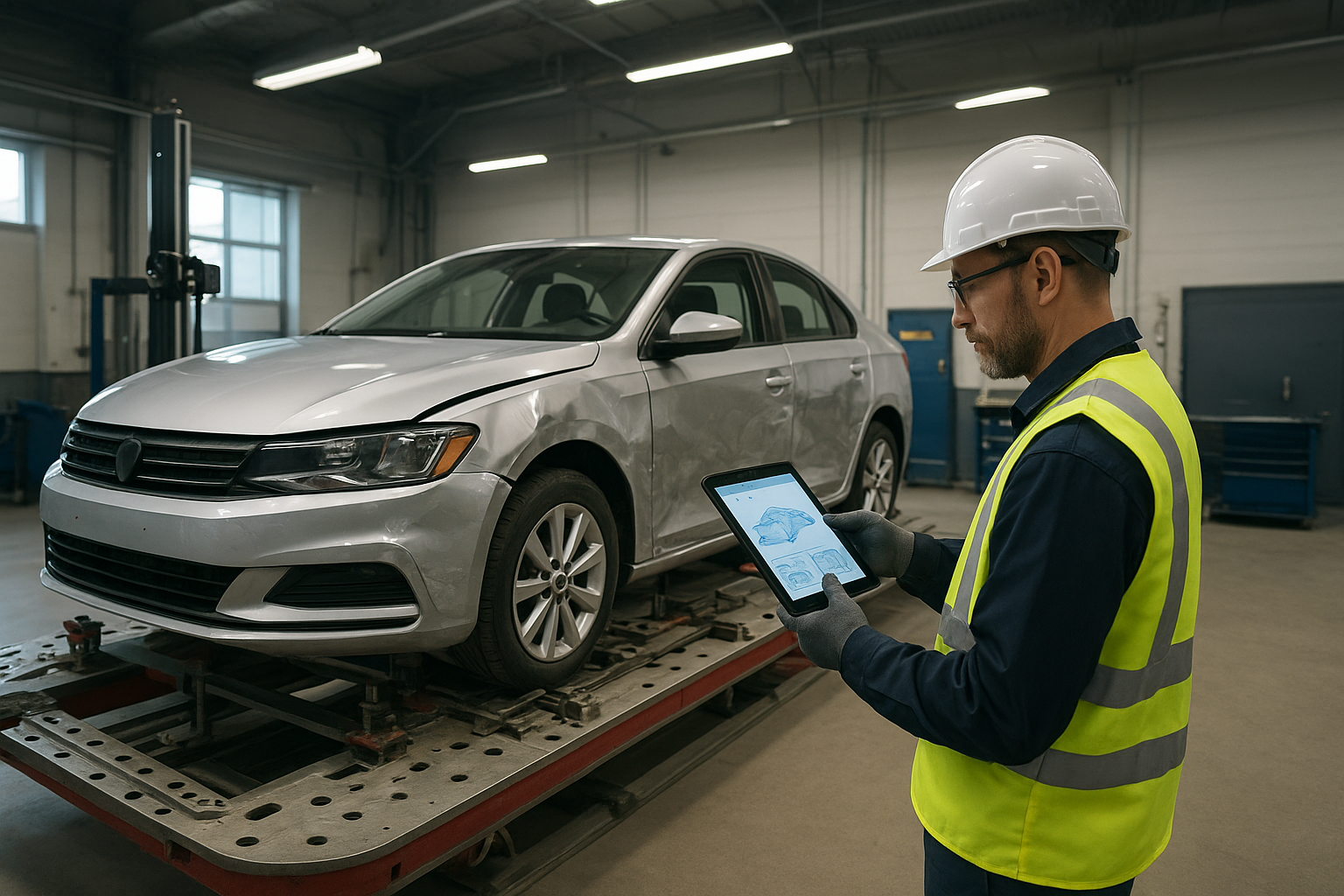
Collision Damage Repair in 2026: A Complete Guide to Safe, OEM-Grade Results

Modern collision damage repair blends precision measuring, OEM procedures, and skilled craftsmanship.
If you were recently in a crash, “collision damage repair” can feel like a maze of estimates, insurance terms, and technical decisions. This guide explains, in plain language, how professional shops return vehicles to pre-loss condition—covering structural straightening, electronics and ADAS calibration, refinishing, parts choices, and quality control. Whether you drive a commuter sedan or a late?model SUV packed with sensors, the steps below will help you make confident choices and protect your vehicle’s safety, value, and warranty.
What Counts as Collision Damage? Cosmetic vs. Structural
Collision damage isn’t only what you can see. A scuffed bumper or misaligned hood can mask deeper shifts in the unibody structure or hidden sensor brackets that keep advanced driver assistance systems (ADAS) working. Professionals classify damage in two broad layers:
Cosmetic damage
Panels, paint, trim, and lighting. These issues affect appearance and aerodynamics but can often be repaired or refinished without cutting or welding. Examples include dents, creases, stone chips, and cracked bumper covers.
Structural and safety-critical damage
Core support, apron, rails, pillars, floor, rocker panels, and any mounting points for suspension, steering, restraint systems, or sensors. Because modern vehicles use engineered crush zones and mixed materials, structural repairs must follow OEM procedures to maintain crash performance.

Understanding the layers of collision damage helps you discuss a precise repair plan.
The Professional Collision Repair Workflow
While every job is unique, quality shops follow a consistent blueprint from intake to delivery to ensure safety and accuracy.
1) Intake, documentation, and digital vehicle inspection
Technicians photograph all damage, record fluid levels and pre-existing conditions, and perform pre-scan diagnostics. This establishes a baseline for electronic faults and confirms which modules are affected.
2) Blueprinting with OEM procedures
Rather than “tear down and guess,” advanced shops disassemble targeted areas and consult OEM service information to map every operation: seam seals, weld counts, corrosion protection, torque specs, and ADAS calibration requirements. The result is a transparent plan that aligns with manufacturer standards.
3) Structural measuring and straightening
With the vehicle mounted to a dedicated bench or frame rack, laser or 3D electronic systems compare actual reference points to factory dimensions. Pulls are performed in small, controlled increments to avoid metal fatigue. Any high-strength steel or aluminum sections are repaired only with approved methods and equipment.

Electronic measuring verifies the structure returns to factory dimensions before refinishing begins.
4) ADAS, sensors, and calibrations
From radar behind grilles to cameras in windshields, today’s vehicles rely on precise alignment. After structural and mechanical work, shops perform calibrations—static on a level floor with targets, dynamic on prescribed road routes, or both. Pre- and post-scans document fault codes and confirm system health.
5) Refinishing, color match, and blending
Modern paint systems require substrate prep, primers, sealers, basecoat application, and clearcoat curing under controlled conditions. When a panel neighbors the repair area, technicians often blend the color into adjacent panels to ensure a seamless match under different lighting.

Color matching and blending deliver an invisible transition between new and existing paint.
6) Reassembly, quality control, and road test
Technicians reinstall trim, verify fastener torques, apply cavity wax and seam sealer, and test all lighting, sensors, and accessories. A final road test confirms alignment, noises, and ADAS performance.
Parts Selection: OEM, Aftermarket, Recycled
The right part balances safety, fit, corrosion protection, and insurance guidelines. Here’s how pros decide:
OEM (new): Highest compatibility and often required for safety components, complex ADAS brackets, and structural pieces. Ensures known metallurgy and crash behavior.
Aftermarket (new): Can be suitable for non-structural trim and some exterior panels when certified for fit and corrosion resistance. Not recommended where sensor mounting tolerances are critical unless explicitly approved.
Recycled/Opt-OE: Environmentally mindful option that preserves OEM fit when sourced from undamaged donor vehicles. Must be inspected for hidden stress and corrosion and refinished appropriately.
Ask your shop which parts category is planned for each line item and why. For safety-critical areas, insist on OEM procedures and materials.
Insurance, Authorizations, and Realistic Timelines
Insurance participation can affect parts choices, procedures, and scheduling. A thorough blueprint prevents “supplements” from spiraling mid-repair. Delays typically arise from hidden damage discovered after disassembly, parts backorders, and calibration scheduling. A transparent shop will update your delivery date as variables change and provide documentation—measurement printouts, scan reports, and calibration results—at handoff.
For a real-world perspective and to explore services in North Orange County, review the Brea Auto Body collision repair approach. Their process overview is a useful benchmark when comparing estimates and repair plans.
How to Evaluate a Collision Repair Shop—Like a Pro
Skip generic checklists. These targeted questions reveal a shop’s true process and quality standards:
- Will you share the OEM procedure pages that govern my repair, including any sectioning limits and weld counts?
- What electronic measuring system do you use, and will I receive pre- and post-measurement reports?
- How do you validate weld integrity (e.g., test coupons, destructive tests) before touching my vehicle?
- Which calibrations are required (static, dynamic, or both), and who performs them? Will I receive the calibration printouts?
- What corrosion protection products (seam sealer, cavity wax, primers) will be used, and where are they applied?
- How will you achieve color match—spectrophotometer read, variant deck, and panel blending plan?
- What’s your documentation package at delivery (scan reports, calibration results, torque logs, warranty terms)?

A focused checklist helps you compare shops beyond price and timeline.
If you’re local and want to see how a reputable team communicates these items, you can request a collision damage repair estimate and review their documentation expectations before you commit.
FAQs About Collision Damage Repair
Do sensors really need calibration after a minor hit?
Often, yes. Even a bumper cover replacement can change radar aim or camera angle. Calibrations confirm the system “sees” correctly and avoids false warnings or missed detections.
Can aluminum and high-strength steel be repaired the same way?
No. Materials require different tools, heat management, and joining methods. Shops must follow OEM-specific limits for straightening, heating, and sectioning.
Will my vehicle be as safe as before?
When OEM procedures, approved materials, proper torque specs, and accurate calibrations are followed—and verified with reports—repairs can restore crash performance and system function.
How long will repairs take?
Simple cosmetic work may finish in days; structural and ADAS-heavy jobs can span weeks, especially if parts are backordered or multiple calibrations are required. Accurate timelines come from a detailed blueprint, not a quick visual estimate.
Bottom Line: Choose Process Over Promises
The best collision damage repair isn’t about the fastest quote—it’s about disciplined planning, precise measurements, verified calibrations, and craftsmanship in refinishing. Demand transparency and documentation at every step, and prioritize shops that prove what they did, not just what they charged.
If you’re comparing options in the Brea and North Orange County area, use the Brea Auto Body process as a reference point and ask any shop to meet or exceed that standard. Your vehicle—and the people who ride in it—are worth it.

