

Collision Repair Near Me: The Complete Driver’s Guide to Safe, Factory-Correct Auto Body Repairs
Updated for today’s ADAS-equipped vehicles — everything you need to find, evaluate, and work with the best local collision repair shop.

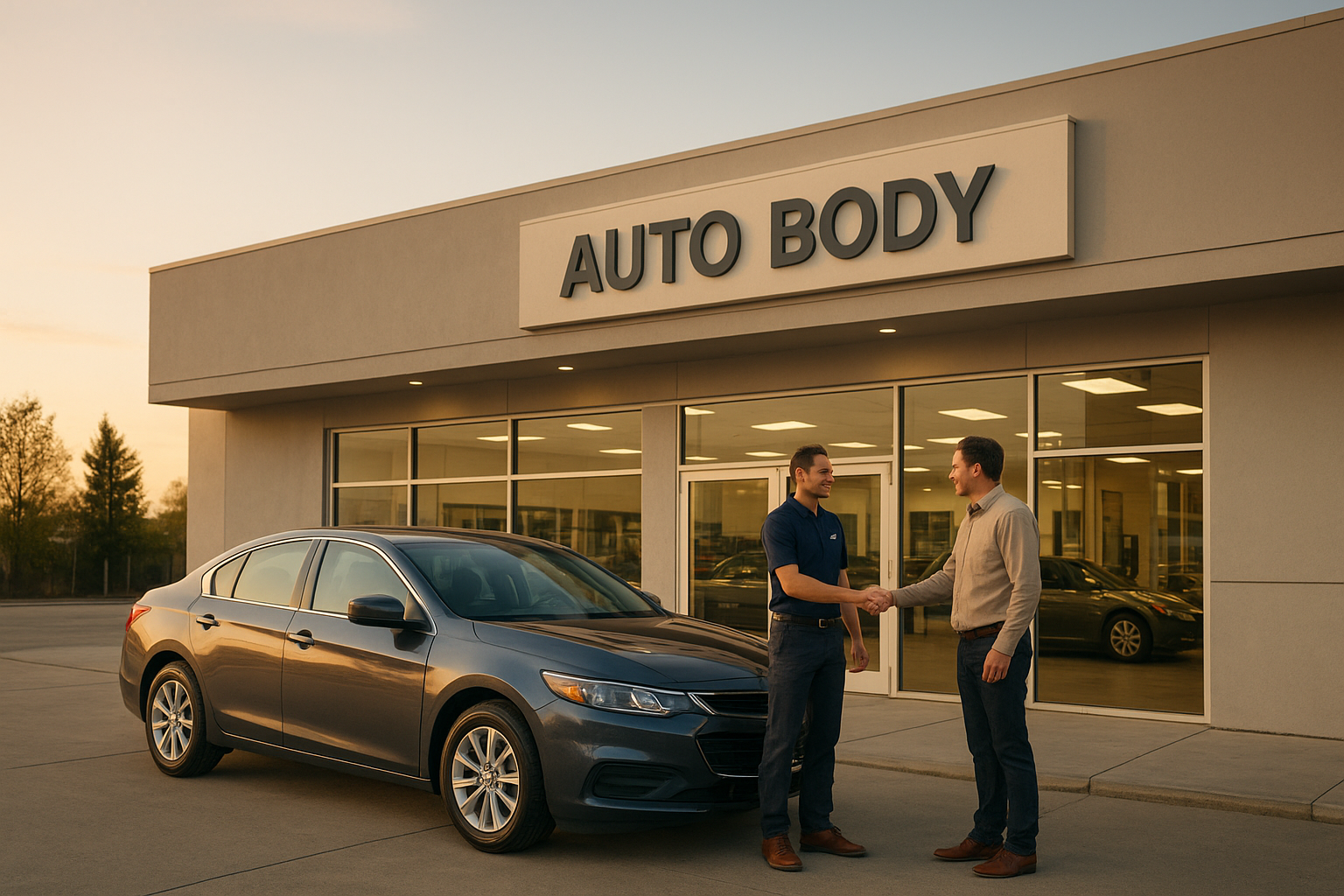
Finding reliable collision repair near me starts with a shop that looks professional and puts safety first.
After a fender-bender or a serious crash, the first thing most drivers do is search for collision repair near me. It seems simple — find a nearby auto body shop, drop off the car, pick it up fixed. But the stakes are far higher than a cosmetic touch-up. Today’s vehicles are engineered systems where a poorly repaired bumper can disable automatic emergency braking, and a misaligned frame rail can redirect crash energy away from designed crumple zones — toward you.
This guide is the most thorough resource available for any driver searching for local collision repair. We cover how to evaluate shops, every stage of the repair process, how to navigate insurance, what drives cost and timeline, the right questions to ask, and how to verify quality at pickup. If you’re in or near Brea and North Orange County, we’ve included a local spotlight to help you get started immediately.
Why Searching “Collision Repair Near Me” Is Only the Beginning
Proximity is convenient, but it should never be the primary reason you choose an auto body shop. Modern vehicles include ultra-high-strength steel (UHSS), aluminum alloys, advanced multi-layer coatings, and sophisticated driver-assistance systems. Repairing these materials incorrectly — using the wrong heat, the wrong welds, or the wrong filler — can compromise the vehicle’s designed crash performance in ways that are invisible to the naked eye.
The right shop for collision repair near me is the one that:
- Follows OEM (Original Equipment Manufacturer) repair procedures for your specific VIN
- Documents and performs all required ADAS calibrations after any repair affecting sensors
- Uses appropriate parts choices that don’t compromise safety or corrosion protection
- Communicates transparently throughout every stage from estimate to delivery
- Provides written documentation — scan reports, calibration records, and a detailed repair blueprint
What’s actually at risk after a collision
Safety systems: Airbags, seatbelt pretensioners, forward collision radar, lane-keeping cameras, blind-spot sensors, and parking sonar all live in the same zones that take collision damage. Improper repairs can disable these systems without triggering a dashboard warning light — leaving you with a false sense of security.
Structural integrity: Your vehicle’s unibody or frame is engineered to absorb and redirect crash energy through specific pathways. Improper welding, incorrect sectioning, or the use of heat on UHSS panels can weaken these paths permanently.
Corrosion protection: Factory vehicles are treated with multi-layer corrosion systems — E-coat primers, seam sealers, cavity wax, and anti-chip coatings. Any shop that skips these steps creates rust pathways that emerge 18–36 months after repair, often voiding manufacturer corrosion warranties.
Resale and lease value: Proper structural pulls, complete corrosion treatments, and factory-match paint jobs preserve your vehicle’s appearance on a Carfax report and its condition at lease return. Shoddy repairs show up as uneven panel gaps, mismatched paint in sunlight, and early rust blistering.
How to Evaluate an Auto Body Shop Before You Hand Over the Keys
Skip the star ratings and ask focused, technical questions. Use this professional framework to grade any shop you’re considering for collision repair near me.

Key evaluation points when choosing collision repair near me: equipment, process, and proof of quality.
1. OEM Repair Procedures — The Non-Negotiable Starting Point
Ask the estimator to show you the vehicle manufacturer’s repair plan for your specific VIN. A professional shop accesses OEM repair procedures for every job — covering one-time-use fasteners, sectioning limits, approved repair vs. replacement decisions, and required corrosion protection steps. If they can’t pull this documentation, they’re guessing — and guessing on your vehicle’s structure is unacceptable.
2. Structural Measuring and Welding Competence
Look for computerized 3D measuring systems that verify the vehicle’s geometry against factory specs at multiple points simultaneously. Ask about weld validation — qualified shops perform test coupon welds on the same material as your vehicle before touching the car, confirming penetration depth, heat-affected zones, and pull strength. Any shop that can’t describe this process should not be welding your vehicle.
3. Paint Environment and Color Match Strategy
A climate-controlled downdraft spray booth, proper bake cycles (typically 140°F for 20–30 minutes), and color documentation using spectrophotometer readings are the foundation of a durable, invisible paint match. Ask to see the booth and ask how the shop handles variant tints in commonly difficult colors like silver, white pearl, and multi-stage reds.
4. ADAS Calibration Access — In-House or Documented Partner
Any repair involving bumpers, windshields, grilles, mirrors, pillars, or suspension geometry can disturb ADAS sensors. Shops must have either in-house static and dynamic calibration equipment or a documented relationship with a trusted calibration partner. Crucially, you should receive printed post-calibration reports in your file — not just a verbal assurance that “everything was checked.”
5. Transparent, Line-Item Paperwork
A professional estimate (or repair blueprint) lists every labor operation individually, specifies part types (OEM, OEM-equivalent, aftermarket, or recycled), itemizes sublet operations, and includes pre- and post-repair scans and all calibrations. Every change from teardown findings should generate a written supplement you can review and approve before work proceeds.
6. Industry Certifications and Training
Look for I-CAR Gold Class recognition, OEM-specific certifications (Tesla, Honda ProFirst, GM, Ford, Assured Performance network, etc.), and ASE-certified technicians. These credentials indicate that the shop invests in keeping its team trained on the latest repair standards — including aluminum repair, advanced welding, and ADAS. Certifications aren’t a guarantee of quality, but their absence is a yellow flag worth noting.
7. Warranty Coverage
A shop confident in its work offers a written warranty on workmanship and materials — typically lifetime on paint and structural repairs for as long as you own the vehicle. Confirm what’s covered, what voids coverage, and how warranty claims are handled. A verbal warranty means nothing.
If you’re in North Orange County, a helpful local benchmark is Brea Auto Body — use their site to understand what a transparent, process-driven collision repair shop looks and communicates like.
The Collision Repair Process, Step by Step
Understanding what happens behind the shop doors empowers you to ask better questions, anticipate accurate timelines, and recognize when a shop is cutting corners. Here is the complete, professional workflow for auto body collision repair.

Understanding the end-to-end process helps you compare shops offering collision repair near me.
-
Intake, Documentation, and Initial Blueprint
The shop photographs and documents all visible damage, then disassembles the affected area — bumper fascias, fender liners, trim pieces — to expose hidden structural damage. This is where the true scope of the repair is established. OEM procedures are pulled for your VIN, and a detailed blueprint is written covering all required operations, parts, and sublets. -
Insurer Approval and Supplement Management
The blueprint goes to your claims representative for review. Most insurance approvals take 24–72 hours for straightforward claims. Any new damage discovered during disassembly triggers a supplement — a revision to the original estimate. A professional shop manages this communication on your behalf, explains each line item in plain language, and doesn’t begin structural work until approvals are confirmed. -
Parts Ordering and Staging
Parts are ordered immediately after insurer approval. OEM parts may arrive next-day from a dealership; some back-ordered sensors, brackets, or trim clips can take days or weeks. A proactive shop tracks all open parts orders, alerts you to delays as soon as they’re known, and plans the repair sequence to maximize productivity while waiting. -
Structural and Mechanical Repair
Technicians use computerized measuring systems to pull the frame or unibody back to factory geometry using manufacturer-specified attachment points. Damaged metal is repaired or replaced per OEM sectioning procedures. Suspension geometry, cooling systems, and any mechanically affected components are addressed. Corrosion protection — cavity wax, seam sealer, anti-chip coatings — is fully restored per spec. -
Refinishing
Repaired panels are sanded, filled where permitted by OEM procedure, primed, and staged for the spray booth. Color is formula-matched using spectrophotometer readings, with variant tint adjustments as needed. Adjacent panels are blended to ensure seamless transitions. Bake cycles cure the finish for long-term durability and UV resistance. -
Reassembly and Mechanical Reconnection
All trim, clips, moldings, and mechanical components are reinstalled. Torque specifications are followed for suspension and structural fasteners. New one-time-use fasteners are installed where required by OEM procedures. Every electrical connector is verified for secure engagement. -
ADAS Calibration and Post-Repair Scanning
After reassembly, all affected ADAS systems undergo calibration — static calibrations in a controlled environment for cameras and radar, dynamic calibrations on a defined road course for systems requiring vehicle movement. A post-repair diagnostic scan clears any stored codes and confirms all modules are communicating correctly. Printed reports are generated and included in your file. -
Quality Control and Road Test
A final QC inspection checks panel gaps against factory tolerances, color match in multiple light conditions, window and door operation, wind noise sealing, and all warning indicators. A test drive confirms alignment, drivetrain function, and real-world sensor operation before the vehicle is handed back to you.
Navigating Insurance: Your Rights, Your Choices, Your Repair
Insurance pays for most collision repairs in the U.S., but the relationship between insurers, shops, and policyholders is frequently misunderstood. Here’s what every driver should know before filing a claim for auto body collision repair near me.
You Choose the Shop — Always
In all 50 states, you have the legal right to choose your own collision repair facility. Your insurer cannot require you to use a specific shop, though they may suggest preferred “Direct Repair Program” (DRP) partners. DRP shops have negotiated rates with insurers, which can speed approvals — but also creates incentives to minimize repair scope. You can use any qualified local shop and your insurer must work with them.
Understanding Parts Choices
Insurers often specify the use of aftermarket or recycled (LKQ) parts to reduce claim costs. Here’s what that means for you:
- OEM parts are manufactured by or to the specification of your vehicle’s maker — best fit, corrosion treatment, and sensor compatibility, highest cost.
- OEM-equivalent (CAPA-certified) aftermarket parts meet independent quality standards and can be appropriate for cosmetic panels on older vehicles.
- Non-certified aftermarket parts carry higher risk of fit issues, paint adhesion problems, and sensor mounting incompatibilities — especially on newer vehicles.
- Recycled OEM parts can be cost-effective for structural components, but require inspection for hidden damage and verification of sensor integrity.
For vehicles under manufacturer warranty or lease, insist on OEM parts for any structural component or sensor-mounting bracket. A qualified shop will advocate for this on your behalf and explain the technical reasoning if an insurer pushes back.
Diminished Value Claims
Even a perfect repair can reduce your vehicle’s market value simply because it now has a collision history on its Carfax report. In most states, you can file a diminished value claim against the at-fault driver’s insurer to recover that lost value. Ask your shop if they can provide documentation supporting a diminished value assessment, and consult your own insurer or an independent appraiser if needed.
Rental Car Coverage and Timing
Most comprehensive and collision policies include rental reimbursement, but coverage amounts vary — commonly $30–$50 per day up to a total cap. Confirm your daily rate and total allowance before the repair begins, and communicate with your shop about the expected timeline so you can budget accordingly. If parts delays extend the repair beyond your rental coverage, ask the shop to document the cause — this can support a coverage extension request with your insurer.
Calibration and Scan Documentation for Insurance
Require that all calibration costs and post-repair scan costs be included in your insurer-approved estimate. Some insurers initially exclude these line items — a shop that follows OEM procedures will include them and negotiate their inclusion on your behalf. Review guidance from the National Highway Traffic Safety Administration (NHTSA) on ADAS safety requirements, and visit I-CAR for current industry repair training standards.
What Affects the Cost and Timeline of Collision Repair Near Me?
Two vehicles with identical-looking damage can have wildly different repair costs and timelines. These are the major factors that drive the variance:
Structural vs. Cosmetic Damage
Cosmetic repairs — door dings, minor scratches, small dents in non-structural panels — can often be completed in 1–3 days. Structural repairs require teardown, measuring, pulling or replacing metal, weld validation, corrosion restoration, and multiple quality checks. A moderate front-end collision with structural involvement can realistically take 10–20 business days from approval to delivery.
Parts Availability and Supply Chain
Semiconductor shortages and global supply disruptions have made certain OEM parts — particularly sensors, cameras, and radar modules — subject to extended back-orders. A proactive shop places parts orders the same day approval is received and monitors open orders daily, flagging delays as soon as they arise. Ask shops specifically how they handle back-ordered parts and how they communicate timeline changes.
Vehicle Make, Model, and Repair Complexity
Aluminum-intensive vehicles (many Audi, BMW, Jaguar, and Ford F-150 models), high-voltage EVs, and vehicles with complex front radar assemblies require specialized tools, training, and handling. Repairs on these vehicles take longer and cost more — but any shop claiming otherwise is a concern, not a bargain.
ADAS Calibrations and Alignment
Static camera calibrations require a controlled environment with specific target placements and can take 30–90 minutes per system. Dynamic calibrations require a road drive under specific conditions. Most moderate-to-severe repairs involve multiple calibrations and a four-wheel alignment check after any suspension or structural work. These steps add both time and cost — but they are not optional for a safe, complete repair.
Shop Capacity and Scheduling
Even a fully capable shop may have a 1–3 week scheduling backlog, especially during high-demand periods (winter weather, holiday weekends). When comparing collision repair shops near me, ask for a realistic start date and completion estimate — and get it in writing.
Typical Cost Ranges
While every repair is unique, these general ranges provide orientation:
- Minor cosmetic (PDR, small scratch repair): $150–$700
- Single panel replacement and paint: $800–$2,000
- Moderate front or rear collision: $2,500–$6,000
- Severe structural collision (airbag deployment, major frame work): $6,000–$15,000+
A significantly lower estimate almost never means a shop found genuine savings — it usually means required operations were omitted. Always compare estimates line by line, not just the bottom line.
Collision Repair vs. Paintless Dent Repair (PDR): Which Does Your Damage Need?
Not every visit to an auto body shop involves full collision repair. Paintless Dent Repair (PDR) is a technique for removing minor dents — door dings, hail damage, small parking lot impacts — without sanding, filling, or repainting. Here’s how to know which approach applies:
- PDR is appropriate when: The paint is unbroken, the dent is shallow (no sharp creases), and the metal can be massaged back without thinning or stretching.
- Traditional collision repair is required when: Paint is cracked or missing, there is a sharp crease, the dent is in a structural panel, or ADAS sensors were affected by the impact.
A reputable shop will give you an honest assessment of which method is appropriate — and won’t upsell you from PDR into a full repair simply because the margins are higher.
Reading Reviews and Estimates Like a Professional
Online reviews offer signal, but you need to read them with intent. When evaluating any shop for collision repair near me, look for:
- Specific mentions of communication quality — did customers know what was happening at each stage?
- References to documented calibrations, written scan reports, or ADAS testing
- Comments on on-time delivery and how delays were handled
- Mentions of post-repair issues and how the shop responded — do they welcome comeback appointments?
- Negative reviews that reveal a pattern of surprise charges, poor paint match, or warranty disputes
When comparing estimates, examine them line by line. Look specifically for the presence or absence of:
- Pre- and post-repair diagnostic scans
- ADAS calibration line items
- Seam sealer and corrosion protection operations
- Four-wheel alignment check
- Blending of adjacent panels for color match
A lower estimate that omits these operations isn’t saving you money — it’s transferring future repair costs and safety risks to you.
Frequently Asked Questions About Collision Repair Near Me
How long does collision repair near me typically take?
Cosmetic repairs take 1–3 days; moderate single-panel repairs 3–7 days; significant structural repairs 10–20+ business days. Variables include parts availability, supplement approval timelines, ADAS calibration requirements, and shop capacity. Get a written timeline estimate from your shop at the start, and confirm how they’ll communicate any changes.
Can I choose my own collision repair shop, or does my insurance decide?
You always have the right to choose your own shop in all 50 states. Your insurer may recommend or promote their Direct Repair Program (DRP) partners, but they cannot legally require you to use them. If a shop you trust follows OEM repair procedures and provides thorough documentation, they can work with your insurer directly.
What is ADAS calibration and why does it matter after a collision?
ADAS stands for Advanced Driver Assistance Systems — the cameras, radar, sonar, and lidar that power automatic emergency braking, lane-keeping assist, adaptive cruise control, and blind-spot detection. Any collision that displaces sensors, replaces bumper fascias, or affects suspension geometry can misalign these systems. Calibration restores them to factory-specified operation. Skipping calibration can leave life-saving systems pointing in the wrong direction without any dashboard warning.
Should I get multiple estimates for collision repair?
Getting 2–3 estimates is reasonable and often recommended. However, compare them line by line, not just the total. A significantly lower estimate is almost always the result of omitted operations — missing ADAS calibrations, no corrosion protection, skipped post-repair scans — rather than genuine efficiency. The cheapest estimate frequently becomes the most expensive repair after comebacks and warranty issues.
What warranty should I expect from a collision repair shop?
A reputable shop offers a written lifetime warranty on workmanship and paint finishes for as long as you own the vehicle. This should cover paint adhesion, color match, panel fit, and structural integrity. Any warranty should be provided in writing with clear terms — not just verbally promised at the counter.
Does collision repair near me affect my car’s resale value?
A collision history is reported on Carfax and similar services and can reduce a vehicle’s private-sale value by 10–25%, even after a perfect repair. The quality of the repair matters — shoddy work with visible paint defects or misaligned panels compounds the value loss. You may be entitled to a diminished value claim against the at-fault driver’s insurer to recover this loss.
What is the difference between an auto body shop and a mechanical repair shop?
An auto body or collision repair shop specializes in structural, cosmetic, and paint repairs resulting from collisions — frame straightening, panel replacement, refinishing, and ADAS calibration. A mechanical shop addresses drivetrain, engine, brakes, and electrical systems. Some severe collisions require both — a quality collision shop will coordinate mechanical sublets on your behalf and include them in a unified repair plan.
Smart Questions to Ask Before Authorizing Collision Repair
Use these questions to evaluate any shop’s competence and commitment to safe, complete repairs — without sounding adversarial.
“Can you walk me through the OEM repair procedures you’ll follow for my VIN?”
A qualified estimator will show you the documentation, identify which operations are required vs. optional, and explain why specific steps — like one-time-use bolts or anti-corrosion primers — cannot be skipped.
“What calibrations and post-repair scans will you perform, and will I receive printed reports?”
Expect specific answers: which systems require calibration, whether static or dynamic calibration is needed, and confirmation that printed reports will be included with your final invoice. Vague answers are a warning sign.
“How do you validate weld quality and restore corrosion protection?”
Listen for: test coupons on matching material, described penetration verification, and a complete corrosion protection sequence including cavity wax, seam sealer, etching primer, and anti-chip coatings per OEM procedure.
“What are your certifications, and are your technicians I-CAR trained?”
Ask for I-CAR Gold Class status and any OEM-specific certifications relevant to your vehicle’s make. Ask which technicians hold which certifications — certifications held by the shop but not the tech doing your repair offer less assurance.
“What is your warranty, and what does it cover in writing?”
Get the terms on paper. A confident, quality shop provides a clear written warranty without hesitation.
“How will you communicate with me if parts are delayed or new damage is found?”
Look for a defined communication protocol — specific contact person, update frequency, and how supplement approvals will be presented to you for review.
After Delivery: Verifying Quality at Pickup
Never rush through a vehicle pickup. A thorough delivery walkthrough protects you and gives the shop a chance to address any concerns before you drive away. Here’s how to inspect your vehicle at pickup:
- Inspect in bright, natural light. Artificial shop lighting can mask paint defects, orange peel texture, and color mismatch. Walk around the vehicle in sunlight and at different viewing angles.
- Check panel gaps. Run a finger along every panel gap adjacent to the repair area. Gaps should be consistent and match the gaps on the opposite, undamaged side.
- Verify color match. Look at the repaired panels from straight on and at a 45-degree angle. Compare to unrepaired adjacent panels and the opposite side of the vehicle.
- Operate every affected door, window, and trim piece. Confirm smooth, complete operation and proper sealing.
- Check the dashboard for warning lights. All warning indicators — including ADAS-related lights — should be off. If any appear, do not accept delivery until the cause is documented and resolved.
- Request your scan and calibration reports. These should be printed and included with your final paperwork. File them with your vehicle’s service records.
- Ask about a follow-up period. Quality shops welcome a recheck appointment within the first week if you notice any wind noise, rattles, sensor behavior, or other post-repair concerns.
Local Spotlight: Collision Repair Near Me in Brea and North Orange County, CA
If you live, work, or commute through North Orange County, you have access to qualified local collision repair resources. When evaluating options, use the criteria in this guide to filter for shops that follow OEM procedures, document calibrations, and communicate transparently — not simply the closest shop or the one your insurer suggests first.

ADAS camera calibrations are essential after any collision — confirm your local shop includes them in writing before authorizing work.
Brea Auto Body serves North Orange County with a process-driven approach to collision repair — covering OEM procedure documentation, complete ADAS calibration, transparent supplementing, and written warranty coverage. Use their site as a benchmark for professionalism and process transparency when comparing any local collision repair shop.
Ready to get started? Request a repair consultation or estimate from Brea Auto Body — and use the questions in this guide to make the conversation count.
Conclusion: The Best Collision Repair Near Me Is the Right One — Not Just the Closest
Searching for collision repair near me is the right first instinct — but proximity alone is never sufficient justification for choosing a shop. Your vehicle’s crash safety, ADAS functionality, corrosion resistance, and long-term value all depend on the quality of the repair performed after a collision.
The best local collision repair shops prove their capability through documented OEM procedures, certified technicians, transparent line-item estimates, written warranty commitments, and printed calibration reports you can keep in your files. They communicate proactively, manage insurer relationships on your behalf, and welcome your scrutiny at every stage.
Use this guide to hold every shop you evaluate to that standard. If you’re in or near Brea, CA, start your search at Brea Auto Body — and use the tools in this article to ask exactly the right questions before you authorize a single dollar of work.

