

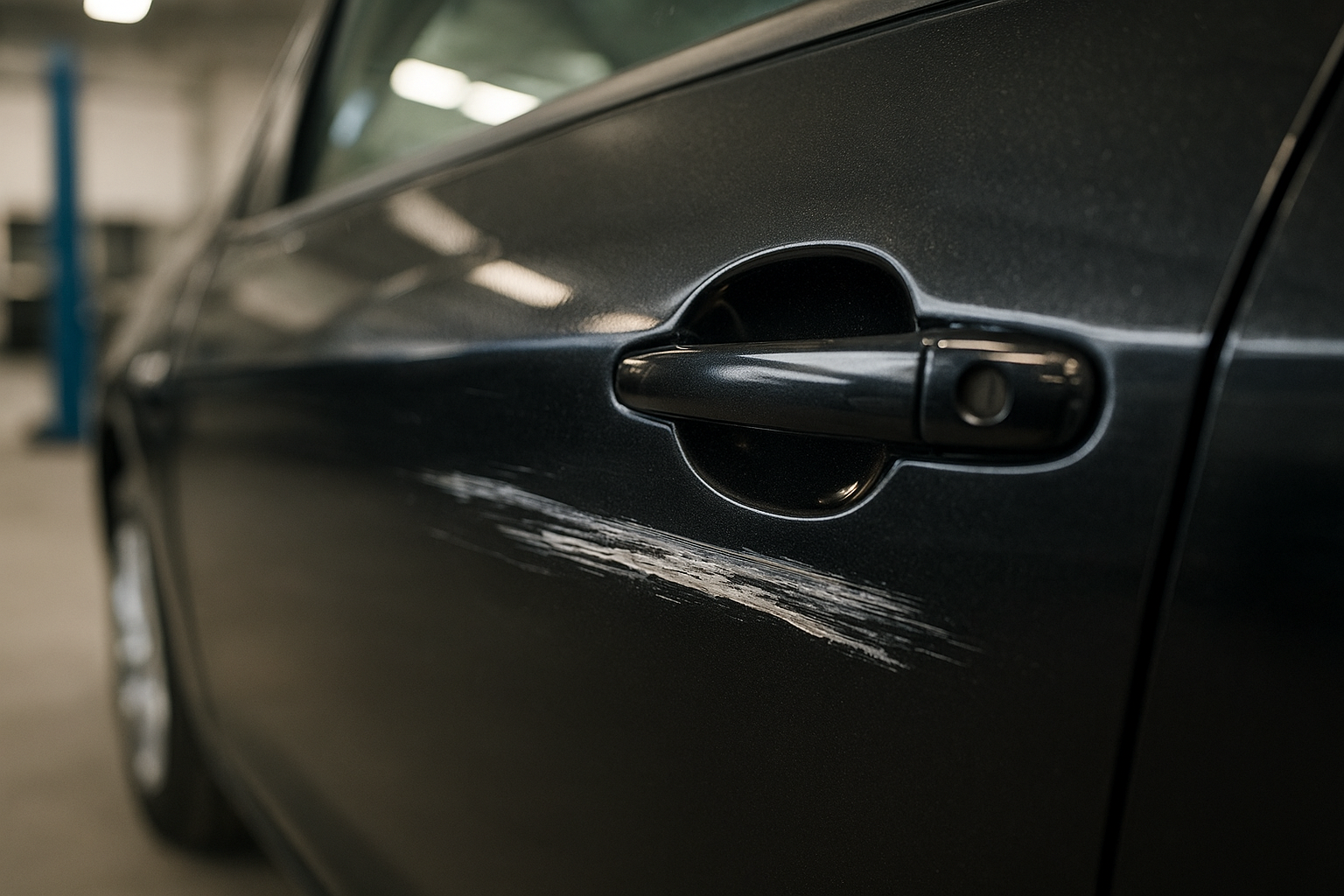
Deep Scratch Repair: A 2026 Expert Guide to Costs, Methods, and When to See a Pro

Deep scratch repair often requires more than buffing—especially when primer or bare metal is exposed.
Few car issues trigger more anxiety than a long, jagged line across a door or bumper. “Deep scratch repair” isn’t just about making paint shine again; it’s about stopping corrosion, restoring clear reflections, and preserving resale value. In this guide, you’ll learn how to identify a true deep scratch, whether you can DIY the fix, what professionals actually do, how much time and money to expect in 2026, and how to prevent a repeat.
What Counts as a “Deep Scratch” on Automotive Paint?
Modern automotive finishes are layered like a protective sandwich: clearcoat (gloss and UV protection), basecoat (the actual color), primer (adhesion and corrosion resistance), and substrate (metal, aluminum, plastic). A scratch is considered “deep” when it cuts below the clearcoat—especially if you see dull gray primer or bare metal/plastic. If your fingernail catches firmly in the groove, you’re usually past the point of a simple polish.
Here’s a practical way to visualize depth so you can choose the right remedy:

Deep scratch repair targets damage that cuts below the clearcoat into the color or primer layers.
Typical severity levels
1) Clearcoat scuff: restores with compounding and polish. 2) Color coat scratch: requires paint touch-up and blending. 3) Primer-exposed gouge: needs sanding, priming, repainting. 4) Bare metal or plastic: add corrosion or adhesion steps, possibly filler.
DIY vs Professional Deep Scratch Repair
Light scratches that live only in clearcoat are fair game for DIY kits. Deep scratches, however, are less forgiving. They call for surface leveling, color-matched paint, controlled blending, and clearcoat application—steps that can go sideways quickly without the right tools and a dust-free environment.
When DIY can work
If the scratch is short, away from edges and body lines, and doesn’t expose primer or metal, a careful DIYer with a quality compound and finishing polish can often make it disappear. Adding a paint-matched touch-up for hairline color breaches may be acceptable on low-visibility areas.
When to choose a body shop
- Primer or substrate is visible, or the scratch is through complex finishes (pearls, metallics, tri-coats).
- The damage crosses body lines, door edges, or bumper curves where blending is tricky.
- You want OEM-level color match and texture, or the vehicle is newer and resale value matters.
- The damaged panel contains sensors, radar covers, or camera housings that need special handling.
For a professional evaluation and factory-grade color matching, consider scheduling an estimate with a trusted shop. If you’re in North Orange County, you can explore professional deep scratch repair options locally.
What Pros Do: The Deep Scratch Repair Process
While every repair is unique, here’s what a reputable body shop typically does to return the panel to pre-damage condition:
1) Clean, inspect, and map the repair
The technician degreases the panel, marks the scratch path, checks for stretching on plastic parts, and decides whether the panel can be spot-repaired or if a full-panel refinish is safer for color consistency.
2) Leveling and feathering
They use controlled sanding to feather the edges of the gouge and remove sharp ridges. If the scratch has depth, a thin layer of glazing putty or filler may be applied and block-sanded to restore flatness.
3) Prime, block, and texture-match
Primer-surfacer is sprayed to build back material and seal the repair. After curing, the area is block-sanded to a uniform profile. Texture is blended so the final clearcoat lays and reflects like the surrounding panel.
4) Color match and blend
Using the vehicle’s paint code and spectrophotometer readings, the basecoat is matched, then blended into adjacent areas to avoid a visible edge. Multi-stage finishes (pearls/tri-coats) get additional layers for depth and flop accuracy.
5) Clearcoat, cure, and refine
A fresh clearcoat is applied over the repair and blend zones. After proper flash and curing, the surface is lightly denibbed, then machine-polished to factory gloss. The panel is reassembled and sensors or trim are verified for fit and function.

Professional deep scratch repair includes precise color matching, blending, and a controlled clearcoat application.
Deep Scratch Repair Cost and Turnaround in 2026
Costs vary widely with depth, length, finish type, and panel location. Rather than chasing a single “average,” consider how these factors move the total up or down:
Key cost drivers
- Depth and length: Deeper, longer gouges require more build materials, sanding, and blending area.
- Finish complexity: Pearls, metallics, and tri-coats require additional layers and skill to match.
- Panel material: Steel and aluminum behave differently; plastic bumpers need flex additives and careful heat management.
- Blend requirements: To avoid visible edges, adjacent panels may need blending, increasing material and labor.
- Sensors and trim: R&I (remove and install) of handles, moldings, badges, or radar covers adds time; ADAS calibration can add cost on some models.
Turnaround time: Minor deep scratches handled as a localized repair may be completed within a day, while full-panel refinishes typically take 1–3 business days to allow for correct curing, blending, and polishing. Complex colors, parts delays, or calibration steps can extend the timeline.
Preventing Future Deep Scratches Without Overkill
Protection works best when it matches how you actually use the vehicle. Daily highway commuting and garage parking call for different strategies than urban street parking or rideshare duty. Consider these targeted options:
Paint protection film (PPF) on high-risk zones
Door edges, handles, rocker panels, trunk ledges, and front bumpers are high-contact zones. A clear PPF kit in these areas absorbs abrasion and can be replaced if damaged, preserving the original paint below.
Ceramic coating for easier maintenance
While ceramic coatings won’t stop a key or a concrete pillar, they reduce micro-marring during washes and make contaminants release more easily—useful for preventing the minor scratches that surround a primary gouge.
Smart handling habits that matter
Use two-bucket washes with clean mitts, keep microfiber towels separate for paint and wheels, and avoid parking too tight to shopping carts or low bollards. Small habits stack up to fewer deep scratch events over the car’s life.
Deep Scratch Repair FAQs
Can a deep scratch be buffed out?
If the damage is only in the clearcoat, yes. Once color or primer is breached, compounding alone won’t restore material—you’ll need paint and clear.
Will touch-up paint fix a deep scratch?
Touch-up can hide bare spots and protect against corrosion on small, hard-to-see areas. On larger or central panels, it often looks uneven and won’t match texture or gloss like a professional blend and clear.
Is repainting a whole panel always necessary?
No. Skilled technicians sometimes perform controlled spot repairs. However, full-panel refinishing is chosen when it’s the only way to ensure an invisible color transition on complex or highly visible surfaces.
Will insurance cover deep scratch repair?
Comprehensive coverage often applies to vandalism or unknown-cause scratches. Consider your deductible and potential premium impacts; a shop can provide a detailed estimate for your insurer.

Use a simple decision flow to choose DIY or professional deep scratch repair with confidence.
Get an Expert Estimate You Can Trust
If you can see primer, feel your fingernail catch, or want a finish that looks factory-fresh, it’s time to talk to a pro. For fast, friendly help in North Orange County, request a deep scratch repair estimate and get your car looking like new again.

