

Car Body Shop Anaheim: The Complete 2025 Guide to Collision Repair, Estimates, Insurance, and Choosing the Right Shop
Updated for 2025 · Serving Anaheim, Anaheim Hills, West Anaheim, the Platinum Triangle, and all of North Orange County

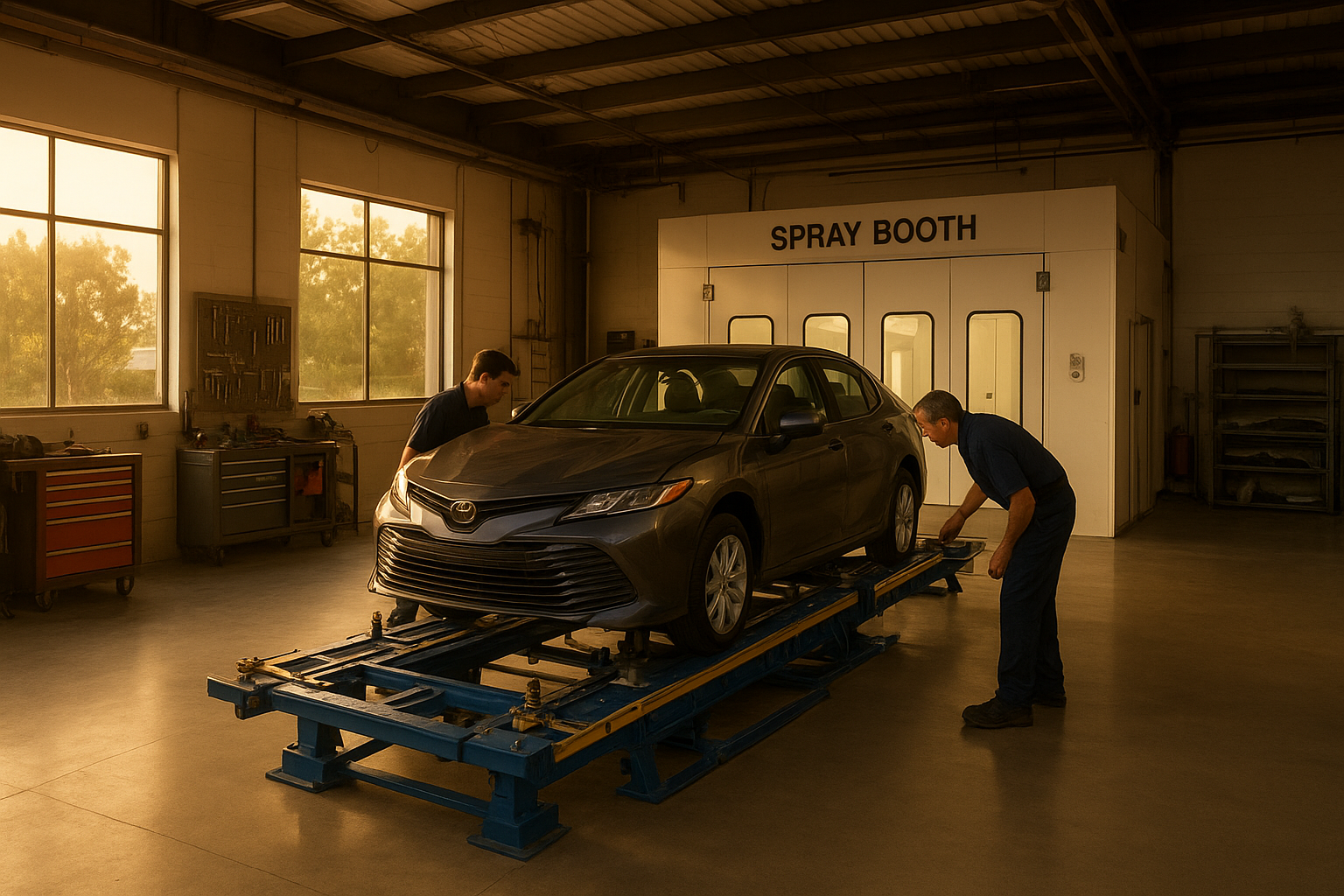
A modern car body shop in Anaheim focusing on precision collision repair, ADAS calibration, and flawless color-matching.
Whether you clipped a pillar in the Disneyland parking structure, caught a freeway pebble on the 91, or traded paint on a congested stretch of the 5, finding the right car body shop in Anaheim is one of the most important decisions you’ll make after an accident. The wrong choice can cost you time, money, and — most critically — your vehicle’s structural safety. This guide covers everything: what separates elite shops from average ones, how collision repair actually works, what services to expect, how pricing and timelines break down, how to handle insurance, and what questions to ask before you hand over your keys.
What Defines a Top Car Body Shop in Anaheim
Not every shop that calls itself a collision center delivers the same quality. In a competitive market like Anaheim — where dozens of shops compete for business — it pays to know precisely what separates exceptional from merely acceptable.
Certifications and Manufacturer Approvals
Top-tier Anaheim body shops hold recognized certifications such as I-CAR Gold Class, which signals that technicians complete ongoing training on the latest repair techniques and vehicle technologies. Manufacturer certifications from automakers like Honda, Toyota, Ford, and Tesla confirm the shop follows brand-specific OEM repair procedures. These aren’t marketing badges — they represent documented commitments to correct, safe repairs.
Quality Indicators You Can See and Verify
On a shop tour, pay close attention to these specifics:
- A frame-straightening bench and computerized measuring system
- Dust-controlled, climate-managed paint booths with modern spray equipment
- Up-to-date MIG and squeeze-type resistance spot (STRSW) welders appropriate for high-strength steel
- Organized parts shelving and fender covers protecting vehicles in progress
- A dedicated ADAS calibration bay or established sublet partner
- Clean, professional customer-facing areas — shops that care about appearances usually care about workmanship
Ask to see examples of recent color-match blending and panel gap alignment. Precision in visible details generally reflects precision in the structural work you cannot see.
Reputation and Reviews: How to Read Them
Online reviews give you signal, but look beyond star ratings. Read for patterns: do reviewers mention clear communication, accurate timelines, and thorough delivery walk-throughs? Negative reviews that mention surprise charges, unresolved sensor warnings, or paint mismatches are red flags regardless of overall rating. A strong Anaheim body shop should have consistent positive feedback on process transparency and finished quality — not just speed.
Full Range of Services Offered at an Anaheim Car Body Shop
A comprehensive car body shop in Anaheim should be capable of handling everything from a paint scratch to a major multi-panel collision. Here’s what a fully equipped shop provides:
Collision & Structural
- Full collision repair
- Frame and unibody straightening
- Structural measuring & alignment
- Panel replacement
- Bumper repair and replacement
Paint & Finish
- Complete paint refinishing
- Computerized color matching
- Blend panel painting
- Scratch and chip repair
- Clear coat restoration
Technology & Safety
- ADAS calibration (static & dynamic)
- Airbag replacement & SRS reset
- EV high-voltage system awareness
- OBD diagnostic scanning
- Sensor & camera alignment
Convenience Services
- Insurance claim assistance
- Rental car coordination
- Digital estimates & updates
- Towing coordination
- Free detailed estimates
When evaluating a car body shop in Anaheim, confirm they handle the full scope in-house rather than outsourcing critical steps to unknown subcontractors — particularly structural work and ADAS calibration.
The Collision Repair Process at an Anaheim Body Shop — Step by Step
Understanding the repair workflow in detail helps you set realistic expectations, spot where shops cut corners, and have informed conversations with your estimator. Here is the complete process you should expect at any reputable Anaheim collision repair shop.

The full end-to-end collision repair process you should expect from a trusted car body shop in Anaheim.
-
Step 1 — Digital Estimate and Vehicle Intake
The shop documents all visible damage with photos, pulls your VIN for model-specific OEM procedures, and produces a preliminary written estimate. A quality Anaheim body shop will clearly separate visible damage from potential hidden damage and explain what may change once panels come off. You should receive a clear, itemized document — not just a verbal quote.
-
Step 2 — Insurance Coordination and Authorization
The shop contacts your insurer (or a third-party insurer if you were not at fault), submits the estimate, and obtains written authorization before touching the vehicle. Remember: in California, you choose the shop — not your insurance company. A strong Anaheim collision shop will advocate for OEM procedures and fight supplement denials on your behalf.
-
Step 3 — Disassembly and Blueprinting
After authorization, technicians remove damaged components to fully expose underlying damage. “Blueprinting” is the creation of a complete, line-item repair plan — parts, labor, materials — that eliminates mid-repair surprises. Hidden damage like bent brackets, damaged foam energy absorbers, and electrical harness damage is documented and submitted as a supplement to your insurer.
-
Step 4 — Structural Repair and Precision Measuring
If the vehicle’s unibody or frame is compromised — even subtly — it goes on a computerized frame-straightening bench with three-dimensional measurement. The goal is restoring factory geometry within manufacturer tolerances. Correct geometry is critical: it determines how crash energy is absorbed in a future collision and governs proper wheel alignment, tire wear, and handling.
-
Step 5 — Panel Repair, Replacement, and Corrosion Protection
Depending on damage severity, technicians either pull and reshape panels or replace them entirely with OEM or quality alternative parts. Critical steps here include proper seam sealing, application of cavity wax in enclosed sections, and corrosion-protection primer — all especially important in Southern California’s marine-influenced climate where moisture intrusion accelerates rust.
-
Step 6 — Paint Preparation and Computerized Color Matching
Refinish quality depends entirely on preparation. Proper feathering, priming, and blocking create the foundation. Computerized spectrophotometers read your existing paint to create a precise formula, accounting for age-related fading. Blending adjacent panels (rather than painting only the repaired panel) creates a seamless result — especially important on complex metallic, pearl, and tri-coat finishes common on modern vehicles.
-
Step 7 — Reassembly, Parts Fitment, and Detail
All components are reinstalled, panel gaps are set to OEM specifications, emblems and trim are aligned, and the vehicle receives a thorough detail to remove any masking residue or overspray. A final quality control inspection checks gaps, color, gloss, and trim alignment before the vehicle moves to the ADAS calibration stage.
-
Step 8 — ADAS Calibration and Road Test
This step is non-negotiable on modern vehicles. Any repair touching bumpers, windshields, fenders, or suspension can displace sensors, cameras, and radar modules. ADAS calibration — either static (on targets in a controlled environment) or dynamic (driven on public roads with scan tools connected) — restores lane-keep assist, adaptive cruise control, blind-spot monitoring, and automatic emergency braking to factory specs. A post-calibration road test confirms all systems are functioning correctly before delivery.
-
Step 9 — Delivery Walk-Through and Documentation
The best Anaheim body shops conduct a thorough delivery inspection with you present. They walk every repaired panel in good lighting, explain warranty coverage, provide aftercare instructions, and supply copies of all repair documentation including OEM procedures referenced, parts invoices, and calibration reports. You leave knowing exactly what was done and what your warranty covers.
Local Factors That Affect Auto Body Repairs in Anaheim

Anaheim sits at the intersection of the I-5, SR-57, and SR-91 — making collision repair a daily reality for tens of thousands of commuters.
Anaheim’s unique geography and traffic patterns create repair considerations you won’t encounter everywhere:
Freeway Speed Collisions and Hidden Structural Damage
The I-5, SR-57, and SR-91 carry some of Southern California’s densest commuter traffic. High-speed rear-end impacts and lane-change collisions on these freeways frequently cause subtle structural deformation that looks minor from the outside. A low-speed parking lot scrape in a theme-park structure and a highway-speed impact may look similar visually but require completely different repair scopes. A proper Anaheim collision shop will perform structural measuring on any vehicle that sustained a significant impact — period.
SoCal Sun and Paint Longevity
Anaheim averages over 280 sunny days per year. UV exposure is relentless, and it accelerates paint oxidation and clear coat degradation — especially on repairs done with inferior refinish chemistry or thin clear coat application. Quality shops use UV-resistant clear coats at full film build and, when appropriate, recommend paint protection film on high-exposure panels like hoods and front bumpers.
Theme Park and Event Traffic
Disneyland, Angel Stadium, Honda Center, and the Anaheim Convention Center generate massive pedestrian and vehicle congestion that creates specific accident patterns — low-speed parking structure incidents, traffic-jam rear-enders, and aggressive merges. These often affect bumper systems, sensors, and fascia in ways that require careful OEM-procedure work to restore properly.
Neighborhoods Served
A well-located Anaheim car body shop should conveniently serve drivers from: Anaheim Hills, West Anaheim, the Platinum Triangle, Fullerton, Placentia, Garden Grove, Orange, Yorba Linda, Brea, and La Habra. Proximity matters for drop-off logistics, but capability matters far more than geography.
Insurance, Estimates, and Your California Rights
Navigating the insurance process is where many Anaheim drivers feel most uncertain. Here’s a plain-language breakdown of how it works and what protections you have under California law.
Your Right to Choose Your Own Shop
Under California law, your insurance company cannot require you to use a specific repair shop. Direct Repair Programs (DRPs) exist to benefit insurers, not necessarily you. You have the legal right to select any licensed collision repair facility in California — including one that is not on your insurer’s preferred vendor list. A quality Anaheim body shop will work directly with your insurance company regardless of DRP affiliation.
Understanding Supplements
Initial insurance estimates are almost always incomplete because they are written before disassembly. A “supplement” is additional documentation the shop submits when hidden damage is discovered. Supplements are normal and necessary — they represent the shop doing its job correctly. Approve them promptly once documented, as delays pause your repair timeline.
OEM vs. Aftermarket Parts in Insurance Claims
Insurers often push for aftermarket (non-OEM) parts to reduce payouts. On safety-critical components — bumper beams, airbag brackets, structural panels, and anything adjacent to sensors — insist on OEM parts. Your shop should advocate for this in writing. For cosmetic components on older vehicles, quality certified aftermarket parts may be acceptable, but this should be a discussion, not a unilateral insurer decision.
California Bureau of Automotive Repair (BAR)
All California auto body shops must be licensed by the Bureau of Automotive Repair. If you have a dispute with a shop or insurer that cannot be resolved directly, the BAR provides free consumer assistance. Review their resources at bar.ca.gov. Always verify your Anaheim body shop’s BAR license before authorizing repairs.
Step-by-Step: How to File a Collision Claim in Anaheim
- Document the scene with photos from multiple angles before moving vehicles if safe
- Exchange information with other parties and obtain a police report if applicable
- Contact your insurer to open a claim and receive a claim number
- Choose your preferred Anaheim body shop (you are not required to use an insurer-recommended shop)
- Bring your claim number, VIN, and photos to your chosen shop for a detailed estimate
- The shop contacts your insurer directly and coordinates authorization
- Arrange rental car coverage through your insurer — confirm rental limits before repairs begin
- Approve any supplements promptly once hidden damage is documented
- Inspect the vehicle thoroughly at delivery before signing the final satisfaction form
EVs, ADAS, and Modern Vehicle Materials: Why Repair Procedures Matter More Than Ever
Modern vehicles are fundamentally different from cars built even ten years ago. Repaired incorrectly, they can fail silently in the next collision. Here’s what every Anaheim driver needs to understand.
ADAS: What It Is and Why Calibration Is Non-Negotiable
Advanced Driver Assistance Systems (ADAS) include features like automatic emergency braking, lane departure warning, adaptive cruise control, blind-spot monitoring, and rear cross-traffic alert. These systems rely on a precise network of cameras, radar, LiDAR, and ultrasonic sensors. Any collision repair that affects the mounting position of these sensors — including bumper replacements, windshield replacements, and even some fender repairs — requires ADAS recalibration to restore correct function.
A shop that skips calibration is not simply cutting a corner — they are returning a vehicle to you with safety systems that may appear to work but are operating with incorrect reference angles. The result can be a system that fails to brake in time, produces false lane-departure alerts, or provides no blind-spot warnings at all.
Electric Vehicles: Special Handling Requirements
If you drive a Tesla, Rivian, Chevy Bolt, Hyundai IONIQ, or any other EV, your body shop choice matters even more. EV collision repair requires:
- High-voltage system awareness — technicians must follow lock-out/tag-out protocols before working near battery components
- Understanding of structural battery enclosure integration on many newer platforms
- Manufacturer-specific repair procedures that often differ significantly from ICE vehicles
- Awareness of thermal management system components embedded in structural areas
Ask any Anaheim body shop directly: “Have your technicians completed EV-specific safety and repair training?” A qualified shop will answer this confidently.
Mixed Materials and Joining Methods
Today’s vehicles combine ultra-high-strength steel (UHSS), boron steel, aluminum alloys, magnesium, and carbon fiber composites in the same structure. Each material requires specific welding techniques, adhesives, and fastening methods. Using the wrong technique — even a steel MIG welder on an aluminum panel — can destroy the material’s structural integrity without visible damage. OEM repair procedures specify exactly which joining methods are approved for each location on each model.
Collision Repair Pricing: What Does a Car Body Shop in Anaheim Cost?
Cost is one of the first questions every driver asks, and it deserves a direct, detailed answer — not a vague “it depends.” Here’s a realistic breakdown of what collision repairs typically cost in the Anaheim area.
| Repair Type | Typical Cost Range (Anaheim) | Key Variables |
|---|---|---|
| Minor scratch / chip repair | $150 – $400 | Depth, paint type, panel size |
| Bumper repair (cosmetic) | $400 – $900 | Sensor presence, paint complexity |
| Full bumper replacement + paint | $900 – $2,200 | OEM vs. aftermarket, sensors included |
| Single panel repair + paint | $500 – $1,500 | Panel size, blend panels needed |
| Multi-panel collision (moderate) | $2,500 – $6,000 | Parts count, structural involvement |
| Structural repair (frame / unibody) | $1,000 – $4,000+ (standalone) | Severity, measuring equipment, labor |
| ADAS calibration | $200 – $800 per system | Static vs. dynamic, system complexity |
| Major collision (total scope) | $6,000 – $20,000+ | Vehicle value, parts availability, EV |
Important note: The cheapest estimate is rarely the best value. Shops that undercut on price frequently cut corners on structural measuring, corrosion protection, paint prep, and ADAS calibration — work that is invisible at delivery but dangerous or costly in the long run. Compare estimates based on scope and procedures documented, not just final dollar amount.
What Drives Cost Up — And What’s Worth Paying For
- OEM parts cost more but fit correctly, preserve safety ratings, and protect warranty coverage
- ADAS calibration adds cost but is legally and ethically required when sensors are affected
- Blend panels add paint labor but produce seamless color matching you’ll appreciate for years
- Corrosion protection steps add time and material cost but are essential for longevity in SoCal’s climate
Realistic Repair Timelines at an Anaheim Body Shop
One of the most common frustrations with collision repair is unexpected delays. Understanding what drives timelines helps you plan transportation and manage expectations.
| Repair Scope | Typical Timeline |
|---|---|
| Minor scratch / paint chip | 1–2 days |
| Bumper repair or replacement | 2–5 days |
| Single panel + paint (no structural) | 3–7 days |
| Multi-panel moderate collision | 1–3 weeks |
| Structural + ADAS + multi-panel | 2–5 weeks |
| Major collision / luxury / EV | 4–10 weeks or more |
Common Causes of Repair Delays
- Parts backlogs — OEM parts for newer vehicles, EVs, and European imports can take weeks to arrive
- Insurance supplement disputes — if the insurer contests additional damage, the shop must negotiate before proceeding
- ADAS calibration scheduling — some calibrations require specific road conditions or equipment availability
- Paint cure time — clearcoat requires full cure before the vehicle can be reassembled and delivered
- Hidden damage — structural or electrical damage discovered during disassembly extends the scope
What You Can Do to Keep Repairs Moving
- Share all accident details and prior repair history upfront to reduce disassembly surprises
- Respond quickly to supplement approvals — each day of delay is a day added to your timeline
- Confirm rental car authorization with your insurer before the repair begins so you’re not scrambling
- Plan transportation around Anaheim event schedules — rental availability drops during major conventions and peak tourist weeks
How to Choose the Right Car Body Shop in Anaheim — A Complete Decision Framework
Step 1: Evaluate Capability, Not Just Convenience
Proximity is a convenience factor; capability determines the quality of your repair. When comparing Anaheim body shops, look for documented evidence of structural measuring systems, spray booths with modern equipment, certifications, and ADAS calibration capability. Ask to see work similar to yours — a shop confident in its quality will show you examples without hesitation.
Step 2: Ask the Right Questions
Use these questions to separate genuinely qualified shops from marketing-savvy but under-equipped operations:
- “Do you have an I-CAR Gold Class certification or manufacturer certification for my vehicle brand?”
- “What measuring system do you use for structural repairs, and can I see the pre- and post-repair printout?”
- “How do you handle ADAS calibration — in-house or sublet, and who performs it?”
- “Does your estimate specify OEM vs. aftermarket parts, and will you advocate with my insurer for OEM on safety-critical components?”
- “What is your warranty on repairs and paint?”
- “Will you provide documentation of all OEM procedures referenced during the repair?”
Step 3: Evaluate Transparency and Communication
The best Anaheim car body shops communicate proactively. They provide a written blueprint before starting work, give timeline ranges with explained dependencies, update you when hidden damage is found, and conduct a thorough delivery walk-through in good lighting. If a shop is vague about timelines, dismissive about supplements, or resistant to showing you the estimate in detail — look elsewhere.
Step 4: Assess the Customer Experience
From rental coordination to digital signature approvals and text-based status updates, a customer-first operation reduces the stress of an already difficult situation. Top Anaheim body shops offer pickup scheduling, keep you informed at every milestone, and provide post-repair care instructions that protect your investment.
Step 5: Understand the Warranty Offered
Reputable shops stand behind their work. A strong warranty covers paint, workmanship, and parts fitment. Be specific about what is and isn’t covered, the duration (lifetime warranties on paint and workmanship are common among top shops), and whether the warranty transfers if you sell the vehicle. Get it in writing.
Red Flags to Watch Out for at Any Anaheim Body Shop
Knowing what to avoid is just as important as knowing what to look for. Walk away if you encounter any of the following:
- ? Verbal-only estimates — Any reputable shop provides a written, itemized estimate before work begins. Verbal estimates protect no one.
- ? Pressure to skip ADAS calibration — If a shop tells you calibration “isn’t necessary” after a bumper or sensor-area repair, find a different shop immediately.
- ? Steering you toward their preferred insurer — Shops that pressure you to choose a specific insurer or file through a specific company may have financial arrangements that don’t prioritize your repair quality.
- ? No visible certifications — I-CAR, manufacturer certifications, or BAR license should be displayed or easily produced on request. Absence of any credential is a concern.
- ? Unusually low estimates with no explanation — If an estimate is significantly below others, ask specifically what’s excluded. Missing blend panels, calibration, or structural measuring are common ways shops undercut on paper.
- ? No post-repair walk-through — A shop that hands you your keys in a parking lot without a structured delivery inspection is cutting the quality process short at the final step.
Aftercare: Protecting Your New Finish After Anaheim Collision Repair
Getting your car back is just the beginning. How you care for the repair in the first weeks determines how the finish holds up for years in Anaheim’s harsh UV environment.
The First 30 Days
- Avoid automated car washes with brushes for at least 30 days — fresh clear coat is still curing and can be marred
- Hand wash only with a pH-balanced automotive soap using a soft microfiber mitt
- Avoid parking directly under trees (sap, bird droppings) and parking lots with heavy foot traffic until the finish fully hardens
- Do not apply wax, polish, or paint sealant for the first 60–90 days — solvent-based products can soften fresh clear coat
- Park in shade or a garage whenever possible to limit UV exposure during the cure period
Long-Term Finish Protection
- Apply a quality paint sealant or carnauba wax every 3–6 months once the finish has fully cured
- Consider paint protection film (PPF) on high-impact areas like the hood, front bumper, and door edges — particularly valuable in Anaheim’s freeway environment
- Address stone chips and minor scratches promptly with touch-up paint to prevent rust nucleation
- If you notice any ADAS warning lights or camera/sensor errors after delivery, contact your shop immediately — do not wait
A Trusted Car Body Shop Option Near Anaheim
If you’re evaluating collision repair providers in North Orange County, consider a reputable car body shop near Anaheim that serves drivers throughout the region. Brea Auto Body provides transparent estimates, thorough OEM-procedure documentation, and handles insurance coordination directly so you don’t have to fight that battle alone. Their site is an excellent resource for understanding what full-scope collision repair should look like — use it to benchmark what any shop you’re evaluating should be delivering.
Ready to Get Your Estimate?
Serving Anaheim, Brea, Fullerton, Placentia, and all of North Orange County.
FAQs: Car Body Shop Anaheim
Do I have to use my insurance company’s recommended car body shop in Anaheim?
No. California law explicitly protects your right to choose any licensed repair facility. Insurance companies operate Direct Repair Programs for their own cost-management purposes — not for your benefit. You may choose any shop you trust, and a quality Anaheim body shop will coordinate directly with your insurer regardless of DRP affiliation.
How long does collision repair take at an Anaheim body shop?
It depends heavily on damage scope. Minor cosmetic repairs often complete in 2–5 days. Multi-panel collisions with structural work typically take 2–4 weeks. Major repairs involving structural damage, ADAS calibration, and parts availability on newer vehicles can extend to 6–10 weeks or more. Ask your shop for a range based on your specific damage and confirmed parts availability.
Will aftermarket parts affect my repair quality?
For cosmetic components on older vehicles, quality-certified aftermarket parts can be acceptable. For safety-critical items — bumper beams, structural panels, ADAS-adjacent components, and airbag systems — OEM parts are strongly recommended. Discuss the specific parts list with your estimator and ask where each part came from and why it was selected.
Can I get an online estimate at a car body shop near Anaheim?
Photo-based estimates are useful for getting a rough range and identifying obviously visible damage. However, a final repair plan requires in-person inspection — and often partial disassembly — to find hidden structural damage, bent brackets, damaged electrical harnesses, or compromised energy absorbers that photos never reveal. Treat online estimates as a starting point, not a commitment.
How do I verify the color match on my repaired vehicle?
Inspect the repaired panels and adjacent areas in direct, natural daylight — not in the shop under artificial lighting. Look at multiple angles, including raking light, to detect any color, gloss, or texture differences. Ask your shop specifically about blend panels — whether they painted adjacent panels to ensure a seamless match. The best results come from process discipline: proper spectrophotometer reading, formula adjustment for fade, and full blend coverage.
What should I do if I notice a problem after picking up my car from an Anaheim body shop?
Contact the shop immediately and document the issue with photos. Reputable shops have a clear warranty process for addressing post-repair concerns. If a sensor warning light appears, do not wait — alert the shop the same day. If you’re unable to get a satisfactory response, the California Bureau of Automotive Repair (BAR) at bar.ca.gov provides consumer dispute resolution services.
Is ADAS calibration always necessary after a collision repair in Anaheim?
For any repair that affects the mounting position of cameras, radar, or ultrasonic sensors — including bumper replacements, windshield replacements, fender repairs, and some hood repairs — ADAS calibration is required per OEM procedures. This isn’t optional or a shop upsell; it’s documented in your vehicle manufacturer’s repair specifications. A shop that skips calibration is not returning your vehicle to a safe condition.
Does collision repair affect my car’s resale value?
Accidents appear on vehicle history reports, which can affect resale value. However, a properly documented, high-quality repair — with OEM parts, correct structural restoration, and clean paint — minimizes value impact far more than a poor repair. Keep all repair documentation including parts invoices, structural measurements, and calibration reports. This documentation demonstrates to future buyers that the repair was done correctly.
Next Steps: Get a Confident Estimate from a Car Body Shop Near Anaheim
You now have everything you need to make a fully informed decision about collision repair in Anaheim. You know what quality looks like, what questions to ask, what the process involves, how insurance works in California, and what red flags to avoid. The only step left is taking action.
Before your shop visit, gather:
- Your vehicle’s VIN (found on the dashboard or inside the driver’s door jamb)
- Photos of all damage from multiple angles, including underneath if accessible
- Your insurance claim number and adjuster contact information
- Any prior repair history relevant to the damaged areas
- Your preferred timeline and rental car arrangements
Then consult a trusted expert. Request an estimate from Brea Auto Body — a reputable collision repair shop serving Anaheim and all of North Orange County — to compare repair plans, parts strategies, ADAS procedures, and timelines against any other shop you’re evaluating. With the right partner, your vehicle will be restored to the same safety and appearance standards it had before the accident — and your confidence on Anaheim’s freeways will return with it.
? Your Collision Repair Checklist
- ? Verified shop’s BAR license and I-CAR or manufacturer certifications
- ? Received a written, itemized estimate with OEM vs. aftermarket parts specified
- ? Confirmed ADAS calibration is included if sensors are in the repair zone
- ? Confirmed insurance coordination handled directly by the shop
- ? Arranged rental car coverage and confirmed daily limits with insurer
- ? Understood the supplement process and agreed to respond promptly
- ? Asked about warranty scope and duration — got it in writing
- ? Scheduled delivery walk-through in good lighting before signing off

