

The Best Body Shop for Insurance Claims: A Complete 2026 Guide to Stress-Free Collision Repair
Everything you need to choose, evaluate, and work with the right collision repair shop — from first call to final delivery.

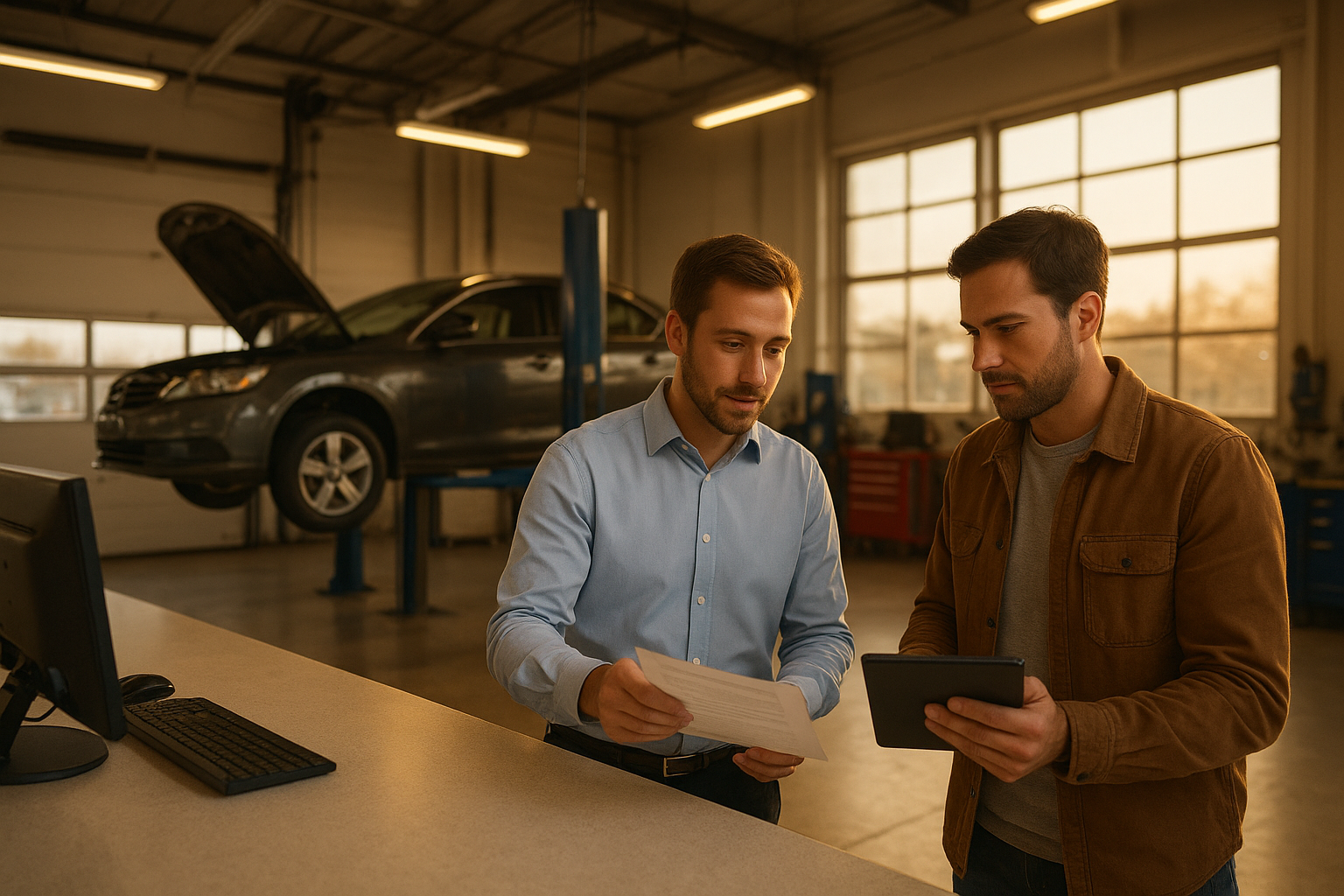
Finding the best body shop for insurance claims starts with clear communication and a transparent, documented repair plan.
If your search history right now reads “best body shop for insurance claims,” you’ve probably just experienced a collision and you’re already dreading what comes next. The truth is, the single biggest factor that determines whether your claim goes smoothly or becomes a months-long nightmare is the body shop you choose. The right facility advocates for you, handles insurer communications, documents every repair step, and returns your vehicle to safe, pre-loss condition. The wrong one leaves you guessing, delays your rental, and may send you home with unrepaired sensor systems that fail at the worst possible moment.
This guide covers every dimension of what makes a collision repair shop truly the best option for insurance claims — from certifications and estimating practices to ADAS calibrations, parts philosophy, cycle times, and the questions you must ask before signing anything. By the end, you’ll have a complete framework for evaluating any shop in any city.
What “Best” Actually Means When Filing an Insurance Claim
The best body shop for insurance claims is not simply the cheapest estimate, the fastest turnaround, or the shop your insurer sends you to automatically. It is the facility that consistently combines four things: insurance process expertise, proven repair quality, transparent communication, and documented accountability. Here’s what each of those pillars looks like in practice.
1. Insurance Fluency — Without Sacrificing Your Rights
Top shops understand the language of adjusters — supplements, labor operations, betterment disputes, total-loss thresholds, and parts pricing matrices. They know how to write airtight estimates that get approved faster and challenge shortfalls with documented OEM procedure evidence. Critically, they keep you at the center of every decision rather than steering you toward whatever makes the insurer’s life easiest.
2. Accurate, Data-Driven Estimates
A quality estimate is not built on visual inspection alone. It requires a pre-scan to identify active fault codes, a disassembly (teardown) phase before costs are finalized, and OEM procedure research for every impacted component. Shops that promise a single, low estimate with “no supplements guaranteed” are telling you they won’t fully inspect your vehicle — a red flag that should end the conversation immediately.
3. Advanced Technology and ADAS Calibrations
If your vehicle was built after 2015, it almost certainly has Advanced Driver Assistance Systems — forward collision warning, lane departure detection, adaptive cruise control, blind-spot monitoring, or backup cameras. Any of these systems can be disrupted by a collision, even a minor one. The best body shop for insurance claims performs both pre-repair and post-repair scans, handles or subcontracts calibrations through a certified specialist, and provides written documentation proving all systems pass before your keys are returned.
4. Clear Timelines and Proactive Status Updates
Cycle time — the number of days your vehicle is in the shop — directly affects your rental costs and your daily life. The best shops set realistic timelines up front, communicate milestone updates (parts arrival, insurer approval, paint-in, reassembly, QC), and proactively contact you rather than making you chase them. Ask any prospective shop: “How will you update me, and how often?” The answer tells you almost everything.
5. Documented Quality and a Meaningful Warranty
A lifetime workmanship warranty is the gold standard — but the word “lifetime” only means something if the shop documents its work thoroughly enough to honor a claim. Look for shops that provide photos of critical repair stages, written repair orders listing every procedure performed, scan reports, and calibration sheets. That paper trail is your protection if something goes wrong after delivery.
Industry Certifications: Why They Matter for Insurance Claims
One area where many drivers get shortchanged is certifications. When you’re filing an insurance claim, the shop’s credentials directly affect repair quality, parts eligibility, and whether your vehicle’s structural integrity is fully restored. Here’s what to look for:
- I-CAR Gold Class: The most widely recognized collision repair training standard in North America. I-CAR Gold Class shops maintain ongoing technician training across all repair disciplines. Non-Gold Class shops may have gaps in knowledge for newer vehicle platforms.
- OEM Certifications (Toyota, Honda, Ford, GM, Tesla, etc.): Manufacturers certify specific shops to repair their vehicles using approved procedures, tools, and genuine parts. An OEM-certified shop for your vehicle brand is often the single strongest signal of quality for insurance repair work.
- ASE-Certified Technicians: ASE certification indicates individual technicians have passed rigorous skills testing. For insurance claims involving structural or mechanical repairs, ASE-certified staff provide added assurance.
- State Licensing: Always confirm the shop holds a valid state license to perform collision repairs. In California and many other states, this is a legal requirement, not optional.
- BBB Accreditation and Local Reputation: While not a technical credential, accreditation and consistent positive reviews signal that a shop backs up its work over time — not just at initial delivery.
Ask every shop you’re considering: “What certifications do your technicians hold, and are you certified by the manufacturer of my vehicle?” A shop that can’t answer clearly may not have the credentials you need.
How the Insurance Claim Process Works at a Top Body Shop
When you partner with a high-performing repairer, the insurance claim moves through a predictable, transparent sequence that minimizes surprises and avoids the delays that inflate your rental bill and raise your stress levels.

An organized claim and repair workflow keeps your schedule — and your vehicle — on track.
-
Step 1: Intake and Claim Setup
You bring the vehicle in or arrange towing. The shop records your claim number, reviews your coverage summary, identifies the responsible insurer, and notes any liability questions. A skilled advisor will also explain your right to choose your own repair facility — regardless of insurer recommendations — in most U.S. states. -
Step 2: Pre-Scan and Initial Estimate
A digital pre-scan identifies all active and stored fault codes before any repairs begin. This is critical: it creates a baseline record that protects both you and the shop by proving which systems were damaged in the collision versus pre-existing. The advisor then captures photos and builds a preliminary estimate for insurer review. -
Step 3: Disassembly and Damage Documentation
After you authorize teardown, technicians remove all damaged panels and structural components to expose hidden damage. This is where most supplements originate — structural damage, bent subframes, damaged wiring, and compromised safety systems that are invisible in an exterior-only inspection. A quality shop photographs and documents everything before submitting a revised supplement to your insurer. -
Step 4: Parts Strategy and Procurement
The shop recommends OEM, aftermarket, or recycled parts based on your policy language, the vehicle’s age, safety criticality, part availability, and your preferences. The best body shop for insurance claims documents why each parts choice is appropriate — particularly for safety-critical components like airbag systems, seat belts, and structural panels. Expect the shop to communicate if parts delays will affect your timeline. -
Step 5: Structural, Mechanical, and Refinishing Repairs
Technicians follow OEM repair procedures — specific welding parameters, approved adhesives, seam sealing protocols, and corrosion protection treatments. Structural repairs are measured against factory tolerances using computerized measuring systems. Paint refinishing occurs in a climate-controlled spray booth to achieve factory-matching color, texture, and gloss. -
Step 6: ADAS Calibrations and Road Testing
Every affected sensor, camera, and radar system is calibrated — either in-house with manufacturer-approved equipment or by a certified mobile specialist. A post-repair road test confirms drivability, braking, and safety system performance. Written calibration documentation is attached to your repair file. -
Step 7: Post-Scan, Quality Control, and Delivery
A final post-repair scan confirms no remaining fault codes. Quality control inspections verify panel gaps, alignment, paint quality, and all electronics. You review the itemized invoice, confirm everything meets your expectations, sign off, and receive your warranty documentation and all scan reports.
DRP vs. Independent Shops: Which Delivers the Best Insurance Claim Results?
This is one of the most misunderstood decisions in collision repair. Here’s a clear breakdown of both options.

DRP and independent shops can both deliver excellent results — what matters most is process, documentation, and accountability.
Direct Repair Program (DRP) Shops
DRP shops are pre-vetted by insurance companies and participate in electronic billing and approval workflows. Advantages include faster estimate approvals, streamlined supplement processing, and guaranteed rental coverage coordination. However, DRP agreements sometimes include cost-control expectations that can create subtle pressure to use lower-cost parts or reduce labor hours. The best DRP shops resist that pressure and document every deviation from insurer guidelines when safety is involved.
Independent Body Shops
Independent shops outside DRP networks operate without insurer cost-control agreements. This can mean more aggressive OEM parts recommendations and less pressure to minimize repair scope. The trade-off is that supplement approvals may take longer, requiring more back-and-forth with adjusters. A strong independent shop offsets this by maintaining detailed documentation and insurer communication protocols that keep the process moving efficiently.
Your Right to Choose
In the vast majority of U.S. states, you have the legal right to choose your own body shop, regardless of what your insurer recommends or which DRP network they suggest. Your insurer cannot legally force you to use a specific facility. If an insurer representative implies otherwise, ask them to direct you to the specific policy language that mandates it — most cannot.
The bottom line: Whether DRP or independent, the best body shop for insurance claims is the one that proves its process with evidence — OEM procedure printouts, pre- and post-scan reports, calibration certificates, and a written warranty. A shop that’s willing to show its documentation is a shop that stands behind its work.
OEM vs. Aftermarket vs. Recycled Parts: What Your Insurance Claim Actually Pays For
Parts decisions are one of the most contentious areas of any insurance claim — and one where the best body shop for insurance claims will go to bat for you. Here’s what you need to understand.
OEM (Original Equipment Manufacturer) Parts
OEM parts are made by or for the vehicle manufacturer to the same specifications as the parts originally installed. For structural components, safety systems (airbags, crumple zones, seat belt pretensioners), and ADAS components, OEM parts are almost always the correct choice for a safe, complete repair. Many OEM-certified shops are contractually required to use genuine parts to maintain their certification.
Aftermarket Parts
Aftermarket parts are manufactured by third parties and are typically less expensive. Quality varies widely — some aftermarket parts meet or exceed OEM specifications, while others do not. For non-structural cosmetic components on older vehicles, quality aftermarket parts can be a reasonable, cost-effective choice. For safety-critical parts, insist on OEM and document your request in writing.
Recycled (Used OEM) Parts
Recycled parts are genuine OEM parts salvaged from other vehicles. They can be appropriate for certain repairs on older vehicles where new OEM parts are unavailable or cost-prohibitive. However, recycled parts should be carefully inspected and should never be used for safety-critical components where structural integrity cannot be verified.
How to Handle Parts Disputes with Your Insurer
If your insurer authorizes aftermarket parts for a safety-critical component, the best body shop for insurance claims will submit a documented objection citing the OEM repair procedure. In many states, insurers are required to use OEM parts for vehicles within a certain age or mileage threshold. Ask your shop to pull the applicable state regulation and include it in the supplement documentation.
ADAS Calibrations: The Hidden Step Most Shops Get Wrong
This is the area where collision repair has changed most dramatically in the last decade — and where choosing the wrong shop carries the highest risk. If you drive a vehicle with any driver assistance technology, this section is essential reading.
Why ADAS Systems Get Disrupted in Collisions
ADAS sensors are mounted throughout the vehicle — in bumpers, windshields, mirrors, door panels, and rooflines. Even a moderate-speed rear impact can shift a camera mount enough to throw off its field of view by several degrees, which is sufficient to cause a false positive or a missed warning at highway speed. A collision that appears cosmetic from the outside may have disrupted multiple safety systems internally.
What Proper ADAS Calibration Looks Like
Calibration is not simply clearing fault codes. Depending on the system, it may require:
- Static calibration: The vehicle is positioned precisely in a controlled environment with calibration targets placed at exact distances and heights per OEM specifications.
- Dynamic calibration: A technician drives the vehicle on specific road types at specific speeds while the system recalibrates itself using real-world data.
- Combined calibration: Some systems require both static and dynamic procedures in sequence.
The best body shop for insurance claims will provide written calibration reports showing the system tested, the procedure performed, the equipment used, and the pass/fail result — before your keys are returned. If a shop cannot produce this documentation, treat it as a serious red flag.
Questions to Ask About ADAS at Any Shop
- Do you perform pre-repair and post-repair scans on every vehicle?
- Do you perform ADAS calibrations in-house or through a third-party specialist?
- What calibration equipment do you use, and is it OEM-approved for my vehicle?
- Will you provide written documentation of every calibration performed?
- How are calibration costs handled with the insurance company?
Supplements: What They Are and Why the Best Shops Handle Them Better
A supplement is a revised estimate submitted to the insurer after the vehicle has been disassembled and additional damage has been identified. Supplements are normal — in fact, their absence on a complex collision claim is itself a warning sign that the shop isn’t looking hard enough. Here’s how the best shops handle them differently:
- Documentation-first approach: Before submitting, top shops photograph every newly identified damage item, pull the OEM repair procedure for each affected operation, and build the supplement around that evidence. This dramatically reduces adjuster pushback and approval delays.
- Proactive communication: You’re notified before the supplement is submitted, given a plain-language summary of what was found, and told how it affects your timeline and any potential out-of-pocket exposure.
- Tracking and follow-up: Every supplement is tracked with a submission date, insurer contact name, and expected approval window. If an approval stalls beyond that window, the shop follows up proactively rather than waiting for you to ask.
- Transparent dispute resolution: If an insurer denies or underpays a supplement line item, the best shop explains the dispute to you, escalates appropriately, and involves a field adjuster when necessary — rather than silently eating the cost or skipping the repair step.
Questions to Ask Before You Authorize Repairs
These targeted questions reveal whether a facility is truly acting as your advocate during the insurance claim process — or simply processing paperwork:

Digitally documented scans and calibrations are non-negotiable for a safe, complete modern repair.
- “Do you perform a pre-repair scan before writing your estimate?” If the answer is no, move on. Pre-scans are the foundation of an accurate diagnosis.
- “How do you handle supplements and insurer approvals?” You want a clear, documented process with timestamps — not vague assurances that “it usually works out.”
- “Do you perform ADAS calibrations, and will you provide documentation?” In-house or subcontracted is acceptable; uncalibrated is not.
- “What is your parts philosophy for safety-critical components?” A quality shop will have a clear, principled answer involving OEM procedures and documented deviations.
- “What’s your average cycle time for a repair like mine?” Specific, category-based answers (minor, moderate, major) indicate operational maturity. “It depends” without a range is a non-answer.
- “What does your warranty cover and for how long?” Lifetime workmanship warranty on all labor, with clear exclusions for manufacturer defects, is the standard to expect.
- “Can I see examples of your documentation — scan reports, calibration sheets, repair photos?” Any shop confident in its process will show you these without hesitation.
- “Are you certified by my vehicle’s manufacturer?” OEM certification is the strongest quality signal you can get for your specific vehicle.
Red Flags That Slow Claims, Inflate Costs, and Compromise Safety
Not all red flags are obvious. Here are the warning signs experienced drivers and claims professionals know to watch for:
- “We guarantee no supplements.” This is a promise to not fully inspect your vehicle. Supplements are the result of thorough disassembly — shops that avoid them are avoiding work, not saving you money.
- No pre-scan or post-scan offered. On any vehicle with electronic systems, skipping scans is a failure of basic due diligence that could leave you driving with a compromised safety system.
- Inability to discuss OEM procedures. If the estimator can’t tell you where they source repair procedures or why they’ve chosen a specific repair method, they may not be following any manufacturer guidance.
- Pressure to skip calibrations to “save time.” Calibration is never optional for vehicles with affected ADAS components. A shop making this suggestion is prioritizing throughput over your safety.
- Vague or verbal-only warranties. A warranty that isn’t written down and signed is a warranty that doesn’t exist. Demand documented terms before authorizing any work.
- No communication plan. If the shop can’t explain how they’ll update you or responds defensively to questions about their process, expect silence throughout the repair.
- Reluctance to provide documentation samples. Shops that won’t show you examples of their scan reports or calibration sheets before you commit may have nothing to show.
- Steering pressure from your insurer. If an insurance representative is unusually insistent that you use a specific shop, ask why and consult your state’s insurance commissioner regulations on consumer choice.
How to Compare Two Body Shops for Your Insurance Claim
When you’re evaluating two or more shops side by side, the lowest estimate is almost never the right metric. Use this comparison framework instead:
Score each shop on these criteria rather than comparing line-item estimates. A shop that scores well across all seven categories will deliver a better outcome — even if their initial estimate is slightly higher — because they’ll find all the damage, repair it correctly the first time, and communicate throughout.
Why Local Reputation Matters — and How to Verify It
Online reviews are a starting point, not a final answer. Here’s how to go deeper:
- Check photo galleries of completed repairs. Real repair photos — not stock images — show you the quality of panel fit, paint blend, and finish work you can expect.
- Ask local dealerships for referrals. Service departments at franchised dealerships routinely refer customers to collision shops after warranty or service claims. Their recommendation carries weight because their reputation is attached to the referral.
- Look for fleet accounts. Shops that service commercial fleets or local government vehicles are held to strict quality and documentation standards. Their fleet business is a signal of operational maturity.
- Read Google and Yelp reviews critically. Look at how the shop responds to negative reviews. A shop that acknowledges problems and describes how they resolved them is more trustworthy than one with 100% five-star ratings and no evidence of how they handle issues.
- Verify credentials directly. Check I-CAR’s website to verify Gold Class status. Check the manufacturer’s dealer locator to confirm OEM certification. Don’t rely solely on what’s displayed in the shop’s lobby.
If you’re looking for a collision center that takes insurance claim coordination seriously and documents every repair step, explore Brea Auto Body — a resource for drivers who want an insurance-claim-friendly repair experience grounded in OEM procedures, verified calibrations, and transparent communication. Compare their approach, ask the questions above, and verify their documentation standards before making your final decision.
Frequently Asked Questions: Best Body Shop for Insurance Claims
Can I choose my own body shop for an insurance claim?
Yes, in nearly all U.S. states you have the legal right to choose the best body shop for your insurance claim. Your insurer may recommend a Direct Repair Program (DRP) shop, but they cannot legally force you to use it in most jurisdictions. Ask for your policy’s specific language on repair shop selection, and check your state’s insurance commissioner website for consumer protection regulations.
What is a supplement in a collision repair insurance claim?
A supplement is a revised, higher estimate submitted to your insurer after the vehicle has been disassembled and additional damage has been discovered that wasn’t visible during the initial inspection. Supplements are normal and expected on moderate-to-severe collisions. A shop that claims they “never need supplements” is telling you they won’t look for hidden damage.
What ADAS calibrations are required after a collision?
The required calibrations depend on which components were damaged or removed during repair. Common triggers include any work involving the front or rear bumper, windshield replacement, wheel alignment, suspension repairs, or replacement of mirror assemblies. Your shop should consult OEM repair procedures for your specific vehicle to determine every required calibration.
Should I insist on OEM parts for my insurance claim repair?
For safety-critical components — structural panels, airbag systems, seat belt pretensioners, and ADAS components — yes, you should insist on OEM parts and document your request in writing. For cosmetic, non-structural components on older vehicles, quality aftermarket parts can be acceptable. Ask your shop to show you the OEM repair procedure for any part they’re proposing to replace with an aftermarket alternative.
How long does a collision repair insurance claim typically take?
Minor repairs (bumper, single panel) typically take 3–5 business days once parts are available. Moderate repairs (multiple panels, structural) average 7–14 business days. Severe structural repairs or vehicles awaiting backordered parts can extend 3–6 weeks or longer. The best body shop for insurance claims provides a specific estimate by repair category and updates you proactively when timelines change.
What warranty should a body shop offer on insurance claim repairs?
The industry standard for a quality collision repair shop is a lifetime warranty on all workmanship — meaning as long as you own the vehicle. This warranty should be documented in writing, signed by both parties, and specify exactly what is and isn’t covered. Parts warranties are separate and governed by manufacturer terms. Never accept a verbal warranty or an unusually short written one.
What is I-CAR Gold Class and why does it matter for insurance repairs?
I-CAR Gold Class is the collision repair industry’s most recognized ongoing training certification. It requires shops to maintain current training across all technical disciplines, including structural repair, refinishing, and electronics. For insurance claims, Gold Class status signals that technicians are up to date on the latest vehicle platforms and repair procedures — including the advanced materials and ADAS systems that require specialized knowledge.
Your Next Steps: Turn a Stressful Claim Into a Smooth Repair
Accidents are unavoidably stressful, but the repair process doesn’t have to be. The single most important decision you make in the next 24 hours is choosing a repair facility that treats your vehicle — and your safety — with the seriousness they deserve. Here’s your action plan:
- Document the scene thoroughly. Photos of all damage, the other vehicle, road conditions, and the surrounding environment create a record that supports your claim and helps the shop understand the collision mechanics.
- Get your claim number before choosing a shop. Contact your insurer to open the claim and get your claim number. You don’t need to commit to a shop yet — the number is what matters at this stage.
- Shortlist two or three reputable local shops. Use the certification, review, and reputation criteria in this guide. Include at least one OEM-certified option for your vehicle brand.
- Ask every shop the evaluation questions above. Judge their answers on specificity, transparency, and willingness to show documentation examples. The right shop will welcome the scrutiny.
- Compare shops on the seven-factor framework, not the estimate. Choose the facility that scores best on certifications, scanning, calibrations, supplements, parts philosophy, warranty, and communication.
- Confirm your rental coverage before dropping off. Coordinate rental timing with the shop’s expected disassembly window so you’re not paying out of pocket before your coverage kicks in.
If you’re ready to begin your research right now, start with Brea Auto Body’s customer-first collision repair team and compare their process, certifications, and documentation standards against every other shop on your list. The right decision today sets you up for a faster, safer, and far less stressful return to the road.

