Brea auto repair covers far more than a simple dent fix — it encompasses precision collision restoration, structural frame correction, paint matching, bumper work, and mechanical diagnostics that directly determine your vehicle’s safety and resale value. Brea, California, sits at the center of Orange County’s automotive service corridor, giving drivers access to some of the most capable certified repair facilities in the region. This guide breaks down everything you need to know to choose the right shop, understand the repair process, and protect your investment from the moment damage occurs. Last updated: 2026-07-07.
According to the IBISWorld Auto Body Repair Industry Report, the U.S. auto body repair market generates over $47 billion annually — a figure that underscores just how critical professional vehicle restoration is for everyday drivers. Whether your car has sustained damage from a rear-end collision, a parking lot scrape, hail, or years of UV exposure, the shop you choose and the process they follow will determine the final outcome.
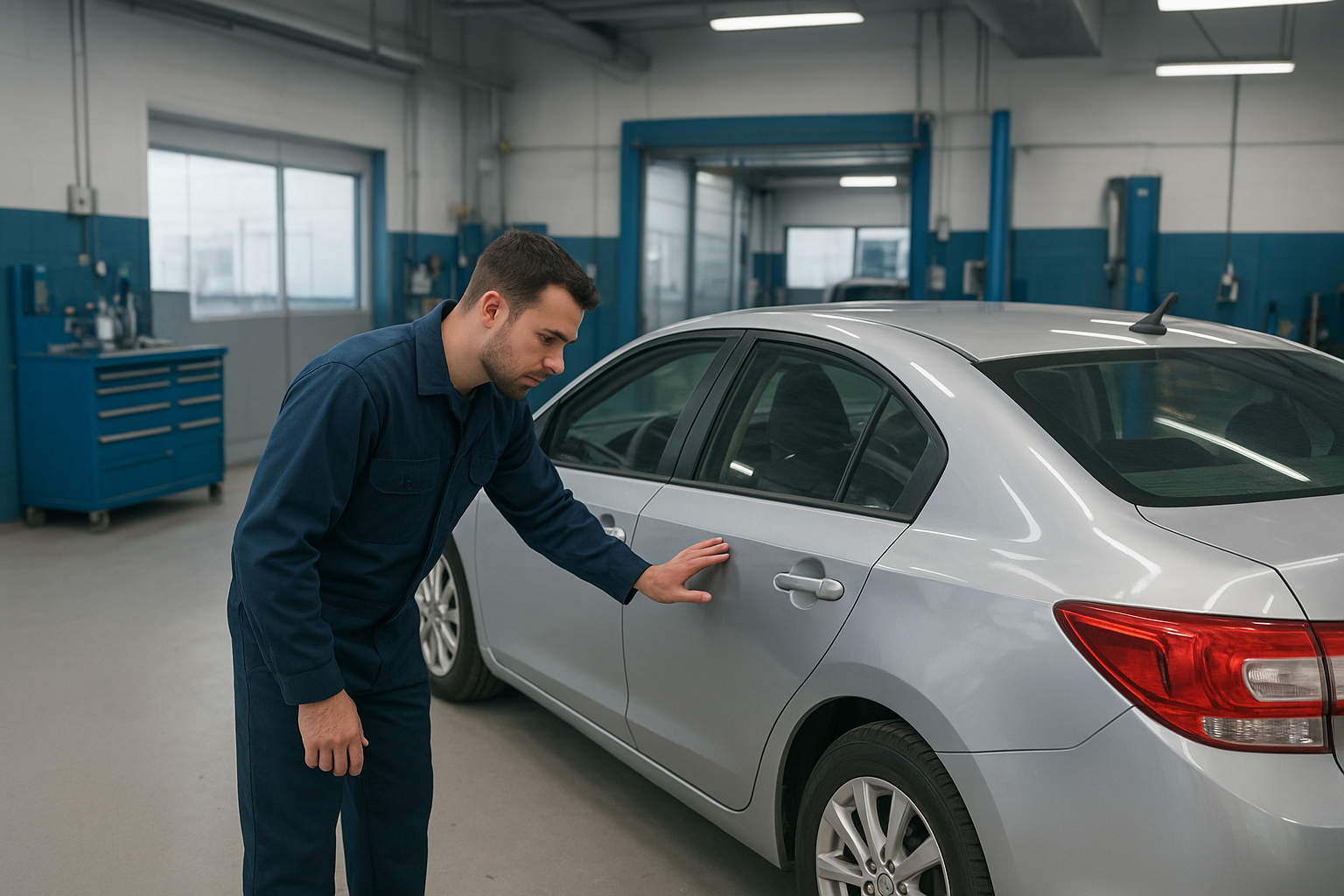
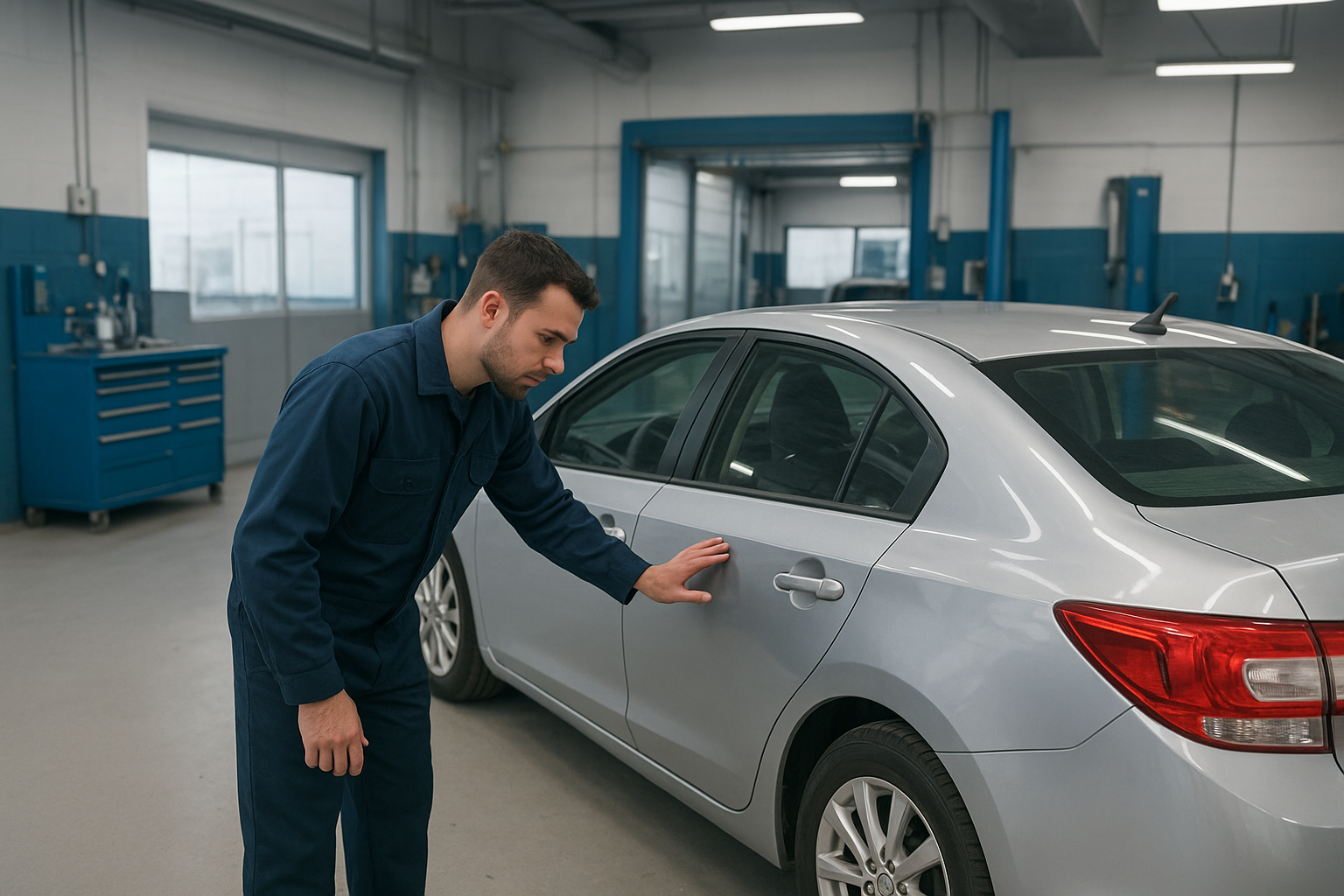
A certified technician carefully inspects vehicle damage as part of the Brea auto repair process at a local collision center.
What Is Brea Auto Repair and What Does It Actually Cover?
Brea auto repair is the umbrella term for all services that restore a vehicle’s body, structure, finish, and mechanical systems after damage. This includes — but is not limited to — collision repair, paintless dent removal (PDR), frame straightening, bumper restoration, panel replacement, paint color matching, rust treatment, and glass work. Quality auto body shops in Brea serve both cosmetic and structural needs for domestic and foreign-made vehicles.
What separates a thorough Brea auto repair shop from a basic one is the ability to identify hidden damage. A rear-end collision that looks like a simple bumper scuff can conceal frame misalignment, damaged crumple zones, or compromised sensor mounts — all of which affect vehicle safety. That’s why a professional diagnostic inspection is the mandatory first step in any legitimate repair process.
Brea auto body facilities serve a wide customer base: individual vehicle owners navigating insurance claims, fleet operators needing quick turnarounds, and car enthusiasts seeking cosmetic restoration. The auto body services available in Brea span the full spectrum of repair complexity — from a $150 bumper scuff to comprehensive structural collision restoration valued in the thousands.
Core Brea Auto Repair Services at a Glance
- Collision Repair: Full structural and cosmetic restoration following accidents of any severity.
- Frame Straightening: Computerized measurement and hydraulic correction of bent or twisted vehicle frames.
- Paintless Dent Removal (PDR): Tool-based panel massage for dents that haven’t broken the paint surface.
- Paint Matching & Refinishing: Computerized color formulation for a factory-seamless finish.
- Bumper Repair & Replacement: Scuff refinishing through full bumper assembly replacement.
- Hail Damage Restoration: PDR and conventional repair for hail-pattern denting.
- Rust Treatment & Prevention: Removal of oxidation and protective coatings to stop future corrosion.
- Glass Replacement: Windshield and window replacement using OEM-grade materials.
- ADAS Sensor Recalibration: Realignment of cameras, radar, and ultrasonic sensors post-collision.
- Fleet Vehicle Repair: High-volume, efficient turnaround for commercial and business fleets.
How to Choose the Right Brea Auto Repair Shop: A Step-by-Step Guide
Choosing a Brea auto repair shop is a decision that directly affects your safety and your vehicle’s long-term value. Following a structured approach eliminates guesswork and protects you from substandard repairs that can fail safety inspections — or worse, compromise your vehicle’s crashworthiness in a future accident.
-
01
Document all vehicle damage immediately. Right after any collision or incident, photograph every damaged area from multiple angles — including underneath the vehicle if accessible. This photographic record is essential for your insurance claim and gives technicians a baseline for their initial estimate. Note date, time, and location of the incident as well.
-
02
Verify shop certifications and technician credentials. Look for facilities holding I-CAR Gold Class certification — the industry’s highest training recognition — or shops staffed by ASE-certified technicians. Manufacturer certifications (OEM certifications from brands like Honda, Toyota, or BMW) indicate the shop follows brand-specific repair protocols using approved materials and methods.
-
03
Request detailed written estimates from two or three shops. A trustworthy Brea auto repair shop will provide an itemized written quote that separates parts costs, labor rates, and paint materials. Avoid shops that offer only verbal estimates or vague line-item totals. Compare the estimates not just on price, but on the specificity and completeness of what is included.
-
04
Confirm direct insurance billing capability. Verify that the shop has an established relationship with your insurance carrier and can bill directly. Shops with direct-repair program (DRP) agreements handle adjuster communications, supplemental damage negotiations, and final billing — removing significant administrative burden from you during an already stressful time.
-
05
Review the repair warranty in writing. Every reputable Brea auto repair shop will provide a written warranty covering both parts and labor. Ask specifically: what is the duration of the warranty, what does it cover, and what is the process for returning a vehicle if the repair is unsatisfactory? Lifetime warranties on paint and bodywork are the gold standard.
-
06
Check online reviews and ask for customer references. Look for shops with a consistent track record on Google, Yelp, and the Better Business Bureau. Pay particular attention to reviews that mention repair quality, communication, and whether completed work passed re-inspection. Recent reviews (within the last 12 months) are the most relevant indicator of current quality.
-
07
Inspect the facility before authorizing work. A professional Brea auto repair shop will have a clean, organized facility with visible modern equipment — frame alignment racks, downdraft spray booths, and digital paint-mixing stations. A cluttered or disorganized shop is often a reliable indicator of the quality of work produced inside it.
? Red Flag Warning: If a Brea auto repair shop declines to provide written estimates, pressures you to authorize work immediately, or cannot show documentation of their certifications — walk away. These are consistent warning signs of deceptive or low-quality repair practices.
The Collision Repair Process in Brea: What Happens Step by Step
Understanding the full collision repair process sets realistic expectations for timelines, helps you ask informed questions, and ensures you recognize if a shop is cutting corners. Here is what a thorough Brea auto repair process looks like from intake to delivery:
Stage 1: Damage Assessment and Teardown
The process begins with a collision repair in Brea inspection — not just of what’s visible, but of what the collision may have displaced or compressed beneath the surface. Technicians use computerized frame measurement systems to map the vehicle’s current geometry against factory specifications and identify any deviation. Hidden structural damage discovered during teardown is documented and added to the repair order before any work begins.
Stage 2: Frame and Structural Correction
If frame misalignment is detected, hydraulic pulling equipment — guided by live computerized measurement feedback — restores the frame to OEM tolerances. This stage is critical: a vehicle with an improperly corrected frame will have abnormal tire wear, steering pull, and critically reduced crash-protection capability. According to the National Highway Traffic Safety Administration (NHTSA), structural integrity following a collision is directly correlated with occupant protection in subsequent accidents.
Stage 3: Panel Repair or Replacement
Damaged panels are repaired using body filler and precision metal shaping, or replaced outright with OEM or OEM-equivalent parts. The choice between repair and replacement depends on the extent of deformation, the cost differential, and the structural role of the panel. Reputable Brea auto body shops always explain this choice and provide the option for OEM parts when requested.
Stage 4: Surface Preparation and Priming
Before any paint is applied, technicians sand, prime, and block the repaired surfaces to create a perfectly smooth base. Multiple primer coats may be applied and sanded between each coat. This stage is often where quality separates itself — shortcuts at the priming stage result in paint adhesion failures, bubbling, and peeling within months of the repair.
Stage 5: Paint Color Matching and Application
Advanced computerized paint-mixing systems read the vehicle’s factory color code and account for fading, creating a custom blend that matches the existing panels — not just on paper, but visually at multiple light angles. Paint is applied in a climate-controlled downdraft spray booth that eliminates dust contamination and ensures uniform coverage. Base coat, clear coat, and curing cycles follow manufacturer-specified timelines.
Stage 6: Reassembly, ADAS Recalibration, and Quality Inspection
Modern vehicles contain a dense array of Advanced Driver Assistance Systems (ADAS) — cameras, radar sensors, ultrasonic sensors, and lane-departure modules — many of which are mounted in bumpers, mirrors, and windshields. After any collision repair, these sensors must be recalibrated to factory specifications. A shop that skips this step delivers a vehicle that may have disabled or inaccurate safety systems. After reassembly and recalibration, a final quality inspection verifies fit, finish, alignment, and function before delivery.
For drivers in Orange County, the team at Brea’s collision repair center follows this complete process with certified precision, restoring vehicles to pre-accident condition and full safety compliance.
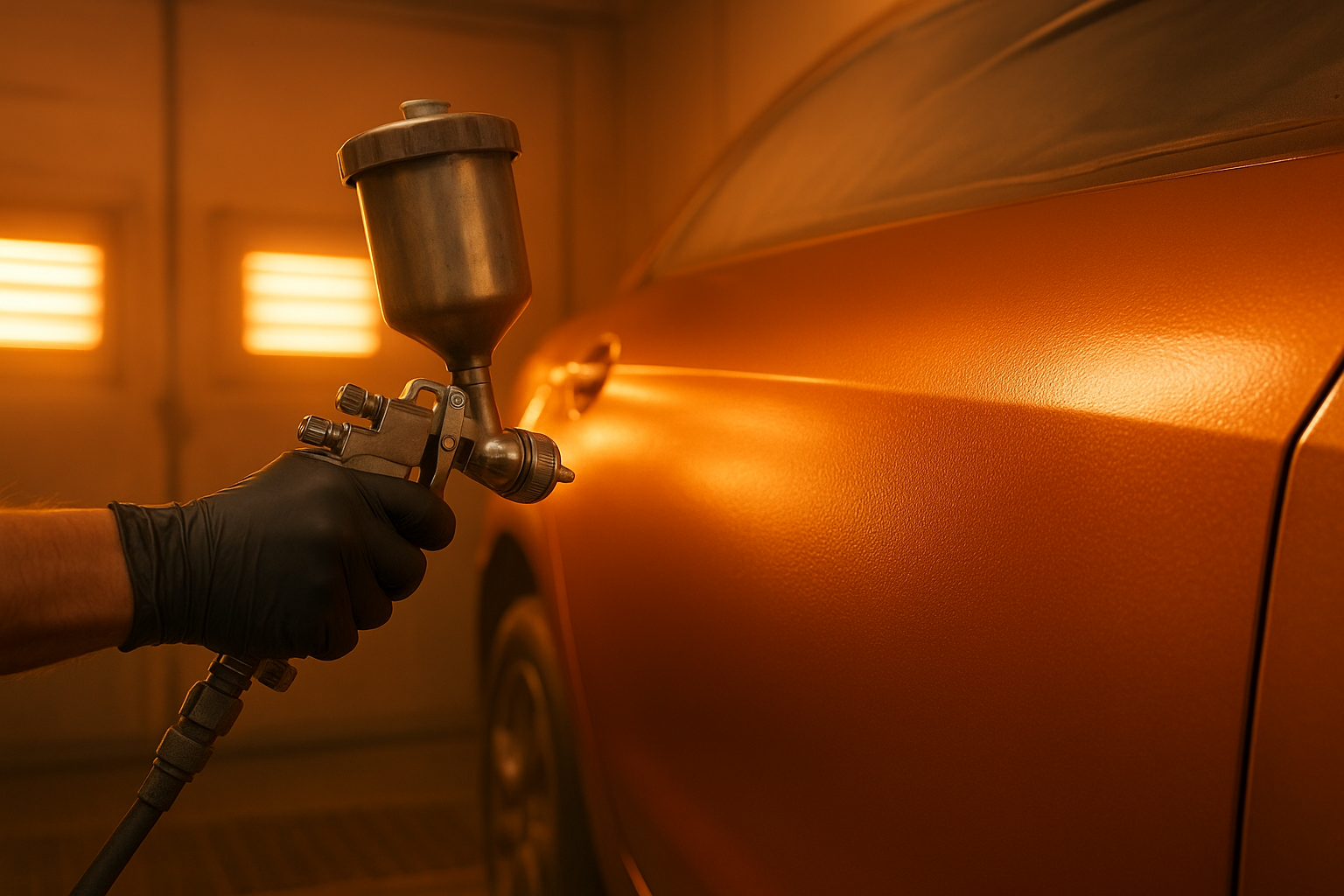
Precision computerized paint matching ensures the repaired area is visually indistinguishable from the original factory finish.
Paintless Dent Removal in Brea: Faster, Cheaper, and Just as Effective
Paintless dent removal (PDR) is one of the most valuable services in the Brea auto repair toolkit — and one of the most underutilized by drivers who assume any dent requires body filler and a repaint. PDR uses specially shaped metal rods and precision tools to massage dents from behind the panel, restoring the original contour without disturbing the factory paint surface.
PDR is the ideal solution when:
- The dent has not cracked, chipped, or creased the paint surface
- The damage is from hail, door dings, or minor parking lot impacts
- The dent is on a panel that allows tool access from behind
- You want to preserve the vehicle’s original paint (important for resale value and warranty coverage)
Compared to traditional bodywork, PDR typically costs 40–70% less and can be completed in hours rather than days. For hail-pattern damage involving dozens of small dents, PDR is frequently the only cost-effective repair method available. Many Brea auto body shops offer free PDR assessments to determine whether your dents qualify for the technique.
It’s worth noting that not every dent qualifies — sharp creases, tears in the metal, and paint damage require conventional repair methods. A skilled Brea auto repair technician will give you an honest assessment of which approach is appropriate for your specific damage.
Bumper Repair and Other Common Auto Body Services in Brea
Bumper damage is the single most common reason drivers seek auto body repair services — and for good reason. Modern plastic bumper assemblies are engineered to absorb low-speed impact energy, which means they take a beating in everyday parking lot situations. Understanding your bumper repair options helps you get the right fix at a fair price.
Bumper Repair Cost Guide for Brea, California
-
Minor scuffs and surface scratches — light refinishing only
$150–$350 -
Moderate cracks or partial damage — plastic welding and repaint
$350–$700 -
Severe damage with sensor integration — full replacement and recalibration
$800–$1,800+
Modern bumpers often house radar sensors for adaptive cruise control, parking sensors, and backup cameras. When these components are integrated into a damaged bumper assembly, replacement and recalibration costs increase accordingly. Always confirm whether your vehicle’s bumper contains sensor hardware before authorizing a repair quote — a shop that ignores this is setting you up for a failed safety system.
For a full breakdown of available options, explore the car bumper repair services offered locally, or visit the Brea Auto Body homepage for a comprehensive list of specialties.
Other Frequently Requested Brea Auto Body Services
- Side Mirror Replacement: Including power mirror, turn signal, and camera reassembly.
- Hood and Fender Repair: Panel reshaping, dent removal, and seamless repainting.
- Roof and Quarter Panel Restoration: Structural and cosmetic correction for T-bone and rollover damage.
- Windshield and Auto Glass Work: OEM-grade replacement with proper ADAS camera remounting.
- Rust Treatment and Underbody Coating: Surface rust removal, chemical treatment, and protective sealing.
- UV Paint Correction and Polish: Restoration of oxidized, faded, or peeling clear coat for California sun damage.
Navigating Insurance After a Collision in Brea: What California Drivers Must Know
Filing an insurance claim after a collision is one of the most stressful parts of the auto repair experience. However, knowing your rights and the process in advance can dramatically reduce that stress. Here is what every Orange County driver should understand before contacting their insurer:
You Have the Legal Right to Choose Your Own Shop
California law is unambiguous on this point: you are not required to use your insurer’s preferred or “direct repair” shop. The California Department of Insurance confirms that policyholders retain the right to select any licensed repair facility they trust. Insurers can recommend shops, but they cannot legally mandate them. Always choose your Brea auto repair facility based on certification, reputation, and quality — not insurer convenience.
How Direct Insurance Billing Works
Most reputable Brea auto repair shops maintain direct billing relationships with major insurance carriers. This means the shop communicates directly with your adjuster, submits all documentation, negotiates any supplemental damage discovered during teardown, and receives payment directly from the insurer. You are responsible only for your deductible. Shops without these relationships require you to manage all insurer communications yourself — a significant burden during what is already a disruptive time.
Supplemental Claims and Hidden Damage
Initial insurance estimates are often based on visible damage only — before teardown reveals what’s underneath. When technicians discover additional damage during disassembly, a supplemental claim is filed to cover the additional cost. A reputable Brea auto repair shop handles this supplemental process proactively, documenting the additional damage with photos and written reports that are submitted directly to your adjuster.
OEM vs. Aftermarket Parts in Insurance-Paid Repairs
Insurers often specify aftermarket parts to reduce claim costs. However, in California you have the right to request OEM (Original Equipment Manufacturer) parts, particularly on newer vehicles still under manufacturer warranty. Using OEM parts preserves your warranty coverage and ensures parts are manufactured to the exact tolerances your vehicle was designed around. Discuss this preference with your Brea auto repair shop before authorizing the work — they can advocate for OEM parts during the claims process.
For drivers who want reliable, transparent service, the trusted local auto repair service in Brea at Brea Auto Body offers direct insurance coordination alongside every repair, handling the paperwork so you can focus on getting back on the road.
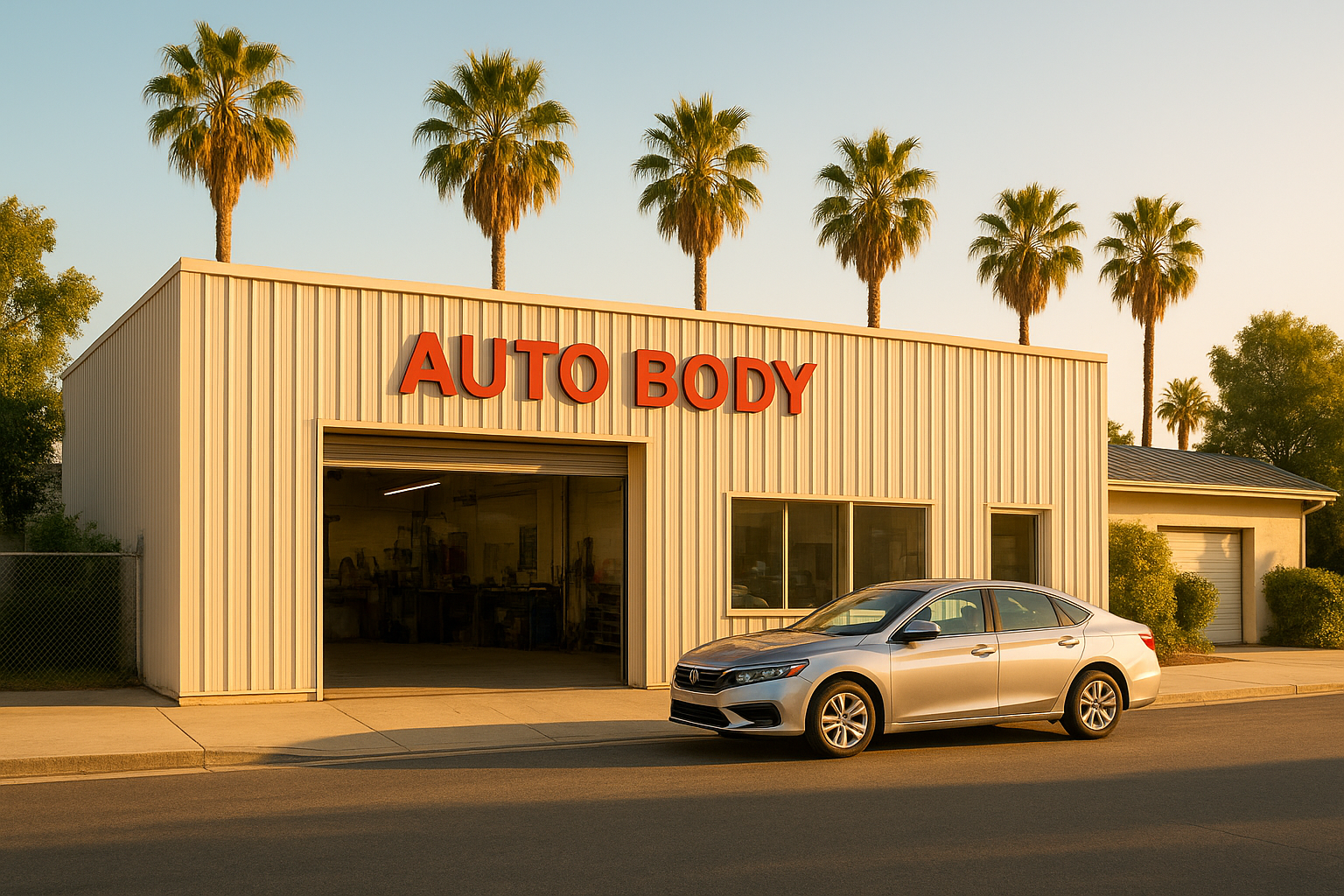
A professional Brea auto repair and collision center, ready to serve Orange County drivers with full-spectrum certified repair services.
Why Certification, Equipment, and Craftsmanship Define Quality in Brea Auto Repair
Not all auto body shops produce the same results. The difference between a cosmetically passable repair and a genuinely safe, durable restoration comes down to three factors: technician certification, shop equipment, and quality-control processes. Here’s how to evaluate each:
Technician Certifications That Matter
- I-CAR Gold Class: The collision industry’s highest training recognition. Requires technicians to complete ongoing education every year in current repair methods and materials — including structural repair, welding, non-structural repair, and electrical systems.
- ASE Certification: National Institute for Automotive Service Excellence credentials covering collision repair and refinishing. Technicians must pass rigorous exams and demonstrate two years of hands-on experience.
- OEM Manufacturer Certifications: Brand-specific training programs (e.g., Honda, Toyota, Ford, BMW) that certify shops to perform repairs using approved methods, tools, and parts — critical for maintaining manufacturer warranties.
Equipment That Separates Professional Shops from Backyard Operations
- Computerized Frame Measurement Systems: Real-time 3D measurement of frame geometry against OEM tolerances — mandatory for structural repairs.
- Digital Paint-Mixing Stations: Spectrophotometer-based color reading and formula mixing that accounts for fading, metamerism, and batch variation.
- Downdraft Spray Booths: Filtered, climate-controlled paint application environments that eliminate dust contamination and ensure even curing.
- ADAS Calibration Systems: Target-based and dynamic calibration equipment for resetting camera, radar, and ultrasonic safety systems after collision repair.
- MIG/MAG and Aluminum Welding Equipment: Manufacturer-approved welding systems for structural steel and aluminum repairs without contamination.
Beyond equipment and credentials, customer transparency is a defining characteristic of the best Brea auto repair shops. A trustworthy facility sends regular updates on repair status, flags any supplemental damage immediately, and never starts additional work without written authorization. This communication standard is what separates a shop that treats you like a partner from one that treats you like a transaction.
How Brea Auto Repair Affects Your Vehicle’s Resale Value
Many drivers focus exclusively on safety and appearance when thinking about auto body repair — but the quality of the repair work has a direct, measurable impact on your vehicle’s resale value. Here is what buyers and appraisers look for:
- Carfax and AutoCheck Accident History: Insurance claims leave a digital record. A vehicle with a disclosed collision that has been properly repaired retains far more value than one with a suspicious, undisclosed repair history.
- Paint Consistency: Experienced buyers and dealers use paint thickness gauges to detect areas where additional paint has been applied — a telltale sign of hasty or substandard bodywork.
- Panel Gap Alignment: Improperly repaired vehicles often show misaligned door gaps, uneven hood fitment, or trunk lid misalignment — visual cues that experienced buyers identify immediately.
- OEM Parts Documentation: Repair invoices that specify OEM parts and certified shop credentials provide buyers with verifiable confidence in the repair quality — which translates to stronger negotiating position at resale.
The bottom line: a well-documented, certified Brea auto repair at a reputable shop is an investment in your vehicle’s long-term value — not merely a cost to minimize.
Frequently Asked Questions About Brea Auto Repair
What does Brea auto repair typically include?
Brea auto repair typically includes collision repair, paintless dent removal, frame straightening, paint color matching, bumper repair and replacement, ADAS sensor recalibration, rust treatment, and glass replacement. Quality certified shops handle both cosmetic and structural damage for domestic and foreign vehicles of all makes and model years.
How long does collision repair take at a Brea auto body shop?
Repair timelines vary by damage severity. Minor bumper scuffs or paintless dent removal may be completed in a single day. Moderate collision repairs involving one or two panels typically take three to five business days. Major structural repairs involving frame correction, multiple panel replacements, and ADAS recalibration can take one to three weeks, particularly when specialty parts must be ordered.
Does Brea Auto Body work directly with insurance companies?
Yes. Reputable Brea auto repair shops, including Brea Auto Body, maintain direct billing relationships with major insurance carriers. They document damage, submit estimates, handle supplemental claims for hidden damage discovered during teardown, and communicate directly with adjusters — so you only pay your deductible.
How is paint matched during Brea auto repair?
Technicians use a spectrophotometer to read the vehicle’s existing paint color at multiple angles, then feed this data into a computerized mixing system that formulates a custom blend accounting for fading, sun exposure, and batch variation. The paint is applied in a climate-controlled downdraft spray booth and cured to factory specifications — ensuring the repaired panels are visually indistinguishable from the originals.
Is paintless dent removal available in Brea, and how do I know if my dent qualifies?
Yes, PDR is available at qualified Brea auto body shops. Your dent qualifies for PDR if the paint surface is intact (no cracks, chips, or creases), the damaged area has tool access from behind the panel, and the metal has not been stretched beyond recovery. A trained technician can assess your dent in minutes and tell you definitively whether PDR is viable or whether conventional repair is more appropriate.
What should I do immediately after a collision in Brea?
First, ensure everyone involved is safe and call 911 if there are injuries. Move vehicles to a safe location if possible, then exchange insurance information and take photos of all vehicle damage, the scene, and any visible injuries. File a police report if the collision was significant. Contact a certified Brea auto repair shop as soon as possible — early documentation helps prevent disputes over the cause and scope of damage.
Can Brea auto repair shops service both foreign and domestic vehicles?
Yes. Reputable Brea auto body facilities are equipped to service virtually all makes and models — including domestic brands (Ford, GM, Chrysler), Japanese imports (Honda, Toyota, Nissan), European brands (BMW, Mercedes-Benz, Audi, Volkswagen), and Korean makes (Hyundai, Kia). Shops holding OEM certifications for specific brands are trained in those manufacturers’ proprietary repair procedures and approved materials.
How much does bumper repair cost in Brea, California?
Bumper repair costs in Brea range from approximately $150 for light surface scuffs to $350–$700 for moderate cracks requiring plastic welding and repaint, and $800–$1,800 or more for full bumper assembly replacement on vehicles with integrated sensors. The final cost depends on the damage severity, your vehicle’s make and model, and whether embedded radar or parking sensors require recalibration.
What certifications should I look for in a Brea auto repair shop?
Prioritize shops with I-CAR Gold Class certification (the industry’s highest training recognition), ASE-certified collision and refinishing technicians, and any OEM manufacturer certifications relevant to your vehicle’s brand. These credentials are independently verified and require ongoing renewal — they are not self-awarded designations.
Do Brea auto body shops provide free estimates?
Most reputable Brea auto repair shops offer free written estimates before authorizing any work. A thorough estimate itemizes parts, labor, and paint costs separately and explains the repair methodology. Use multiple estimates not just to compare price, but to gauge the shop’s diagnostic thoroughness — a shop that identifies more potential issues isn’t necessarily more expensive, but may be doing more complete work.
Can weather damage be repaired at a Brea auto body shop?
Yes. Brea auto body shops regularly address hail dents (often via PDR), UV paint oxidation and clear coat failure, flood-related corrosion and interior damage, and tree/debris impact damage. California’s climate creates specific wear patterns — particularly UV degradation and hail damage — that local technicians are well-practiced in addressing efficiently.
What is the difference between auto body repair and mechanical repair?
Auto body repair addresses the structural and cosmetic elements of a vehicle — panels, frame, glass, paint, and exterior components. Mechanical repair covers functional systems: engine, transmission, brakes, steering, suspension, and electrical systems. After a significant collision, both types of repair may be necessary. Some full-service Brea auto repair shops offer both disciplines in-house; others specialize exclusively in body work and refer mechanical repairs to partner facilities.
What is ADAS recalibration and why does it matter after a collision?
ADAS (Advanced Driver Assistance Systems) recalibration is the process of resetting the cameras, radar sensors, and ultrasonic sensors that power features like automatic emergency braking, lane-keep assist, blind-spot monitoring, and adaptive cruise control. After any collision that moves, replaces, or aligns bumpers, windshields, or mirrors, these sensors may be physically displaced from their calibrated position. Driving a vehicle with miscalibrated ADAS systems is a serious safety risk — the safety features may fail to activate or activate incorrectly. Always confirm that your Brea auto repair shop performs ADAS recalibration as part of the post-repair process.
Does quality Brea auto repair affect my vehicle’s resale value?
Yes, significantly. A certified repair with documented OEM parts, completed by a credentialed shop, preserves far more resale value than a quick, undocumented patch job. Used car buyers and dealers use paint thickness gauges, panel gap inspection, and vehicle history reports to detect poor repairs. A well-executed Brea auto repair from a reputable, certified shop is verifiable and actually positions your vehicle competitively at resale.
Conclusion: Getting Your Vehicle Back in Top Shape with Brea Auto Repair
The quality of the Brea auto repair shop you choose has a direct, lasting impact on your vehicle’s safety, structural integrity, appearance, and resale value. Taking the time to verify certifications, request itemized written estimates, confirm insurance compatibility, and inspect the facility before authorizing work is always worth the effort — and it protects you from costly surprises after the job is done.
From paintless dent removal and bumper restoration to full structural collision repair and ADAS recalibration, Brea’s certified auto body professionals are equipped with the tools, training, and processes needed to restore your vehicle to its pre-accident condition with precision and accountability. Whether you’re dealing with a minor parking lot ding, significant hail damage, or a major collision requiring frame correction, the right team makes all the difference.
Working with a shop that prioritizes transparency — proactive status updates, written authorizations for supplemental work, and documented quality inspections before delivery — ensures you remain informed and confident throughout the entire process.
For Orange County drivers seeking expert, certified service they can trust, Brea Auto Body delivers the craftsmanship, credentials, and customer-first approach needed to get you safely — and confidently — back on the road. Explore their full range of services and take the first step toward a seamless, professional repair today.