

Collision Repair Near Me: The Complete Driver’s Guide to Safe, Certified, Factory-Correct Repairs
Everything you need to find, evaluate, and work with the best local auto body shop — so your vehicle comes back safer, smarter, and structurally sound.

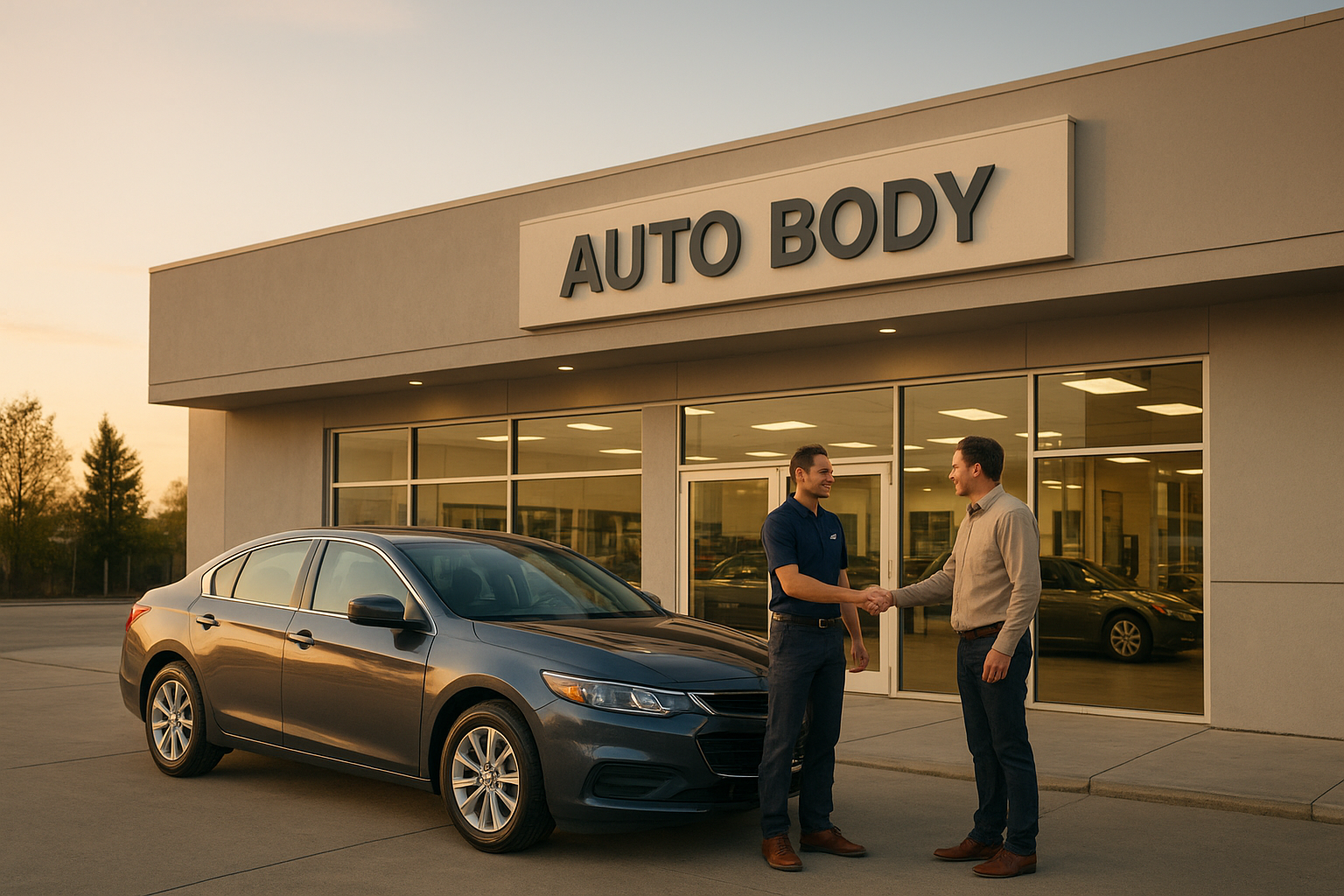
Finding reliable collision repair near me starts with a shop that looks professional and puts safety first — not just the one closest to you.
After a fender-bender or a serious crash, most drivers reach for their phone and search collision repair near me. It’s instinct — but the closest shop and the right shop are rarely the same thing. Today’s vehicles are engineering marvels built from ultra-high-strength steel, aluminum structures, multi-stage airbag systems, and dozens of sensors that keep you safe every mile. An improperly repaired vehicle can look flawless on the outside while hiding compromised crash energy paths, disabled Advanced Driver Assistance Systems (ADAS), and hidden corrosion that surfaces years later. This complete guide gives you every tool you need: how to evaluate any local body shop, what genuinely happens during each stage of the repair process, how to navigate insurance like a pro, what drives cost and timeline, red flags to watch for, and where to get expert help if you’re in or near Brea and North Orange County, California.
“Collision Repair Near Me” — Why Location Is the Last Factor That Should Drive Your Decision
A body shop three blocks away that cuts corners is far more dangerous than a certified shop twenty minutes across town. Modern vehicles are rolling computers. Repairing them incorrectly can create risks that are entirely invisible until the moment they matter most:
- Compromise crash energy management — improper sectioning or welding changes how the car absorbs and redirects impact force in a future collision, directly threatening the survival space of everyone inside.
- Disable safety systems silently — airbags, seatbelt pretensioners, radar modules, and camera arrays may appear functional but fail at the critical moment if not properly calibrated or replaced per OEM specification.
- Void manufacturer warranties — incorrect corrosion protection and seam sealer application can void factory rust warranties, costing thousands down the road.
- Destroy resale value — uneven panel gaps, mismatched paint, and imprecise structural pulls are immediately apparent to a professional appraiser or at lease return.
- Create hidden corrosion — skipped cavity wax, missing seam sealer, and improper primer systems allow moisture intrusion that causes structural rust within just a few years.
What proximity genuinely helps with — when it’s paired with quality
A great local shop does offer real convenience advantages — but only when quality is already confirmed:
- Drop-off and pickup logistics — easier coordination without long drives while you’re already managing post-accident stress.
- Mid-repair visits and approvals — you can stop by to review supplement findings in person, which builds trust and accelerates decisions.
- Rental and ride coordination — a nearby shop can often coordinate more efficiently with local rental agencies, reducing your out-of-pocket rental days.
- Long-term relationship — a trusted local shop becomes your go-to for future incidents, recall questions, and referrals, saving you from re-evaluating every time.
What Collision Repair Near Me Actually Covers: Every Type of Damage Explained
Not all collision damage is created equal, and the scope of required work varies dramatically between incidents. Before you call any shop, understand which category your vehicle’s damage falls into — so you know what questions to ask and what processes to expect.
Minor dents, dings, and hail damage
Small parking lot dents, door dings, and hail damage with no paint breakage may qualify for paintless dent repair (PDR). PDR preserves the factory finish entirely, is faster, and costs significantly less than traditional bodywork — but only when the metal hasn’t been stretched beyond repair limits and the paint remains fully intact. Not every shop offers quality PDR; ask to see examples of completed work on similar panel types before committing.
Cosmetic panel damage
Deeper dents, scratches through the clear coat, scuffs, and damage requiring body filler involve traditional metalwork, filler application, priming, color-matching refinishing, and blending into adjacent panels. The result should be genuinely invisible — no texture difference, no color variance under any lighting condition, no overspray on trim or glass.
Structural and frame damage
Any collision that moves a vehicle significantly — front, rear, or side impacts — may cause structural damage even when it’s invisible to the naked eye. Structural repair requires computerized three-dimensional measuring, frame pulls using manufacturer-specified attachment points, weld validation, full corrosion protection restoration, and post-repair alignment verification. This is the highest-stakes category of collision repair, and it demands a shop with the right equipment and the training to use it correctly.
Mechanical and suspension damage
Collisions frequently damage control arms, tie rods, struts, steering components, cooling systems, and AC lines that aren’t visible until teardown. A qualified collision shop handles these in-house or through a documented sublet arrangement — and always performs a certified four-wheel alignment after any suspension or structural work. Never accept a vehicle back without alignment documentation.
ADAS and electronics damage
Any impact to a bumper cover, windshield, mirror housing, or grille area likely involves sensors — forward-facing radar emitters, front cameras, side cameras, ultrasonic parking sensors, or lidar units. These require pre- and post-repair electronic scanning, replacement per OEM procedures, and formal static or dynamic calibration with printed documentation provided to you. A verbal assurance that sensors are “fine” is not acceptable.
Electric vehicle (EV) and hybrid-specific damage
EVs and hybrids add a critical layer of complexity: high-voltage battery systems, unique aluminum or mixed-material structures, and proprietary sensor ecosystems require shops with specialized EV training, proper HV safety protocols, and access to OEM repair procedures specific to the platform. If you drive an EV or hybrid, confirm EV-specific certifications before choosing any collision repair shop near you.
How to Evaluate Any Auto Body Shop Before You Hand Over the Keys
Star ratings are a starting point, not a finish line. Use this professional framework to grade any local collision repair shop’s readiness for your specific vehicle and damage type.

Key evaluation points when choosing collision repair near me: equipment, certifications, process, and documented proof of quality.
1. OEM certifications and manufacturer approvals
Manufacturers including Ford, Honda, Toyota, Nissan, BMW, Mercedes-Benz, Tesla, Hyundai, and Stellantis brands certify shops that meet their specific training, tooling, and repair procedure requirements. Certified shops gain direct access to OEM repair procedures, genuine parts programs, and manufacturer technical support lines. Ask which brands a shop is certified for — then verify it directly on that manufacturer’s certified collision repair locator, not just on a wall plaque that may be outdated.
2. Documented OEM repair procedures pulled per VIN
A professional shop doesn’t rely on technician memory or general industry experience. They pull the vehicle manufacturer’s published repair procedure for your exact VIN — specifying one-time-use fasteners, structural sectioning limits, weld types and parameters, required corrosion protection steps, adhesives, and torque specifications. Ask the estimator to show you the procedure during your consultation. If they can’t produce it immediately, walk away.
3. Structural measuring equipment and weld competence
Ask about their computerized three-dimensional measuring system — it should reference manufacturer-specified datum points and produce printed measurement reports. Ask how they validate weld quality: professional shops perform test weld coupons on the specific base metal being welded, since the heat-affected zone behavior on aluminum is entirely different from high-strength or mild steel. If the shop can’t describe weld validation procedures, they are not equipped for structural repairs on any modern vehicle.
4. Downdraft paint booth and spectrophotometer color matching
A temperature-controlled downdraft spray booth with bake cycle capability is non-negotiable. Ask how they match color — a professional shop uses a spectrophotometer to read the vehicle’s actual paint code variant directly from the panel, not just the code printed on the door jamb sticker. Many factory paint colors have dozens of production variants that shift over time; reading from the panel is the only way to achieve an invisible blend.
5. In-house or verified ADAS calibration capability
The shop must either perform ADAS calibrations in-house with OEM or OEM-equivalent scan tools and target systems, or maintain a documented sublet relationship with a calibration specialist. You must receive printed calibration reports as part of your final paperwork — this is proof, not a courtesy. Any shop that offers only verbal confirmation of calibration should be disqualified immediately.
6. Pre- and post-repair electronic scanning with reports
Every modern vehicle should receive a pre-repair electronic scan to capture all existing fault codes before any work begins, and a post-repair scan to confirm no new codes were introduced during the repair. These timestamped reports should be included in your final documentation — they protect you from liability disputes and confirm that no hidden damage was overlooked.
7. Transparent, fully itemized written estimates
Your estimate should list every labor operation individually, identify each part as OEM, aftermarket, or recycled, include all sublet operations with provider names, and explicitly list calibrations required. Any damage discovered during teardown generates a written supplement you review and approve before work continues — never a surprise on pickup day.
8. I-CAR Gold Class or equivalent technician training
I-CAR Gold Class certification indicates that a shop’s technicians maintain current training across all repair disciplines — including new materials, structural procedures, and emerging vehicle technologies. It’s one of the most meaningful shop-wide quality indicators available. Ask whether individual technicians hold I-CAR certifications or Platinum individual designations for their specific role.
If you’re in North Orange County, a strong reference point for what professional shop communication and process transparency looks like is Brea Auto Body. Use it to benchmark estimating transparency and process standards as you compare local options.
10 Red Flags That Mean You Should Leave a Collision Repair Shop Immediately
Most drivers don’t know what a bad shop looks like until it’s too late. These warning signs should end any consideration of a shop instantly:
- They can’t show you OEM repair procedures for your VIN when asked. There is no acceptable reason for this gap.
- They don’t mention pre- or post-repair scanning unless you bring it up — and even then are vague about what tool they use and whether you get reports.
- Calibrations are not line items on the estimate when sensors or cameras are involved. “We’ll take care of it” is not a documented process.
- They pressure you to use only their preferred insurance relationship and get evasive if you want to involve your own adjuster or an independent estimator.
- The estimate is significantly cheaper than others without explaining why — cheaper almost always means missing operations, cheaper parts, or skipped steps.
- They refuse or can’t describe their weld validation process for the specific metal in your vehicle.
- Their warranty isn’t offered in writing before you authorize work — oral warranties are effectively unenforceable.
- The shop floor is visibly disorganized or dirty — a shop’s physical environment directly reflects its work culture and attention to detail.
- They suggest skipping alignment after structural or suspension work — this is never acceptable regardless of how “minor” the damage appears.
- Google, Yelp, and BBB reviews show a pattern of defensive or dismissive responses to complaints — management culture under pressure tells you everything about how they’ll handle your vehicle.
The Full Collision Repair Process, Step by Step
Understanding what actually happens inside a collision repair shop empowers you to ask the right questions, set accurate expectations, and recognize when a shop is cutting corners that affect your safety.

Understanding the end-to-end process helps you compare shops offering collision repair near me — and spot the ones that skip critical steps.
-
Intake, pre-repair electronic scan, and full documentation
The vehicle is photographed from every angle, an electronic diagnostic scan captures all existing fault codes, and visible damage is formally documented. This timestamped baseline protects everyone if a dispute ever arises about pre-existing conditions or damage caused during the repair.
-
Complete teardown, blueprint, and VIN-specific OEM procedure pull
The damaged area is fully disassembled to expose all hidden damage — damage that is frequently invisible until components are removed. Technicians pull OEM repair procedures for every affected component and create the true repair blueprint. This replaces the initial visual estimate with an accurate, complete scope of work before any repair begins.
-
Insurer approvals and professional supplement management
The blueprint goes to your insurer. Every new finding discovered during teardown becomes a documented supplement — additional line items requiring insurer approval before any related work proceeds. A professional shop manages this insurer communication on your behalf and explains every line item clearly in plain language.
-
Parts procurement with proactive communication
Parts are ordered the moment approvals are received. Proactive shops immediately flag back-ordered components, provide expected arrival windows, and update you so you can plan your rental car needs accordingly. Never let a shop start structural work before all required parts are either on-site or confirmed in transit.
-
Structural and mechanical operations
Frame or unibody straightening is performed using computerized measuring with manufacturer-specified attachment points — never improvised points. Suspension, cooling system, and mechanical components are addressed. Corrosion protection — cavity wax, seam sealer in all specified locations, primer — is reapplied per OEM procedure exactly, not approximated by memory.
-
Panel replacement, metalwork, and gap fitting
New panels are installed, fitted, and aligned to OEM gap specifications before a single drop of paint is applied. Rushing this stage is where shoddy shops save time — and where misaligned gaps, wind noise, and water leaks emerge months later.
-
Professional refinishing and color blending
Surfaces are prepared with the correct primer system for each substrate. Color is matched using a spectrophotometer reading from the actual panel — not just the door jamb code. Panels are sprayed in a downdraft booth with a controlled bake cycle, and adjacent panels are blended to create a seamless, invisible transition in all lighting conditions.
-
Full reassembly and ADAS calibration
All trim, moldings, lights, sensors, and mechanical components are reinstalled. Cameras, radar modules, lidar, and ultrasonic sensors are calibrated to OEM specification — static calibration performed in a controlled space with manufacturer targets, dynamic calibration performed on a controlled road test, or both as required by OEM procedure. Printed calibration results are documented for your file.
-
Post-repair electronic scan, alignment verification, road test, and quality control
A final electronic scan confirms zero new fault codes. A road test validates alignment behavior, brake function, wind noise, water tightness, and sensor responsiveness. A formal QC checklist covers every panel gap, color match in both direct sunlight and shade, glass operation, interior reattachment, and all dashboard indicators.
-
Delivery walkthrough and complete documentation package
At pickup, you receive your final itemized invoice, pre- and post-repair scan reports, calibration certificates, alignment printout, and warranty documentation. These records belong permanently in your vehicle’s service history — they are proof of safety restoration and protect resale value.
Insurance and Collision Repair: Your Rights, the Parts Debate, and How to Avoid Every Surprise
Insurance pays the bill, but you control the shop. This is one of the most misunderstood aspects of the collision repair experience, and understanding it thoroughly can save you thousands of dollars and significant frustration.
You always have the right to choose your own shop
No insurance company can legally require you to use a preferred or Direct Repair Program (DRP) shop. DRP shops may offer faster initial approvals, but their primary business relationship is with the insurer — not with you. You have the right to select any licensed, independent collision repair shop that follows OEM procedures, and a quality shop will manage all insurer communication, supplements, and approvals entirely on your behalf.
The parts debate: OEM vs. aftermarket vs. recycled — what each one means for you
Insurers routinely specify non-OEM parts to reduce claim costs. Here’s what you need to know about each option:
- OEM (Original Equipment Manufacturer) — manufactured to the same specification as the original component. Best dimensional fit, correct corrosion coatings, fully compatible with all sensor mounting and calibration requirements. Always required for bumper reinforcement beams, radar mounting brackets, structural components, airbag-related parts, and any component where calibration geometry matters.
- Aftermarket — independently manufactured. Quality varies enormously. CAPA-certified or NSF-certified aftermarket parts provide baseline dimensional assurance, but may still require extra fitting time, may lack proper factory corrosion coatings, and can create sensor mounting geometry issues that affect calibration accuracy.
- Recycled (used OEM) — pulled from salvage vehicles. Can be excellent for certain body panels on older vehicles where fit and finish are the only concerns. Electronics, airbag-related components, seat belt pretensioners, and any active safety sensor should never be sourced from recycled parts — there is no way to verify their functional integrity or deployment history.
Ask your shop how each part type choice in your estimate affects crashworthiness ratings, corrosion warranty validity, and ADAS calibration compatibility. For any structural or sensor-related component, push for OEM — it is not an unreasonable request.
Understanding deductibles, betterment, and out-of-pocket costs
Your deductible is your defined out-of-pocket contribution — typically $500–$1,500 depending on your policy. If the at-fault driver’s insurer is paying, you typically owe no deductible. Watch for “betterment” charges — adjusters sometimes reduce claim payments for worn items like tires or batteries that are being replaced with new ones. This is legal in most states but worth negotiating; your shop can often advocate on your behalf.
Total loss thresholds and diminished value claims
If estimated repair costs exceed approximately 70–80% of the vehicle’s actual cash value (ACV), the insurer may declare a total loss rather than authorize repairs. If the at-fault driver is responsible for the accident, you may also be entitled to a diminished value claim — compensation for the reduction in your vehicle’s market value after the accident appears on its history report, even after a perfect repair. Consult a licensed public adjuster or attorney to evaluate whether this applies to your situation; many drivers leave substantial money on the table by never asking.
Rental car coordination done right
Most collision and comprehensive policies include rental reimbursement — typically $30–$50 per day up to a fixed total. If the at-fault driver’s insurance is covering the claim, their liability coverage should provide a rental vehicle for the full duration of authorized repairs. Confirm rental authorization before your vehicle enters the shop — gaps in rental authorization are one of the most common and avoidable sources of out-of-pocket expense.
Industry standards and regulatory resources
For ADAS safety standards, recall information, and vehicle safety ratings, refer to the National Highway Traffic Safety Administration (NHTSA). For collision repair technician training standards, certification programs, and shop quality benchmarks, visit I-CAR, the industry’s leading collision repair training organization. For part quality certification standards for aftermarket components, reference CAPA (Certified Automotive Parts Association).
What Drives Cost and Timeline for Collision Repair Near Me
Two vehicles with nearly identical visible damage can have dramatically different repair costs and completion timelines. Understanding every variable empowers you to budget realistically and spot shops that are cutting corners to deliver an artificially low price.
Structural vs. cosmetic damage
Structural repairs require computerized measuring, frame pulling equipment, weld validation, corrosion restoration, and multiple QC checkpoints — each adding significant labor hours. Cosmetic repairs move faster but still demand professional surface preparation, precise color matching, controlled spray environment, and full cure time. Never accept “it’s just cosmetic” as justification for skipping any documented step.
Vehicle make, material complexity, and model year
A luxury European vehicle or an EV with an aluminum-intensive structure costs significantly more to repair than a conventional steel-bodied domestic sedan. Aluminum requires dedicated welding equipment, separate rivet-bonding tools, different filler products, segregated work areas to prevent metal contamination, and more highly trained technicians. EVs add high-voltage system inspection and battery safety protocols above and beyond everything else.
Parts availability and supply chain delays
Back-ordered sensors, radar brackets, trim pieces, and body panels — especially for newer or lower-production models — can delay reassembly by days or weeks regardless of how efficiently the shop operates. A proactive shop orders all parts the moment insurer approval is received and flags any constrained component immediately so you can extend your rental authorization and adjust your schedule. Always ask about parts status before you authorize work.
Number and type of ADAS calibrations required
A vehicle with front radar, forward camera, 360-degree surround-view cameras, and blind-spot monitors may require four or five separate calibration procedures after a front-end collision. Some calibrations are static — performed in a controlled indoor space with OEM target systems — and some are dynamic — requiring a calibrated road drive under specific conditions. Each adds professional time and cost. Skipping even one is never acceptable.
Hidden damage revealed during teardown
Damage invisible until the bumper cover is removed — bent reinforcement beams, destroyed foam energy absorbers, cracked sensor brackets, pushed-in radiator support — generates supplements that extend both cost and timeline. A professional shop minimizes surprises through thorough teardown and complete blueprinting before submitting the initial scope to the insurer. Shops that rush the blueprint stage virtually guarantee supplement surprises and delivery delays.
Quality assurance processes
A thorough QC process — post-repair scan, water leak test, wind noise evaluation, panel gap measurement with a gauge, alignment printout review, and full ADAS functionality confirmation — adds meaningful time to the final stage. Shops that skip this save a day and generate callbacks. Shops that execute it completely never hear from you about repair quality again.
Minor dent / PDR: $75–$350 per dent | Cosmetic panel repair: $300–$1,500 per panel | Bumper replacement with sensors and calibration: $800–$2,800+ | Moderate structural repair: $2,500–$6,000 | Major structural repair with full ADAS recalibration: $6,000–$15,000+ | Total loss threshold: typically 70–80% of ACV
How to Read Estimates and Reviews Like a Professional
Most drivers compare collision repair estimates by looking at the bottom-line number. That approach is exactly backwards. Here’s how to evaluate both estimates and reviews the way an industry professional would:
Comparing written estimates line by line
- Never compare totals — compare line items. A cheaper estimate almost always omits required operations: pre/post scans, seam sealer, corrosion protection, ADAS calibration, or blend operations on adjacent panels. Find what’s missing, not just what’s cheaper.
- Verify parts designation for every component. Is each part explicitly identified as OEM, CAPA-certified aftermarket, uncertified aftermarket, or recycled? Know exactly what you’re getting for every line and ask for the shop’s recommendation with reasoning.
- Confirm calibrations are explicitly listed. If a bumper, windshield, or mirror housing is being replaced and there is no calibration line item, that is a red flag — not a savings. Sensors don’t self-calibrate.
- Understand the labor rate and what it reflects. Higher labor rates frequently reflect certified technicians, specialized equipment investments, and proper training programs. A significantly lower labor rate often signals undertrained technicians working on vehicles beyond their verified competency.
- Verify corrosion protection steps are listed. Cavity wax, seam sealer, and anti-corrosion primer applications should appear as explicit line items on any estimate involving structural work or panel replacement.
Reading customer reviews with professional skepticism
- Look for reviews that cite specific outcomes: clear communication throughout the repair, documented calibration reports provided, accurate timeline estimates, and a thorough joint delivery inspection. Vague five-star reviews that say “great job!” provide no useful signal.
- Study how the shop responds to negative reviews. A defensive, dismissive, or blame-shifting response to a customer complaint reveals management culture more accurately than any marketing material.
- Look for repeat customers — someone who brings their second or third vehicle to the same shop, or specifically refers family members, is the most credible endorsement available.
- Cross-reference across Google, Yelp, and the Better Business Bureau. Clusters of generic five-star reviews concentrated on only one platform with similar language patterns frequently indicate paid or incentivized reviews.
Smart Questions to Ask Before Authorizing Collision Repair
These questions confirm a shop’s competence without being adversarial. A great shop welcomes every one of them — they’re an opportunity to demonstrate expertise. A problematic shop gets defensive, vague, or evasive.
“Can you show me the OEM repair procedures you’ll follow for my specific VIN?”
A capable estimator pulls this documentation immediately and explains why each procedure step matters for your vehicle’s specific materials and construction. Hesitation, vague answers, or “we follow standard industry practices” are disqualifying responses.
“What specific calibrations and post-repair scans will you perform, and will I receive printed reports?”
Expect specific calibration types named by system (forward radar, lane-keep camera, etc.) and a firm commitment that reports are included with your final invoice package — not available only “if you ask for them” after the fact.
“How do you validate weld quality and restore corrosion protection for this specific metal?”
Listen for test weld coupons, specific cavity wax product names, seam sealer application procedures, primer system specifications, and anti-corrosion coating steps applied per OEM procedure. “We always do it right” is not an answer.
“What is each part on this estimate — OEM, aftermarket, or recycled — and what’s your recommendation for each?”
A transparent shop explains the rationale for every parts designation and proactively tells you if the insurer has specified something they would recommend upgrading for safety or calibration compatibility reasons. That’s advocacy — and it’s what you deserve.
“What could delay parts or approvals, and how will you communicate timeline updates?”
Clear expectations reduce surprises and help you plan rental car coverage. A shop with a structured communication protocol answers this immediately with specifics: text updates, a designated advisor, and a defined check-in frequency.
“What does your warranty cover, for how long, and can I see it in writing before I sign?”
Reputable shops offer a written lifetime warranty on workmanship for as long as you own the vehicle, and a defined warranty on paint adhesion and finish quality. Get it in writing — not as a handshake commitment — before you authorize any repair.
“Do you have specific training or certifications for my vehicle make — and can I see them?”
This is especially important for European, EV, or aluminum-intensive vehicles. OEM certifications are verifiable on manufacturer websites. I-CAR Gold Class status is verifiable at i-car.com. Ask to see both and confirm they’re current — certifications expire and must be renewed.
Local Spotlight: Collision Repair Near Me in and Around Brea, CA
If you live or commute through North Orange County — including Brea, Fullerton, Placentia, Yorba Linda, La Habra, Anaheim Hills, or Diamond Bar — you have access to multiple body shops. Applying the full evaluation framework in this guide is essential, because quality and process rigor varies significantly between facilities even within the same zip code.

ADAS calibration is a non-negotiable safety step — always confirm your local collision repair shop includes it in writing with printed documentation provided at delivery.
When evaluating local options, use Brea Auto Body as your regional benchmark for process transparency, OEM procedure adherence, and professional communication standards. Whether you’re managing a minor parking lot dent or a major structural repair from a highway collision, the principles in this guide apply equally to every shop conversation.
Ready to take the next step? Request a repair consultation or detailed written estimate from a reputable local provider. Start here if you’re in the area: Book collision repair near me in Brea, CA ?
After Delivery: How to Verify Quality at Vehicle Pickup
Your job isn’t finished when you hand over payment. A thorough delivery inspection protects your investment and confirms the shop’s work before you drive away. Here’s how to do it comprehensively:
- Conduct a joint walkthrough with the advisor in both direct sunlight and shade. Shade reveals texture differences and orange peel variation; direct sunlight reveals color mismatch and metallic flake alignment issues. Insist on both lighting conditions before you sign.
- Check every panel gap and seam with your fingertip. Run your finger along every gap adjacent to the repair area. Gaps should feel uniform and match the corresponding undamaged side of the vehicle within 1–2mm.
- Operate every window, door, liftgate, mirror, and sensor-adjacent surface. Test everything that was repaired or adjacent to damage — power windows, door seals, trunk releases, camera covers, mirror adjusters, and any surface a sensor sits behind.
- Confirm the instrument cluster is entirely clear. Zero warning lights, zero ADAS indicators, zero system faults. Any illuminated indicator means the vehicle is not ready for delivery — do not accept it until every light is resolved and explained in writing.
- Request all scan reports, calibration certificates, and alignment printouts. These are permanent records of your vehicle’s safety restoration. If the shop can’t produce them at delivery, the work wasn’t documented — which means it may not have been done correctly.
- Receive the written warranty document before you sign. Confirm coverage scope, exclusions, duration, and the process for scheduling a recheck within the first 30 days.
- Drive one block before finalizing paperwork. Confirm no wind noise, no rattles, no unusual vibration, and no pulling in either direction before you leave the property. Issues are dramatically easier to resolve while the shop still has your payment than after.
If you notice wind noise, a rattle, a sensor warning, or a color concern in the first week, contact the shop immediately and schedule a recheck. Quality shops welcome this feedback — it’s an opportunity to stand definitively behind their work.
Frequently Asked Questions About Collision Repair Near Me
How do I find the best collision repair near me?
Start with Google reviews filtered for specifics — clear communication, documented calibrations, accurate timelines, and thorough delivery walkthroughs. Then call shortlisted shops and ask whether they pull VIN-specific OEM repair procedures, perform pre- and post-repair electronic scans, and provide printed calibration reports with every file. Verify any stated manufacturer certifications directly on the automaker’s website. The best collision repair shop near you follows OEM procedures completely, documents every process step, communicates proactively, and provides you with a complete documentation package at delivery.
Can my insurance company force me to use a specific body shop?
No. You always have the legal right to choose any licensed collision repair facility. Insurers may recommend Direct Repair Program (DRP) shops, but they cannot require you to use them in any U.S. state. If a shop you trust isn’t on the DRP list, they can still work directly with your insurer to manage all approvals and supplements on your behalf. Your insurer’s obligation is to restore your vehicle to its pre-loss condition — how they get there is partly your choice.
What is ADAS calibration and why does it matter in collision repair?
ADAS — Advanced Driver Assistance Systems — includes the cameras, radar sensors, lidar, and ultrasonic sensors that power automatic emergency braking, lane departure warning, blind-spot monitoring, adaptive cruise control, and parking assist. When any of these sensors are moved, replaced, or the vehicle’s alignment changes during collision repair, the system’s targeting angles and operational ranges must be recalibrated to exact OEM specification. An uncalibrated system can appear fully functional while providing incorrect data to safety algorithms — a potentially fatal safety gap that creates no warning light and no obvious symptom until the moment it fails.
How long does collision repair typically take?
Minor cosmetic repairs: 2–5 business days. Moderate repairs involving panel replacement and refinishing: 5–10 business days. Major structural repairs with ADAS calibrations, insurance supplements, and parts procurement: 2–6 weeks. Parts availability is the single most common source of extended timelines, particularly for newer or specialty models. A proactive shop orders parts at the moment of approval and updates you immediately if any component is constrained — allowing you to extend rental authorization proactively.
Should I use OEM or aftermarket parts for collision repair?
For structural components, sensor-mounting brackets, bumper reinforcement beams, and any part that interfaces with ADAS systems, OEM parts are strongly recommended for safety, calibration compatibility, and warranty compliance. For non-structural cosmetic panels on older vehicles, CAPA or NSF-certified aftermarket parts can be acceptable — but ask your shop to confirm the specific part meets fit and corrosion coating requirements. Never use recycled parts for any safety system component, airbag-related hardware, or active sensor.
Does collision repair affect my vehicle’s resale value?
Any accident recorded on a Carfax or AutoCheck report will affect resale value to some degree — this is diminished value. A high-quality, OEM-procedure repair minimizes visible and functional impact significantly. A poor repair — misaligned gaps, mismatched paint, skipped corrosion protection — compounds the diminished value loss and makes the vehicle harder to sell at any price. If another driver caused the accident, you may be entitled to file a diminished value claim against their liability insurance. Consult a licensed vehicle appraiser or auto accident attorney for guidance specific to your state.
What is a supplement in collision repair?
A supplement is a formal written addendum to your original repair estimate documenting damage or required operations discovered during teardown that were not visible during the initial inspection. Supplements are normal — they reflect the reality that hidden damage behind bumper covers, inner panels, and structural members cannot always be identified before disassembly. Every supplement must be documented in writing and approved by your insurer before the additional work proceeds. A transparent shop explains every supplement line item and advocates with your insurer to ensure all OEM-required operations are covered.
What is I-CAR Gold Class and why does it matter when choosing collision repair near me?
I-CAR Gold Class is a shop-level designation earned when all of a shop’s repair roles are staffed by technicians who maintain current training through I-CAR’s curriculum — covering structural repair, non-structural repair, refinishing, electrical/mechanical systems, and vehicle technology. It’s one of the most meaningful independent quality indicators in the industry because it reflects the entire team’s ongoing competency, not just one individual’s certification. You can verify a shop’s current Gold Class status at i-car.com before you commit to any repair.
How do I know if my car has frame damage after a collision?
Frame or unibody structural damage is frequently invisible to the naked eye after a significant impact. Signs that suggest possible structural damage include: doors or trunk that don’t align or latch correctly, new creaking or rattling sounds, vehicle pulling to one side while driving, uneven tire wear after the accident, visible ripples or crinkles in floor pans or firewall areas, or gaps between panels that weren’t there before. The only definitive way to assess structural damage is with a computerized three-dimensional measuring system referencing manufacturer datum points — a proper collision repair shop performs this as part of their teardown and blueprint process.
Conclusion: The Nearest Shop Isn’t Always the Best — Use This Framework to Choose the Right One
Searching collision repair near me is only the beginning of a decision that directly affects your vehicle’s safety, your family’s protection, and one of your largest financial assets. The safest outcome comes from a shop that follows OEM repair procedures for every VIN without exception, documents every calibration with printed proof, uses appropriate parts for every component, communicates clearly from the first blueprint meeting to the final delivery walkthrough, and stands behind its work with a written warranty.
Verified OEM certifications, transparent line-item estimates, pre- and post-repair electronic scans, printed ADAS calibration reports, and a documented warranty are the quality standards that matter. Marketing language, low bottom-line numbers, and convenient proximity are not.
If you’re in or around Brea, Fullerton, Yorba Linda, Placentia, La Habra, or anywhere in North Orange County, use Brea Auto Body as your local benchmark and reference point for what professional collision repair looks like at every stage of the process. Wherever you choose to go, take this guide with you — and drive away with complete, documented confidence in every repair behind you.

