

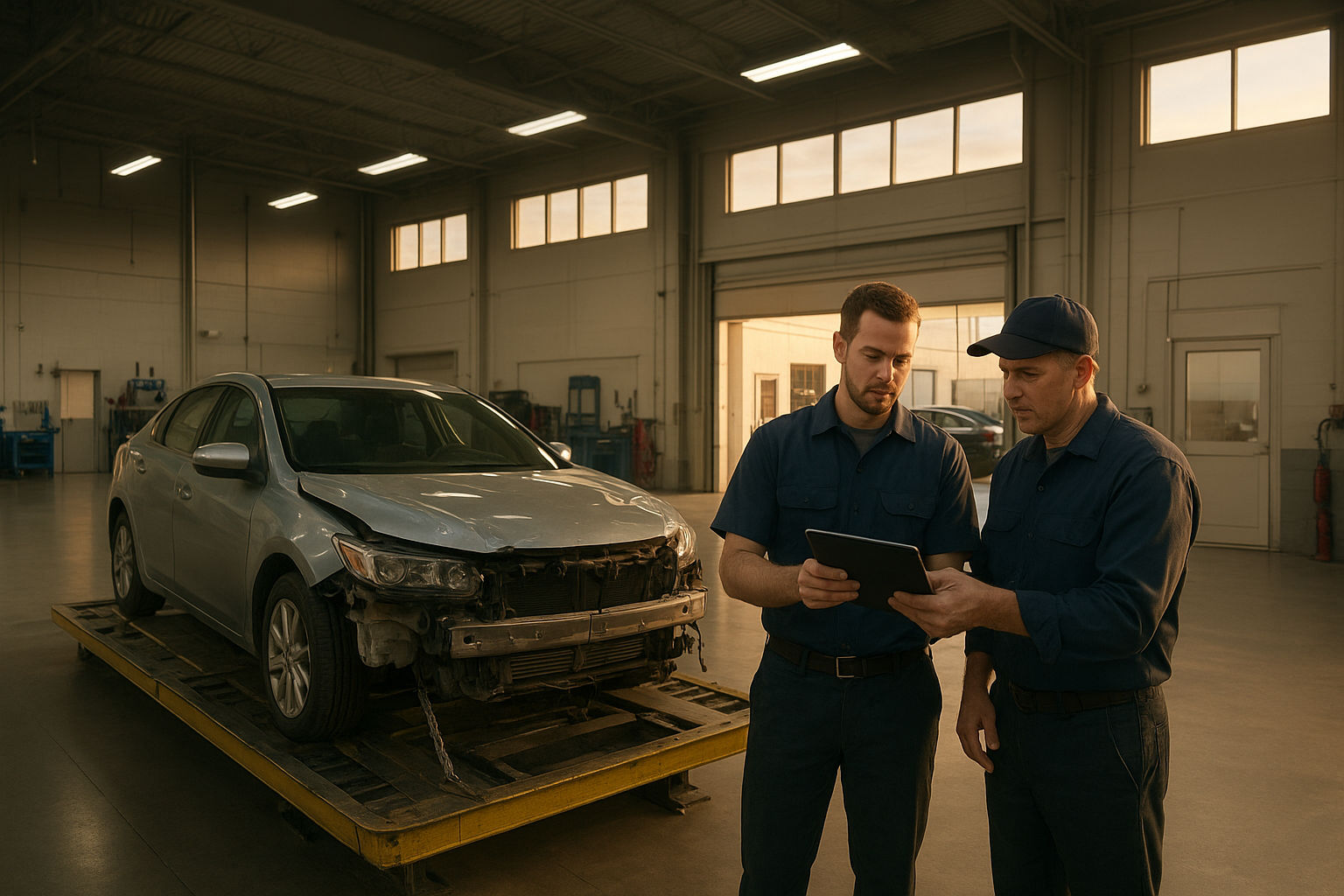
DRP Body Shop: How Direct Repair Programs Deliver Faster, Seamless Collision Repairs

A modern DRP body shop streamlines estimates, parts ordering, and approvals to get you back on the road faster.
If you’ve just been in a fender-bender or a major collision, you’ll hear the term “DRP body shop” almost immediately from your insurer. DRP stands for Direct Repair Program—a vetted network of collision centers that work closely with insurance carriers to simplify the claims and repair experience. In this guide, we’ll break down how a DRP body shop operates, why it can accelerate cycle time without compromising safety, and what to look for when choosing a trusted partner in North Orange County.
Looking for a local option right now? Explore a certified DRP body shop in Brea that’s known for transparent estimates, OEM-backed repairs, and dependable service.
What Is a DRP Body Shop?
A DRP body shop participates in a formal agreement with one or more insurance companies. The shop meets performance and quality standards—think trained technicians, modern equipment, standardized documentation, and clear customer communication. In return, the insurer streamlines certain steps, such as approvals and supplemental inspections, to reduce delays.
Why insurers use DRP networks
- Faster, consistent estimates based on industry-standard systems
- Quicker insurer approvals and supplemental reviews
- Accountability to quality metrics like cycle time, rework rate, and customer satisfaction
For drivers, the benefit is convenience: fewer phone calls, fewer surprises, and a shorter path from drop-off to delivery.
How a DRP Body Shop Streamlines Your Repair—Step by Step

The DRP body shop process aligns estimates, approvals, and parts to minimize downtime after a collision.
- Intake and documentation: The shop captures photos, VIN, and damage details, then writes a digital estimate using industry-standard platforms.
- Direct insurer review: Because the shop is in-network, adjusters can approve estimates and supplementals faster—often virtually.
- OEM repair planning: Technicians reference vehicle manufacturer procedures for structural points, weld counts, materials, and calibrations to ensure safety is restored.
- Parts and scheduling: The shop orders OEM or insurer-approved parts and schedules structural, body, and paint operations to reduce idle time.
- Structural and body repairs: Using frame benches, measuring systems, and manufacturer weld techniques, the vehicle is brought back within spec.
- Refinish and curing: Color is matched with spectrophotometers; clearcoat is applied in a downdraft booth, then cured to factory-like gloss and durability.
- Calibrations and QC: ADAS sensors and cameras are calibrated; a multi-point quality inspection verifies fit, finish, and drivability.
- Delivery and documentation: You receive a final invoice, repair photos, and warranty details for future peace of mind.
The result: less waiting for approvals, better parts coordination, and an easier experience from first call to final pickup.
Does “DRP” Mean You Must Use the Insurer’s Shop?
No. In California, you have the right to choose your repair facility. A DRP body shop is an option—often a very efficient one—but not a requirement. The key is to select a shop that prioritizes safety, follows OEM procedures, and communicates clearly about parts and timing.
Common myths, clarified
- Myth: DRP shops cut corners to go fast.
Reality: Reputable DRP facilities are audited for quality, cycle time, and customer satisfaction. Many carry OEM certifications and advanced tooling specifically to uphold standards. - Myth: You’ll only get aftermarket parts.
Reality: Parts decisions follow your policy, state regulations, and the repair plan. Many repairs use OEM parts, and structural components often must be OEM. - Myth: Warranty is weaker at DRP shops.
Reality: Established DRP shops provide strong written warranties and maintain relationships with insurers that depend on long-term customer satisfaction.
Quality and Safety: What to Expect from a Top DRP Body Shop

Post-repair ADAS calibration is essential to restore safety features after a collision.
Modern vehicles use high-strength steels, aluminum, sensors, and advanced driver assistance systems (ADAS). Proper repairs require:
- OEM procedures: Correct sectioning points, rivet/weld counts, adhesives, and torque specs—especially critical for structural integrity.
- Electronic scanning and calibration: Pre- and post-repair scans plus static/dynamic calibrations for cameras, radar, and lidar.
- Measuring and alignment: Computerized frame measuring verifies the vehicle returns to factory dimensions.
- Paint-matching technology: Spectrophotometer-assisted formulas blended for an invisible repair.
- Documentation and warranty: Detailed records and written coverage for materials and workmanship.
When you evaluate a shop, ask about their OEM certifications, calibration capabilities, and whether they provide photo documentation of hidden damage and repair stages.
Local Advantage: Choosing a DRP Body Shop in Brea, CA
Orange County drivers value speed, safety, and straightforward communication. A locally trusted DRP partner combines those strengths with easy access and neighborhood accountability. That’s why many Brea-area drivers turn to Brea Auto Body—a team equipped for structural repairs, advanced refinishing, and ADAS calibration, all backed by clear updates throughout your claim.
What sets a trusted local DRP shop apart
- Insurance fluency: The staff coordinates estimates, supplements, and photo updates directly with your adjuster.
- Transparent timelines: You’ll get realistic ETAs based on parts availability, calibration needs, and booth scheduling.
- Customer-first communication: Text or email updates and a single point of contact reduce uncertainty.
- Lifetime workmanship warranties: Written coverage that travels with you.
When DRP Is the Best Fit—and When It’s Not
A DRP body shop is ideal for most collision claims, especially when you want a streamlined process. If your vehicle requires rare parts, specialized aluminum or carbon fiber repairs, or custom modifications, ask whether the shop has the exact tooling and certifications. A reputable team will guide you honestly—even if that means recommending an alternative path to protect your vehicle’s value.
Quick Checklist: How to Evaluate a DRP Body Shop
- Do they follow and document OEM repair procedures for your specific make and model?
- Can they perform in-house ADAS calibrations or manage them promptly with a trusted partner?
- Will they share a written repair plan, parts list, and estimated timeline?
- Is there a clear, written warranty for workmanship and paint?
- Are technicians trained on modern materials (aluminum, ultra-high-strength steel) and bonding methods?
- Do past customers confirm consistent communication and on-time delivery?
FAQs About DRP Body Shops
Will my insurance cover a rental while my car is at a DRP shop?
Rental coverage depends on your policy. DRP shops can coordinate timing so your rental overlaps with the repair schedule efficiently.
Can I choose OEM parts?
In many cases, yes—especially for structural and safety-related components. Your policy and state guidelines influence the final parts mix. Quality-focused shops will explain options before work begins.
How long will repairs take?
Cycle time depends on damage severity, parts availability, and required calibrations. DRP relationships help reduce waiting for approvals and supplementals, shortening delays you can’t control.
Next Steps: Get a Seamless, Safe Repair
If you want a collision experience that’s quick, transparent, and aligned with your insurer, a DRP body shop is a smart choice. For drivers in Brea, Fullerton, Yorba Linda, and the surrounding Orange County communities, start with a trusted local team. Visit Brea Auto Body in Brea, CA to schedule an estimate or get help opening your claim.
From digital estimates and photo updates to OEM-quality repairs and ADAS calibrations, the right partner makes the process smooth—so you can get back to normal, safely and sooner.

