

Electric Car Body Repair: A Complete Owner’s Guide to Safe, Smart EV Collision Fixes

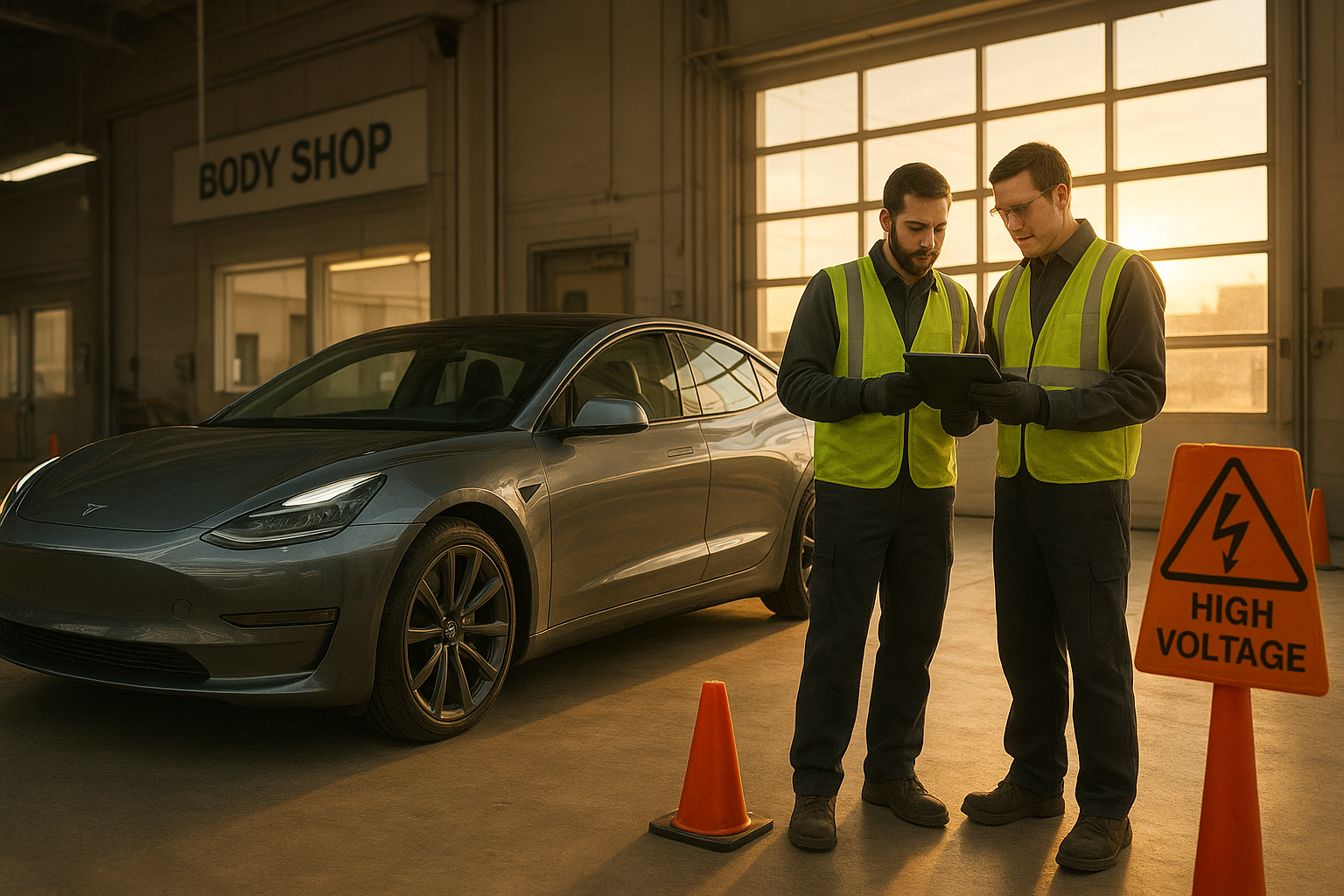
Electric car body repair performed in a certified EV body shop with proper high?voltage safety protocols.
Whether you drive a Tesla, Nissan LEAF, Chevy Bolt EUV, or another EV, “electric car body repair” involves more than replacing panels and spraying paint. Modern EVs integrate high?voltage batteries, advanced driver?assistance systems (ADAS), specialized aluminum and mixed?material structures, and manufacturer?specific bonding/riveting methods. This guide explains what makes EV collision work different, how the process unfolds, what influences cost and timing, and how to select the right shop—so your vehicle remains safe, efficient, and true to OEM standards.
What Makes Electric Car Body Repair Different?
Traditional collision shops have long handled steel panels and mechanical components. EVs change the playbook in four big ways:
1) High?Voltage Safety Comes First
An EV’s battery pack and orange?cable circuits require isolation and monitoring before any work begins. Certified technicians follow OEM procedures to power down, secure, and verify the system, reducing the risk of thermal events and ensuring safe handling during structural and cosmetic repairs.
2) Mixed Materials and Specialized Joining
EV bodies often combine aluminum, ultra?high?strength steel, magnesium, and composites. These materials use specific repair strategies—structural adhesives, self?piercing rivets, flow?drill screws, or component replacement—selected according to OEM repair manuals. Using the wrong method can compromise crash energy management and warranty coverage.
3) ADAS Sensors Everywhere
Radar, camera, ultrasonic, and lidar sensors live behind bumpers, windshields, fenders, and emblems. Even a minor alignment change after a collision can skew readings. Post?repair, ADAS modules require precise calibration in controlled environments using targets, levels, and software that match manufacturer tolerances.
4) Thermal Management and Range Integrity
Repairs that affect cooling circuits, underbody shields, or aero panels can influence battery temperature and efficiency. EV?savvy shops confirm sealing, airflow, and undertray fitment so range and longevity remain intact.

EV body structure and sensor locations influence electric car body repair strategy and calibration steps.
The Step?by?Step EV Body Repair Workflow
Quality electric car body repair follows a documented, data?driven path that protects you and your vehicle. Here’s how a best?practice shop handles it:
1) Intake, Safety, and Documentation
The team verifies the vehicle’s condition, photographs all damage, and records battery state of charge. If needed, they isolate the high?voltage system according to OEM guidelines and set safe zones around the vehicle.
2) Digital Pre?Scan and OEM Procedure Lookup
Technicians run a diagnostic pre?scan to identify hidden DTCs and load OEM service procedures. This determines part replacement vs. repair, correct joining methods, and special equipment required.
3) Estimating and Insurer Coordination
A detailed estimate is built from the blueprint, including materials, calibrations, sublets (e.g., windshield or alignment), and potential one?time?use fasteners. Clear documentation speeds insurer approvals and reduces supplements later.
4) Disassembly and Parts Procurement
With trim removed, the shop confirms hidden damage and orders OEM or certified parts. EV repairs may require insulated tools, aluminum?only workspaces, and adhesive/rivet kits validated for your model.
5) Structural and Cosmetic Repairs
Panels are repaired or replaced per OEM specs. Aluminum repair often uses dent?extraction systems and heat?controlled methods to avoid work?hardening. Structural bonding and rivet patterns are followed precisely to preserve crash performance.
6) Refinishing and Corrosion Protection
After shaping and priming, panels enter the paint booth for color?match and curing. The team reinstates corrosion protection, seam sealer, and underbody coatings, which are critical for EV battery compartment longevity.
7) ADAS Calibration and Post?Scan
Once reassembled, the vehicle receives static or dynamic ADAS calibrations as required, followed by a post?scan to confirm no lingering diagnostic codes. Wheel alignments and road tests validate handling and sensor health.
8) Quality Control and Delivery
Final QC checks verify panel gaps, paint texture, sensor aims, and documentation. You receive a repair record listing procedures performed—ideal for future maintenance and resale transparency.

Electric car body repair workflow—from intake and pre?scan to ADAS calibration and final quality checks.
Costs, Timelines, and What Really Drives Them
Because EVs use advanced materials and ADAS calibrations, repair planning is crucial. Expect estimates to reflect:
- Material type: Aluminum and composite repairs often require dedicated bays, tools, and adhesives.
- Sensor density: More driver?assist features can mean additional calibrations, sublets, or road?test routines.
- Parts availability: Limited?run trim or new model years may add waiting time.
- OEM repairability rules: Some components are “replace?only,” which can increase cost but preserve safety design.
- Hidden damage: Under?panel brackets, crash boxes, and mounts sometimes reveal issues after disassembly.
Timelines vary by severity and parts supply. Minor bumper and sensor repairs can turn around in days once parts arrive; structural repairs may take multiple weeks, especially when calibrations and paint curing are involved. A transparent shop will update you at each milestone and coordinate rental coverage if applicable.
How to Choose the Right EV?Certified Body Shop
For safe, long?lasting results, choose a shop that proves it can meet EV demands—not just talk about them. Look for:
- EV and OEM certifications: I?CAR Gold Class and model?specific approvals demonstrate training and tooling.
- High?voltage protocols: Documented battery isolation procedures, insulated PPE, and dedicated safety zones.
- Aluminum?capable facilities: Separate clean rooms prevent cross?contamination that can ruin finishes.
- In?house or validated ADAS calibration: Proper targets, level floors, and scan tools ensure sensor accuracy.
- Transparent documentation: Pre? and post?scans, OEM procedure references, and photo logs.
- Warranty and customer care: Clear workmanship guarantees and proactive communication.
If you’re in Orange County or nearby, consider working with an EV?certified body shop in Brea that understands the full lifecycle of electric car body repair—from safety?first intake to precise calibration and quality control.

ADAS calibration bay ensures sensors are correctly aligned after electric car body repair.
Electric Car Body Repair: Quick FAQ
Will a minor fender?bender really affect my EV’s range or safety?
It can. Damaged aero panels, misaligned sensors, or disturbed cooling shields may affect efficiency or functions like adaptive cruise. Proper inspection and calibration address these risks.
Do all dents on EV aluminum panels require replacement?
No. Some dents are candidates for paintless dent repair (PDR) if access and metal memory allow it. However, aluminum work often demands specialized techniques and sometimes panel replacement per OEM rules.
Why are calibrations line items on my estimate?
ADAS systems depend on precise alignment. After any body or glass work, OEMs typically require static and/or dynamic calibrations to restore safety features to spec.
Can I drive my EV after a collision before the inspection?
If airbags deployed, warning lights appear, or underbody damage is suspected, arrange towing and professional evaluation. Driving could aggravate damage or compromise safety systems.
How do I start a repair with a trusted shop?
Schedule an evaluation, share your insurance claim number (if applicable), and request a written plan referencing OEM procedures. For local service, you can begin with Brea Auto Body’s electric car body repair team to get a clear, safety?focused estimate.
The Bottom Line
Electric car body repair is a precision discipline that balances high?voltage safety, modern materials, and sensor calibration. The right EV?certified shop will isolate the battery correctly, follow OEM structural methods, refinish with care, and validate every driver?assist function before delivery. When those steps happen in sequence, your EV returns to the road looking great—and performing exactly as designed.
Ready for expert help? Reach out to Brea Auto Body to schedule an inspection and get a thorough, transparent plan for your EV.

