

Hail Damage Repair Brea: Your 2026 Guide to Getting Dents Fixed Right
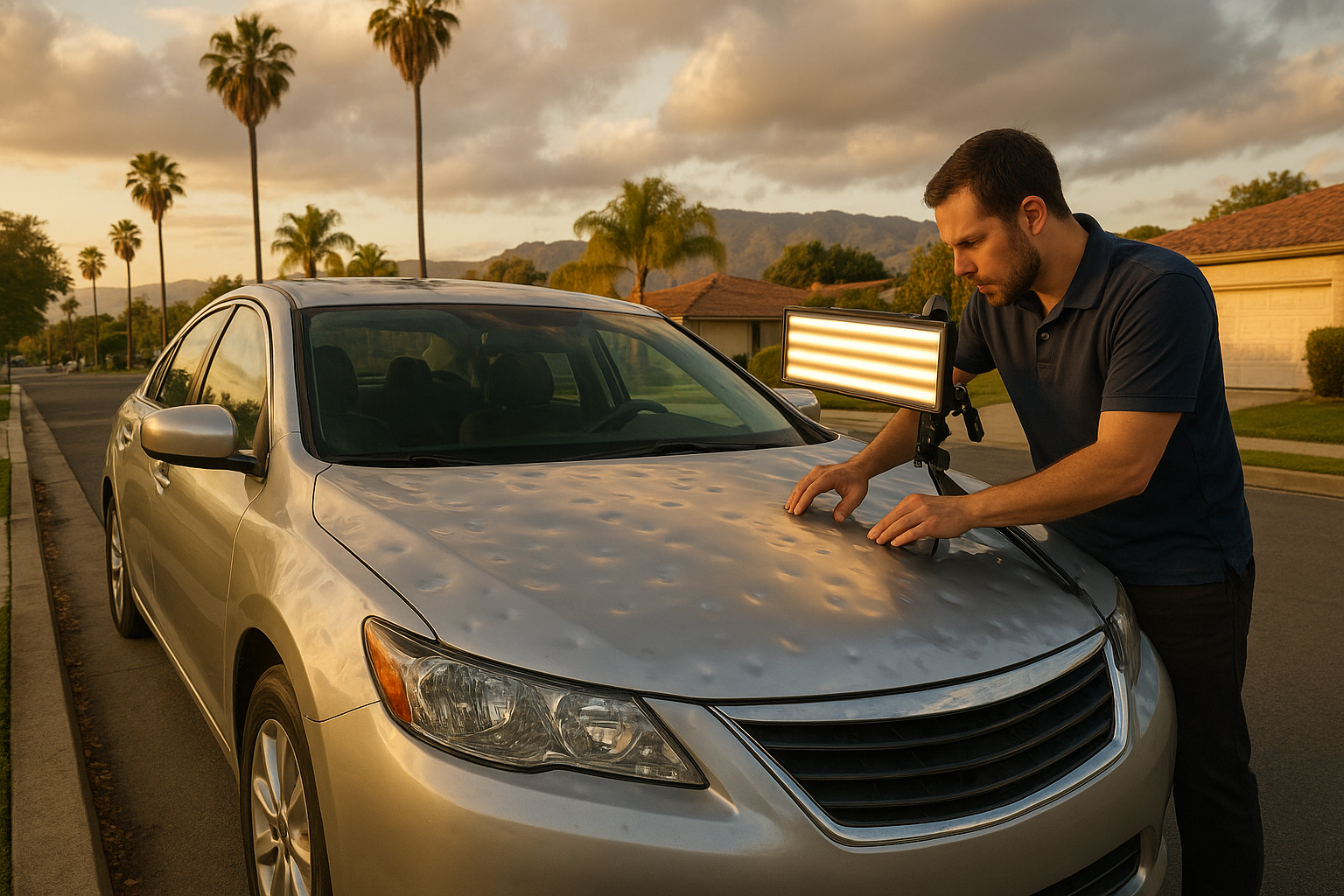
Post-storm inspection is the first step toward accurate hail damage repair in Brea.
If your vehicle was caught in a sudden winter cell and now wears a peppering of small dents, you’re likely searching for “hail damage repair Brea.” This guide breaks down the exact repair methods shops use in North Orange County, how much you can expect to pay, how long repairs take, what your insurance covers, and how to choose a reputable local body shop. Whether you drive a daily commuter or a cherished weekend car, the right approach can restore your vehicle’s value and finish without unnecessary repainting.
Is hail damage common in Brea?
Hail is less frequent in Southern California than in the Midwest, but quick-moving winter storm cells can still deliver pea- to marble-size hail across North Orange County. When it happens, dozens or even hundreds of small, shallow dents can appear across hoods, roofs, trunk lids, and upper door sections. The good news: most storm-related dents are ideal candidates for paintless dent repair (PDR), a non-invasive technique that preserves your factory paint.
How hail damage is repaired: methods that protect your paint and value
The best repair strategy depends on dent size, depth, panel material (steel vs. aluminum), paint condition, and whether edges, body lines, or double-wall structures are involved. Here’s how professionals in and around Brea typically approach storm damage.
Paintless Dent Repair (PDR)
PDR is the go-to solution for the vast majority of hail cases. Skilled technicians use specialized rods, levers, and glue-pulling systems to gently massage metal back to its original contour from behind the panel. Because PDR doesn’t disturb the finish, it helps retain OEM paint, panel originality, and resale value. It’s often faster and more affordable than traditional bodywork, with less time in the booth and fewer materials used.
Conventional body and paint
When dents are too sharp, large, or on inaccessible seams and edges, a conventional approach is used. This can include strategic filling, sanding, and refinishing, or—in severe cases—replacing outer panels. Shops will blend adjacent panels to ensure color match and gloss consistency. Expect longer cycle times due to prep, coating cure windows, and quality control checks.
Hybrid approach
Many hail repairs combine both methods: PDR for the bulk of shallow dents and conventional techniques where dents are beyond the scope of PDR. The hybrid route controls costs, reduces time in paint, and still restores structural and cosmetic integrity.
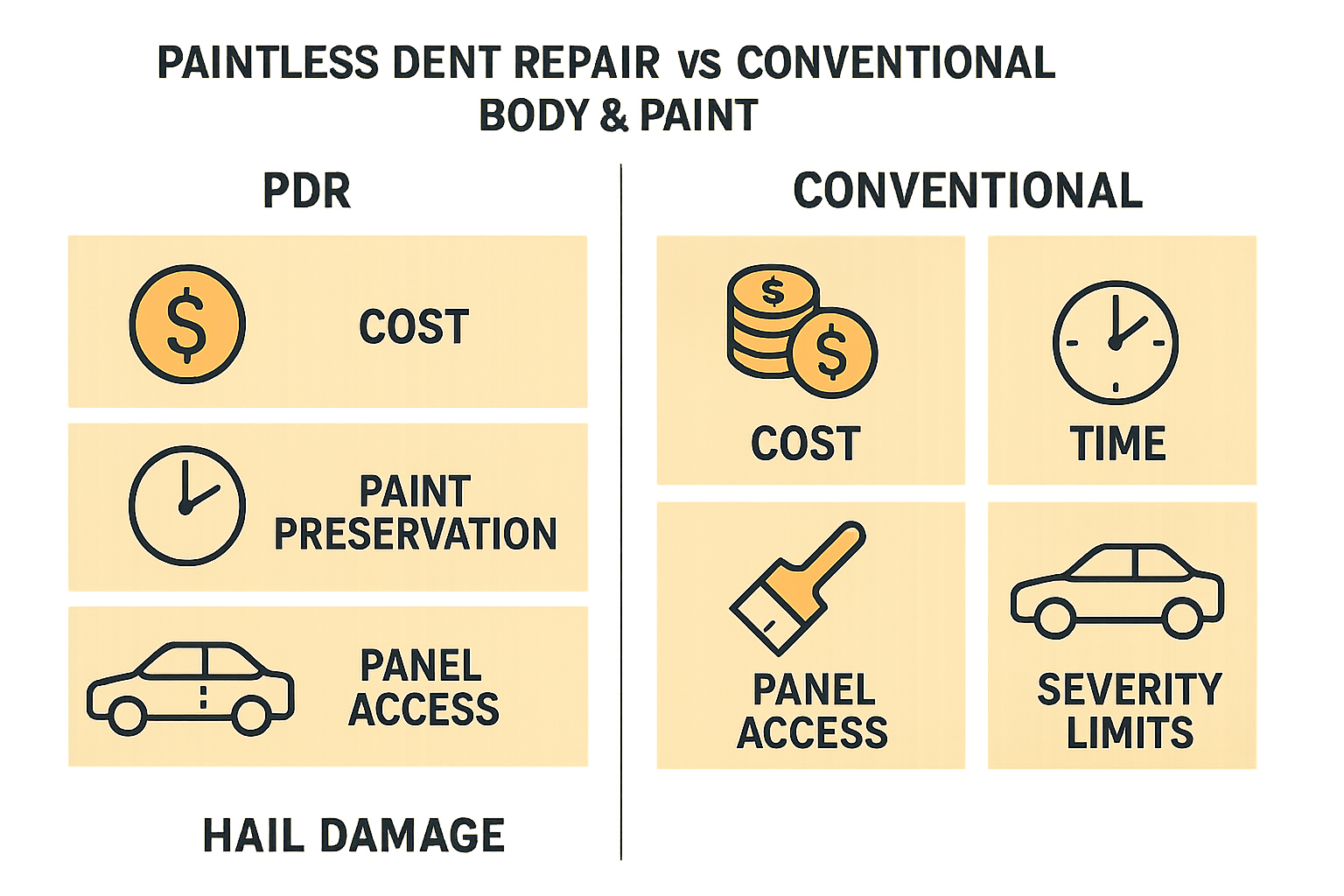
PDR vs. conventional: the right hail damage repair in Brea depends on dent severity, access, and finish goals.
Cost, timing, and what affects both in Brea
Every storm is different, and so is every roof or hood pattern left behind. That said, estimates typically consider:
- Panel count and dent density (how many dents per panel)
- Dent size and sharpness (shallow “soft” dents vs. creased or stretched metal)
- Panel material (aluminum panels can add time)
- Access complexity (bracing, double walls, sound-deadening)
- Paint condition and prior repairs
- Needed R&I (remove and install) of trim, liners, headliners, and glass
- Calibration needs for ADAS sensors after windshield or roof-related work
Minor hail events repaired primarily with PDR can sometimes be completed in a few days, while mixed or severe cases—especially those requiring paint, parts, or glass—may extend into one to two weeks or more, depending on shop load after a storm. Costs vary widely for the same reasons. Your written estimate will itemize PDR line items (often priced by panel and dent density), conventional refinish steps, and R&I operations.
Insurance claims for hail in California: what to know
Hail damage typically falls under comprehensive coverage (not collision). In California, you have the right to choose any licensed repair facility. Many insurers maintain direct repair programs (DRPs) that streamline claims, but you’re not required to use a specific shop. Save your receipts and any calibration documentation for your records.
- Document: Take clear photos under good lighting from multiple angles.
- File your claim: Provide storm date, location, and an initial description of damage.
- Inspection: An adjuster may review photos, scan your vehicle, or meet at the shop.
- Estimate: You’ll receive a preliminary estimate; supplement approvals are common once headliners and trim are removed for a full panel-by-panel view.
- Repair authorization: Choose your shop and schedule the work. Ask about target cycle time and any parts lead times.
- Final billing and calibration docs: Ensure all invoices and calibration reports are included with the claim.
For consumer guidance on your rights, review the California Department of Insurance resources. Additionally, for background on hail formation and severity, the National Severe Storms Laboratory provides helpful education.
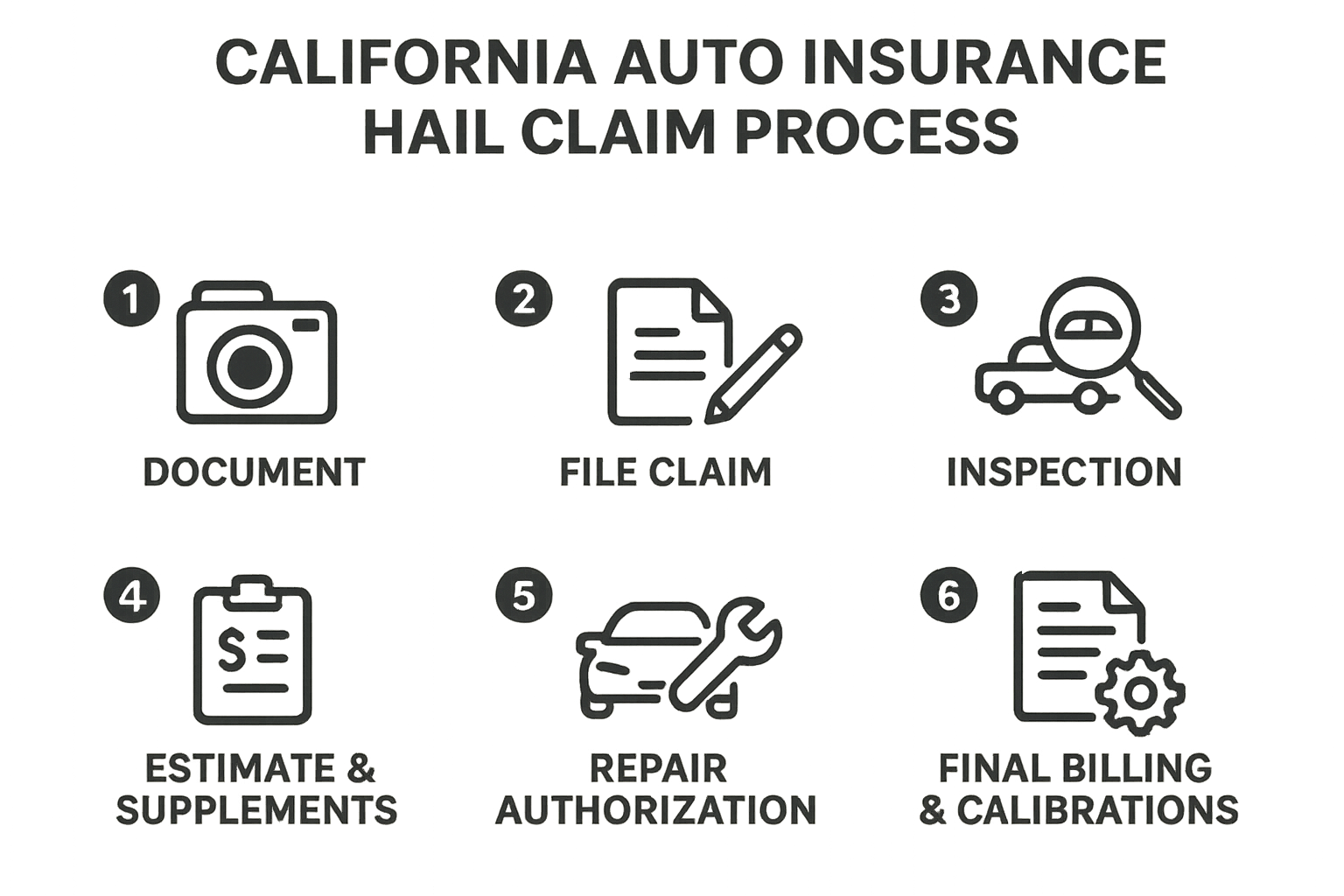
Understanding the claim process helps you move from estimate to completed hail damage repair without delays.
Choosing a local shop for hail damage repair in Brea
Look for a repairer that communicates clearly, provides a written plan, and can execute both PDR and conventional methods. Transparent estimates, high-quality lighting during inspections, and the ability to perform or coordinate ADAS calibrations are all positive signs. A reputable shop will also explain when PDR alone is best and when paintwork is necessary to achieve a factory-grade result.
For location, hours, and appointment options, see the official site for Brea Auto Body. If you prefer direct, context-specific navigation, start with this resource on Brea Auto Body hail damage repair in Brea to inquire about availability after a storm surge or to request an estimate.
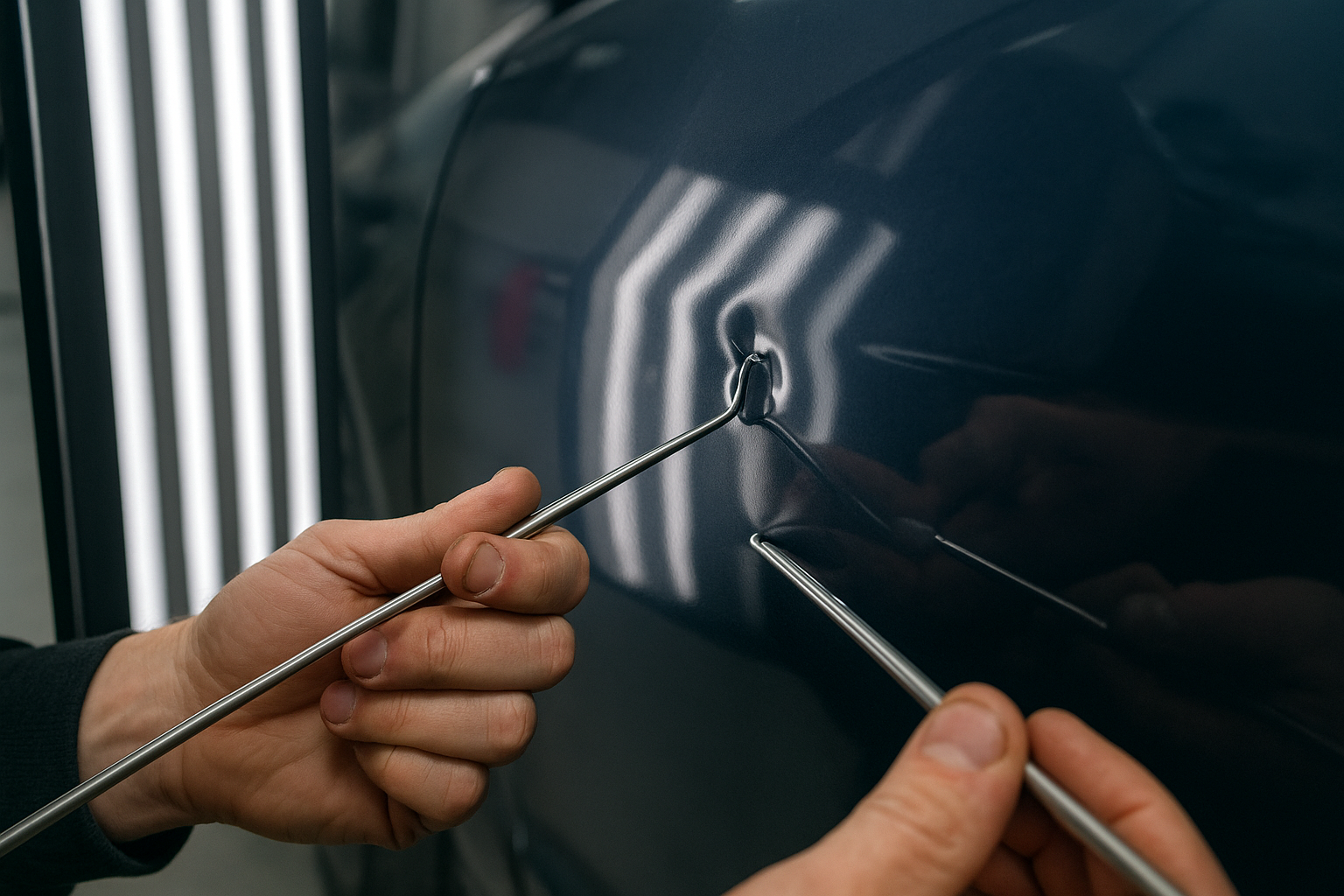
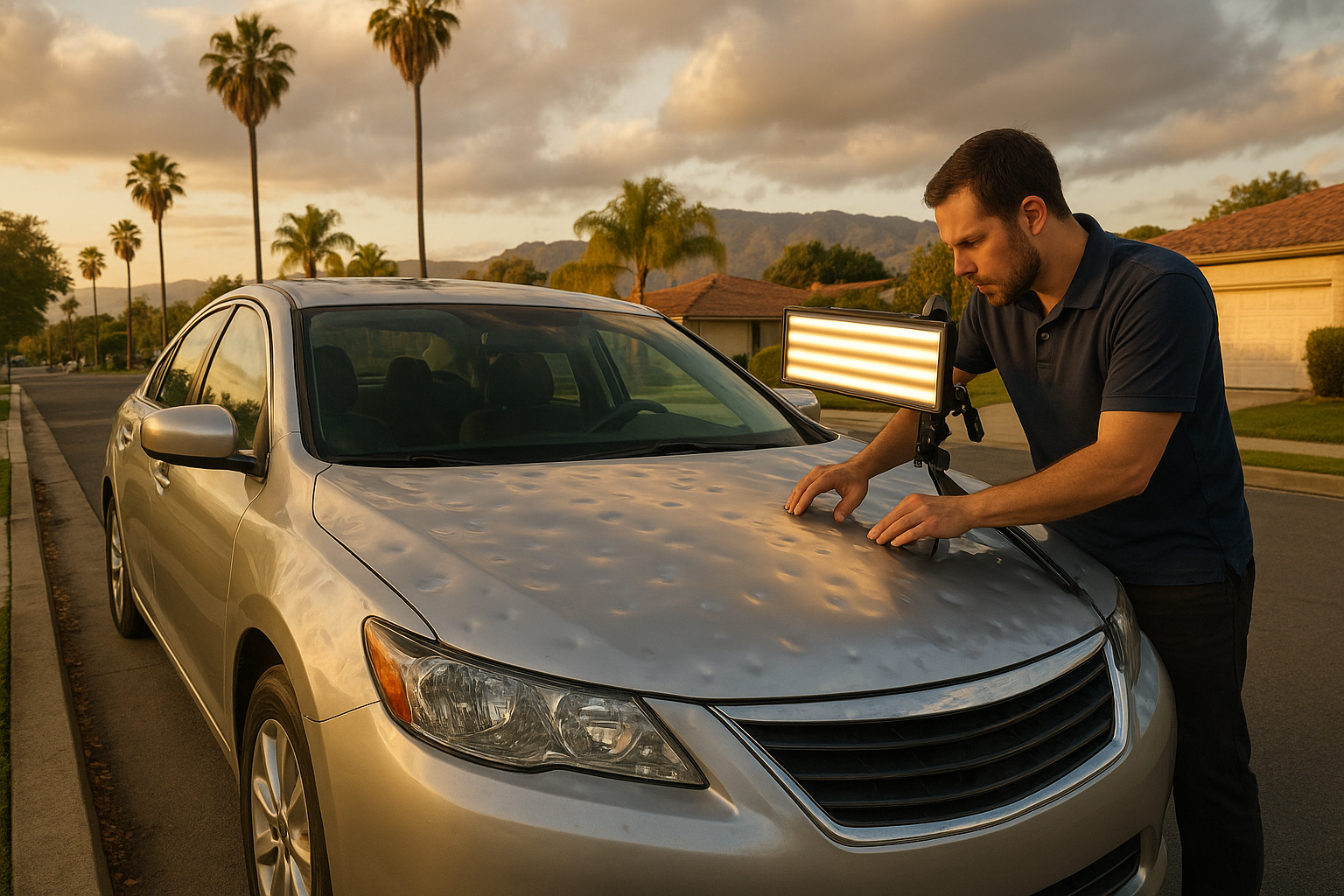
Experienced PDR technicians can restore panels without repainting, preserving OEM finish and value.
What to do in the first 24 hours after a hailstorm
Time matters—both for preventing secondary damage and for securing a repair slot when demand spikes. Here’s a practical, locally focused sequence you can follow after a Brea hail event:
- Rinse and dry: Remove debris and check for cracked paint that could invite corrosion.
- Inspect under raking light: A simple LED bar or shop light reveals dents better than overhead lighting.
- Photograph everything: Hood, roof, trunk, A- and C-pillars, and upper door frames. Capture a few close-ups plus panel-wide shots.
- Protect glass: If your windshield or backlight is chipped or cracked, cover with a temporary film until repair or replacement.
- Contact your insurer: Note the storm date and file the claim promptly, especially when a surge is likely across Brea, Fullerton, Placentia, La Habra, and Yorba Linda.
- Contact a shop early: Ask about their hail workflow, PDR capacity, and whether they coordinate glass and calibrations to minimize downtime.
Frequently asked questions about hail damage repair in Brea
Will PDR work on aluminum panels?
Yes, but it can take more time and advanced technique. Many modern hoods and some body panels are aluminum; skilled PDR techs adjust tools and approach accordingly.
What if my car already had previous bodywork?
Areas with prior filler or repaint may not be good PDR candidates. Your estimator will switch to a conventional method on those panels to achieve a seamless finish.
Do I need to repair minor hail dents?
Unrepaired hail dents can affect trade-in value and, if paint is cracked, can allow corrosion to start. Timely repair maintains appearance and value, especially on newer vehicles and leases.
Can I choose any shop with my insurance?
In California, you can select any licensed repair facility. Direct-repair networks can speed logistics, but they are optional. Prioritize a shop whose plan and craftsmanship you trust.
How long will my car be in the shop?
Light PDR-only jobs might wrap up in a few days; mixed repairs with paint or glass typically take longer, especially when many local vehicles were affected by the same cell. Your advisor can give a time window after a complete tear-down and access check.
How to prep for your estimate appointment
Bring your claim number (if filed), insurance information, photos, and a short list of concerns. Request a walk-through under specialty lighting so you can see what the technician sees. Ask whether trim or headliner removal is required, how panels will be accessed, and which panels—if any—need refinishing rather than PDR. Clarify whether the vehicle will need ADAS calibration if glass or roof components are addressed. Finally, get your repair plan and warranty terms in writing.
The bottom line
Hail damage repair in Brea is best handled by professionals who can balance PDR and conventional methods to deliver factory-grade results. With a clear estimate, open communication, and the right technical approach, you’ll protect your vehicle’s value and get back on the road quickly. For scheduling, directions, or to start an estimate request, visit Brea Auto Body and ask about current hail repair availability.

