

Car Body Shop Anaheim: The Complete 2025 Guide to Collision Repair, Estimates, Insurance, and Choosing the Right Shop
Updated for 2025 — serving Anaheim, Anaheim Hills, the Platinum Triangle, West Anaheim, and all of North Orange County.

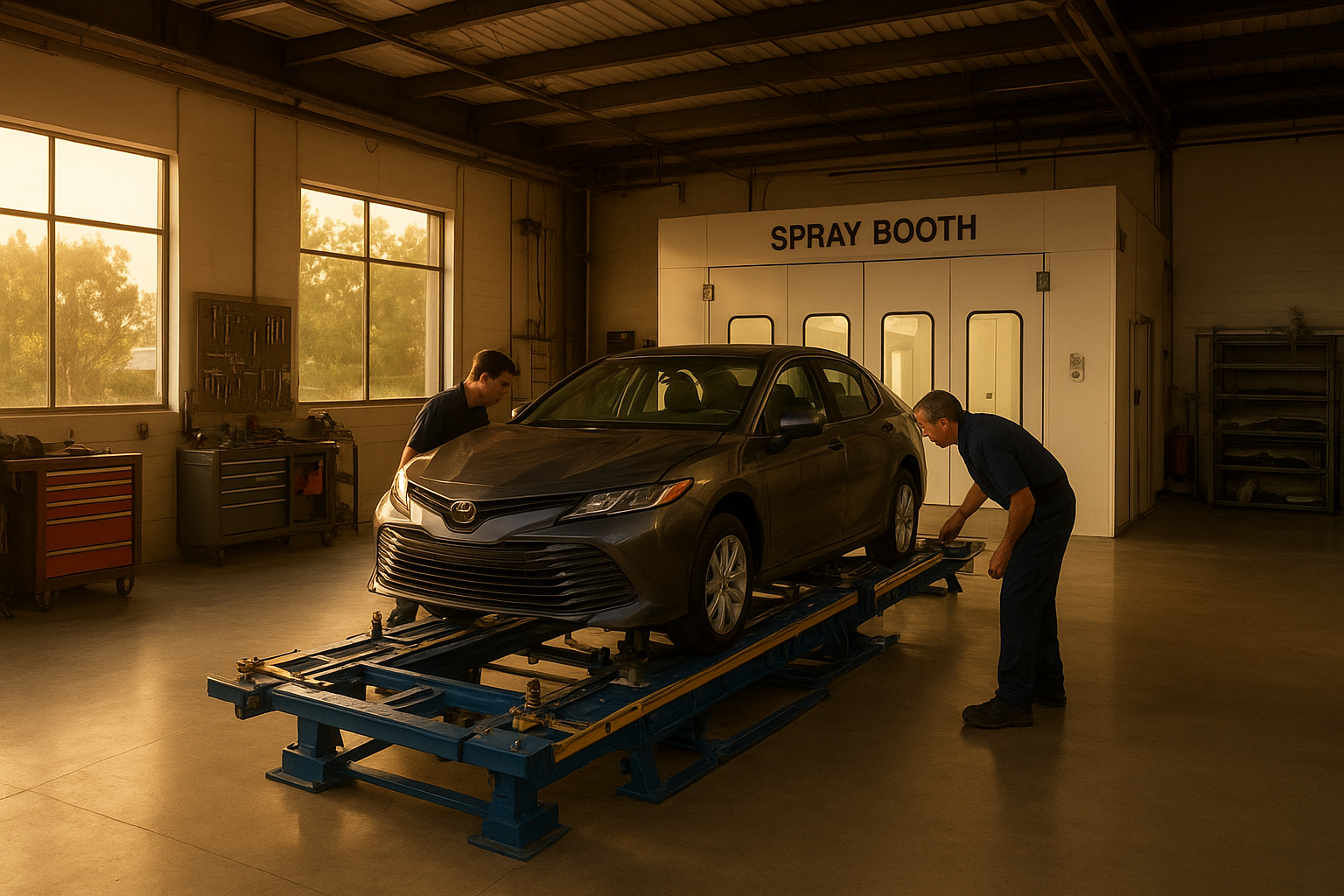
A modern car body shop in Anaheim specializing in precision collision repair and paint restoration.
Whether you’ve been rear-ended on the I-5 near the Anaheim Convention Center, clipped a pillar in the Disneyland parking structure, or taken a freeway pebble to the hood on the 91, finding a trustworthy car body shop in Anaheim is one of the most important decisions you’ll make after an accident. This guide gives you everything you need: how to evaluate shops, what the full repair process looks like step by step, what your California legal rights are, how insurance really works, what to expect on cost and timelines, and what separates a great result from a regrettable one.
? Quick Navigation
- What Defines a Top Car Body Shop in Anaheim
- Full Range of Services to Look For
- The Collision Repair Process, Step by Step
- Local Anaheim Factors That Affect Your Repair
- Insurance, Estimates, and Your California Rights
- EVs, ADAS, and Modern Materials
- How to Choose the Right Shop
- Costs, Timelines, and Supplements
- Aftercare and Protecting Your Finish
- FAQs
What Defines a Top Car Body Shop in Anaheim
Not every shop that hangs a sign qualifies as a top-tier collision center. Anaheim has dozens of options, ranging from one-bay independents to multi-location certified repair facilities. The best car body shops in Anaheim share a set of non-negotiable qualities that separate a safe, lasting repair from one that looks fine on day one and fails over the next 18 months.
Certifications and OEM Approvals
Top shops pursue manufacturer certifications — I-CAR Gold Class, ASE-certified technicians, and OEM-specific repair credentials from Ford, Honda, Toyota, Tesla, or other brands. These certifications require ongoing training and facility investment. When a shop is OEM-certified, it means the automaker has verified their tools, training, and procedures meet the standards for repairing that brand safely. Ask any shop directly: “What certifications do your technicians hold, and which OEM programs is your facility enrolled in?”
Transparent Estimates and Documented Repair Plans
A reputable Anaheim body shop never asks you to trust a verbal quote. Every estimate should be itemized: labor hours per operation, each part with OEM or alternative designation, materials, and sublet items like ADAS calibration or wheel alignment. You should receive a written copy before any work begins and be notified immediately — and in writing — when supplements arise during disassembly.
Quality Indicators You Can See on a Shop Tour
Don’t be afraid to ask for a brief walk-through. Look for:
- Frame and unibody bench: A computerized measuring system (Chief, Celette, Car-O-Liner) is non-negotiable for structural repairs.
- Dust-controlled paint booth: A downdraft or crossdraft spray booth with filtered airflow keeps contaminants out of your clearcoat.
- MIG/MAG welders rated for high-strength steel: Modern vehicles use ultra-high-strength steel that standard welders can compromise. Squeeze-type resistance welders (STRSW) are required for many OEM repairs.
- Organized, protected vehicles: Cars waiting for repair should be covered with fender blankets and masked properly — signs the shop respects customers’ property.
- Recent work examples: Ask to see completed jobs. Look at panel gap consistency, color match on adjacent panels, and the absence of orange peel or fisheye in the clearcoat.
- Clean, organized parts area: Parts staged by RO number show a shop with process discipline — which translates directly to repair quality.
Full Range of Services to Expect From a Car Body Shop in Anaheim
A complete collision repair facility near Anaheim should offer the full spectrum of services — not just paint and bang-out work. Here’s what a comprehensive shop provides:
? Collision & Structural
- Full collision repair
- Frame and unibody straightening
- Structural measuring and documentation
- Fender, door, and quarter panel replacement
- Bumper repair and replacement
- Hood and trunk lid alignment
? Paint & Finish
- Full and spot refinishing
- Color matching and blending
- Paint correction and polishing
- Clearcoat restoration
- UV-resistant topcoat application
- Paintless dent removal (PDR)
? Mechanical & Safety
- Wheel alignment post-repair
- Suspension component inspection
- Airbag and SRS system service
- Glass and windshield replacement
- Headlight and taillight replacement
- Electrical diagnostics
? Modern Vehicle Systems
- ADAS calibration (static and dynamic)
- Camera and radar sensor realignment
- Electric vehicle (EV) repair protocols
- Aluminum and mixed-material repair
- Pre- and post-repair scanning
- OEM procedure compliance documentation
Paintless Dent Repair (PDR) — When Is It Right?
Paintless dent repair is an ideal solution for small dents, door dings, and hail damage where the paint surface is intact. A skilled PDR technician uses specialized tools to massage the metal back into shape from behind the panel — no primer, no paint, no filler. It’s faster, more affordable, and preserves your original factory finish. Ask your Anaheim body shop whether PDR is appropriate for your specific damage before committing to a full repaint.
Bumper Repair vs. Bumper Replacement
Not every bumper needs to be replaced. A quality Anaheim collision shop will assess whether a bumper cover can be repaired with plastic welding and refinishing versus replaced outright. If the structural foam underneath is crushed or the mounting tabs are broken, replacement is usually safer and more cost-effective long term. Always ask which choice your shop recommends and why — and whether the bumper radar sensor is being verified for calibration afterward.
The Collision Repair Process at an Anaheim Body Shop — Step by Step
Understanding exactly how a repair unfolds gives you power: you’ll recognize quality work, spot red flags, and set accurate expectations for time and cost. Here’s what the repair journey looks like at a thorough car body shop in Anaheim.

The end-to-end collision repair process you should expect from a car body shop in Anaheim.
-
Step 1: Pre-Repair Scanning and Digital Estimate
Before anything else, a modern body shop will plug in a scan tool and pull all diagnostic trouble codes (DTCs) from your vehicle’s systems. This pre-repair scan captures the baseline state of your electronics — critical for comparing against the post-repair scan. Simultaneously, a writer photographs all visible damage, pulls your VIN, and generates an initial estimate. A quality estimate clearly distinguishes between visible damage and potential hidden damage that will only become apparent during disassembly.
-
Step 2: Disassembly and Blueprinting
After you approve the estimate and authorize repairs, technicians carefully disassemble damaged areas to expose what the impact actually affected. This is called “blueprinting” — a thorough, line-item documentation of every repair operation, part, and material needed. Proper blueprinting dramatically reduces mid-repair surprises and makes supplement conversations with your insurer faster and cleaner. Shops that skip blueprinting often deliver inaccurate initial estimates, leading to delays and disputes later.
-
Step 3: Structural Measuring and Frame/Unibody Repair
If your vehicle’s unibody or frame has been compromised, it goes onto a computerized measuring bench. Laser or electronic measuring systems compare your vehicle’s actual dimensions against factory specifications. The pulling and straightening process uses hydraulic equipment calibrated to precise tolerances — restoring crash energy management geometry, wheel alignment angles, and door gap symmetry. This step protects everything downstream, from panel fit to how your car behaves in a future collision.
-
Step 4: Panel Repair or Replacement and Corrosion Protection
Technicians repair or replace panels based on severity, OEM repair procedures, and structural integrity. New panels must be installed with proper seam sealer, anti-corrosion primer, and cavity wax in enclosed sections — steps that are often skipped at lower-quality shops. In Southern California’s marine-influenced climate, corrosion protection isn’t optional: salt air, morning fog, and UV stress make proper sealing essential for long-term durability. Ask your shop specifically about their seam sealing and weld-through primer process.
-
Step 5: Paint Preparation and Color Matching
Great paint jobs are built on great prep. The surface must be properly blocked, primed, and feathered before any topcoat is applied. Color matching uses your vehicle’s OEM color code as a starting point, but skilled painters adjust for age-related fade by referencing the vehicle’s undamaged surfaces. Adjacent panels are blended to eliminate visible boundaries between old and new paint — particularly important for tri-coat pearls, candies, and complex metallics common on modern vehicles. A downdraft spray booth with temperature and humidity control ensures a contaminant-free application environment.
-
Step 6: Reassembly with OEM Torque Specs and Procedures
Every clip, bracket, fastener, and sensor must be reinstalled to OEM torque specifications. This is where cutting corners is invisible but consequential — a bumper cover clip installed incorrectly can leave a gap that allows wind noise, water intrusion, or sensor misalignment. Reputable shops reference OEM repair procedures from databases like AllData or OEM1Stop to ensure every step is documented and followed correctly.
-
Step 7: ADAS Calibration
This step is critical and often overlooked by less capable shops. Any repair that involves the windshield, bumper, grille, fenders, or rear fascia likely affects one or more ADAS sensors: forward collision radar, backup cameras, surround-view cameras, lane-departure cameras, blind-spot monitoring, or parking sensors. These systems require static calibration (in a controlled indoor environment with calibration targets) and often dynamic calibration (a test drive under specific conditions). Shops that don’t perform or sublet this work are leaving your safety systems in an unknown state.
-
Step 8: Post-Repair Scanning, Quality Inspection, and Road Test
Before your keys come back, a post-repair scan should be performed and compared against the pre-repair scan to confirm no new fault codes were introduced during the repair process. A quality control inspection checks panel gaps, paint finish, trim alignment, and sensor function. Finally, a road test verifies that the vehicle drives straight, brakes evenly, and all driver-assistance systems behave correctly. You should receive a copy of both scan reports at delivery.
Local Anaheim Factors That Affect Your Collision Repair

Anaheim sits at the crossroads of the 5, 57, and 91 freeways — choose a car body shop positioned for convenient drop-off and pick-up.
Anaheim’s specific geography and traffic patterns create repair scenarios you won’t find in every market. Understanding these local dynamics helps you ask the right questions.
High-Speed Freeway Collisions on the 5, 57, and 91
Freeway impacts — even ones that look “minor” from the outside — often hide significant structural and suspension damage. A fender bender at 65 mph transfers a very different energy load than a parking lot tap. Reputable Anaheim body shops automatically include a structural inspection for any freeway-speed collision, even if the visible damage appears cosmetic. Suspension components, subframe mounting points, and firewall areas should all be evaluated before an estimate is finalized.
Theme Park and Convention Center Traffic Damage
Anaheim’s parking structures — the Disneyland Resort complex, Angel Stadium, the Honda Center, and the Convention Center — generate a high volume of door dings, low-speed parking lot collisions, and side swipes. These are often ideal candidates for paintless dent repair or targeted spot refinishing. If you’ve been hit in one of these lots, take photos immediately, document the scene, and file a police report if the responsible party left the scene — even for seemingly minor damage.
SoCal UV Exposure and Paint Durability
Orange County averages over 280 sunny days per year. That UV exposure is relentless on automotive finishes — especially on refinished panels if the shop uses inferior clearcoat or skips UV inhibitors in their paint system. The best body shops in Anaheim use waterborne paint systems with UV-stable clearcoats rated for California conditions. Ask specifically about the clearcoat brand and its warranty before approving refinish work.
Coastal Marine Air and Corrosion Risk
Anaheim is roughly 20 miles from the Pacific Ocean. Marine-layer moisture and salt air accelerate corrosion in poorly sealed repair areas — particularly welded joints, door hem flanges, and rocker panels. Shops that skip weld-through primer, seam sealer, or cavity wax on closed sections are setting you up for rust within 2–5 years. This is a SoCal-specific concern that many out-of-state guides miss entirely.
Neighborhood-Specific Considerations
Anaheim spans a wide geographic area with distinct neighborhoods — each with slightly different logistics considerations when choosing a body shop:
- Anaheim Hills: Hillside roads and canyon driving increase the likelihood of wildlife encounters and single-vehicle accidents. Shops near the 91 or Weir Canyon corridor serve this area conveniently.
- Platinum Triangle / Stadium District: High-density commuter area; proximity to a shop with a rental car coordination service matters most here.
- West Anaheim / Ball Road corridor: Older industrial infrastructure; look for shops that have invested in modern equipment despite the surrounding area’s vintage.
- North Orange County broadly: Shops in nearby Brea, Fullerton, and Orange often serve Anaheim customers and may offer equal or superior capability with shorter wait times.
Insurance, Estimates, and Your California Legal Rights
Navigating the insurance process is often the most stressful part of collision repair. Here’s a clear breakdown of your rights, the process, and what to watch out for.
You Have the Right to Choose Your Own Shop
Under California law, your insurance company cannot require you to use a specific repair shop. They may recommend or “direct” you toward their preferred vendors (called a Direct Repair Program or DRP shop), but that recommendation is not legally binding. You have the right to choose any licensed auto body shop in California for your repair — including a car body shop near Anaheim that you’ve researched independently. For consumer guidance, visit the California Bureau of Automotive Repair at bar.ca.gov.
?? Important: DRP Shops vs. Independent Shops
Direct Repair Program shops have contractual agreements with insurers that may include cost-reduction targets. This doesn’t automatically mean poor quality — but it does mean their business incentive isn’t 100% aligned with your repair outcome. An independent shop chosen by you is contractually obligated only to you.
How the Claims Process Works
- File a claim with your insurer (or the at-fault party’s insurer) and receive a claim number.
- An adjuster — either in person or via a virtual/photo estimate — generates an initial estimate.
- Your chosen body shop performs its own estimate; if it exceeds the insurer’s initial number (it almost always does once disassembly occurs), the shop files a supplement.
- The shop negotiates the supplement with the adjuster — a good shop does this for you, keeping you informed without requiring your direct involvement.
- Repairs proceed once supplement approval is received. You pay your deductible at pickup; the insurer pays the rest directly to the shop or to you.
Understanding Supplements
A supplement is an additional charge submitted to your insurer after hidden damage is discovered during disassembly. Supplements are normal and expected — they are not a sign of dishonesty. What matters is that your shop documents supplements clearly with photos, OEM procedure references, and written justification, and communicates them to you before proceeding. Never authorize a shop to proceed on undisclosed additional costs without written documentation.
Total Loss vs. Repairable: What Determines the Threshold?
In California, if the cost to repair a vehicle exceeds a certain percentage of its actual cash value (ACV), the insurer may declare it a total loss. That threshold is not fixed by law — each insurer has its own internal guidelines, typically ranging from 70–80% of ACV. If your vehicle is declared totaled, you have the right to dispute the ACV valuation using comparable vehicle listings in your market. A shop cannot legally repair a declared total loss without the insurer’s consent and a salvage title process.
Diminished Value Claims in California
Even after a perfect repair, your vehicle’s market value is statistically lower because it now has a collision history. This is called diminished value. In California, if you were not at fault, you can file a diminished value claim against the at-fault party’s insurer. Get a professional appraisal from a certified automotive appraiser to support your claim. This is a right most insurers won’t volunteer to tell you about.
EVs, ADAS, and Modern Materials: Why Your Shop’s Procedures Are Critical
The vehicles on Anaheim roads in 2025 are dramatically more complex than those from even a decade ago. Repairing them safely requires more than a good painter and a set of pulling equipment.
ADAS: Every Sensor Has a Safety Function
Modern vehicles may include 10 or more ADAS sensors: forward-facing radar, LiDAR, stereo cameras, ultrasonic parking sensors, surround-view cameras, and rear cross-traffic radar. Any repair that disturbs the area around these sensors requires calibration — and many OEM procedures require calibration even when the sensor itself wasn’t touched, if adjacent structural or panel geometry changed. Calibration failures are invisible until they cause an accident.
? Questions to Ask About ADAS at Any Anaheim Body Shop
- Do you perform ADAS calibration in-house or sublet it?
- Do you have the dedicated calibration targets and space for static calibration?
- Which OEM calibration procedures do you reference?
- Will I receive a documented calibration report at delivery?
- Do you perform both a pre- and post-repair electronic scan?
Electric Vehicle Collision Repair Requirements
EVs introduce unique challenges: high-voltage battery packs, orange high-voltage cabling, and specific disconnection protocols that must be followed before any cutting, welding, or heating operations. Shops that repair EVs must have technicians trained in high-voltage safety, appropriate PPE, and the ability to assess whether the battery pack itself was damaged in the collision — which may not be apparent from external damage. Tesla, Rivian, Lucid, and others publish specific collision repair requirements that certified shops must follow.
Aluminum, High-Strength Steel, and Mixed Materials
Many modern vehicles — including popular trucks and SUVs driven throughout Anaheim — use aluminum body panels (Ford F-150, Audi A8, Jaguar XE) or multi-material architectures mixing ultra-high-strength steel (UHSS), aluminum, magnesium, and carbon fiber composites. These materials cannot be repaired using the same techniques as mild steel. Aluminum requires dedicated tools and a contamination-free work environment (aluminum particles contaminate steel and cause galvanic corrosion). UHSS panels often cannot be heated or hammered — they must be sectioned using OEM-specified cut lines. Ask your shop what materials your specific vehicle uses and how they handle them.
How to Choose the Right Car Body Shop in Anaheim — A Complete Decision Framework
With dozens of options in Anaheim and surrounding North Orange County, here’s a structured approach to making the right choice for your specific vehicle and situation.
Step 1: Match the Shop to Your Vehicle’s Complexity
A shop that excels at cosmetic work on everyday sedans may not have the certifications or equipment for a luxury vehicle, an EV, or a truck with a complex bed liner and sensor suite. Start by identifying what your vehicle requires — OEM certification? Aluminum capability? High-voltage EV training? — and filter shops that meet those specific requirements before evaluating anything else.
Step 2: Verify Licenses and Certifications
Confirm the shop holds an active California Bureau of Automotive Repair (BAR) license — you can verify this at bar.ca.gov. Look for I-CAR Gold Class status (the industry’s most recognized training credential), ASE-certified technicians, and any OEM certifications relevant to your vehicle make. A shop’s willingness to share documentation — not just claim certifications verbally — is itself a quality signal.
Step 3: Evaluate Communication Quality from the First Call
How a shop treats you on the phone before they have your business is the best preview of how they’ll treat you once they do. Are they patient in answering questions? Do they explain the process clearly? Do they offer to walk you through their facility? Shops with strong communication cultures typically handle supplements, timeline changes, and unexpected issues far more professionally than those that treat customer interaction as an inconvenience.
Step 4: Get Multiple Estimates — and Know How to Read Them
Getting 2–3 estimates is smart — but comparing only total dollar amounts misses the point. Review each estimate for:
- OEM vs. aftermarket vs. remanufactured part designations
- Whether blend panels are included for adjacent refinished areas
- Whether pre- and post-repair scanning is included or itemized
- Whether ADAS calibration is listed (if applicable to your vehicle)
- Whether corrosion protection and seam sealer are included
- The warranty offered on parts and labor
A lower estimate that omits these items isn’t actually cheaper — it’s incomplete. The “savings” show up later as callbacks, rust, or misaligned sensors.
Step 5: Assess Reviews — and Read Them Critically
Online reviews are useful but require interpretation. Look for patterns across multiple reviews rather than individual standouts. Specifically note reviews that mention: communication during the repair, match to the original timeline, paint quality at 6–12 months post-repair, and how the shop handled problems. A shop with a 4.3 average and 200+ reviews that consistently mentions communication and quality is more trustworthy than a 5.0 average on 12 reviews.
Step 6: Confirm the Warranty
Reputable body shops warranty their work — typically a lifetime warranty on paint and workmanship for as long as you own the vehicle, and the OEM or parts manufacturer warranty on replacement parts. Get the warranty terms in writing before authorizing repairs. Confirm whether the warranty covers paint failure, delamination, and corrosion at repair seams — these are the failure modes most common with inferior work.
? Trusted Option Near Anaheim
If you’re evaluating providers, consider a reputable car body shop near Anaheim serving drivers throughout North Orange County. Their site is a helpful resource for understanding services, estimates, and repair expectations — use it to prepare the right questions for any shop you visit.
Collision Repair Costs and Timelines: What to Realistically Expect Near Anaheim
One of the most common frustrations with body shop experiences is misaligned expectations on cost and time. Here’s a detailed breakdown for Anaheim-area customers.
Typical Cost Ranges by Repair Type
| Repair Type | Typical Range (SoCal) | Key Variables |
|---|---|---|
| Minor dent / PDR | $75 – $350 | Dent size, location, paint condition |
| Bumper repair & refinish | $400 – $1,200 | Severity, paint type, sensor calibration |
| Fender replacement | $900 – $2,500 | OEM vs. aftermarket, vehicle make/model |
| Door replacement | $1,200 – $4,000 | Glass, electronics, OEM color match |
| Rear-end collision repair | $1,500 – $8,000+ | Structural involvement, trunk mechanism, sensors |
| Front-end / structural repair | $3,000 – $15,000+ | Frame damage, airbag deployment, ADAS |
| Full respray | $3,500 – $10,000+ | Vehicle size, prep quality, paint system |
Note: These ranges reflect typical Southern California labor rates and parts pricing as of 2025. Luxury and EV repairs often exceed the high end of these ranges. Always get a written estimate specific to your vehicle.
Typical Repair Timelines
- Cosmetic-only repairs (PDR, spot refinish, bumper cover): 1–4 business days
- Moderate collision (panel replacement, no structural): 5–12 business days
- Structural repair with ADAS calibration: 2–4 weeks
- Complex front-end or multi-panel damage: 3–6 weeks or more
- Specialty, EV, or OEM-certified repair: Timeline varies by parts availability
The Parts Shortage Reality in 2025
Parts supply chain disruptions remain a real factor for Anaheim body shops in 2025. OEM parts for certain vehicles — especially EVs, European brands, and recently released model years — can have lead times of 2–6 weeks. A transparent shop will give you a realistic timeline at intake based on actual parts availability checks, not an optimistic guess designed to win your business. Ask directly: “Have you confirmed parts availability for my specific vehicle?”
What You Can Do to Keep Your Repair Moving
- Share all accident details, photos, and prior repair history at intake to reduce disassembly surprises.
- Approve supplements quickly — delays in approval halt the repair and extend your time without a vehicle.
- Arrange rental transportation early, especially during high-traffic event seasons around Disneyland and Angels home games.
- Provide accurate contact info and confirm your preferred update method (text, phone, email) so the shop can reach you efficiently.
- Ask about rental car coordination — many quality shops can arrange Enterprise or Enterprise-adjacent rentals directly from the facility.
Aftercare: Protecting Your New Finish and Monitoring Your Repair
Your responsibility doesn’t end when you pick up your vehicle. Proper aftercare protects your investment and ensures you catch any issues while warranty coverage applies.
Fresh Paint Curing: What Not to Do
- Avoid automated car washes with brushes for at least 30 days — the abrasive bristles can mar fresh clearcoat.
- Use hand washing only with pH-neutral soap during the first 60–90 days.
- Avoid waxing or polishing the repaired area for 90 days — solvent-based products can soften new clearcoat.
- Park in covered or shaded areas when possible — SoCal sun accelerates curing but also increases early clearcoat vulnerability.
- Do not place stickers, protective film, or magnets on fresh paint for at least 60 days.
Long-Term Maintenance for Repaired Panels
After full cure (typically 90+ days), apply a quality synthetic sealant or ceramic coating to repaired areas for UV and environmental protection. Inspect seam areas and edges periodically for any signs of lifting, bubbling, or rust initiation — these are early indicators of a seam sealing failure and should be addressed under warranty before they spread.
Monitoring ADAS Behavior Post-Repair
In the weeks after repair, pay attention to any new warning lights on your dashboard, unexpected lane-departure alerts, or inconsistencies in adaptive cruise control behavior. These can indicate an ADAS calibration issue. Contact your body shop immediately — most shops with genuine calibration capability will re-check the system promptly under their warranty. Never ignore a safety system warning light after a collision repair.
Document Everything for Resale and Insurance Records
Keep copies of your repair estimate, supplement documentation, parts invoices, calibration reports, pre- and post-scan reports, and the warranty document. If you sell the vehicle, this documentation demonstrates that repairs were performed professionally using OEM procedures — which can support a stronger resale price and preemptively address buyer concerns about the vehicle history report.
FAQs: Car Body Shop Anaheim
Do I have to use my insurance company’s recommended car body shop in Anaheim?
No. California law gives you the right to choose any licensed auto body shop for your repair. Your insurer may suggest a preferred shop, but you are not legally required to use it. Select a shop based on capability, certifications, and reputation — not insurer convenience.
Will aftermarket parts affect my repair quality or safety?
It depends entirely on the part type and where it’s used. Non-structural cosmetic parts (mirrors, trim, some bumper covers) from quality aftermarket suppliers can be acceptable. Safety-critical components — airbag parts, crash-zone structural members, radar brackets, ADAS mounting hardware — should use OEM parts to ensure proper crash performance and sensor geometry. Always ask your shop to identify OEM vs. alternative parts on your estimate and get a clear explanation of why each choice was made.
Can I get an accurate online or photo estimate from an Anaheim body shop?
Photo estimates are useful for ballpark ranges and for triage (is this likely a $500 repair or a $5,000 repair?), but no photo estimate should be treated as a final, reliable number. Accurate estimates require physical inspection to identify hidden damage, measure structural misalignment, and identify ADAS components that need service. Plan to have the vehicle inspected in person before authorizing anything.
How do I verify that the color match is correct before I accept delivery?
Inspect the vehicle in daylight — not under fluorescent shop lighting alone. View the repaired panels from multiple angles at 10–15 feet, and look for hue difference, metallic flake alignment, and gloss level consistency with adjacent unrepaired panels. Ask your shop whether they blended the color into neighboring panels. If you notice a mismatch at delivery, do not sign off — document it in writing and ask for a correction before accepting the vehicle.
What is I-CAR Gold Class and why does it matter for Anaheim collision repairs?
I-CAR (Inter-Industry Conference on Auto Collision Repair) Gold Class is the collision repair industry’s most widely recognized ongoing training credential. Shops that achieve Gold Class status have demonstrated that all their technicians — in every role — meet annual training requirements across structural repair, non-structural repair, paint and refinishing, and damage analysis. It’s not a one-time certification; it requires annual renewal. It’s one of the best proxy indicators of a shop’s commitment to doing repairs correctly.
How long does a typical car body repair take in Anaheim?
Minor cosmetic repairs can be completed in 1–4 days. Moderate panel replacement takes 1–2 weeks. Structural repairs with ADAS calibration typically require 2–4 weeks. Complex multi-panel or EV repairs can take 4–8 weeks, especially with current parts supply constraints. The most reliable shops give you a range with clear dependencies — not a single optimistic date — and proactively update you as those dependencies resolve or change.
Can I file a diminished value claim after my car is repaired in Anaheim?
Yes, if you were not at fault. California allows diminished value claims against the at-fault driver’s insurer. You’ll need a certified appraisal documenting the reduction in your vehicle’s market value due to its accident history. Consult with an automotive appraiser or attorney familiar with California diminished value claims to understand the process and your realistic recovery amount.
What should I do immediately after a collision in Anaheim?
First, ensure safety — move out of traffic if possible. Call 911 if there are injuries. Document the scene thoroughly: photos of all vehicles, license plates, VINs, driver licenses, insurance cards, and the surrounding environment including street signs. File a police report, even for minor collisions — insurers and body shops rely on documented accident details. Contact your insurer to open a claim, then research Anaheim body shops before committing to one. Do not drive a vehicle with suspected structural or airbag damage.
Next Steps: Get a Confident Estimate Near Anaheim
You deserve a collision repair that restores your vehicle’s appearance, structural integrity, and safety systems to factory specification — not just a car that looks okay in the shop’s parking lot. Start by gathering your VIN, accident photos, and insurance claim number. Review this guide’s checklist before your first shop visit so you know exactly what to ask.
When you’re ready to compare providers, consider a trusted car body shop near Anaheim that serves North Orange County drivers with the certifications, equipment, and communication standard your vehicle deserves. Request an estimate from Brea Auto Body — and use the framework in this guide to compare every option with confidence.
Ready to Get Your Anaheim Collision Repair Started?
Serving Anaheim, Anaheim Hills, Brea, Fullerton, Placentia, and all of North Orange County.

