

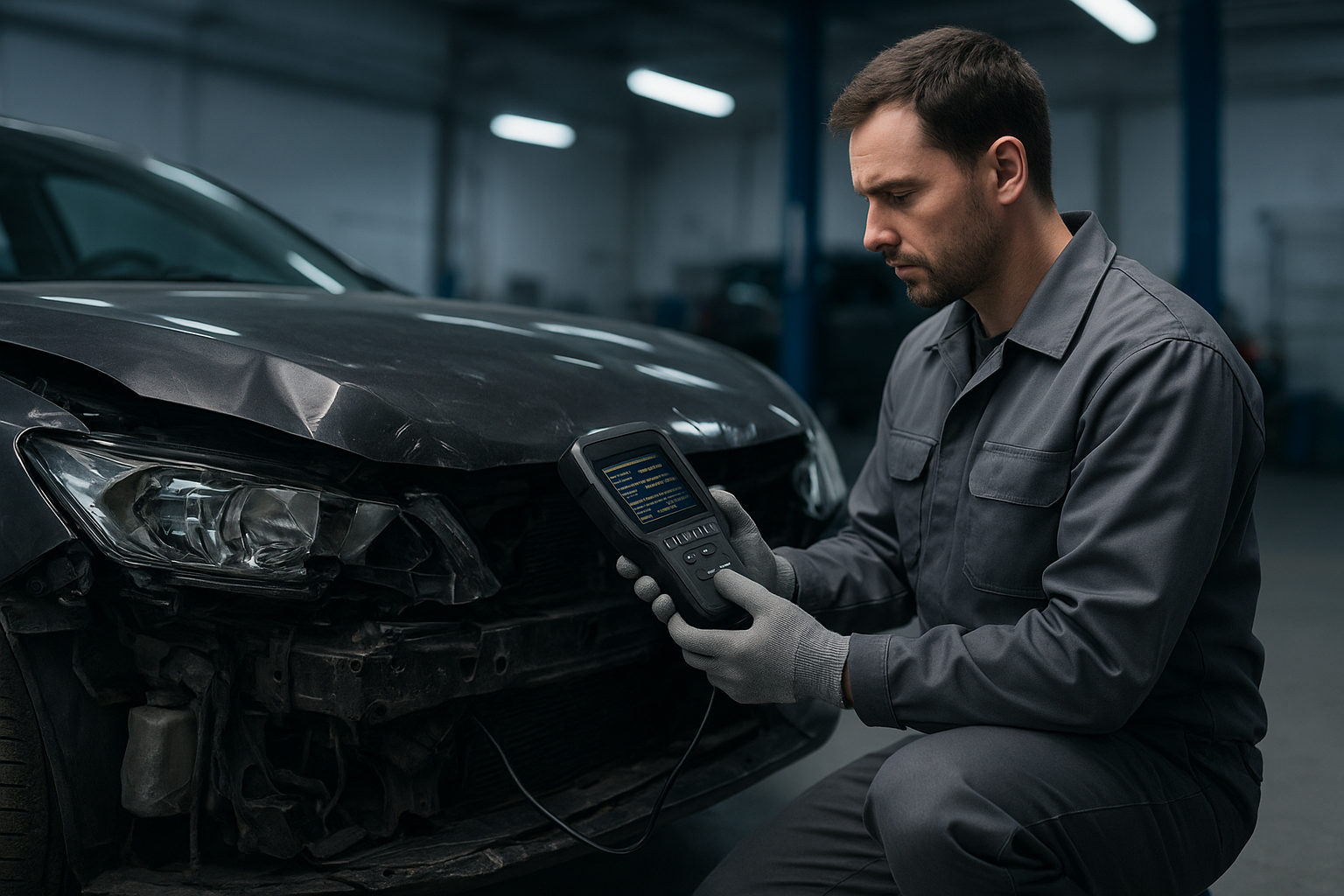
A crash changes more than metal and glass — it can silently compromise the electronic systems your life depends on.
Quick Answer: Electrical diagnostics after collision is the process of scanning, testing, and inspecting a vehicle’s entire electrical system following an accident to uncover hidden damage to wiring, sensors, control modules, and safety systems. It is a non-negotiable step before any repaired vehicle safely returns to the road.
When your vehicle is involved in a crash, the visible dents and broken glass are only part of the story. Electrical diagnostics after collision — the systematic evaluation of your car’s wiring, modules, and electronic safety systems following an accident — is one of the most critical and frequently overlooked steps in the repair process. Modern vehicles contain millions of lines of code and hundreds of sensors working together. A collision, even a minor one, can disrupt that network in ways no visual inspection alone can detect.
What Is Electrical Diagnostics After Collision?
Electrical diagnostics after collision is a structured, technology-assisted inspection process in which certified technicians use OBD-II scanners, oscilloscopes, wiring diagrams, and visual checks to identify any damage to a vehicle’s electrical infrastructure caused by impact forces. Unlike mechanical damage that is often visible, electrical damage hides inside harnesses, beneath trim panels, and within sealed control units.
According to the National Highway Traffic Safety Administration (NHTSA), vehicle electronics and software now govern everything from braking performance to occupant protection systems. When these systems are compromised after a crash and not properly diagnosed, the results can be catastrophic — even if the car appears to drive normally.
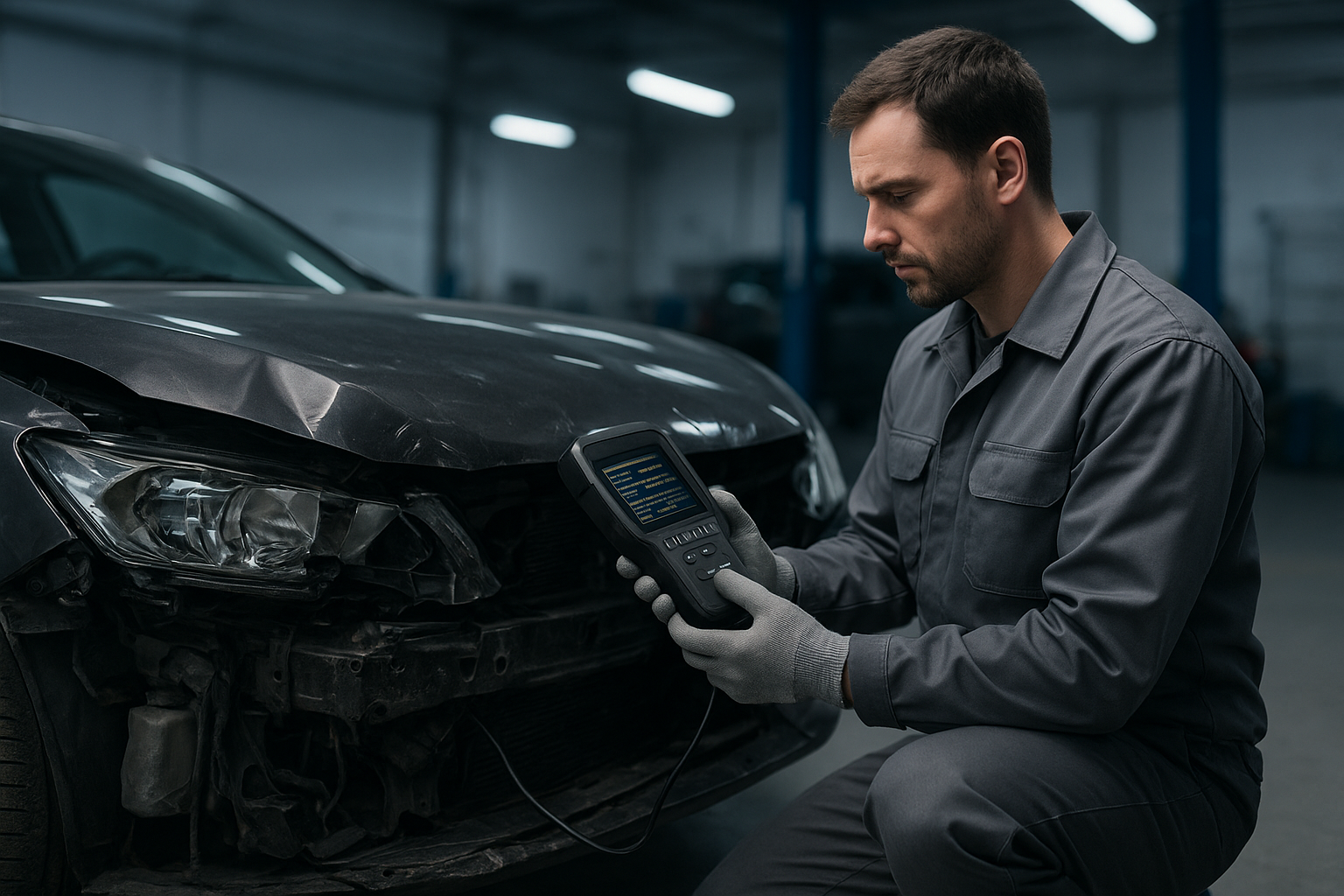
Electrical diagnostics after collision begins with a full scan of all onboard control modules to retrieve stored fault codes invisible to the naked eye.
Why Your Car Can Seem Fine — And Still Have Serious Electrical Damage
This is the most dangerous misconception drivers carry away from an accident scene. A vehicle that starts, shifts gears, and drives down the road can simultaneously have a frayed airbag wiring harness, a disabled ABS wheel speed sensor, or a cracked battery casing slowly leaking acid toward live electrical contacts. None of these conditions will necessarily trigger a dashboard warning light right away.
Impact forces during a collision travel through the vehicle’s frame in complex patterns. A rear-end collision can jar the front battery tray. A side impact can pinch wiring routed along the door sill. Even an airbag deployment — which itself involves explosive electrical charges — leaves behind modules that must be inspected and often replaced entirely before the system is safe again.
Systems Most Vulnerable to Collision Electrical Damage
- Supplemental Restraint System (SRS) — airbags and seatbelt pretensioners
- Anti-lock Braking System (ABS) wheel speed sensors
- Engine Control Unit (ECU) and Transmission Control Module (TCM)
- Body Control Module (BCM) governing lights, locks, and windows
- Advanced Driver Assistance Systems (ADAS) — cameras, radar, and LiDAR
- Battery management systems in hybrid and electric vehicles
- Fuel pump relay and ignition wiring circuits
The Step-by-Step Process Technicians Follow
A professional post-collision electrical inspection is not a single action — it is a layered process that moves from broad system scanning down to individual circuit testing. Here is what a qualified repair facility performs:
Full OBD-II Module Scan
Every control module in the vehicle is queried for stored Diagnostic Trouble Codes (DTCs), including codes that do not activate warning lights. This creates a baseline of all pre-existing and collision-related faults.
Physical Wiring Harness Inspection
Technicians manually trace wiring harnesses in the impact zone, checking for pinching, abrasion, melting, or disconnected connectors. Harnesses near crumple zones are especially vulnerable.
Battery and Charging System Test
The battery’s cold cranking amps, state of charge, and internal resistance are tested. The alternator output and voltage regulator are verified. Battery hold-downs and casing integrity are physically checked.
Airbag and SRS Module Evaluation
The SRS control module is inspected for deployment records and internal damage. Even if airbags did not deploy, the module may have recorded crash data that requires reset or replacement per manufacturer specifications.
ADAS Sensor Calibration Verification
Forward collision cameras, blind-spot radar, and parking sensors must be recalibrated after any repair that moves the bumper, windshield, or body panels. An uncalibrated ADAS system can give false readings or fail to respond in an emergency.
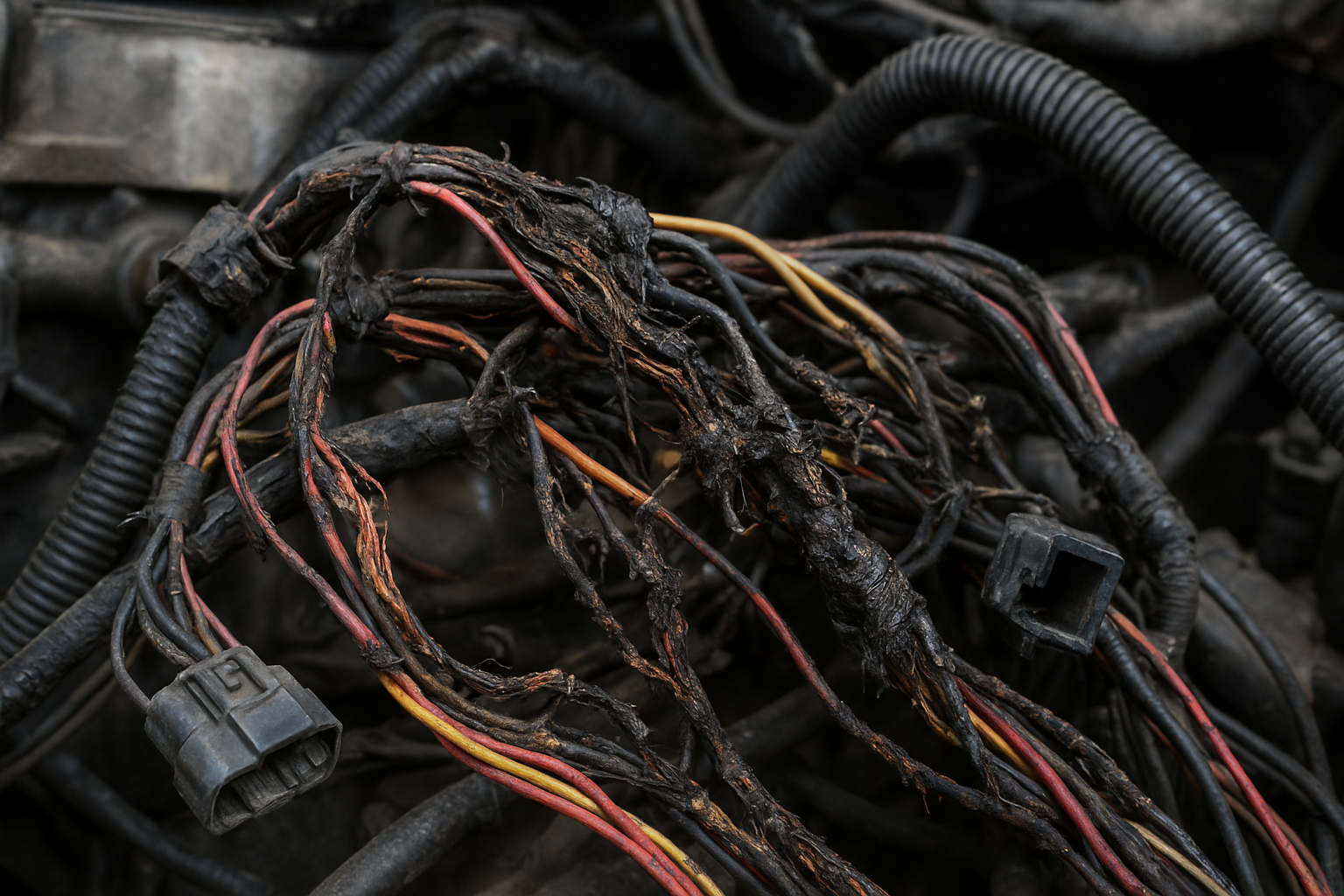
Damaged wiring harnesses are among the most common findings during electrical diagnostics after collision — and among the most dangerous if left unrepaired.
Does Insurance Cover Post-Collision Electrical Diagnostics?
In most cases, yes. If your collision or comprehensive insurance policy covers the accident, the cost of electrical diagnostics is typically included within the repair estimate as a labor line item. However, coverage depends on your policy terms and the insurer’s assessment of what damage is directly related to the collision. Always request that the repair shop document all diagnostic findings in writing and submit them as part of the claim.
It is worth noting that some insurers may push back on diagnostic costs for low-speed impacts. In those situations, a detailed written report from a certified technician explaining the diagnostic necessity is your strongest tool for reimbursement.
Frequently Asked Questions
Why is electrical diagnostics after a collision necessary even if the car starts fine?
A vehicle can start and drive after a collision while still harboring serious electrical damage. Frayed wiring, displaced sensors, and compromised airbag modules may not trigger immediate warning lights but can cause safety failures, fires, or system malfunctions at any time after the accident.
How long does a post-collision electrical inspection take?
A thorough post-collision electrical inspection typically takes between one and three hours depending on the severity of the impact and the complexity of the vehicle’s electronic systems. Vehicles with advanced driver assistance systems (ADAS) may require additional calibration time.
What are the most common electrical problems found after a car accident?
The most common electrical problems found after a car accident include damaged wiring harnesses, blown fuses, faulty airbag control modules, disabled ABS sensors, malfunctioning lighting circuits, and corrupted ECU data. These issues are often invisible to the naked eye and require diagnostic scanning equipment to detect.
Does insurance cover electrical diagnostics after collision?
In most cases, yes. If the collision was covered under your comprehensive or collision insurance policy, the cost of electrical diagnostics after the collision is typically included as part of the repair estimate. Always confirm with your insurer and repair shop before work begins.
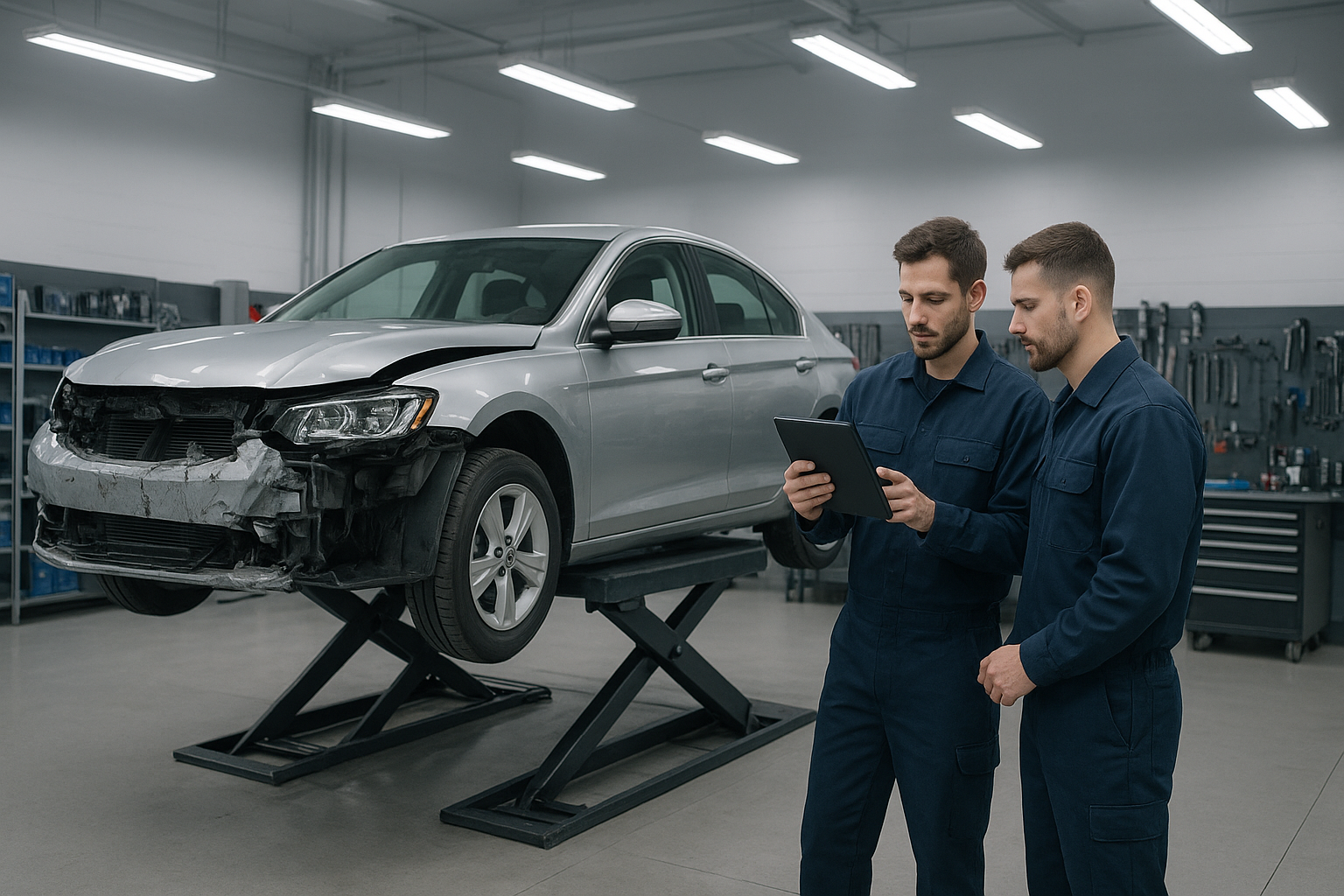
A fully equipped repair facility provides the tools and trained personnel needed to complete a thorough post-collision electrical inspection.
Electric and Hybrid Vehicles: A Higher-Stakes Situation
For battery electric vehicles (BEVs) and hybrid electric vehicles (HEVs), electrical diagnostics after a collision carries even greater urgency. High-voltage battery packs operating at 400 to 800 volts can develop internal cell damage that is invisible externally but poses a serious fire risk hours or even days after the initial impact. Thermal runaway — a chain reaction inside a damaged lithium-ion battery — has been documented in post-collision scenarios where the vehicle appeared fully functional.
Certified EV repair technicians must inspect the high-voltage battery management system (BMS), check for coolant leaks within the battery enclosure, and verify that all high-voltage safety interlocks are intact. This requires specialized training and equipment beyond standard OBD-II scanning — another reason why choosing a qualified collision repair facility matters enormously.
Choosing the Right Facility for Post-Collision Electrical Work
Not every body shop is equipped to perform comprehensive electrical diagnostics. When evaluating a repair facility after an accident, look for these qualifications:
- I-CAR Gold Class certification or equivalent manufacturer training
- OEM-approved repair procedures and access to factory diagnostic software
- Dedicated electrical diagnostic bays with oscilloscope and scan tool capability
- Experience with ADAS recalibration for your specific vehicle make and model
- Transparent written documentation of all diagnostic findings
The team at Brea Auto Body provides comprehensive post-collision electrical diagnostics alongside full structural and cosmetic repair services. Their certified technicians use manufacturer-approved diagnostic tools to ensure every system in your vehicle is functioning correctly before it leaves the shop.
What Happens If Electrical Damage Goes Undetected?
The consequences of skipping electrical diagnostics after a collision range from inconvenient to life-threatening. Here is a realistic picture of what undetected electrical damage can cause:
Airbag Non-Deployment
A compromised SRS module may fail to deploy airbags in a subsequent collision, removing a critical layer of occupant protection.
Electrical Fire Risk
Damaged wiring with compromised insulation can arc against metal components, igniting fires in the engine bay or passenger cabin.
ABS and Stability Failure
Disabled wheel speed sensors can render ABS and electronic stability control inoperative, significantly increasing stopping distances.
ADAS False Readings
Miscalibrated cameras and radar sensors may fail to detect obstacles or generate false emergency braking events at highway speeds.
Final Thoughts: Never Skip Electrical Diagnostics After Collision
The sophistication of modern vehicle electronics means that a collision’s true impact is never fully visible from the outside. Electrical diagnostics after collision is not an optional add-on or an upsell from your repair shop — it is a fundamental safety requirement that protects you, your passengers, and every other person on the road. From airbag integrity to ADAS calibration to battery management systems, every electronic layer of your vehicle deserves the same careful attention as the bodywork you can see.
Before you accept your repaired vehicle back from any shop, ask directly: “Was a full electrical diagnostic performed, and can I see the scan report?” A trustworthy facility will answer yes to both without hesitation. For drivers in the Southern California area, Brea Auto Body offers the certified expertise and diagnostic technology needed to ensure your vehicle is genuinely safe — not just cosmetically repaired.
Your Safety Starts With a Full Electrical Inspection
After any collision, insist on comprehensive electrical diagnostics before driving your vehicle. The systems you cannot see are often the ones that matter most.

