

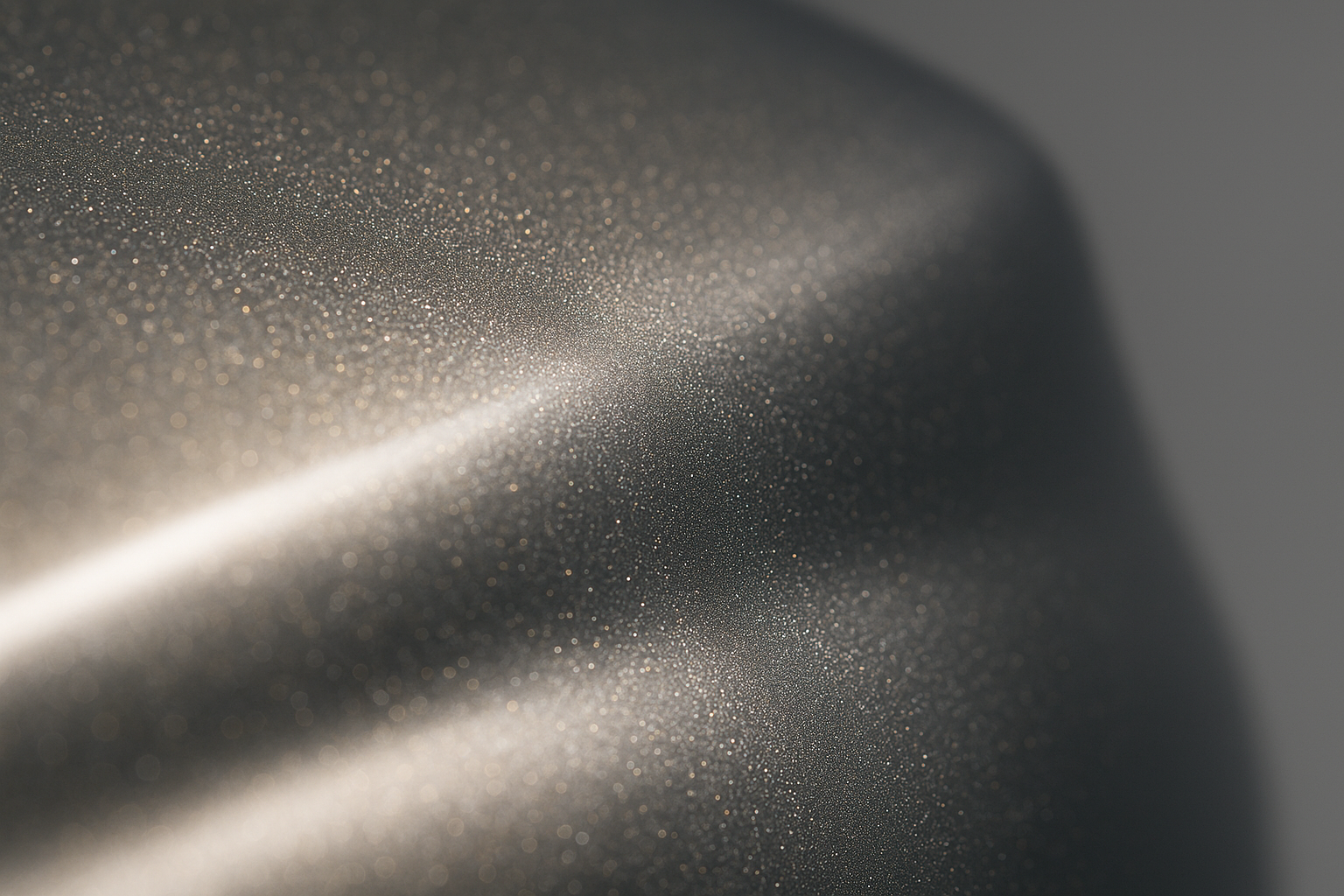
Automotive Refinishing Guide
Why matching metallic paint is one of the most precise skills in collision repair — and how the pros get it right.
Paint matching for metallic finishes is the highly technical process of precisely replicating a vehicle’s existing metallic paint — including its color tone, aluminum or mica flake size, flake density, and application angle — so that a repaired or repainted panel blends invisibly with the surrounding original surface. It sounds straightforward, but anyone who has tried to touch up a silver, champagne, or deep-blue metallic vehicle knows the reality: even a fraction of a degree in spray angle or a slightly wrong flake concentration can make the repair glaringly obvious in direct sunlight.
Quick Answer
Paint matching for metallic finishes requires scanning the existing paint with a spectrophotometer, mixing a custom formula that accounts for fading and flake behavior, and blending the new paint into adjacent panels. When done by a skilled technician, the result is virtually invisible to the naked eye.
What Is Paint Matching for Metallic Finishes?
Paint matching for metallic finishes is a multi-step diagnostic and application process unique to metallic automotive coatings. Unlike solid colors — which reflect light uniformly — metallic paints contain microscopic reflective particles, typically aluminum flakes or synthetic mica, suspended within the pigment layer. These particles catch and scatter light, producing the characteristic shimmer and depth that makes metallic finishes so visually appealing.
According to the Wikipedia overview of automotive paint, modern vehicle finishes typically consist of multiple layers: a primer coat, a base coat containing the color and metallic particles, and a clear coat that protects the surface and adds gloss. Matching a metallic finish means replicating every one of those variables simultaneously.
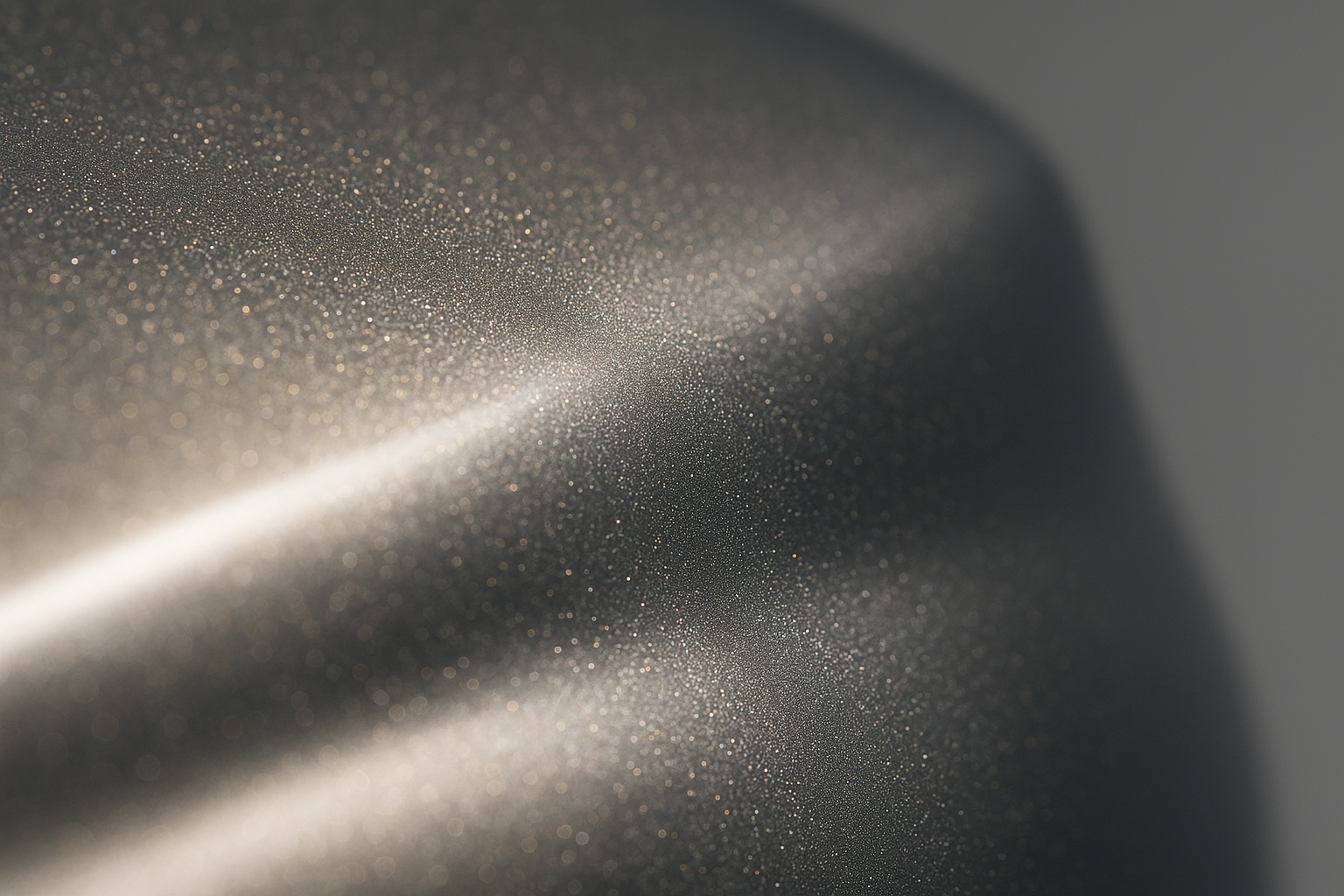
The tiny aluminum flakes in metallic paint create a dynamic shimmer that makes paint matching for metallic finishes far more complex than solid color work.
Why Metallic Paint Is So Difficult to Match
Solid paint colors present a single variable: hue. Metallic finishes present at least five distinct variables that must all align perfectly:
- Flake size: Coarser flakes produce a bold, sparkly effect; finer flakes create a smoother, satin-like sheen. Mismatching flake size is immediately visible.
- Flake density: The concentration of particles per square inch affects how bright or subdued the metallic effect appears.
- Flake orientation: The angle at which flakes settle during application is controlled by spray pressure, distance, and technique. Flakes lying flat produce maximum brightness; tilted flakes create a darker, more directional sparkle.
- Color shift (goniochromism): Many metallic paints look dramatically different at different viewing angles — lighter face-on, darker from the side. This phenomenon must be replicated exactly.
- Weathering and fade: Original factory paint ages with UV exposure. A fresh mix using the factory code will often look slightly too bright or too saturated against the aged surrounding panels.
How Professionals Approach Metallic Paint Matching
Experienced collision repair technicians follow a disciplined, multi-stage process when tackling metallic paint jobs. Here is how it typically unfolds:
Step 01
Paint Code Retrieval
The technician locates the manufacturer’s paint code, usually found on a sticker inside the door jamb, under the hood, or in the trunk. This code is the starting point for the formula.
Step 02
Spectrophotometer Scanning
A spectrophotometer is placed directly on the undamaged paint. It measures light reflectance at multiple angles, producing a precise digital profile of the existing color and metallic character.
Step 03
Formula Mixing & Test Sprays
Using the scan data, the technician mixes a custom batch of paint. Test sprays are applied to spray-out cards and compared to the vehicle under multiple lighting conditions before the final application.
Step 04
Panel Blending
Even a perfect formula rarely stops at the damaged panel’s edge. Technicians blend the new paint into adjacent panels using a gradual fade technique, making the transition imperceptible.
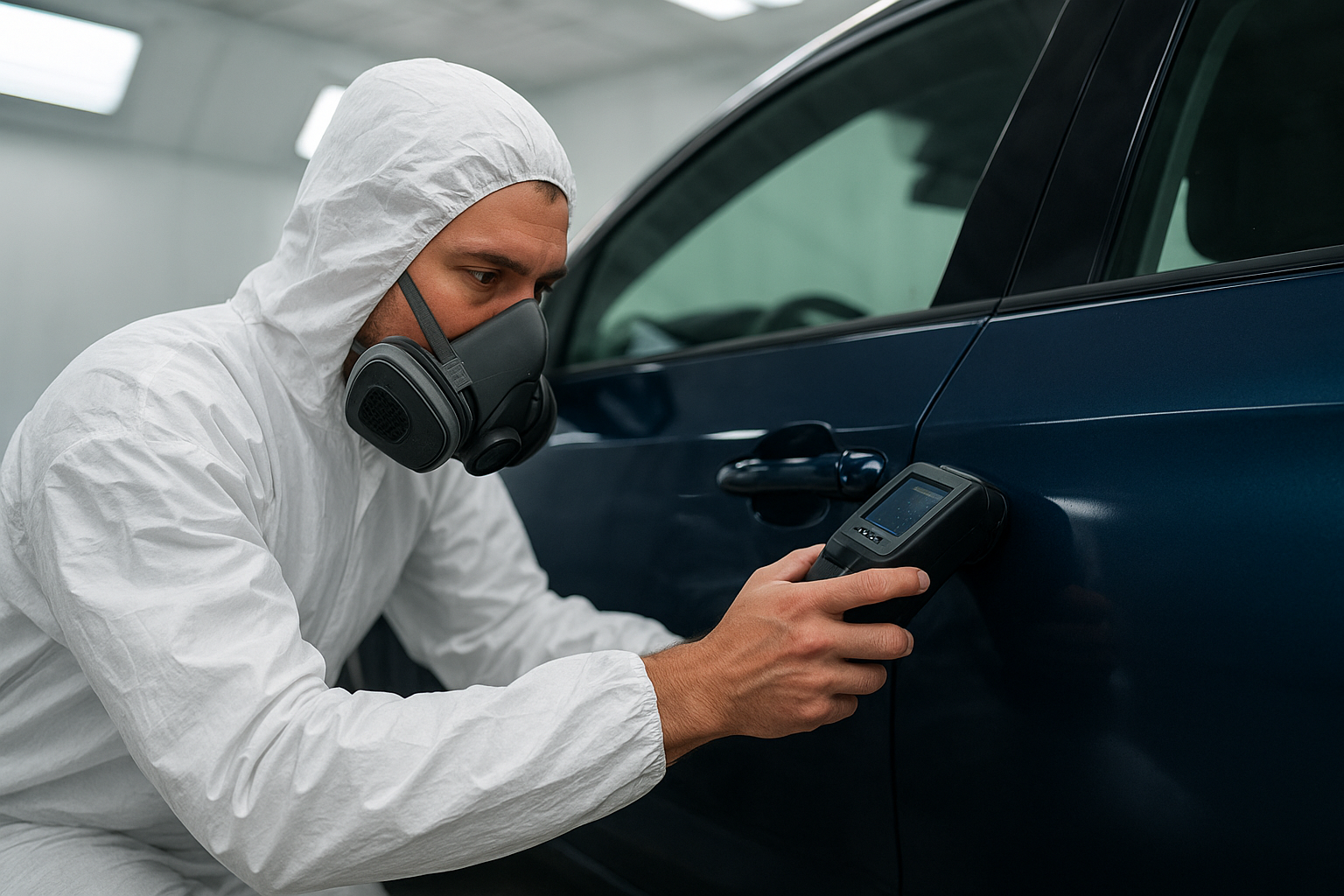
A spectrophotometer captures precise light-reflectance data from the existing paint, giving technicians the scientific foundation for an accurate formula.
The Role of Spray Technique in Metallic Matching
Even a perfectly formulated metallic paint can look wrong if applied incorrectly. Spray gun distance, air pressure, and pass speed all influence how metallic flakes orient themselves as the paint lands on the panel. Flakes applied with high pressure and fast passes tend to lie flat, maximizing brightness. Slower, closer passes can cause flakes to stand on edge, darkening the finish and creating a grainier texture.
This is why spray technique is considered an art form alongside the science of formula mixing. Elite technicians develop an intuitive feel for how a specific metallic formula behaves under their equipment — knowledge that only comes from years of hands-on experience.
Common Metallic Paint Matching Challenges
Several recurring challenges make metallic paint matching uniquely demanding:
Discontinued or reformulated codes: Paint manufacturers occasionally reformulate colors or discontinue pigments. A code from a 2009 vehicle may not produce the same result with today’s pigment supply chain, requiring manual adjustment.
Three-stage and four-stage finishes: Some premium metallic finishes — particularly pearl and tri-coat colors — involve three or four separate layers, each contributing to the final visual effect. Each layer must be matched independently.
Panel-to-panel variation: Even from the factory, adjacent panels on the same vehicle can have subtle color variation due to different spray robots or batch differences. A skilled technician accounts for this when deciding how far to blend.
Temperature and humidity: Environmental conditions in the spray booth affect how quickly the solvent evaporates, which directly influences flake orientation. Professional booths maintain controlled temperature and airflow to minimize this variable.
Frequently Asked Questions
Why is metallic paint harder to match than solid colors?
Metallic paint contains tiny aluminum or mica flakes that reflect light differently depending on viewing angle. This means the color appears to shift — a phenomenon called goniochromism — making it far more difficult to replicate than solid, single-tone paint colors that reflect light uniformly in all directions.
Does metallic paint fade over time and affect matching?
Yes. Metallic paint oxidizes and fades with UV exposure over time. Technicians must account for this weathering when mixing a new formula, often adjusting the tint slightly so the repaired area matches the aged surrounding panels rather than the original factory specification.
Can paint matching for metallic finishes be done perfectly?
In most cases, highly skilled technicians using modern spectrophotometry and proper blending techniques can achieve a result that is virtually indistinguishable to the naked eye, even under direct sunlight. The key is choosing a shop with the right equipment and documented experience with metallic finishes.
How long does a metallic paint match repair take?
A single-panel metallic repair typically takes one to three days when including prep, primer, base coat, clear coat, and curing time. More complex blending jobs involving multiple panels may take longer depending on the shop’s workflow and drying conditions.
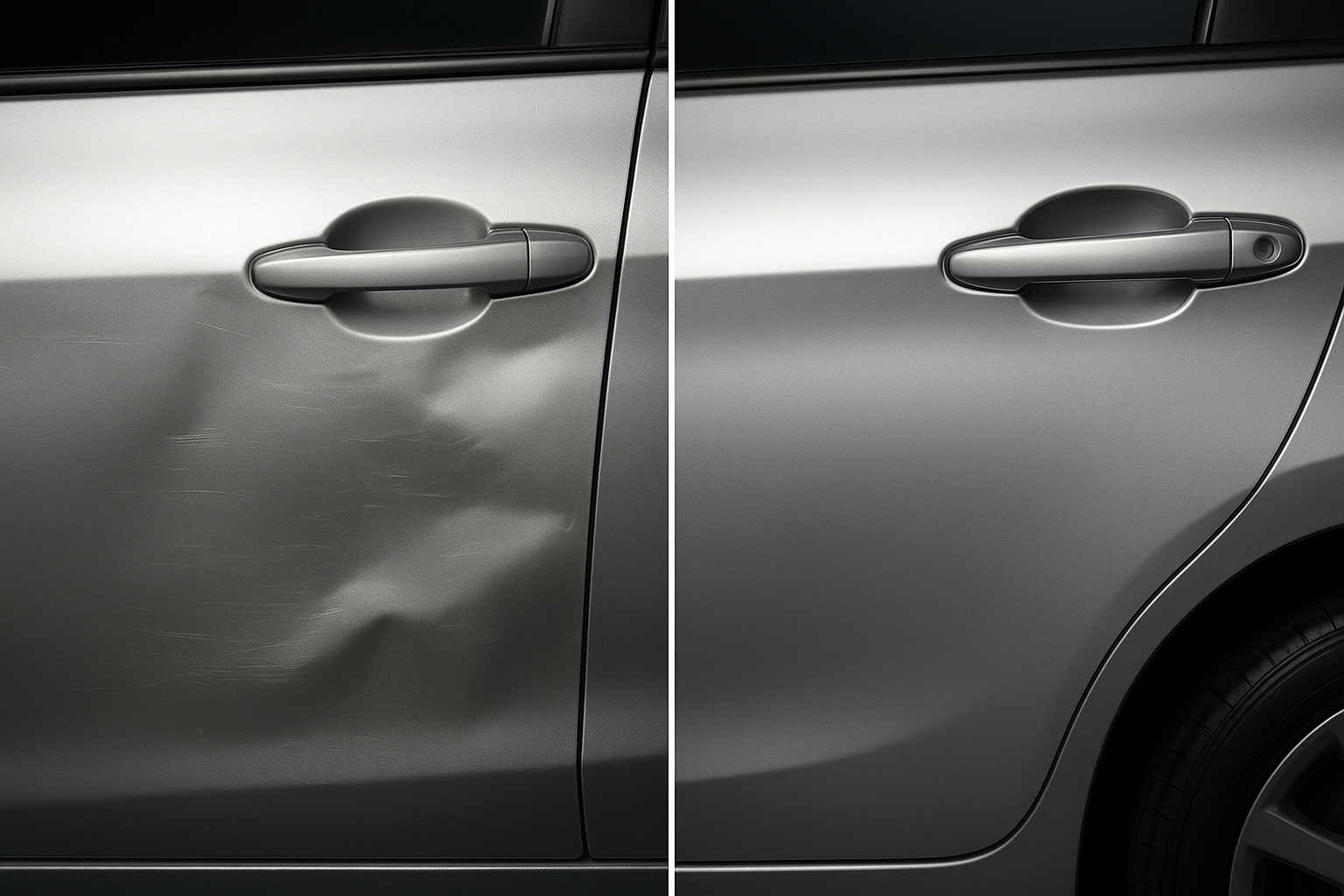
A professional metallic paint repair, when done correctly, should be completely invisible — matching gloss, depth, and flake behavior of the original finish.
What to Look for in a Metallic Paint Matching Shop
Not all body shops are equally equipped for metallic paint matching. When evaluating a shop, look for the following:
- Spectrophotometer on-site: This device is non-negotiable for accurate metallic matching. If a shop doesn’t have one, they are guessing.
- Climate-controlled spray booth: Temperature and humidity control directly affect flake orientation and finish quality.
- Certified technicians: Look for I-CAR Gold Class certification or manufacturer-specific training, which ensures technicians are trained in the latest metallic paint techniques.
- Portfolio of metallic work: Ask to see examples of previous metallic paint repairs, ideally in the same color family as your vehicle.
- Written warranty: A reputable shop will stand behind their paint work with a documented warranty covering peeling, fading, and color mismatch.
If you are in the Southern California area and need expert-level paint matching for metallic finishes, the team at Brea Auto Body brings decades of refinishing experience and advanced color-matching technology to every repair.
Caring for Your Vehicle After a Metallic Paint Repair
Once your metallic paint repair is complete, proper aftercare helps preserve the match quality and protect the new finish long-term:
- Wait at least 30 days before applying wax or polish to newly painted panels.
- Avoid automatic car washes with abrasive brushes, which can scratch and dull metallic clear coats.
- Use a pH-neutral car shampoo and a microfiber wash mitt to protect the flake layer beneath the clear coat.
- Apply a UV-protective ceramic coating or quality carnauba wax every three to six months to slow oxidation and keep the metallic finish vibrant.
- Park in shaded or covered areas when possible to reduce UV exposure and slow the natural fading process.
Conclusion: Precision Is Everything in Metallic Paint Matching
Paint matching for metallic finishes sits at the intersection of chemistry, physics, and skilled craftsmanship. The dynamic way metallic flakes interact with light means there is no shortcut — every variable from flake size and spray pressure to booth temperature and aging correction must be addressed with precision. When all of those elements come together in the hands of an experienced technician, the result is a repair that disappears completely into the original finish.
Whether your vehicle has a subtle silver metallic, a vibrant candy-blue, or a complex tri-coat pearl finish, choosing the right body shop makes all the difference. Look for shops that invest in proper technology, trained technicians, and a transparent warranty. For drivers in the Brea and greater Orange County area, Brea Auto Body is a trusted resource for factory-quality metallic paint repairs.
Key Takeaway
Metallic paint matching is a science-backed art form. The right shop, the right tools, and the right technique produce results that are invisible — even under the harshest light.

