

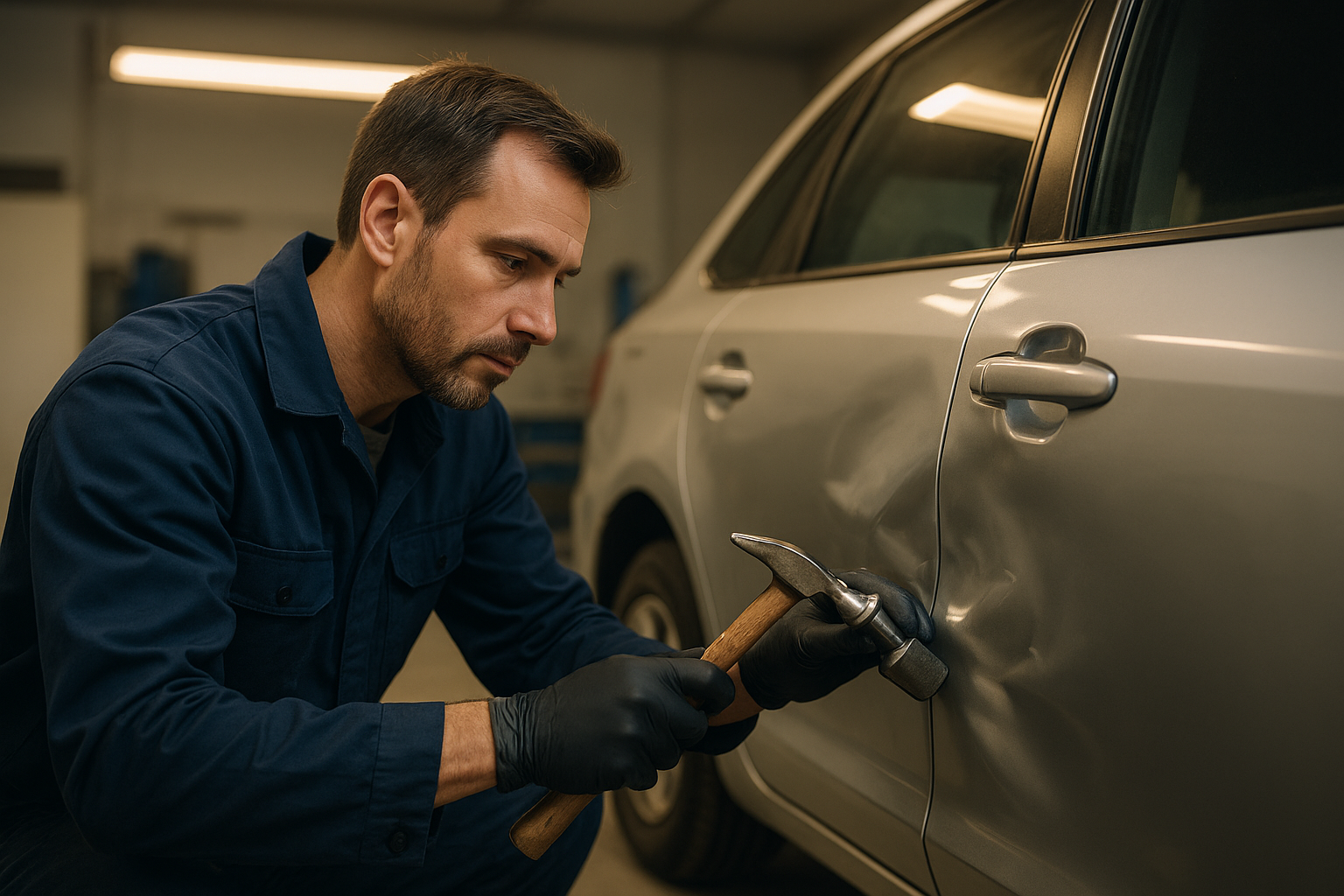
Auto body mechanics are skilled tradespeople who repair, restore, and refinish the exterior structures of damaged vehicles. Whether your car has been in a collision, battered by hail, or simply accumulated years of scratches and rust, these technicians are the professionals who bring it back to pre-damage condition — both structurally and cosmetically. Last updated: 2026-06-22. Author: Brea Auto Body team. See our auto body repair guide for in-depth steps and tools.
However, many drivers confuse auto body mechanics with general automotive mechanics. In practice, the two roles are quite different. Understanding what auto body specialists actually do — and why their work matters — helps you make smarter decisions after an accident or when your vehicle needs cosmetic attention.
What Do Auto Body Mechanics Actually Do?
Auto body mechanics is a broad term that covers multiple repair disciplines. At its core, the job involves restoring a vehicle’s body panels, frame, glass, and finish after damage. According to the U.S. Bureau of Labor Statistics, automotive body repairers work on damaged metal, plastic, fiberglass, and other materials to return vehicles to their original condition.
Their day-to-day tasks typically include straightening bent frames, replacing crumpled panels, repairing or replacing damaged glass, and applying paint that matches the original factory finish. Additionally, they often work alongside insurance adjusters to document and estimate repair costs accurately.
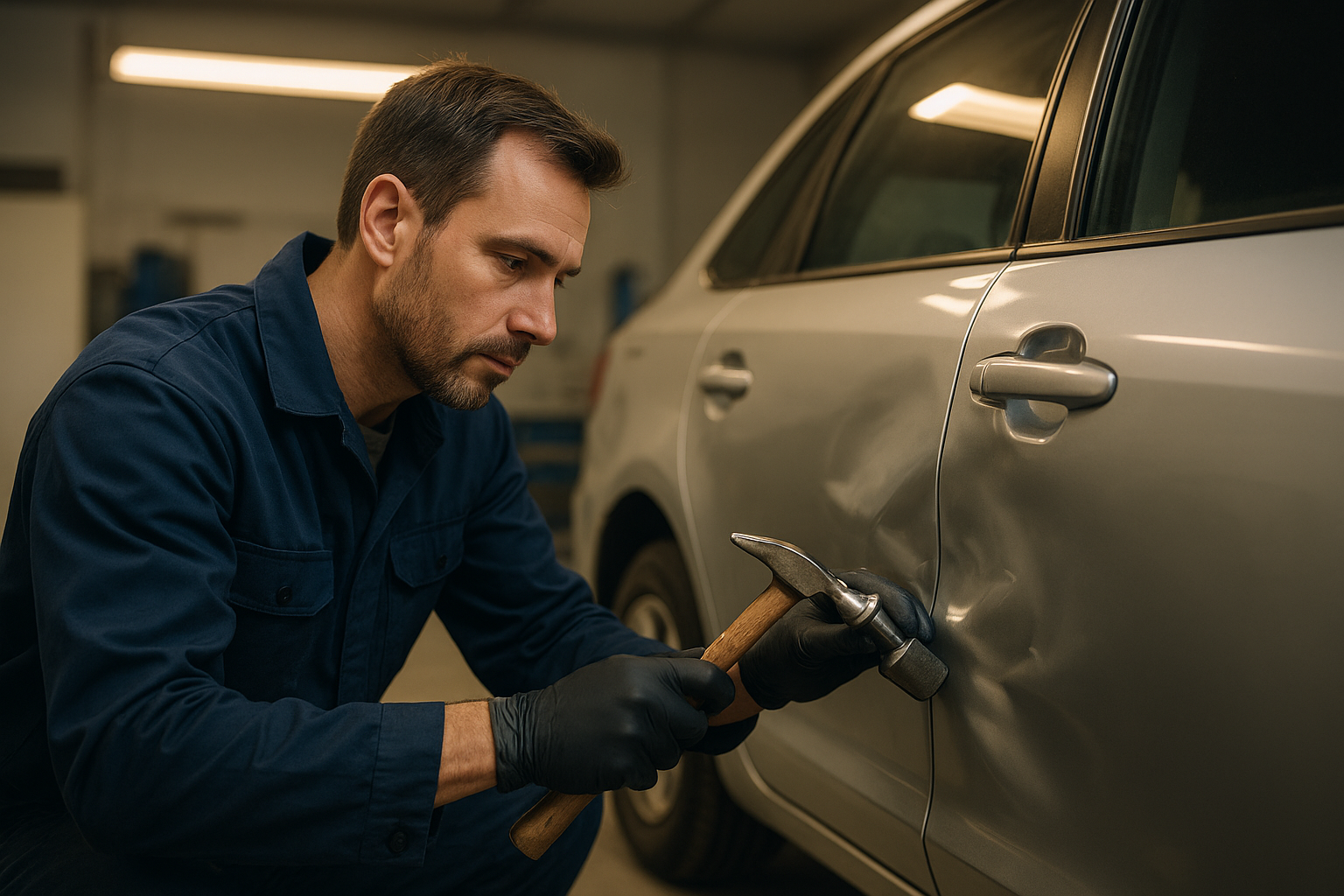
Auto body mechanics use specialized hand tools to restore damaged panels to their original shape.
Core Skills and Specializations
The field encompasses several distinct skill areas. Because modern vehicles use a mix of steel, aluminum, and composite materials, technicians must be proficient across all of them. The most common specializations include:
- Frame and structural repair — Using hydraulic straightening equipment to restore a vehicle’s unibody or frame to factory specifications.
- Panel replacement and welding — Cutting out and welding in new metal panels when damage is too severe to repair in place.
- Paintless dent repair (PDR) — Massaging small dents out from behind a panel without disturbing the paint surface.
- Paint refinishing — Mixing, spraying, and blending paint to match the vehicle’s original color code seamlessly.
- Glass replacement — Removing and installing windshields, side windows, and rear glass using adhesive bonding systems.
As a result of these varied demands, experienced technicians often hold certifications from organizations like ASE (Automotive Service Excellence) or complete training through I-CAR, the Inter-Industry Conference on Auto Collision Repair.
How the Repair Process Works Step by Step
Understanding the repair workflow helps you set realistic expectations when dropping off your vehicle. First, the technician performs a thorough damage assessment, documenting everything with photos and computerized measuring tools.
Step-by-Step: What Happens to Your Car
- Damage assessment — Technicians inspect and photograph all visible and hidden damage.
- Parts ordering — OEM or quality aftermarket parts are ordered based on the repair plan.
- Disassembly — Damaged panels and components are carefully removed to expose underlying structure.
- Frame and structural work — If the frame is bent, hydraulic equipment pulls it back into alignment.
- Panel repair or replacement — Dents are worked out or new panels are welded in place.
- Surface preparation and painting — Surfaces are sanded, primed, painted, and clear-coated to match the original finish.
- Reassembly and quality check — All components are reinstalled and the vehicle undergoes a final inspection before delivery.
Therefore, even what appears to be a simple fender bender can involve multiple stages. Minor repairs may take one to two days, while extensive structural damage can require one to two weeks depending on parts availability and the complexity of the work.
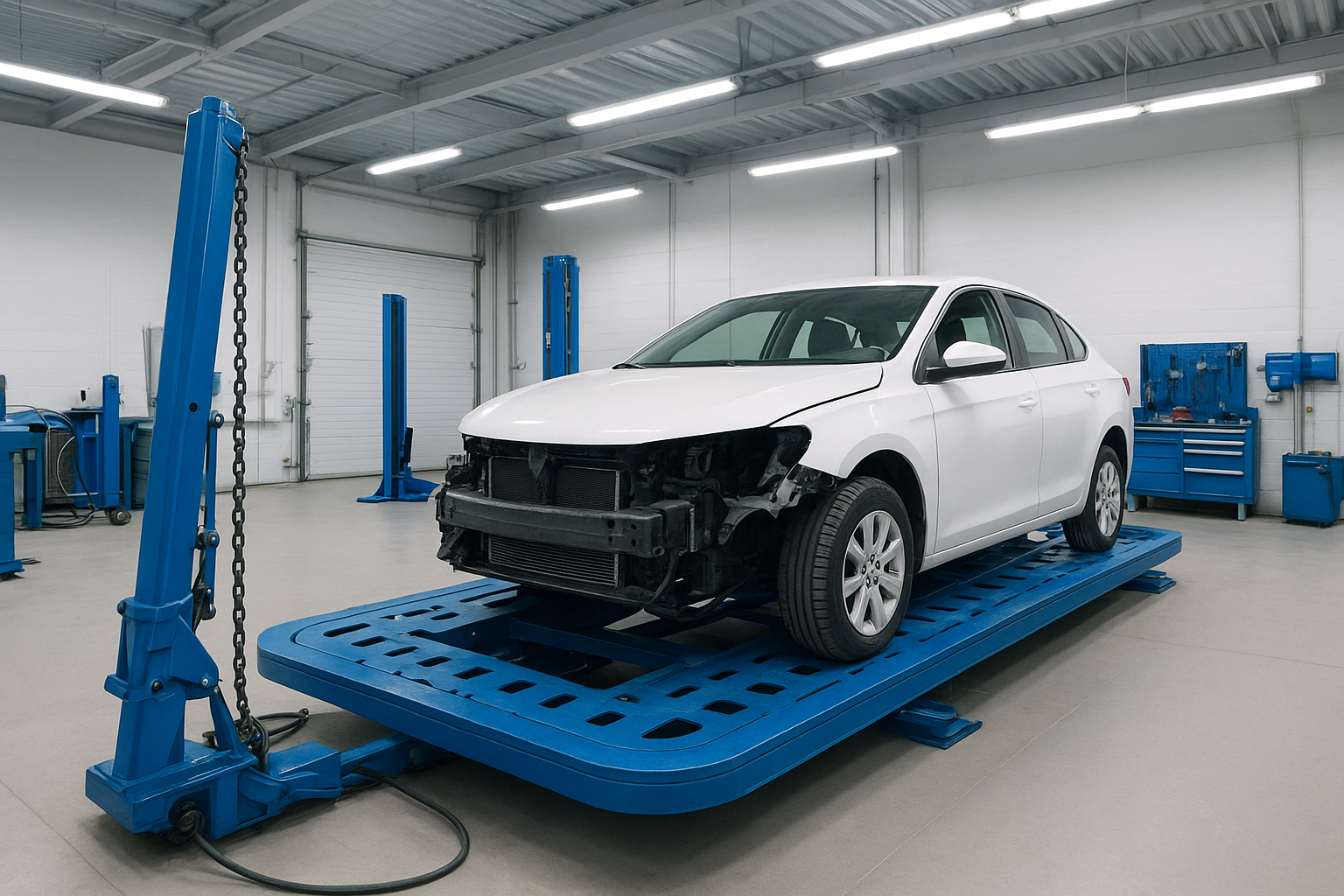
Frame straightening equipment restores a vehicle’s structural integrity after serious collision damage.
Body Repair vs. Mechanical Repair: Understanding the Difference
Many car owners are unsure whether to visit a body shop or a general mechanic after an accident. In practice, the distinction is straightforward. General mechanics handle drivetrain components — engines, transmissions, brakes, and suspension systems. Auto body specialists, by contrast, focus entirely on the vehicle’s exterior structure, panels, glass, and finish.
However, a significant collision can damage both systems simultaneously. For example, a front-end impact might bend the frame and also damage the radiator or steering components. In those cases, a full-service shop — or a body shop that collaborates closely with a mechanical facility — is the best choice. Shops like Brea Auto Body handle both structural and cosmetic repairs under one roof, streamlining the process for customers.
Choosing the Right Shop: 5 Things That Matter Most
Not all body shops deliver the same quality of work. Because your vehicle’s safety and resale value are on the line, it pays to be selective. See tips on choosing the best auto body shop near you before deciding.
1. Certifications
Look for ASE-certified technicians and I-CAR Gold Class shop recognition — these signal ongoing training and industry standards compliance.
2. Written Estimates
Always get a detailed written estimate that breaks down parts, labor, and paint costs separately before authorizing any work.
3. Repair Warranty
Reputable shops stand behind their work with a written warranty covering both parts and labor — often for the lifetime of your ownership.
4. Customer Reviews
Recent Google and Yelp reviews reveal how a shop handles communication, timelines, and any issues that arise during the repair process.
Additionally, consider whether the shop has experience with your specific vehicle make. European luxury vehicles, for instance, often require manufacturer-specific repair procedures and materials that not every shop is equipped to handle.
Common Mistakes Drivers Make After an Accident
After a collision, it is easy to make decisions that complicate the repair process or cost you more money. One of the most frequent mistakes is delaying repairs. Although a small dent may seem purely cosmetic, exposed metal rusts quickly, and misaligned panels can stress surrounding components over time.
Another common error is letting your insurance company direct you exclusively to their preferred shop without comparing options. In most states, you have the legal right to choose your own repair facility. Furthermore, accepting a verbal estimate instead of a written one leaves you unprotected if the final bill differs significantly from what was discussed.
Finally, skipping the post-repair inspection is a mistake many drivers make. Before driving away, walk around the vehicle with the technician, check panel gaps, verify paint color match in natural light, and confirm that all replaced components operate correctly. If you need local options, try our find local body shop page to compare nearby providers.
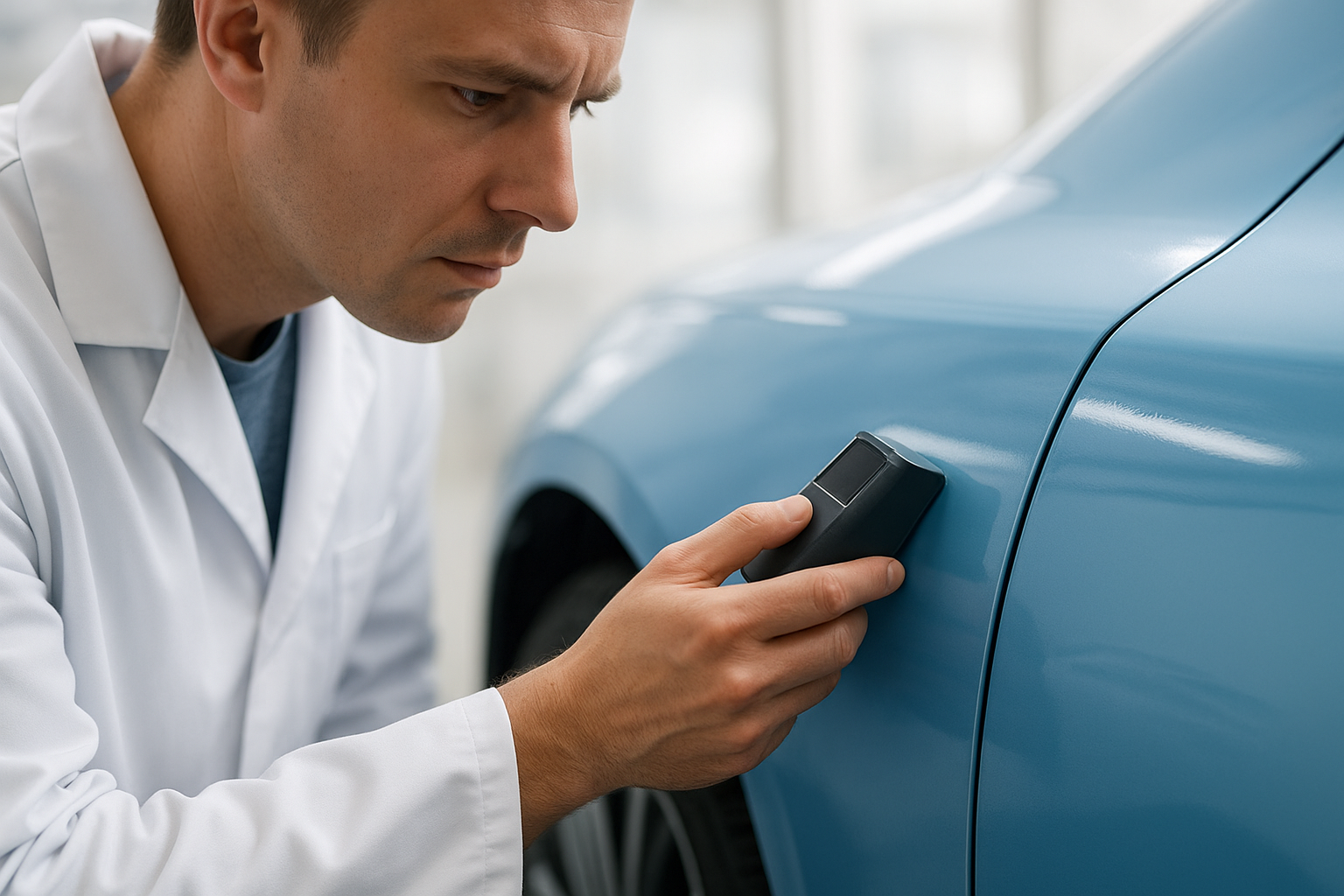
A thorough post-repair inspection ensures paint color match and panel alignment meet factory standards.
How Technology Is Changing the Field
Modern auto body repair has evolved dramatically over the past decade. Today, computerized frame measuring systems verify structural alignment to within millimeters. Spectrophotometers scan a vehicle’s existing paint and generate precise mixing formulas, eliminating guesswork from color matching.
Advanced driver assistance systems (ADAS) — including lane-keeping cameras, radar sensors, and parking systems — are now embedded in bumpers, mirrors, and windshields. As a result, modern body shops must recalibrate these systems after any repair that affects their mounting position. This requirement has made ADAS calibration a critical new competency for auto body technicians.
Shops that invest in this technology and training — such as those found at Brea Auto Body — are better positioned to handle the full complexity of today’s vehicles safely and correctly.
Why Skilled Auto Body Mechanics Are Worth the Investment
Choosing experienced auto body mechanics is ultimately an investment in your vehicle’s safety, performance, and long-term value. Poor-quality repairs can compromise structural integrity in a future collision, create paint adhesion failures that lead to rust, and reduce resale value significantly.
In contrast, a properly repaired vehicle performs as the manufacturer intended, retains its resale value, and provides reliable protection in the event of another accident. Therefore, the extra time spent finding a certified, reputable shop pays dividends well beyond the immediate repair.
Frequently Asked Questions
What do auto body mechanics do?
Auto body mechanics repair and restore the exterior structure of vehicles after collisions, weather damage, or general wear. Their work includes dent removal, panel replacement, frame straightening, and paint refinishing. They also handle glass replacement and, increasingly, ADAS sensor recalibration.
How are auto body mechanics different from regular mechanics?
Regular mechanics focus on mechanical systems such as engines, transmissions, and brakes. Auto body mechanics specialize in the structural and cosmetic restoration of a vehicle’s exterior, including panels, frames, and paint. Although their skills sometimes overlap after major collisions, each profession requires distinct training.
What certifications should a good auto body mechanic have?
The most recognized credential is ASE (Automotive Service Excellence) certification in collision repair. I-CAR training is another widely respected program. Together, these certifications confirm that a technician meets current industry repair standards.
How long does auto body repair typically take?
Minor repairs such as small dents or scratches may take one to two days. More extensive collision damage involving frame work or full panel replacement can take one to two weeks depending on parts availability and shop workload.
Does insurance cover auto body repair?
Comprehensive and collision insurance policies typically cover auto body repair costs after an accident, minus your deductible. Liability-only policies generally do not cover repairs to your own vehicle. Always confirm coverage details with your insurer before authorizing work.
What is paintless dent repair?
Paintless dent repair (PDR) is a technique where technicians use specialized tools to massage dents out from behind a panel without disturbing the original paint. It is ideal for small dings and hail damage, and it is typically faster and less expensive than traditional dent repair.
How much does auto body repair cost?
Costs vary widely depending on the extent of damage. Minor dent repairs can cost $100 to $300, while major collision repairs involving structural damage can run $1,500 to $10,000 or more. Getting multiple written estimates helps ensure you receive fair pricing.
Can auto body mechanics fix rust damage?
Yes, auto body mechanics can treat surface rust and replace panels affected by deep rust. Early treatment is important because rust spreads and can compromise structural integrity over time. Addressing rust promptly saves money and protects vehicle safety.
What should I look for when choosing an auto body shop?
Look for ASE or I-CAR certified technicians, positive customer reviews, written estimates, and a warranty on repairs. Experience with your specific vehicle make is also valuable, particularly for luxury or European brands that require manufacturer-specific procedures.
Is it safe to drive a car with body damage?
It depends on the type of damage. Cosmetic scratches or small dents are generally safe to drive with temporarily. However, structural damage, misaligned panels, or compromised safety systems should be addressed immediately to avoid further risk.
What tools do auto body mechanics use?
Auto body mechanics use frame straightening machines, welding equipment, dent pulling tools, orbital sanders, spray paint systems, and computerized measuring systems. Modern shops also use spectrophotometers for paint color matching and ADAS calibration equipment.
How do auto body mechanics match paint color?
Technicians use the vehicle’s paint code, typically found on a sticker inside the door jamb, to mix an exact color match. Modern computerized mixing systems and spectrophotometers help achieve a seamless blend that is nearly indistinguishable from the factory finish.
Final Thoughts on Finding the Right Auto Body Mechanics
Skilled auto body mechanics do far more than make your car look good — they restore structural safety, preserve resale value, and ensure that every system on your vehicle functions as intended. Therefore, taking the time to find a certified, reputable shop is one of the most important decisions you can make after any accident or cosmetic damage event.
Whether you need minor dent removal or comprehensive collision repair, prioritize shops with verified certifications, transparent pricing, and a clear warranty policy. The result will be a vehicle that looks, drives, and protects as well as it did the day it left the factory. Author: Brea Auto Body team. Last updated: 2026-07-22.

