

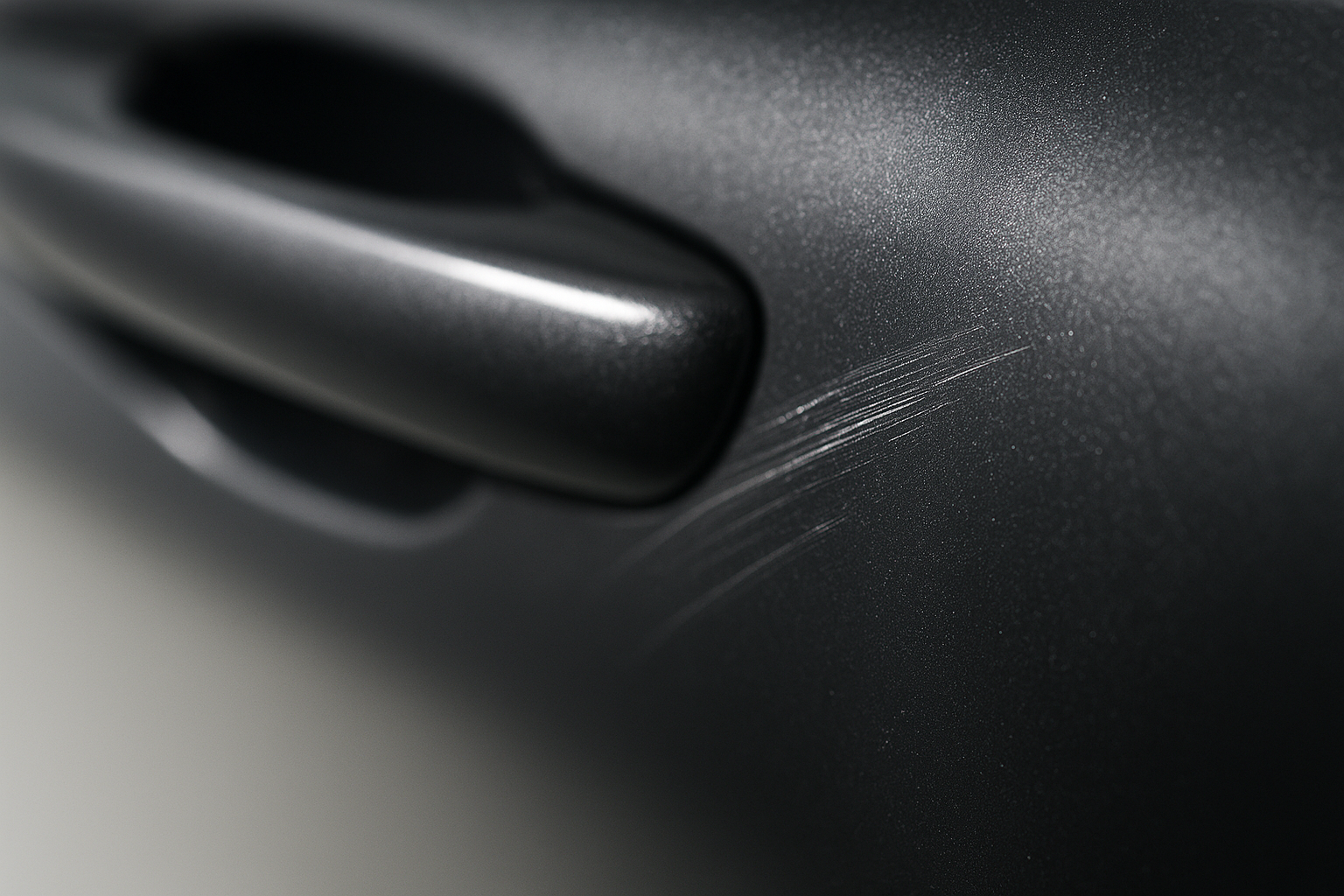
Understanding how deep of a scratch can be buffed out is the first step to saving money and protecting your car’s finish. Not every scratch needs a body shop — but not every scratch can be fixed with a polishing cloth either.
In general, only scratches that remain within the clear coat layer can be successfully buffed out. Deeper damage — reaching the base coat, primer, or bare metal — requires professional paint repair. Knowing the difference saves time, money, and prevents making the damage worse.
What Is a Car’s Paint Structure?
To understand scratch depth, you first need to understand how automotive paint works. According to the Wikipedia overview of automotive paint, modern vehicles typically have four distinct layers applied to bare metal.
These layers, from the inside out, are: the primer (adhesion and rust protection), the base coat (your car’s color), the clear coat (transparent protective layer), and sometimes a sealer. The clear coat is usually 40 to 60 microns thick — roughly the width of a human hair.
Therefore, a scratch’s repairability depends entirely on which layer it has damaged. The shallower the scratch, the better your DIY options.
How Deep of a Scratch Can Be Buffed Out?
How deep of a scratch can be buffed out is a question with a clear answer: only scratches confined to the clear coat layer respond to buffing and polishing. Once a scratch cuts through to the color coat or deeper, buffing alone will not restore the finish.
Here is a quick breakdown of scratch types by depth and their typical treatment:
- Clear coat scratch (Level 1): Hazy or white marks on the surface. Buffable at home.
- Base coat scratch (Level 2): Color layer is disturbed. Needs professional paint correction or touch-up.
- Primer scratch (Level 3): Gray or white primer is visible. Requires sanding, priming, and repainting.
- Bare metal scratch (Level 4): Silver metal is exposed. Urgent professional repair needed to prevent rust.
The Fingernail Test: Your First Diagnostic Tool
The fingernail test is the fastest way to gauge scratch depth. Simply drag your fingernail gently across the scratch at a 90-degree angle. If your nail glides smoothly without catching, the scratch is most likely a surface-level clear coat mark that buffing can address.
However, if your nail catches in the groove, the scratch has cut deeper into the paint layers. In that case, polishing alone will not solve the problem — and may actually remove more protective clear coat unnecessarily.
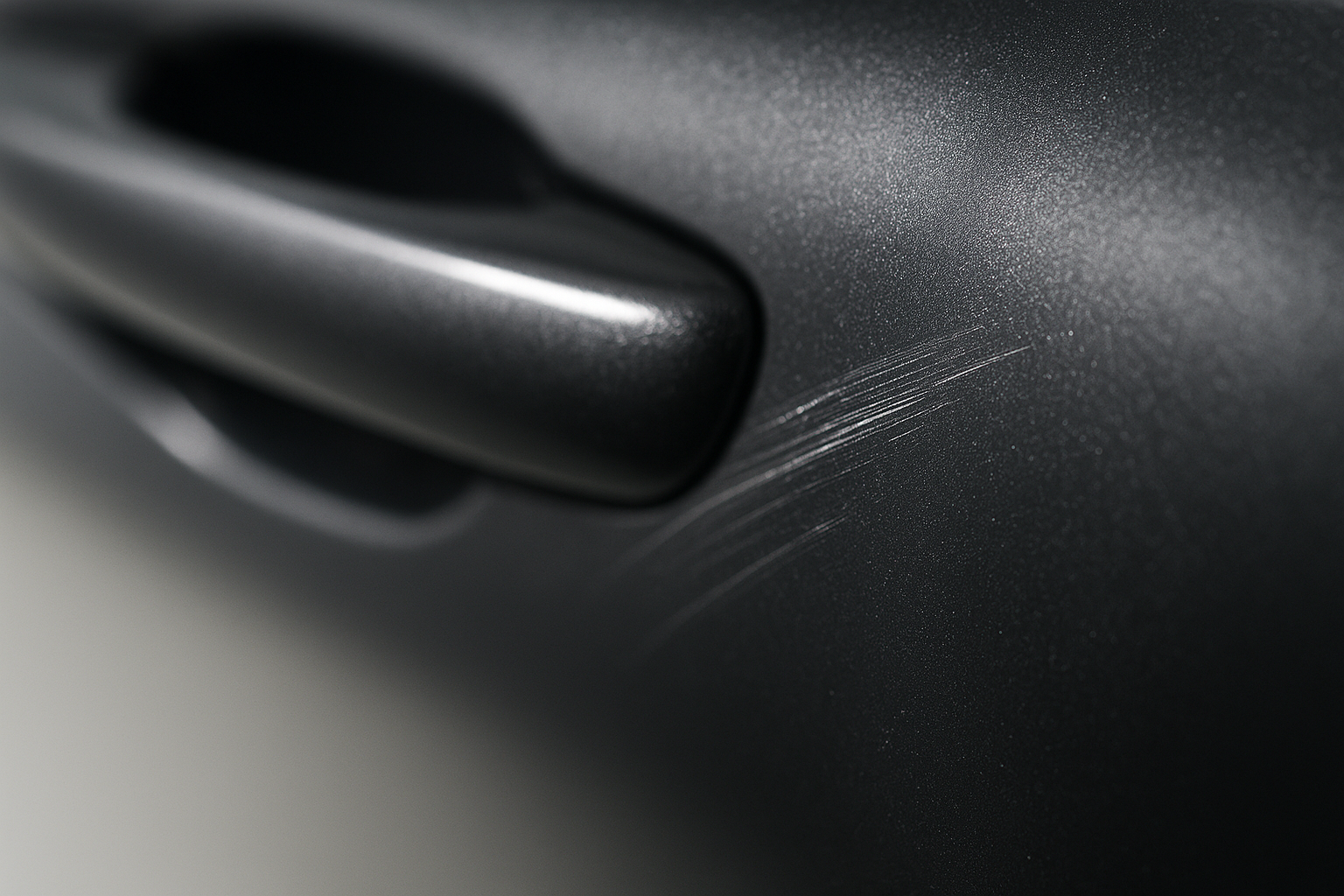
A clear coat scratch like this one is typically within the range of how deep a scratch can be buffed out successfully.
How to Tell If a Scratch Is Buffable: Step-by-Step
Follow these steps to accurately assess your scratch and choose the right repair path.
- Perform the fingernail test. Drag your fingernail across the scratch. No catch means it’s likely clear coat only.
- Inspect the scratch color under good lighting. White or hazy = clear coat. Colored paint disturbed = base coat. Gray = primer. Silver = bare metal.
- Clean the area thoroughly. Wash, dry, and degrease before attempting any repair to avoid trapping debris under the pad.
- Choose the right compound. Fine polish for hairline marks, medium-cut for moderate clear coat damage, heavy-cut only for stubborn surface scratches.
- Buff with correct technique. Use a foam or microfiber pad in straight back-and-forth strokes. Apply moderate pressure, then wipe clean and inspect under light.
Consequently, following these steps in order prevents wasted effort and avoids making the damage worse before a professional sees it.
Choosing the Right Products for Scratch Removal
Not all polishing products are created equal. For very fine swirl marks and hairline scratches, a finishing polish is sufficient. For moderate clear coat scratches, a medium-cut compound works better. Above all, always start with the least aggressive product and work up only if needed.
Popular DIY options include 3M Scratch Remover, Meguiar’s ScratchX, and Chemical Guys VSS Scratch and Swirl Remover. These products use fine abrasives that gently level the clear coat around the scratch, making it less visible or invisible entirely.
Furthermore, a dual-action (DA) polisher delivers more consistent results than hand buffing, especially on larger scratched areas. However, for small isolated marks, hand application with a microfiber pad is perfectly effective.
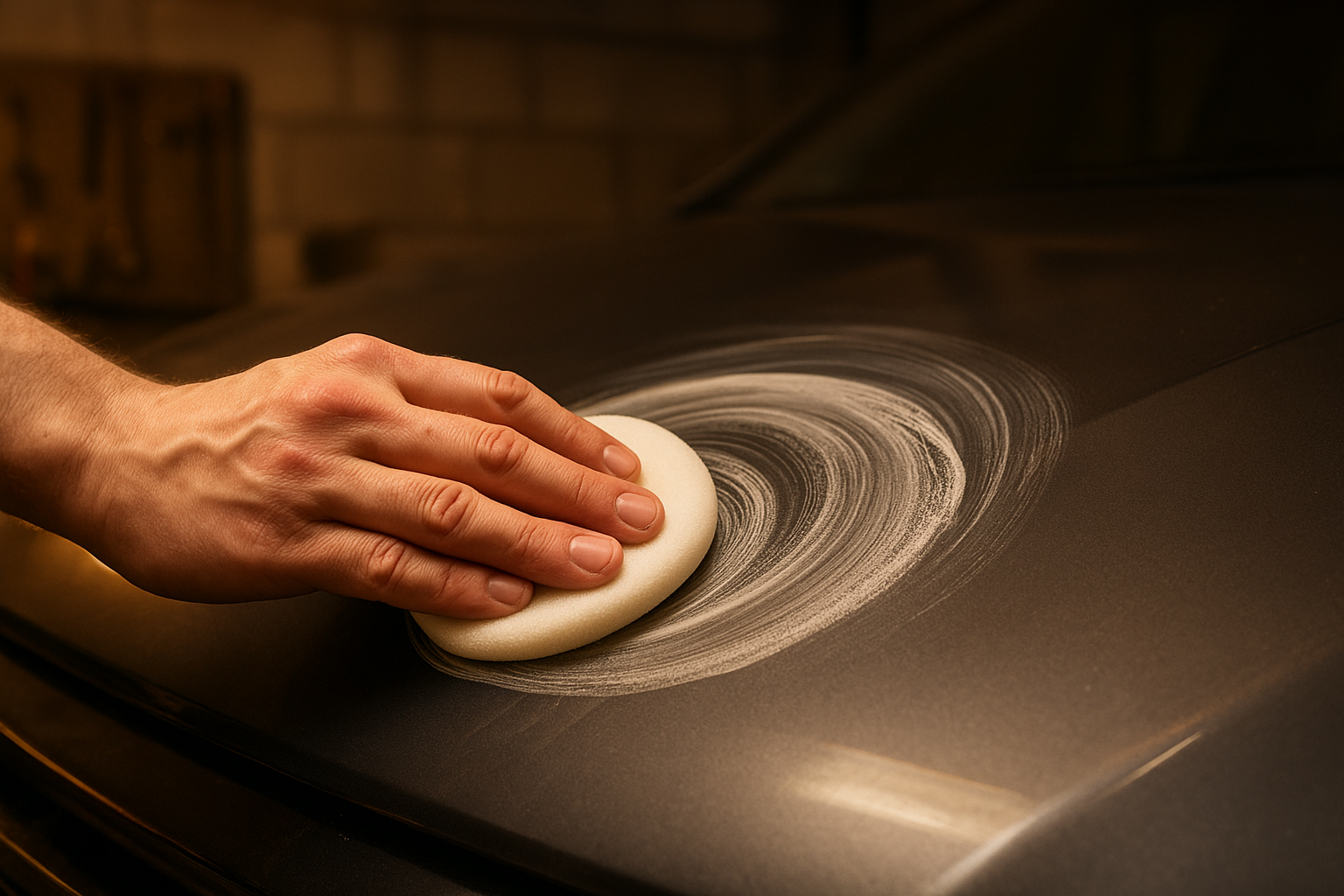
Applying the right compound with correct technique is key to successful scratch buffing at home.
When DIY Buffing Is Not Enough
Even the best polishing products have limits. If you can see the color of your car’s paint disturbed inside the scratch, or if you notice gray primer or silver metal, buffing will not fix it. In fact, continuing to buff in these situations removes more clear coat without improving the appearance.
Additionally, scratches longer than 6 inches or located on curved body panels often benefit from professional assessment. A trained technician can blend the repair into the surrounding paint far more seamlessly than a DIY approach.
Professional Scratch Repair: What to Expect
Professional scratch repair costs vary widely based on depth and size. According to industry estimates, minor clear coat repairs typically run between $50 and $150. Base coat damage requiring spot repainting can cost $200 to $400. Full panel repaints for severe scratches may exceed $600 to $900 depending on the vehicle and shop.
Therefore, catching a scratch early — before rust develops on exposed metal — is always more cost-effective. The team at Brea Auto Body offers professional scratch assessments and can advise whether a scratch is buffable or requires paint repair, helping you avoid unnecessary expense.
Similarly, paint protection film (PPF) and ceramic coatings applied after repair can significantly reduce the risk of future scratches reaching the base coat.
Paint Correction vs. Standard Buffing
Paint correction is a professional multi-stage polishing process that removes deeper clear coat scratches, swirl marks, and oxidation. It involves progressively finer abrasive compounds applied with a machine polisher. This differs from simple buffing in that it systematically levels the clear coat surface rather than just masking minor imperfections.
In contrast, standard buffing at home addresses only the most superficial marks. For anything beyond light hairline scratches, paint correction by a professional delivers far superior and longer-lasting results.
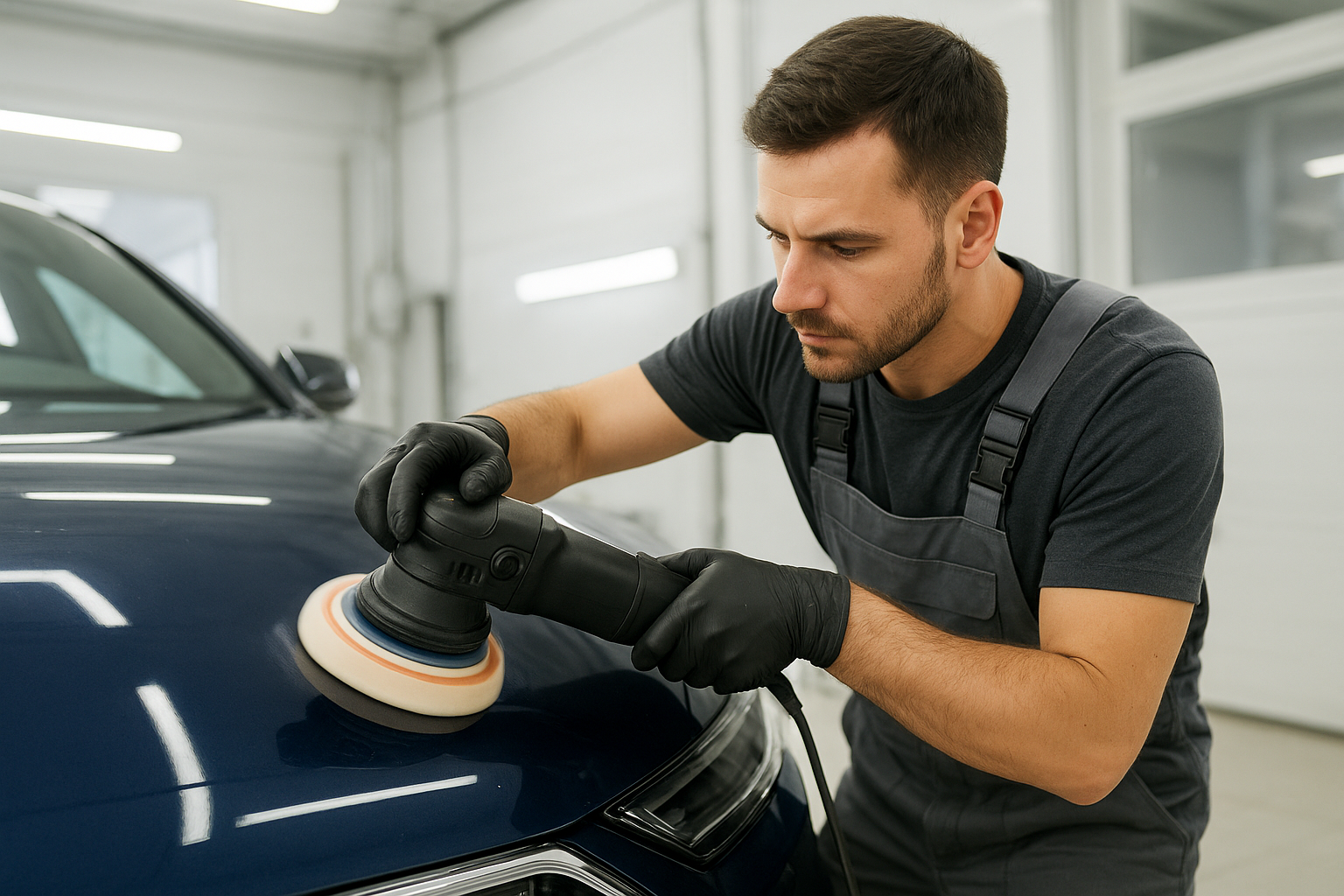
Professional paint correction handles scratches that go beyond what simple buffing can fix.
Common Mistakes When Trying to Buff Out Scratches
Many car owners make the same errors when attempting scratch removal. Specifically, these mistakes can worsen the damage and increase repair costs significantly.
- Using too aggressive a compound first. Heavy-cut compounds remove more clear coat than necessary for light scratches.
- Buffing in circular motions. This creates swirl marks. Always use straight back-and-forth strokes instead.
- Skipping the cleaning step. Buffing over dirt grinds particles into the paint, creating new scratches.
- Buffing in direct sunlight. Heat causes compounds to dry too fast, making them harder to remove and reducing effectiveness.
- Over-buffing one area. Excessive passes in one spot can burn through the clear coat entirely.
Furthermore, using household products like toothpaste or baking soda as substitutes for proper compounds rarely produces lasting results and can leave a dull finish behind.
Frequently Asked Questions
How deep of a scratch can be buffed out at home?
Scratches that stay within the clear coat layer can typically be buffed out at home using a polishing compound and a microfiber pad. Once a scratch reaches the base coat or primer, professional repair is usually needed.
What is the fingernail test for car scratches?
The fingernail test involves gently dragging your fingernail across the scratch. If your nail glides over it without catching, the scratch is likely surface-level and can be buffed out. If your nail catches, the scratch is deeper and may need professional attention.
Can a deep scratch that reaches bare metal be buffed out?
No. Scratches that expose bare metal cannot be buffed out. They require sanding, priming, repainting, and clear coating to restore the surface properly.
How many layers does automotive paint have?
Most modern vehicles have four paint layers: primer, base coat (color), clear coat, and sometimes a sealer. The clear coat is the outermost protective layer and is typically 40 to 60 microns thick.
What products are best for buffing out light scratches?
Light scratches respond well to polishing compounds, scratch-removal pens, and fine-cut rubbing compounds. Products like Meguiar’s ScratchX or 3M Scratch Remover are popular choices for DIY repair.
How much does professional scratch repair cost?
Professional scratch repair can range from $50 to $150 for minor clear coat scratches to $400 or more for deep scratches requiring repainting. The exact cost depends on the scratch depth, size, and location on the vehicle.
Will buffing a scratch make it worse?
Buffing can make a scratch worse if done incorrectly. Using too aggressive a compound, applying too much pressure, or buffing a scratch that reaches bare metal can remove more clear coat or spread damage. Always start with the least aggressive method.
How do I know if a scratch needs professional repair?
If the scratch shows a white or gray color (damaged clear coat), exposes the base paint color, shows primer, or reveals bare metal, it likely needs professional repair. A body shop can assess the damage accurately.
Can buffing remove key scratches from a car?
Key scratches are usually deep enough to cut through the clear coat and into the base coat, making them very difficult to buff out completely. Shallow key marks may respond to polishing, but most require professional paint correction or repainting.
How long does it take to buff out a scratch?
A light surface scratch can be buffed out in 15 to 30 minutes. Deeper scratches requiring wet sanding and multiple polishing stages may take 1 to 3 hours or more depending on severity.
Does toothpaste really remove car scratches?
Toothpaste contains mild abrasives that can reduce the appearance of very fine surface scratches. However, it is far less effective than a dedicated polishing compound and should only be used as a temporary measure.
What is paint correction and when is it needed?
Paint correction is a professional multi-stage polishing process that removes scratches, swirl marks, and oxidation from a vehicle’s clear coat. It is needed when scratches are too deep for basic polishing but do not yet reach the base coat.
Conclusion
Knowing how deep of a scratch can be buffed out gives you a clear advantage before spending money on products or repairs. In summary, clear coat scratches are your best candidates for DIY buffing, while base coat, primer, and metal-level damage require professional intervention. The fingernail test and a careful visual inspection under good lighting are your most reliable first tools. For scratches that go beyond what buffing can fix, consulting a professional body shop like Brea Auto Body ensures the repair is done correctly — protecting your vehicle’s value and preventing rust. Above all, act quickly: the longer a deep scratch is left untreated, the more expensive the repair becomes.

