

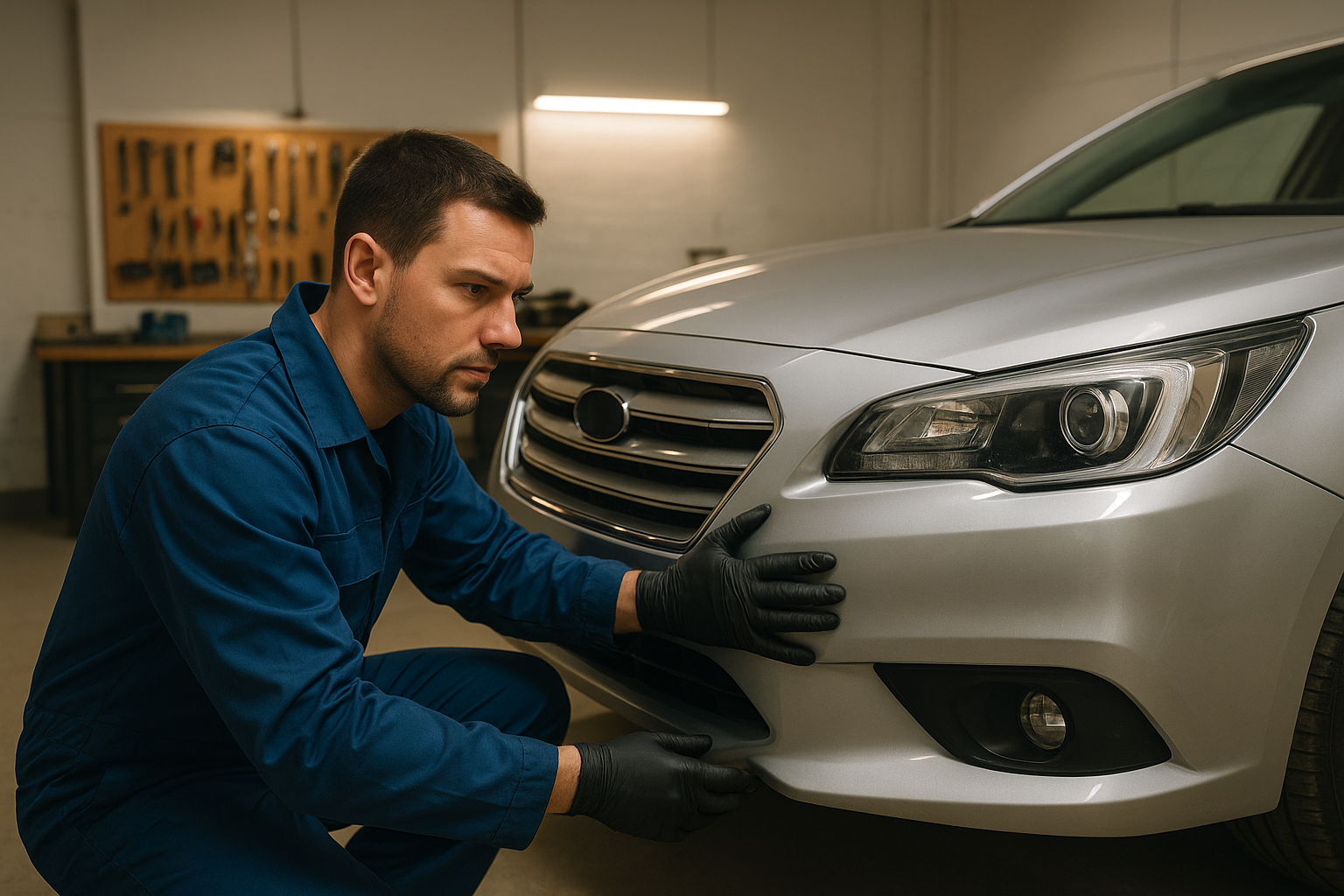
When you need to find a body shop near me, the sheer number of options can feel overwhelming — especially after the stress of a collision or discovering unexpected damage on your vehicle. Choosing the wrong shop can cost you time, money, and peace of mind. Fortunately, knowing what to look for makes the process much simpler. This guide is provided by Brea Auto Body; Last updated: 2026-07-07.
In this guide, we cover everything from certifications and estimates to red flags and warranty policies. By the end, you will feel confident choose the best auto body shop that delivers quality results.
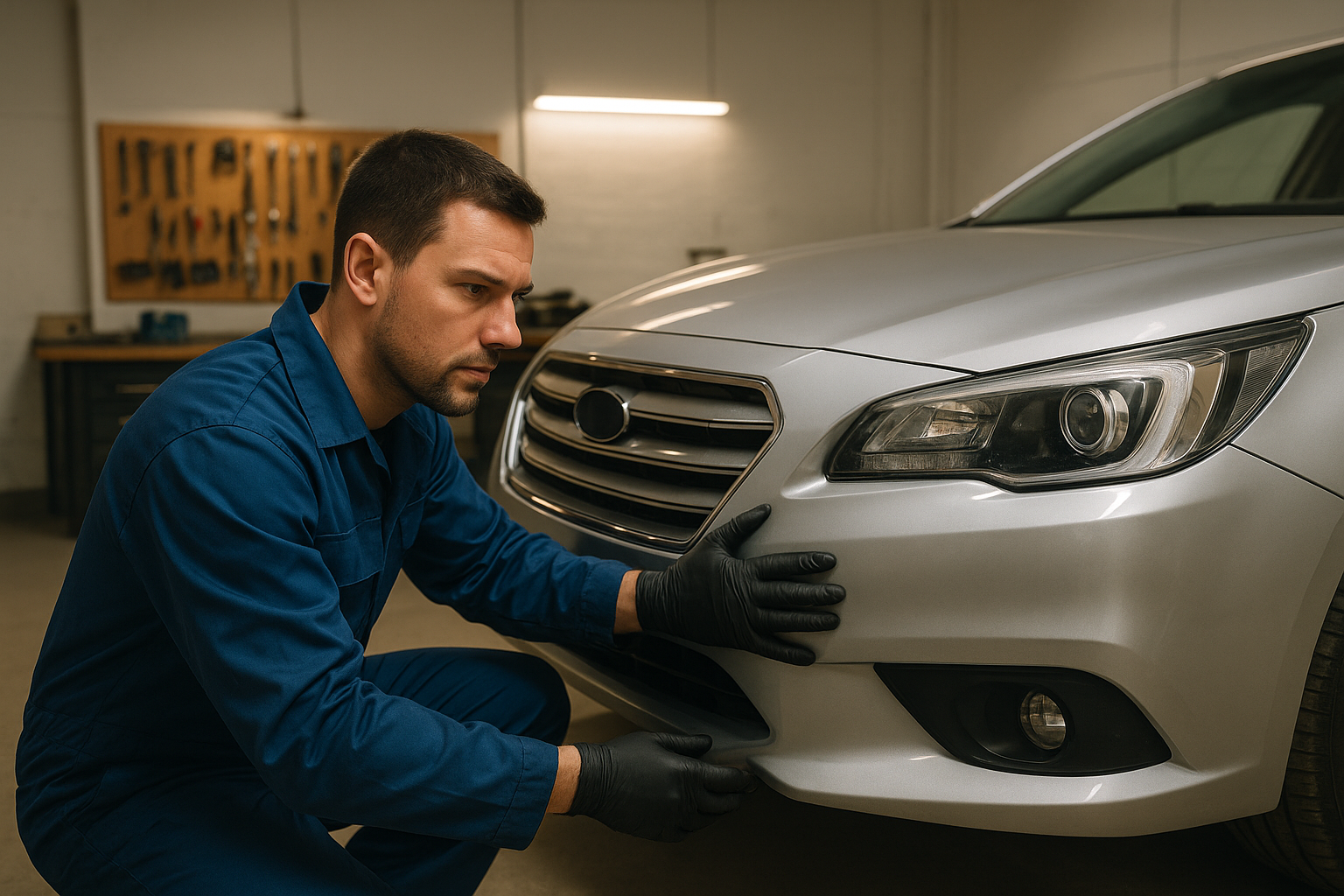
A skilled technician carefully assesses vehicle damage — the first step at any reputable body shop near you.
What Is a Body Shop and What Does It Do?
A body shop — also called a collision repair center or auto body repair shop — is a facility that specializes in restoring the exterior structure and appearance of vehicles after accidents, weather damage, or general wear. This includes dent removal, frame straightening, paint matching, and panel replacement.
Body shops differ from general mechanics. While a mechanic focuses on your engine, brakes, and drivetrain, a body shop handles structural and cosmetic repairs. However, some full-service shops handle both, which can be convenient after a serious collision.
According to the collision repair industry overview on Wikipedia, the U.S. auto body repair market generates over $47 billion annually — reflecting just how common vehicle damage really is.
How to Find a Body Shop Near Me: Step-by-Step
Following a clear process helps you avoid costly mistakes and find a shop you can trust. For a deeper checklist on choosing the right shop, choose the best auto body shop. Here is a proven approach:
- Search for certified local shops and find the best local shop. Use Google Maps and search for “auto body shop near me.” Filter by star rating and look for I-CAR Gold Class or ASE-certified facilities in the results.
- Read online reviews carefully. Check Google, Yelp, and the Better Business Bureau. Pay close attention to how the shop responds to negative feedback — this reveals their commitment to customer care.
- Request written estimates from multiple shops. Visit at least two or three locations. Compare not just the total price, but also the scope of work, parts quality, and warranty terms. best auto body shop
- Verify certifications and insurance acceptance. Confirm the shop holds valid credentials and works with your insurance provider. Ask whether they use OEM (Original Equipment Manufacturer) or aftermarket parts.
- Inspect the facility before committing. A clean, organized shop with modern equipment is a strong sign of professional standards. Disorganized or dirty facilities can signal careless workmanship.
Why Written Estimates Matter
A written estimate protects you from unexpected charges. Specifically, it documents the agreed-upon work, parts, and labor costs. Furthermore, many states legally require shops to provide written estimates before beginning any repair work.
Always review the estimate line by line. In addition, ask the shop to explain any items you do not understand. A trustworthy shop will welcome your questions rather than rush you through the paperwork.
Key Certifications to Look For in a Local Auto Body Shop
Certifications are one of the clearest indicators of a shop’s commitment to quality. Therefore, always check for the following credentials before making your choice.
I-CAR Gold Class is the industry’s highest training standard. Shops that earn this designation — awarded by I-CAR (Inter-Industry Conference on Auto Collision Repair) — require their technicians to complete ongoing education every year. As a result, their staff stays current with the latest vehicle technologies and repair methods.
ASE (Automotive Service Excellence) certification is another reliable benchmark. While more common among mechanics, ASE-certified body technicians demonstrate a verified level of competence. Similarly, manufacturer-specific certifications (such as those from Honda, Toyota, or Ford) indicate the shop is trained to repair your specific vehicle brand to factory standards.
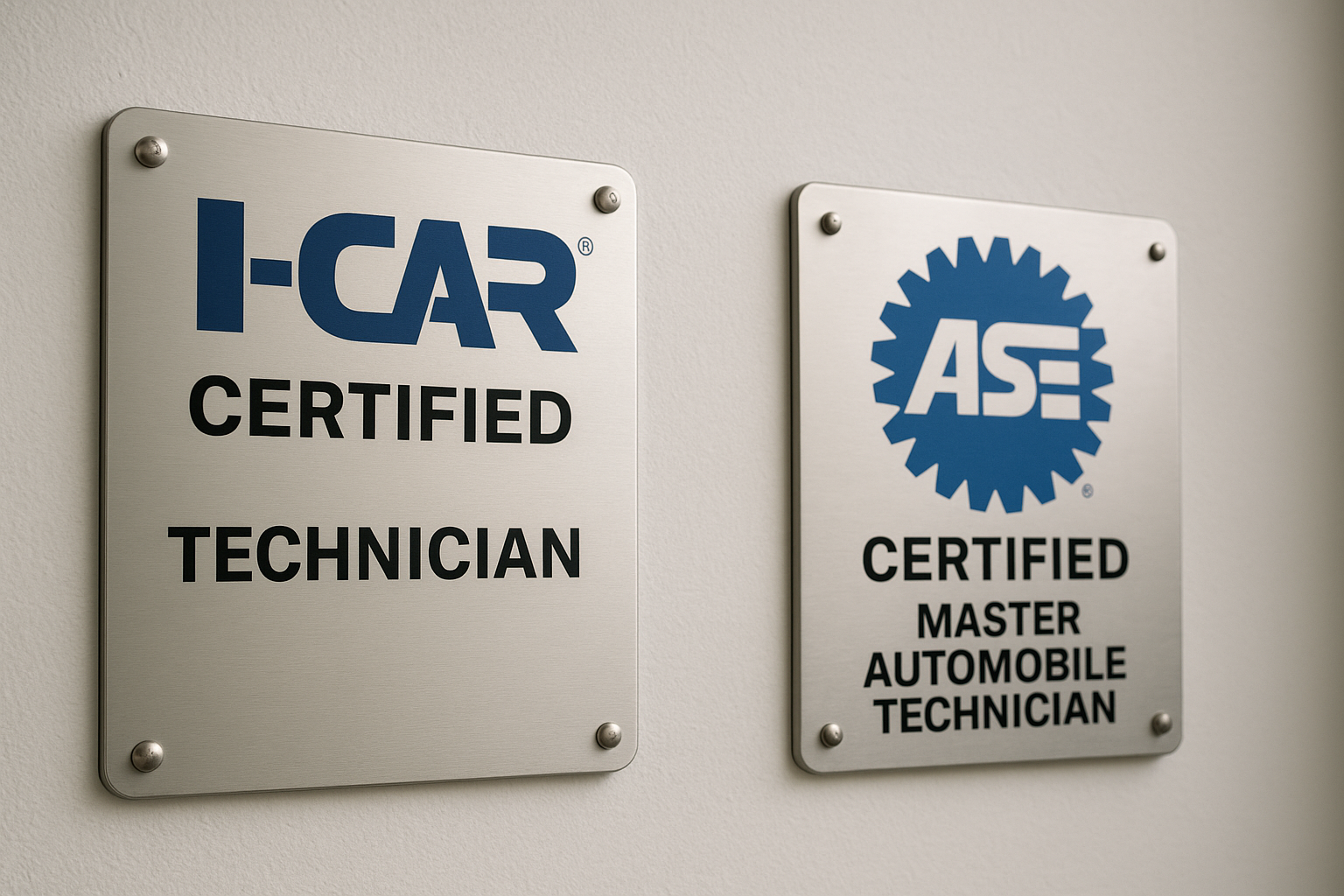
Certifications like I-CAR Gold Class signal that a collision repair shop meets rigorous professional standards.
Understanding Auto Body Repair Costs
Repair costs vary widely depending on the type and severity of damage. For example, minor dent or scratch repairs typically cost between $150 and $300. In contrast, major collision repairs involving frame damage or multiple panel replacements can range from $1,500 to well over $10,000.
Several factors influence the final price:
- Parts type: OEM parts cost more than aftermarket alternatives but typically fit better and last longer.
- Labor rates: Rates vary by region and shop reputation, generally ranging from $50 to $150 per hour.
- Paint matching: Custom or metallic paint finishes require more time and materials.
- Structural damage: Frame or unibody repairs add significant cost and require specialized equipment.
Should You Use Insurance for Body Repairs?
Whether to file an insurance claim depends on the repair cost versus your deductible. For minor damage that costs less than your deductible to fix, paying out of pocket is often the smarter choice. However, for significant collision damage, filing a claim is usually the right move.
Importantly, you are not required to use your insurance company’s preferred shop. You have the legal right to choose any licensed facility. Resources like Brea Auto Body can help you navigate the insurance process and ensure your vehicle is repaired to the highest standard.
Red Flags to Avoid When Choosing a Collision Repair Shop
Not every shop that appears in a local search result is worth your business. Consequently, knowing the warning signs can save you from a costly mistake.
Watch out for these red flags:
- Unusually low estimates — A price that seems too good to be true often means corners are being cut on parts or labor.
- High-pressure sales tactics — A reputable shop gives you time to think. Pressure to decide immediately is a serious concern.
- No written estimate — Verbal quotes offer no legal protection. Always insist on written documentation.
- No visible certifications — Legitimate shops display their credentials proudly.
- Consistently poor reviews — A pattern of negative feedback about quality or communication is a reliable warning sign.
Warranties and Guarantees: What to Expect
A quality auto body shop stands behind its work. Most reputable shops offer a warranty on parts and labor. In many cases, paint and bodywork warranties are offered for the lifetime of the vehicle — as long as you own it.
Before authorizing any repairs, ask these specific questions:
- What does the warranty cover — parts, labor, or both?
- How long does the warranty last?
- Is the warranty transferable if I sell the vehicle?
- What is the claims process if I notice a problem after pickup?
If a shop is unwilling to provide a clear warranty, that is a strong signal to look elsewhere. Similarly, get all warranty terms in writing before work begins.
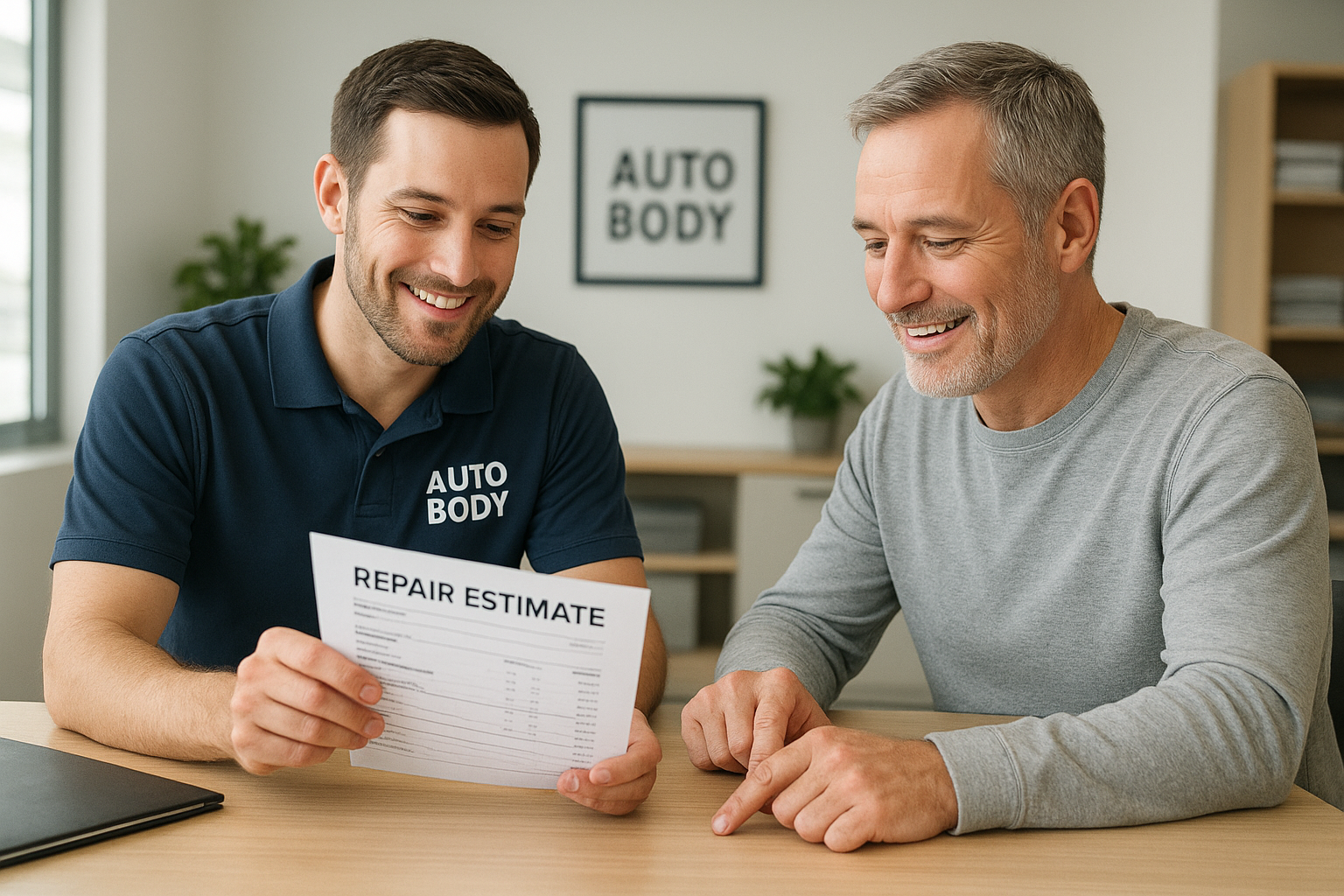
Reviewing a written estimate in detail is an essential step when choosing a body shop near you.
How Long Will Vehicle Collision Repair Take?
Repair timelines depend heavily on the extent of the damage and parts availability. Minor cosmetic repairs — such as small dents or scratches — typically take one to three business days. However, major collision repairs involving frame work or multiple panel replacements can take one to three weeks or longer.
Supply chain delays have also affected parts availability in recent years, so it is worth asking upfront whether any parts need to be ordered. A reliable shop will give you a realistic timeline and keep you updated throughout the process.
Furthermore, ask whether the shop provides a loaner vehicle or can assist with rental car arrangements while your car is being repaired. Many shops that work directly with insurance companies can coordinate this for you.
Frequently Asked Questions About Finding a Body Shop Near Me
How do I find a body shop near me that I can trust?
To find a body shop near me that is trustworthy, look for I-CAR or ASE certifications, read Google and Yelp reviews, and ask for a written estimate before agreeing to any work. A reputable shop will always be transparent about pricing and timelines. choose the best auto body shop
What certifications should a good auto body shop have?
Look for I-CAR Gold Class certification, which indicates technicians complete ongoing training. ASE (Automotive Service Excellence) certification is also a strong indicator of professional competence.
How much does auto body repair typically cost?
Minor dent or scratch repairs can cost between $150 and $300, while major collision repairs can range from $1,500 to over $10,000. Always get at least two or three written estimates before committing to any shop.
How long does auto body repair usually take?
Minor repairs typically take one to three days. Major collision repairs can take one to three weeks, especially if parts need to be ordered. A reliable shop will give you a clear timeline upfront.
Should I use my insurance company’s recommended shop?
You are not legally required to use your insurer’s preferred shop. You have the right to choose any licensed auto body repair facility. However, using a preferred shop can sometimes speed up the claims process.
What is the difference between a body shop and a mechanic?
A body shop specializes in repairing the exterior structure of a vehicle, including dents, paint, and collision damage. A mechanic focuses on mechanical systems such as the engine, brakes, and transmission.
Do body shops offer warranties on their work?
Most reputable body shops offer a warranty on parts and labor, often ranging from one year to a lifetime guarantee on paint and bodywork. Always ask about the warranty policy before authorizing any repairs.
Can I get a free estimate at a local auto body shop?
Yes, most auto body shops offer free written estimates. It is good practice to get at least two or three estimates to compare pricing and scope of work before making a final decision.
What should I bring when I visit an auto body shop?
Bring your driver’s license, vehicle registration, and insurance information. If you have already filed a claim, bring your claim number and any documentation provided by your insurer.
How do I know if a body shop is using quality parts?
Ask the shop whether they use OEM (Original Equipment Manufacturer) parts, aftermarket parts, or recycled parts. OEM parts are made by the vehicle manufacturer and generally offer the best fit and quality.
What are common red flags when choosing a body shop?
Red flags include unusually low estimates, pressure to decide immediately, no written estimate, lack of certifications, and poor online reviews. A shop that cannot clearly explain the repair process should also raise concern.
Is it worth repairing cosmetic damage on an older car?
It depends on the extent of the damage and the vehicle’s current value. For older cars, cosmetic repairs may not be cost-effective unless the damage affects structural integrity or safety. Discuss the cost-benefit ratio with your body shop before proceeding.
Conclusion: Choosing the Right Body Shop Near You
Ultimately, when you need to find a body shop near me, the decision comes down to trust, transparency, and proven quality. Look for certified technicians, read independent reviews, compare written estimates, and inspect the facility in person. Shops like Brea Auto Body demonstrate what a professional, customer-focused collision repair experience should look like. By following the steps outlined in this guide, you can confidently choose a local auto body shop that will restore your vehicle to its pre-accident condition — without the stress or surprises.

