

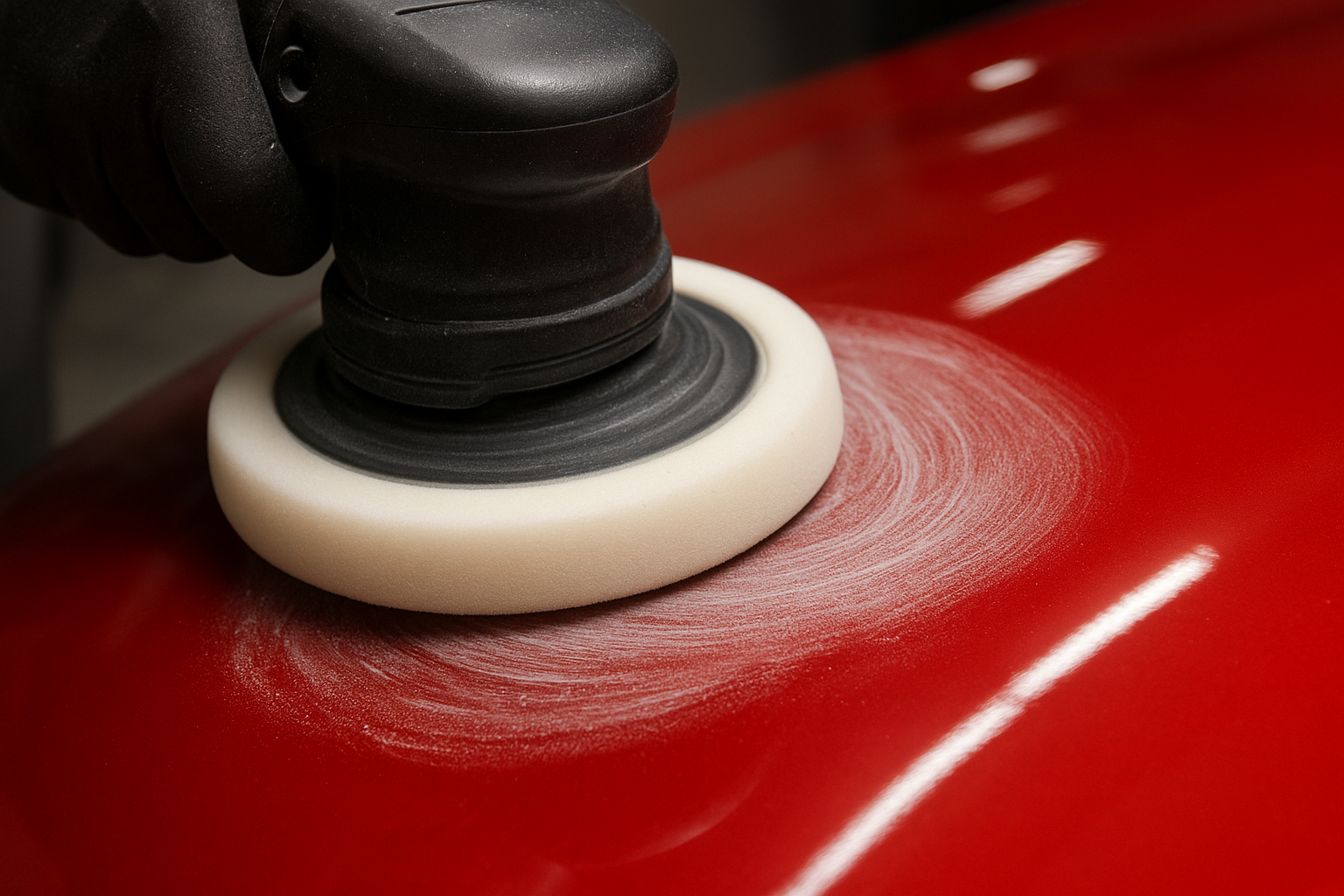
Does buffing remove scratches? The short answer is yes — but only for certain types of scratches. Buffing is a paint correction technique that uses mild abrasives to level the surface of your car’s clear coat, effectively making shallow scratches disappear. However, deeper scratches that reach the base coat, primer, or bare metal require more than buffing alone.
Understanding the limits of buffing can save you time, money, and the frustration of a job that doesn’t deliver results. In this guide, we’ll break down exactly when buffing works, when it doesn’t, and how to do it correctly.
What Does Buffing Actually Do to Car Paint?
Modern car paint is made up of several layers. From the outside in, you typically have the clear coat, the base coat (color layer), the primer, and finally the bare metal. The clear coat is a transparent protective layer that gives your car its shine and shields the color beneath.
Buffing works by gently abrading the top of the clear coat. Specifically, it removes a microscopic amount of material from the surrounding paint to level it down to the bottom of the scratch. As a result, the scratch becomes invisible because the surface is now uniformly flat.
According to automotive paint science, the clear coat on most modern vehicles is between 40 and 60 microns thick — roughly the width of a human hair. This means buffing has a finite amount of material to work with, which is why it’s not a fix for every scratch.
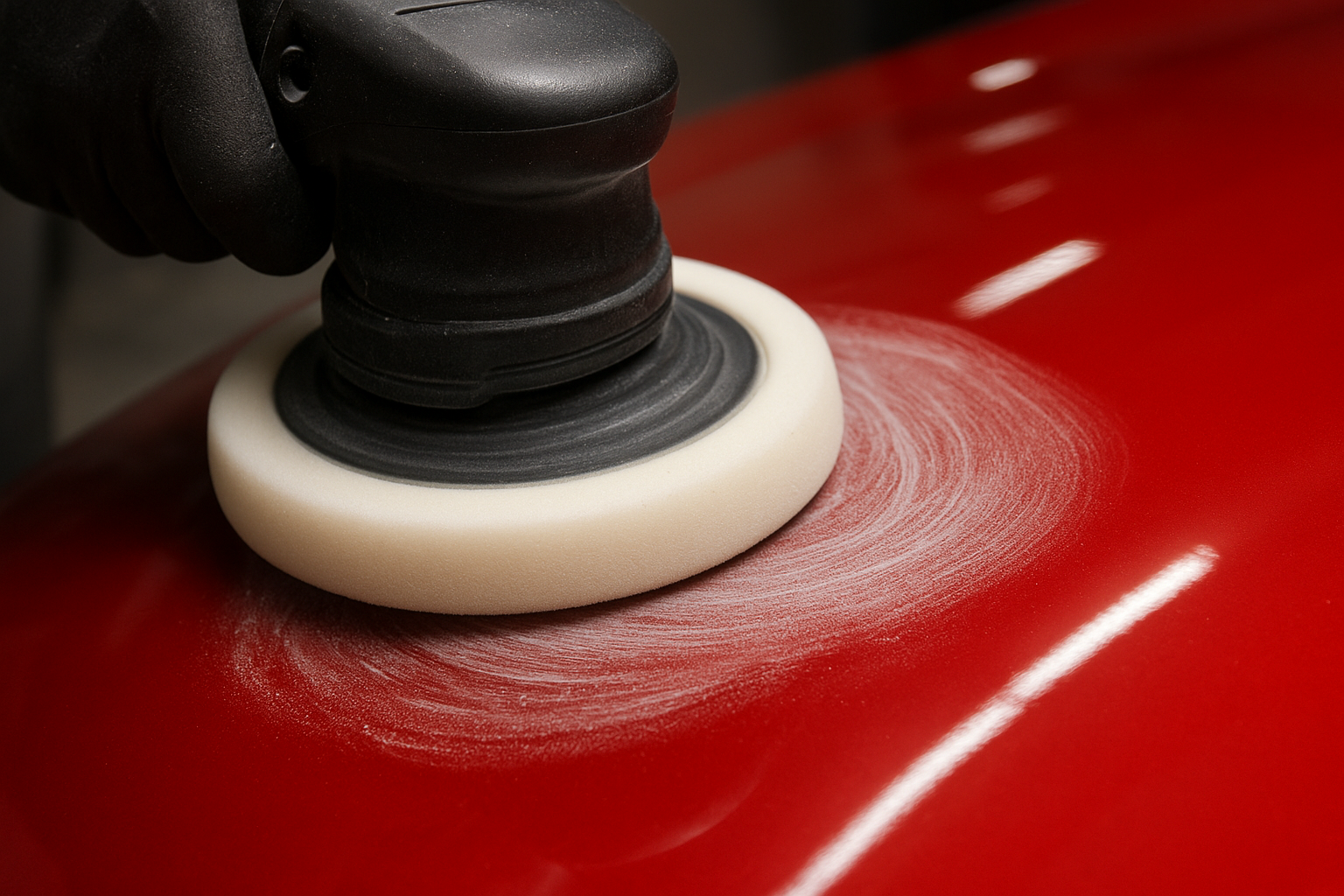
Buffing uses a foam or wool pad with abrasive compound to level the clear coat and remove surface scratches.
What Types of Scratches Can Buffing Remove?
Not all scratches are equal. Therefore, the first step is always to assess the depth of the damage before reaching for a polishing compound.
Clear coat scratches: These are the most common type and the easiest to fix. They appear as light marks or scuffs that don’t penetrate the color layer. Buffing is highly effective here and can produce a near-perfect result.
Swirl marks: These fine, circular scratches are usually caused by improper washing or drying technique. In most cases, a light polishing compound is all you need to eliminate them completely.
Base coat scratches: When a scratch cuts through the clear coat and reaches the colored base coat, buffing alone won’t fix it. You may be able to reduce its appearance, but a full repair requires touch-up paint or professional refinishing.
Deep scratches and primer exposure: Scratches that reach the primer or bare metal are beyond the scope of DIY buffing. These require professional attention to prevent rust and ensure a color-matched finish.
The Fingernail Test: A Quick Way to Assess Scratch Depth
A simple and reliable method is to run your fingernail gently across the scratch. If your nail glides over it without catching, the scratch is likely confined to the clear coat and buffing should work well. However, if your nail catches in the groove, the damage is deeper and buffing alone probably won’t be enough.
How to Buff Out Scratches Step by Step
If you’ve confirmed the scratch is shallow enough, follow these steps for the best results. A study by the International Detailing Association found that over 70% of light vehicle scratches are clear coat level and can be addressed with proper polishing technique.
- Assess the scratch depth — Run your fingernail across the scratch to gauge how deep it goes. This determines which products and methods you’ll need.
- Wash and dry the area thoroughly — Clean the surface with car wash soap and a microfiber cloth. Dirt particles left on the paint can cause new scratches during buffing.
- Apply rubbing compound — Place a small amount of cutting or rubbing compound on a foam applicator pad. Work it into the scratch using firm, overlapping circular motions.
- Buff and wipe the area — Use a dual-action polisher or continue by hand. Buff until the scratch fades, then wipe away compound residue with a clean microfiber cloth.
- Polish to restore gloss — Follow up with a fine polishing compound to remove any haze and restore the paint’s original depth and shine.
- Apply wax or paint sealant — Seal the repaired area with a quality car wax or paint sealant to protect the clear coat and add UV resistance.
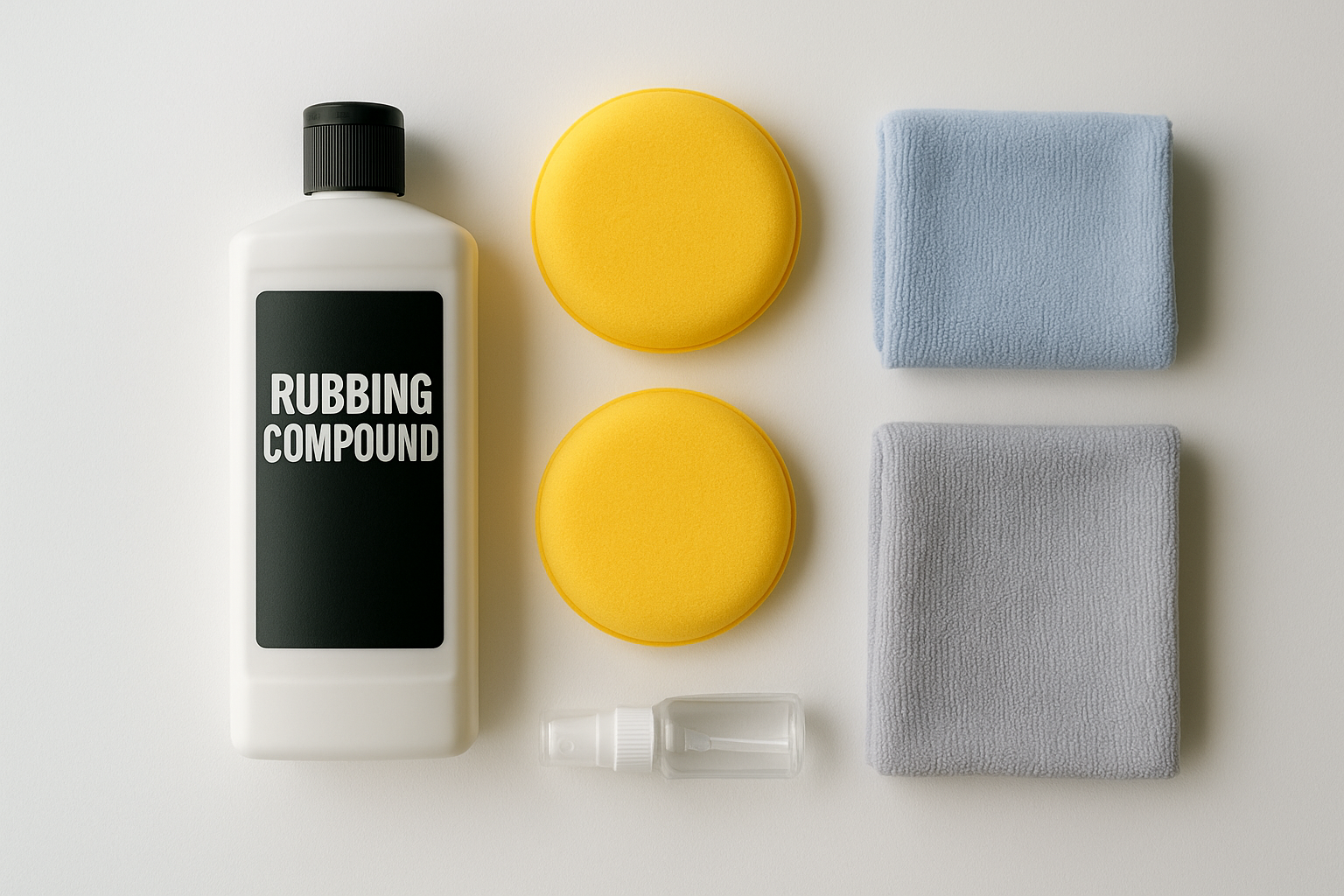
Having the right supplies — compound, pads, and microfiber cloths — makes the scratch buffing process far more effective.
Can Buffing Damage Your Paint?
Yes, buffing can cause damage if done incorrectly. Consequently, it’s important to understand the risks before you start. Using too much pressure, the wrong type of pad, or a compound that is too aggressive can remove too much clear coat at once, causing thin spots or burn marks.
Furthermore, because each buffing session removes a small layer of clear coat, the process should not be repeated too frequently. Most professionals recommend limiting machine buffing to once or twice a year at most for daily drivers.
In addition, edges and body lines are particularly vulnerable. The clear coat is thinner at panel edges, so extra care is needed in these areas to avoid burning through to the base coat.
Hand Buffing vs. Machine Buffing: Which Is Safer?
Hand buffing is slower but generally safer for beginners. It’s harder to generate the heat and friction that can damage paint. However, machine buffing with a dual-action (DA) polisher is much faster and produces more consistent results. DA polishers are considered beginner-friendly because they oscillate rather than rotate in one direction, reducing the risk of paint damage significantly compared to rotary polishers.
When to Call a Professional Auto Body Shop
Some scratches are simply beyond what DIY buffing can address. Specifically, you should seek professional help when:
- The scratch reveals bare metal or white primer underneath
- The damaged area is large or covers multiple panels
- Rust has already begun to form in the scratch
- Previous DIY attempts have made the area worse
- You want a flawless, color-matched factory finish
Professional paint correction technicians have access to specialized equipment, color-matching tools, and paint depth gauges that ensure precise, lasting results. For deeper damage, a skilled shop can perform spot repairs, blend panels, or carry out a full respray as needed.
If you’re in the Southern California area, the team at Brea Auto Body offers expert paint correction and scratch repair services to restore your vehicle’s finish to showroom quality.
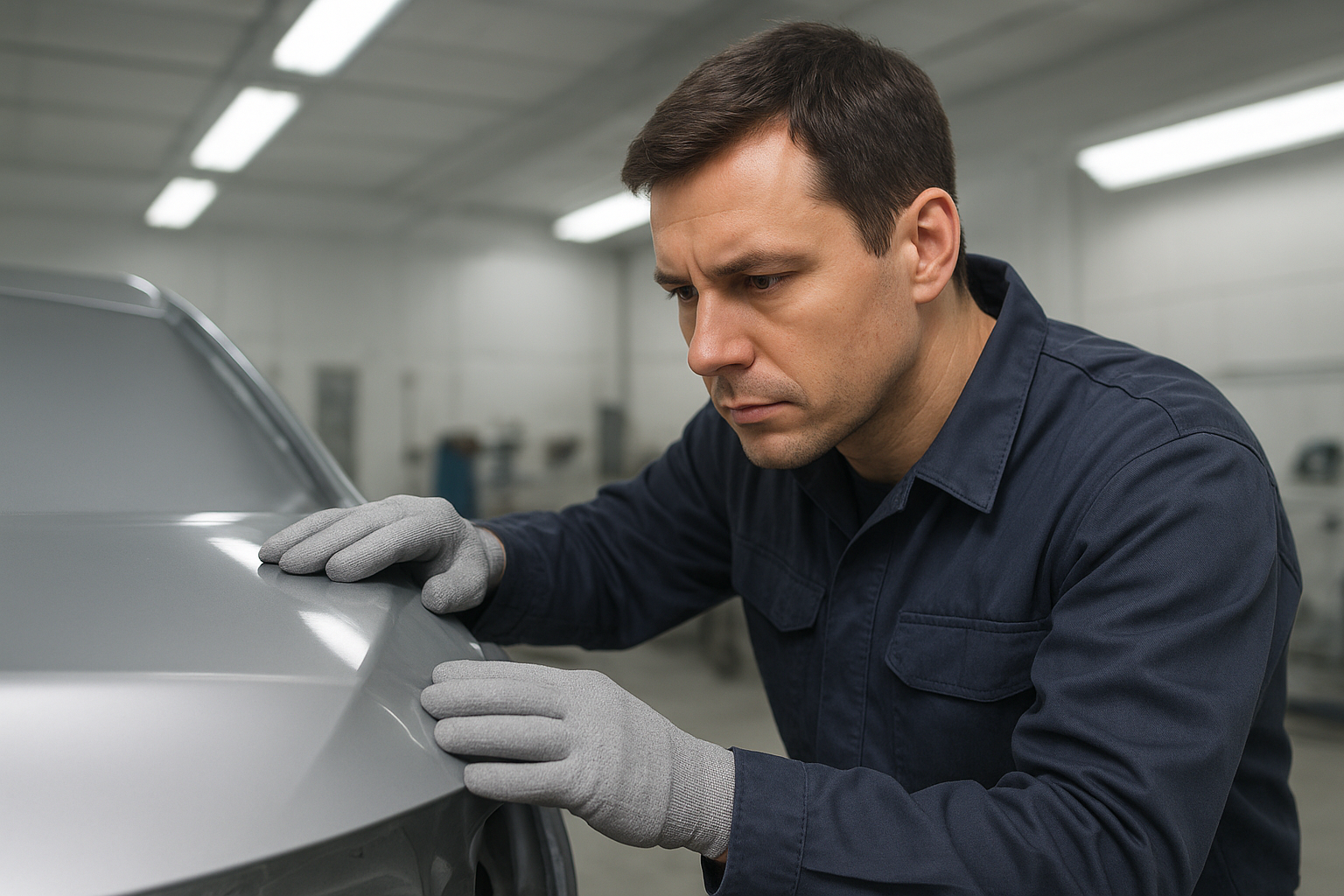
A professional technician can assess scratch depth accurately and recommend the right repair approach for lasting results.
How to Prevent Scratches After Buffing
After investing time and effort in buffing out scratches, protecting that fresh finish is equally important. Here are some practical prevention tips:
- Use a two-bucket wash method to avoid dragging dirt across the paint during washing
- Apply a paint protection film (PPF) or ceramic coating for long-term scratch resistance
- Park away from shopping carts and high-traffic areas whenever possible
- Use only soft microfiber cloths and wash mitts — never sponges or rough towels
- Wax your car regularly to maintain a protective barrier on the clear coat
For more guidance on keeping your vehicle’s exterior in top shape, explore our tips on car paint care and maintenance to extend the life of your finish between professional services.
Frequently Asked Questions About Buffing and Scratch Removal
Does buffing remove scratches completely?
Buffing can completely remove light surface scratches that only affect the clear coat layer. However, deeper scratches that reach the base coat or primer will require more intensive paint correction or professional repair.
What types of scratches can buffing fix?
Buffing is most effective on clear coat scratches, swirl marks, and light scuffs. It works by gently abrading the surrounding clear coat to level it with the bottom of the scratch, making it disappear.
Can I buff out deep scratches at home?
Deep scratches that penetrate beyond the clear coat are very difficult to fix at home with buffing alone. These typically require professional paint correction, touch-up paint, or a full respray.
What is the difference between buffing and polishing?
Buffing uses an abrasive compound to remove a thin layer of paint or clear coat, while polishing uses a finer product to refine the surface and add gloss. Polishing typically follows buffing to restore shine.
How do I know if a scratch is too deep to buff out?
Run your fingernail across the scratch. If your nail catches in the groove, the scratch is likely too deep for buffing alone. Scratches that reveal bare metal or white primer almost always need professional attention.
Does buffing damage car paint?
Buffing can damage paint if done incorrectly, especially with too much pressure, the wrong pad, or excessive heat. Each buffing session removes a small amount of clear coat, so it should not be done too frequently.
How long does it take to buff out scratches?
A small scratch can take as little as 15 to 30 minutes to buff out by hand. Larger areas or more severe damage may take several hours, especially when using a machine polisher for thorough paint correction.
What products do I need to buff out scratches?
You will need a rubbing or cutting compound, a polishing compound, microfiber cloths or foam pads, and optionally a dual-action polisher. A finishing wax or sealant is recommended after buffing to protect the paint.
Should I wash my car before buffing scratches?
Yes, always wash and dry your car thoroughly before buffing. Dirt particles on the surface can cause additional scratches during the buffing process, making the damage worse.
When should I see a professional instead of buffing at home?
You should consult a professional auto body shop when scratches are deep, cover a large area, or have broken through to the primer or bare metal. Professional paint correction ensures a flawless, lasting result.
How much does professional scratch buffing cost?
Professional scratch buffing typically costs between $50 and $300 depending on the size and depth of the damage, the vehicle type, and the shop’s rates. Extensive paint correction or respraying can cost significantly more.
Can buffing remove swirl marks as well as scratches?
Yes, buffing is actually one of the most effective ways to remove swirl marks, which are fine circular scratches usually caused by improper washing technique. A light polish or finishing compound is often enough to eliminate them.
Conclusion: Does Buffing Remove Scratches for Good?
So, does buffing remove scratches? Absolutely — when those scratches are limited to the clear coat layer. Buffing is a proven, cost-effective technique for eliminating light scuffs, swirl marks, and surface-level paint damage. However, it’s not a universal solution. Deeper scratches that penetrate the base coat or primer require professional repair to restore a proper finish and prevent rust. By understanding the limits of buffing, using the right products, and knowing when to call in a professional like Brea Auto Body, you can keep your car looking its best for years to come.

