

How to choose a body shop: what really matters for safe, factory?correct repairs

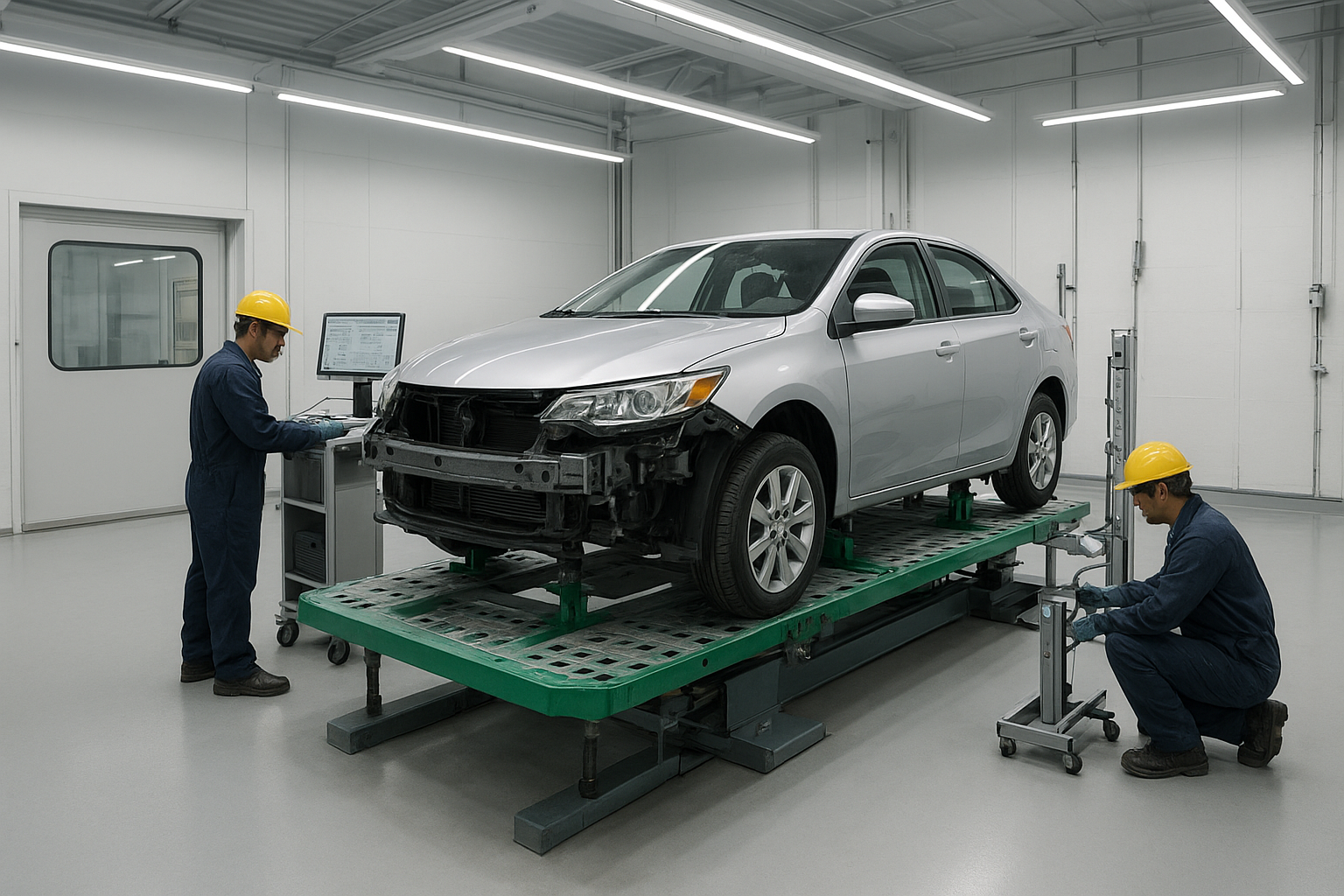
A modern collision repair facility set up for accurate, factory?correct repairs.
If you’re searching for how to choose a body shop after a fender?bender or a major collision, you’re making a decision that affects your family’s safety, your car’s value, and your insurance claim. This guide distills what actually predicts quality—beyond shiny lobbies and low estimates—so you can pick a collision repair partner with confidence.
First principles: what “quality” means in collision repair today
Modern vehicles are rolling networks of sensors, high?strength steels, aluminum, composites, and advanced driver?assistance systems (ADAS). A quality repair isn’t just about looks; it’s about restoring crash energy management, ensuring airbag timing remains correct, and recalibrating cameras, radars, and ultrasonic sensors. When a shop follows the vehicle maker’s repair procedures, performs pre? and post?repair diagnostics, and verifies measurements on a structural bench, your car is far more likely to protect you the way it did before the accident. To understand how safety technologies interact with repairs, explore guidance from the National Highway Traffic Safety Administration.

Beyond paint: a collision often touches structure, airbags, and ADAS—choose a body shop that addresses all three.
Credentials that actually predict a better repair
OEM approvals and procedures
Ask whether the shop accesses your specific manufacturer’s repair procedures for your exact VIN. Vehicle makers publish step?by?step methods (often down to specific weld counts, rivets, and adhesives). The right shop will show you those procedures and explain how they’ll be followed—especially for structural parts and ADAS components.
I?CAR and ASE training
Look for current training that aligns with modern materials and electronics. Two respected signals are I?CAR Gold Class for collision repair teams and ASE certifications for technicians. Credentials don’t guarantee perfection, but they indicate ongoing education and competency.
Equipment that proves accuracy
Advanced facilities invest in computerized frame measuring systems, resistance spot welders matched to OEM specs, dedicated aluminum repair areas, four?wheel alignment capability, and ADAS calibration tools or trusted calibration partners. Ask to see measurement reports and calibration documentation on recent jobs.
Estimates that protect your car—not just your wallet
An estimate is a starting point, not a final price tag. High?quality shops often perform a blueprint or teardown before finalizing the plan. That allows hidden damage to be identified early and ensures parts, labor, calibrations, corrosion protection, seam sealers, and refinish operations are properly captured.
What a thorough estimate includes
You should see line items for structural setup and measure, weld?through primer, cavity wax, pre? and post?repair scans, ADAS calibrations, blend operations for color match, and refinish materials. If a bid is hundreds lower because these tasks are missing, the savings may come at the expense of safety or longevity.
Understanding supplements
Once the car is disassembled, shops submit “supplements” for additional damage found. This is normal. What you want is transparency: photos, OEM references for any changed procedures, and clear communication with you and your insurer.
Your right to choose the shop—insurance networks explained
Insurers may recommend “preferred” shops, but in most states you have the right to select any licensed facility that meets your standards. Preferred networks can be convenient and many are excellent; still, decide based on training, equipment, process, and documentation—never on a single referral alone. If a shop pressures you to skip scans or calibrations to keep costs down, that’s a red flag.
Paint quality, color match, and warranties
Matching today’s multi?stage finishes (including pearls and metallics) requires controlled lighting, color documentation, and often blending adjacent panels. Ask how the shop performs spray?out cards and whether they use manufacturer?approved refinish systems. A strong warranty should cover workmanship and paint defects for as long as you own the vehicle. You can also review complaint histories and ratings with the Better Business Bureau.

A side?by?side comparison makes it easier to choose a body shop based on what matters.
Turnaround time and communication without the guesswork
Accurate timelines come from accurate blueprints. Ask how the shop sequences work (structural ? mechanical ? body ? paint ? reassembly ? calibration ? quality control) and how often they’ll update you. Many leading facilities provide text/email updates with milestone photos. This transparency reduces stress and prevents surprises at delivery.
Concrete red flags (and why they matter)
- The shop refuses to show OEM procedures or measurement/calibration reports.
- No mention of pre? and post?repair scans for vehicles with airbags or ADAS.
- Quotes that omit corrosion protection, seam sealers, or blend operations.
- Cash?only deals to avoid deductibles or taxes.
- Unwillingness to discuss part types (OEM, aftermarket, recycled) and their impact.
- Dirty, cluttered work areas with poor lighting, indicating weak process control.
Each of these signals correlates with corners being cut—sometimes with safety consequences. If you encounter two or more, keep looking.
What to ask at drop?off and pickup
At drop?off
Confirm the repair plan tied to your VIN, expected completion window, and calibration strategy. Ask for a single point of contact and preferred update frequency. Provide any dashcam or aftermarket device details so they can be removed and reinstalled properly.
At pickup
Request and review: before/after measurement printouts, pre/post scan reports, calibration certificates, and paint care guidance. Inspect panel gaps, color match in sunlight, headlight aim at dusk, and verify that ADAS settings (lane keep, cruise, parking sensors) function normally on a short test drive.
Local example and resource
If you’re near North Orange County and want to see how a modern shop presents its process and customer experience, review the site of Brea Auto Body. Browsing a well?organized shop site can help you build the comparison checklist you’ll use anywhere you go.
A practical, step?by?step checklist for how to choose a body shop
Use this concise workflow to make a confident decision:
- Shortlist three shops that are convenient for you (drive time matters during updates and inspection).
- Verify training and tooling: I?CAR/ASE status, structural measuring, ADAS calibration access, aluminum capability.
- Ask each shop to show sample OEM procedures and a recent calibration or measurement report.
- Compare blueprint quality, not just price. Look for scans, corrosion protection, blend ops, and warranty language.
- Confirm communication cadence and whether you’ll get photo updates at key milestones.
- Choose the shop that proves its process in writing and welcomes your questions.
The takeaway
When you understand the systems beneath the paint, “how to choose a body shop” becomes a straightforward process: verify training, insist on OEM procedures, demand documentation, and prioritize transparency over the lowest number. If you’d like a real?world reference point while you evaluate options, explore this example of a trusted body shop in Brea and adapt the criteria to your location.

