

I-CAR Certified: What It Means, Why It Matters, and How to Choose the Right Collision Repair Shop
Your complete guide to I-CAR certification, Gold Class shops, Platinum technicians, and verifying credentials before every repair.
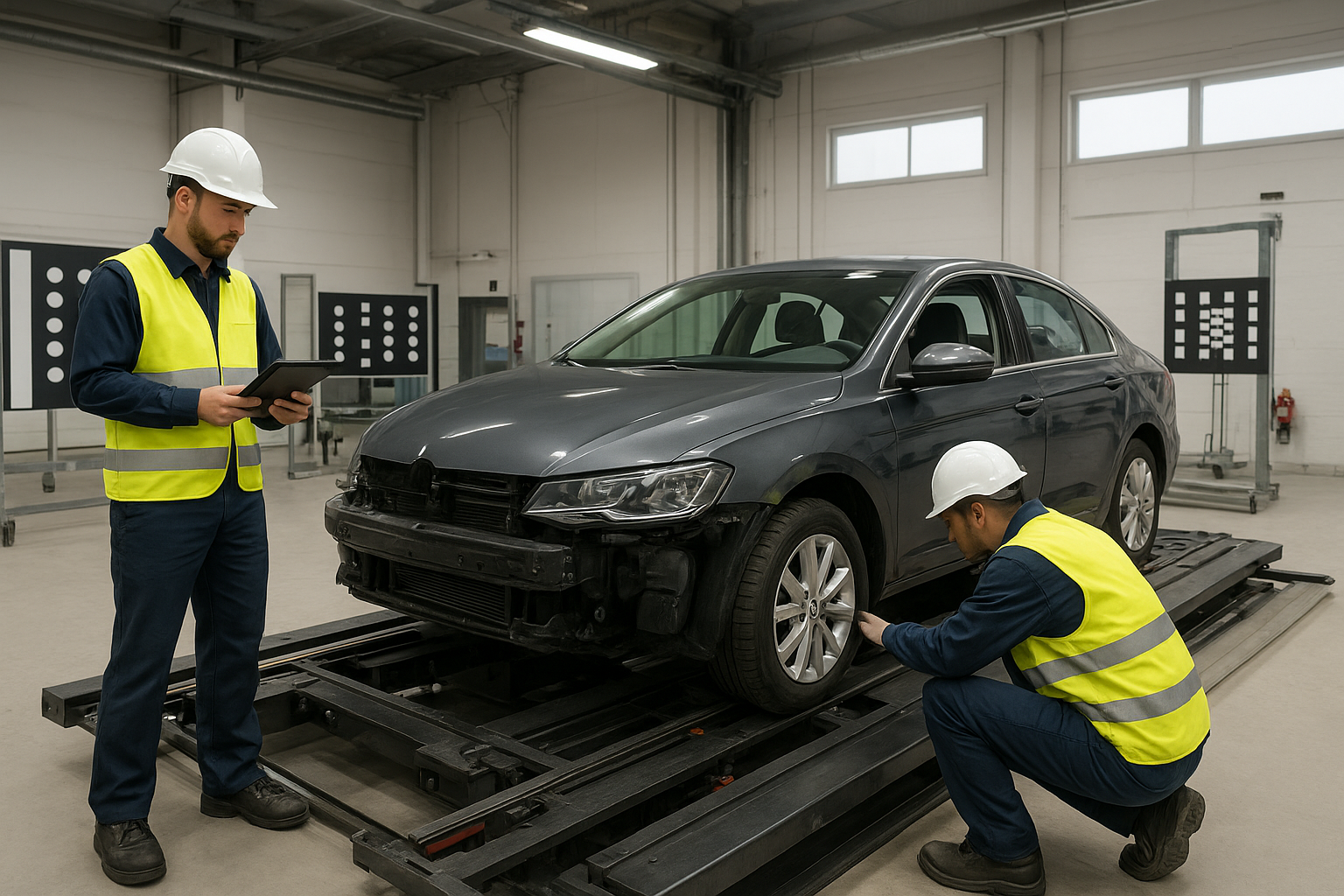
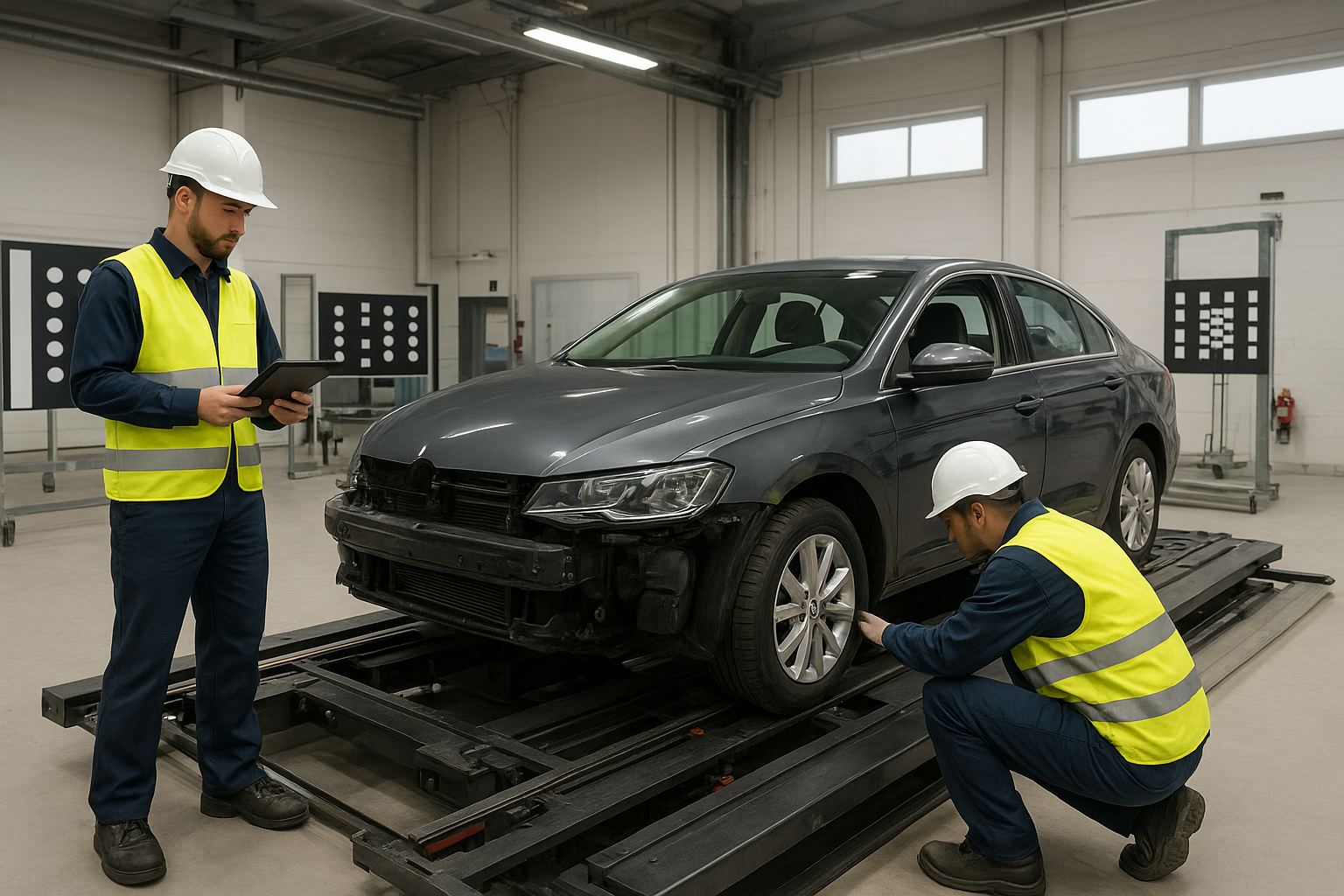
A modern collision center where I-CAR certified training guides every repair decision from estimate to final calibration.
Quick Answer
I-CAR certified means a collision repair shop or technician has completed — and continues to maintain — structured training through the Inter-Industry Conference on Auto Collision Repair (I-CAR), the industry’s leading nonprofit training organization. I-CAR certified is a verified, ongoing credential, not a one-time badge, confirming that professionals follow current OEM repair procedures, materials science, and safety system protocols on every vehicle they touch.
What “I-CAR Certified” Really Means
When a shop or technician is described as I-CAR certified, it confirms participation in — and successful completion of — structured training programs run by the Inter-Industry Conference on Auto Collision Repair, a nonprofit organization dedicated to improving the quality and safety of collision repairs across the entire auto industry. Founded in 1979, I-CAR works with automakers, insurers, and repair professionals to develop standardized education that keeps pace with rapidly changing vehicle technology.
Importantly, I-CAR certification is not a one-time achievement. Instead, it is a continuous commitment. Technicians, estimators, and shop leaders must complete ongoing training every year to maintain their recognized status. Therefore, a current I-CAR credential is far more meaningful than an old certificate hanging on a wall — it signals that the professional’s knowledge is up to date right now.
Furthermore, I-CAR training covers every discipline involved in a collision repair, including:
- Structural repair — restoring a vehicle’s load-bearing frame and crash structure to OEM specifications
- Non-structural repair — panels, bumpers, trim, and components that don’t form part of the structural cage
- Estimating — accurately identifying damage, referencing OEM repair procedures, and producing a correct scope of work
- Refinishing — paint preparation, corrosion protection, color matching, and long-term finish durability
- Electronics and ADAS — scanning, calibration, and restoring driver-assistance features after a collision
In short, I-CAR certified status represents a verifiable, role-specific, regularly renewed standard of professional knowledge — not simply a membership or marketing claim.
Gold Class, Platinum, and ProLevel: How I-CAR Credentials Stack Up
I-CAR recognizes both shops and individual professionals through a tiered credential system. Understanding each level helps you evaluate a shop’s overall capability — and not just the logo on their sign.
Gold Class Shop Recognition
Gold Class is I-CAR’s highest shop-level recognition. To achieve Gold Class standing, a collision repair facility must ensure that a qualified representative in each core repair role — structural, non-structural, refinishing, and estimating — completes and maintains role-specific training annually.
Consequently, Gold Class is not just about having one trained person on staff. It signals cross-functional expertise throughout the shop. For consumers, Gold Class status is the fastest, most reliable indicator that the facility invests in continuous, role-specific education across the full repair workflow — from the first estimate through final quality inspection.
Additionally, Gold Class status must be maintained every year. A shop that earned it five years ago but has since let training lapse is no longer Gold Class. That is why verifying current status matters — more on that in the verification section below.
ProLevel Stages for Individual Technicians
ProLevel is I-CAR’s individual progression framework. Technicians advance through multiple ProLevel stages within their specific repair discipline, demonstrating increasing competency at each stage. Progress is measured through completed courses, passed assessments, and demonstrated practical application of skills.
ProLevel stages exist for structural repairers, non-structural repairers, refinish technicians, and estimators. As a result, consumers can understand not only whether a shop is trained, but how deeply each individual’s expertise runs within their discipline.
Platinum Individual Recognition
Platinum recognition is the highest individual-level honor I-CAR awards. A technician earns Platinum status by completing the full, highest-tier training path for their specific role and maintaining that currency year over year. Platinum individuals represent the deepest knowledge within their discipline.
It is common — and desirable — to find a Gold Class shop staffed with several Platinum-recognized individuals. That combination provides both shop-wide competency and individual depth, ensuring that specialized repairs are handled by the most highly trained person available.
CREDENTIAL SUMMARY AT A GLANCE
- Gold Class ? Shop-level recognition; cross-role training maintained annually
- ProLevel ? Individual progression stages within a specific repair discipline
- Platinum ? Highest individual recognition; full role-specific training path completed and maintained
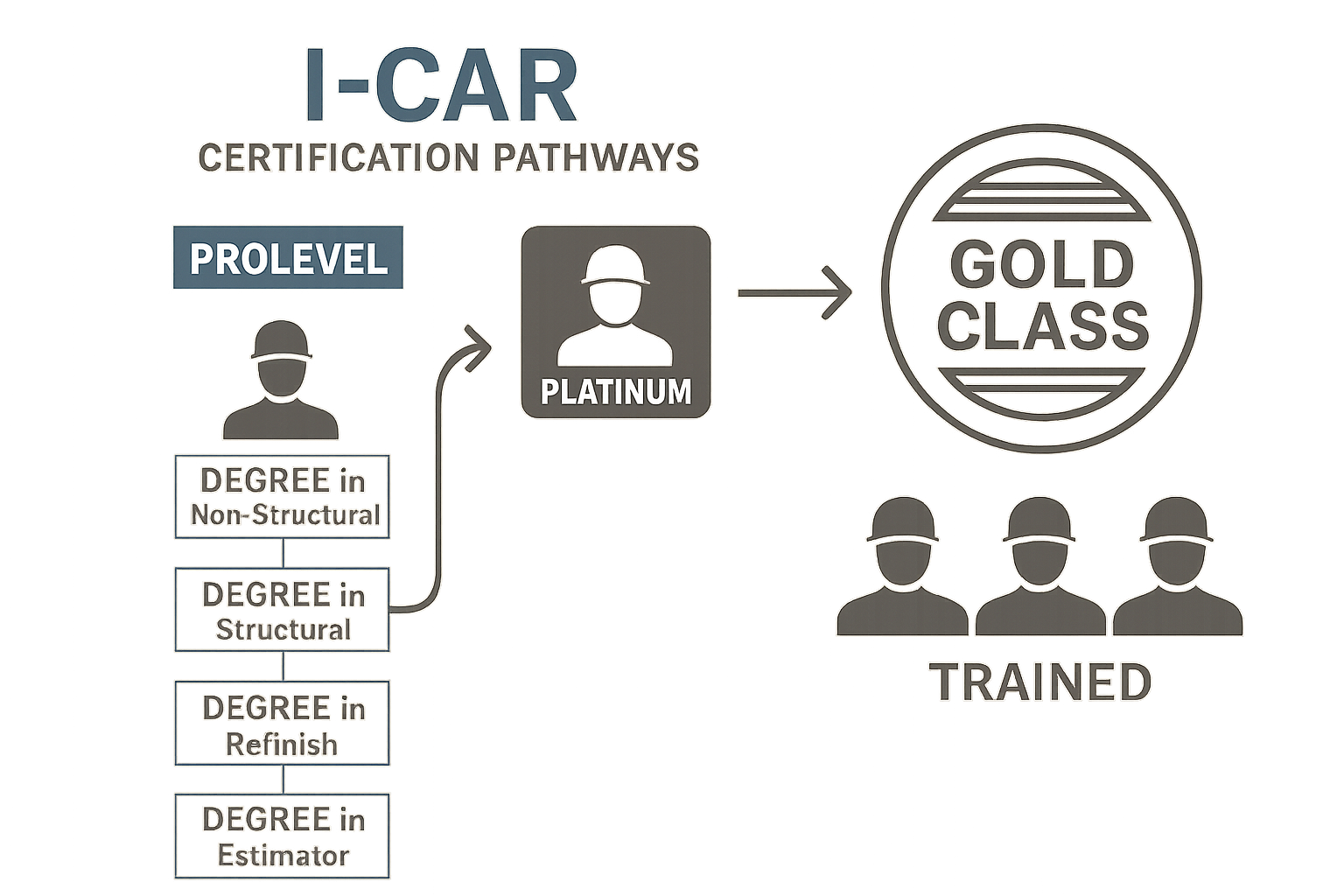
I-CAR certification pathways: ProLevel stages for individuals, Platinum recognition, and Gold Class for shops.
Why I-CAR Certified Training Matters for Modern Vehicles
Today’s vehicles are fundamentally different from those built a decade ago. Modern cars combine high-strength steel, aluminum, carbon fiber, and advanced polymer composites in a single body structure. They are also packed with sensors, radar units, cameras, and computers that coordinate dozens of safety systems simultaneously. As a result, collision repair is far more complex — and far more consequential — than it was in the past.
Specifically, even a minor front-end impact can misalign a forward-facing radar sensor by a fraction of a degree — enough to compromise automatic emergency braking or adaptive cruise control. Similarly, a side collision can silently damage structural reinforcements that are invisible to the naked eye but critical to how a vehicle performs in the next crash.
Above all, what an I-CAR certified team brings to every repair is the verified knowledge to handle this complexity correctly. Here is a breakdown of each critical area:
Adherence to OEM Repair Procedures
OEM repair procedures are instructions published by the vehicle’s manufacturer specifying exactly how each component, material, and system must be repaired or replaced. I-CAR training places heavy emphasis on consulting these procedures for every repair — not relying on general habits or outdated assumptions.
For example, some automakers prohibit sectioning a structural rail in certain locations. Others specify adhesive types and application sequences that must be followed precisely. Deviating from OEM procedures — even slightly — can compromise a vehicle’s designed crash performance. Therefore, I-CAR certified professionals are trained to look up and follow the correct procedure for every specific make, model, and VIN.
Material-Specific Repair Methods
Advanced vehicle materials are not interchangeable in their repair methods. High-strength steel (HSS) and ultra-high-strength steel (UHSS) cannot be heated for reshaping the same way mild steel can — heat reduces their tensile strength and defeats the purpose of using them. Aluminum requires dedicated tools and clean workspaces to prevent galvanic corrosion. Carbon fiber components often require replacement rather than repair.
Furthermore, mixing repair techniques across material types — for instance, using steel welding equipment near aluminum panels — can introduce contamination that leads to long-term corrosion. I-CAR training covers the specific techniques, tools, and precautions required for each material so that repaired sections perform as designed.
ADAS Calibration, Electronics, and the New Repair Reality
One of the most significant — and most overlooked — areas of modern collision repair is Advanced Driver Assistance Systems (ADAS) calibration. ADAS refers to the network of cameras, radar units, ultrasonic sensors, and lidar arrays that power features such as lane-keeping assist, blind-spot monitoring, automatic emergency braking, and rear cross-traffic alert.
After virtually any collision, one or more ADAS components may need recalibration before they function correctly. In many cases, calibration is also required after windshield replacement, suspension alignment changes, or even wheel and tire swaps. Consequently, skipping this step is not just a matter of convenience — it leaves the driver relying on systems that may be aiming in the wrong direction or triggering at the wrong threshold.
Pre- and Post-Repair Scanning
I-CAR trained professionals understand the difference between a pre-repair scan — performed before any work begins to capture all stored fault codes and understand the vehicle’s condition — and a post-repair scan, performed after repairs are complete to confirm no new codes were introduced and all systems are communicating correctly.
Both scans are essential. However, many shops that lack I-CAR certified training skip the pre-repair scan entirely, missing pre-existing faults that could complicate the repair. Others skip the post-repair scan, delivering a vehicle that looks complete but has uncorrected electronic issues.
Static vs. Dynamic Calibration
Static calibration is performed in a controlled shop environment using calibration targets placed at precise distances and angles relative to the vehicle. Dynamic calibration, in contrast, requires driving the vehicle under specific conditions — typically at certain speeds on clear road markings — so the system can recalibrate through real-world sensor feedback.
Each OEM specifies which calibration method — or combination of methods — is required for their vehicles. I-CAR certified technicians are trained to identify the correct procedure, prepare the required environment, and confirm successful calibration before the vehicle is returned to the customer.
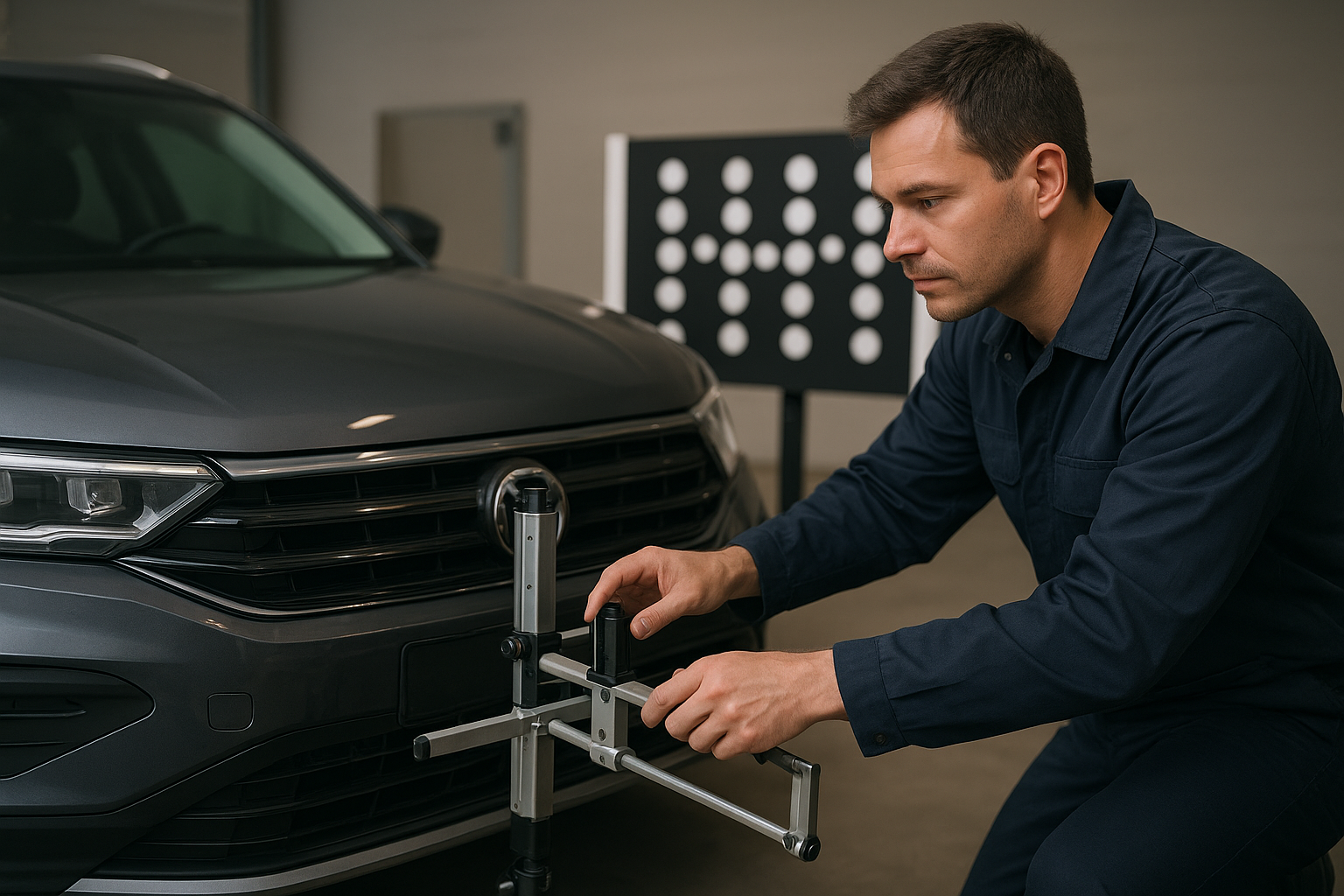
ADAS calibration is an essential final step in any I-CAR certified collision repair — not an optional add-on.
Refinishing Quality and Long-Term Protection
I-CAR training extends into the refinish process — and for good reason. A paint job that looks perfect at delivery can begin to fail within months if the underlying corrosion protection steps were skipped or rushed. I-CAR certified refinish training covers substrate preparation, primer selection, corrosion inhibitor application, color-match procedures, and clear coat techniques that deliver both visual quality and long-term protection against rust and delamination.
Additionally, many modern vehicles use multi-stage paints, specialty finishes, and factory-applied coatings that require specific equipment and procedures to match correctly. Consequently, a properly trained refinish technician brings far more than a good eye — they bring a systematic, documented process that produces a durable, OEM-quality result.
How to Verify an I-CAR Certified Body Shop Before You Commit
Verifying a shop’s I-CAR certified status is straightforward — and it is one of the most important steps you can take before authorizing repairs. Here is a practical, step-by-step process:
- Use the I-CAR Shop Locator. The official I-CAR website provides a public-facing shop locator tool. Enter your ZIP code or city to find Gold Class shops in your area, confirm their current status, and see which roles are covered. This is the most direct way to verify that a shop’s Gold Class designation is active — not lapsed.
- Ask directly about current-year training. Gold Class requires annual maintenance. Therefore, ask the shop specifically: “Is your Gold Class status current for this calendar year?” A confident, detailed answer is a good sign. Vague deflection is not.
- Request the names and roles of certified technicians. Ask which roles are represented — structural, non-structural, refinishing, estimating — and whether any technicians have achieved Platinum recognition. Similarly, ask which technician will be assigned to your vehicle.
- Confirm OEM procedure access for your VIN. Ask whether the estimator and repair team will pull OEM procedures specific to your vehicle’s make, model, year, and VIN. Shops with genuine I-CAR certified training build this step into their standard workflow — it should not be an unusual request.
- Ask about scanning and calibration plans. Specifically, ask: “Will you perform a pre-repair scan and a post-repair scan?” and “Which ADAS calibrations does my vehicle need based on the damage?” A trained shop will have clear, informed answers to both questions.
- Review the repair plan for OEM references. A well-documented repair estimate from an I-CAR certified shop will cite OEM repair procedures, identify required calibrations, and specify parts by type — OEM, aftermarket, or recycled — with clear justification.
Above all, remember that verification is not adversarial. Reputable, trained shops welcome these questions because they demonstrate exactly the kind of thorough, documented process that I-CAR certified training produces.
Questions to Ask Any Body Shop Before Choosing
Beyond verifying I-CAR credentials, there are several additional questions that separate genuinely qualified shops from those that rely on appearances. Use this list when evaluating any collision repair facility:
- Do you carry any OEM certifications — for example, from Ford, Toyota, Tesla, BMW, or another automaker — in addition to I-CAR Gold Class?
- What equipment do you have for measuring and restoring structural geometry — for instance, a frame rack with computerized measuring?
- Do you have a dedicated aluminum repair area, separate from your steel repair area, to prevent cross-contamination?
- What scanning tools do you use, and are they capable of reading all modules on my specific vehicle?
- Will you provide a written warranty on both workmanship and paint? What does it cover and for how long?
- How do you handle supplements — additional damage discovered once teardown begins — and how do you communicate changes to me and my insurer?
- Can I see the completed repair plan, including OEM procedure references, before work begins?
In particular, the question about OEM certifications is worth exploring carefully. While I-CAR certified status covers broad industry training, OEM certifications — awarded directly by vehicle manufacturers — go further by verifying that a shop has the specific tools, equipment, and documented procedures to repair that brand’s vehicles correctly. Many top-tier shops hold both.
Costs, Insurance, and What to Expect from an I-CAR Certified Repair
Will an I-CAR Certified Shop Cost More?
Not necessarily — but the estimate may look different. An I-CAR certified shop is more likely to produce a thorough, accurate initial estimate that accounts for OEM procedures, required scanning, calibration costs, and the correct parts and materials. In contrast, a lower estimate from an untrained shop often reflects items that were missed, skipped, or underpriced — costs that appear later as supplements or, worse, as failures in quality and safety.
Furthermore, if your vehicle requires ADAS calibration — which most modern vehicles do after a collision — that cost is real and unavoidable. A shop that omits it from the estimate has not saved you money; they have simply deferred a problem.
Working with Your Insurance Company
Insurers are increasingly familiar with I-CAR certified standards and the need to follow OEM procedures. However, some may initially resist line items they are not accustomed to seeing — such as scanning fees or calibration labor. In these situations, an I-CAR certified shop’s ability to cite specific OEM repair procedures as justification is a significant advantage. These are published, verifiable documents — not opinions.
Additionally, you have the right to choose your own repair shop regardless of which shop your insurer recommends or prefers. Your policy covers a proper repair — not just the cheapest one. If your insurer’s recommended shop is not I-CAR certified, you may request to use a qualified shop of your choice.
Cycle Time and Communication
Cycle time — the number of days required to complete a repair — depends on parts availability, calibration scheduling, the complexity of structural work, and paint cure times. An I-CAR certified facility sets realistic expectations at the outset rather than promising a delivery date it cannot meet. Consequently, expect clear communication at each stage of the repair: teardown, parts ordering, structural work, refinishing, reassembly, scanning, and delivery.
Ask about the shop’s warranty on both workmanship and paint. A properly trained shop stands behind its work with a documented, transferable warranty — and the confidence to offer one comes directly from following verified, training-backed procedures on every repair.
Frequently Asked Questions About I-CAR Certification
Is I-CAR certification the same as an OEM or automaker certification?
No — they are distinct but complementary. I-CAR certified status represents broad, role-specific, industry-wide training applicable to all vehicles. In contrast, OEM certifications are brand-specific programs that verify a shop has the equipment, tooling, facilities, and documented procedures to repair a particular manufacturer’s vehicles. For example, a shop might hold I-CAR Gold Class status plus separate OEM certifications from Ford, Honda, and GM. The best shops typically carry both — I-CAR for foundational industry competency and OEM approval for brand-specific depth.
Can an experienced technician skip I-CAR training?
Experience is valuable, but it cannot substitute for staying current. Vehicles change every model year — new substrates, new structural designs, new ADAS configurations, new calibration requirements. I-CAR certified training ensures that even the most experienced professionals are updated on the latest OEM requirements and repair science. The combination of deep hands-on experience plus ongoing I-CAR education is the strongest possible credential for a collision repair technician.
What if my insurer recommends a shop that isn’t I-CAR certified?
You are legally entitled to choose your own repair shop in most jurisdictions. If your insurer’s preferred or direct-repair shop does not hold current I-CAR Gold Class status, ask that shop specifically how they maintain technician training, verify OEM procedures, and handle ADAS calibration. Look for documented, verifiable answers — not general reassurances. If satisfactory answers aren’t forthcoming, exercise your right to choose a qualified, I-CAR certified shop.
How long does I-CAR certification take to earn?
The time required varies depending on the technician’s current role, experience level, and the number of courses required for their specific ProLevel pathway. Some individuals complete initial certification requirements within months; others take longer. More importantly, I-CAR certification is not a finish line — it requires annual renewal through ongoing education, meaning the timeline never truly ends. That continuous commitment is precisely what makes current I-CAR status a meaningful credential.
Does I-CAR training cover electric vehicles (EVs)?
Yes. I-CAR has developed dedicated training content for electric and hybrid vehicle collision repair, covering high-voltage system safety, battery handling protocols, disconnect procedures, and the unique structural and material considerations of EV platforms. As EV adoption grows, this area of I-CAR training is becoming increasingly important — and increasingly relevant to ask about when evaluating any shop.
Is there a difference between an I-CAR trained technician and an I-CAR certified shop?
Yes. An individual technician can hold I-CAR training credentials — including Platinum recognition — independently of whether the shop they work in has achieved Gold Class status. Conversely, a Gold Class shop must have role representatives who maintain current training across all core disciplines. For the best outcome, look for both: a Gold Class shop staffed with individually credentialed, Platinum-recognized technicians.
A Local Resource Worth Knowing
If you are currently researching body shops in your area, consider beginning with a consultation at a reputable local collision center. For example, you can review services and request a repair assessment through Brea Auto Body — a helpful starting point when evaluating what a properly structured, I-CAR certified repair process looks like in practice.
Use your first consultation as an opportunity to ask the specific questions outlined in this guide: OEM procedure access, scanning protocols, ADAS calibration plans, and the credentials of the technicians who will work on your vehicle. A genuinely qualified shop will answer every question with confidence and specifics.
Conclusion: Choose I-CAR Certified Training You Can Verify
“I-CAR certified” is not a marketing slogan — it is a verifiable, continuously maintained credential that reflects a professional’s current knowledge of OEM repair procedures, advanced materials, electronics, and safety system calibration. For vehicle owners, it is the most reliable shorthand for a shop that takes quality and safety seriously enough to invest in ongoing, role-specific education.
Specifically, prioritize shops that hold current Gold Class status, employ Platinum-recognized technicians, document their repair plans with OEM references, and confirm scanning and calibration as standard parts of every job. Furthermore, do not let insurance pressure or a lower estimate steer you toward a shop that cannot answer basic questions about training and procedures.
In summary, your vehicle’s safety systems were designed to work together. A proper, I-CAR certified repair ensures they continue to do so — now, and in any future collision. Use this guide, ask the right questions, and choose a shop whose credentials you can confirm before the first bolt is turned.
Ready to Discuss Your Repair?
Contact Brea Auto Body to talk through your vehicle’s needs, ask about I-CAR credentials, and get a thorough, OEM-informed repair assessment.

